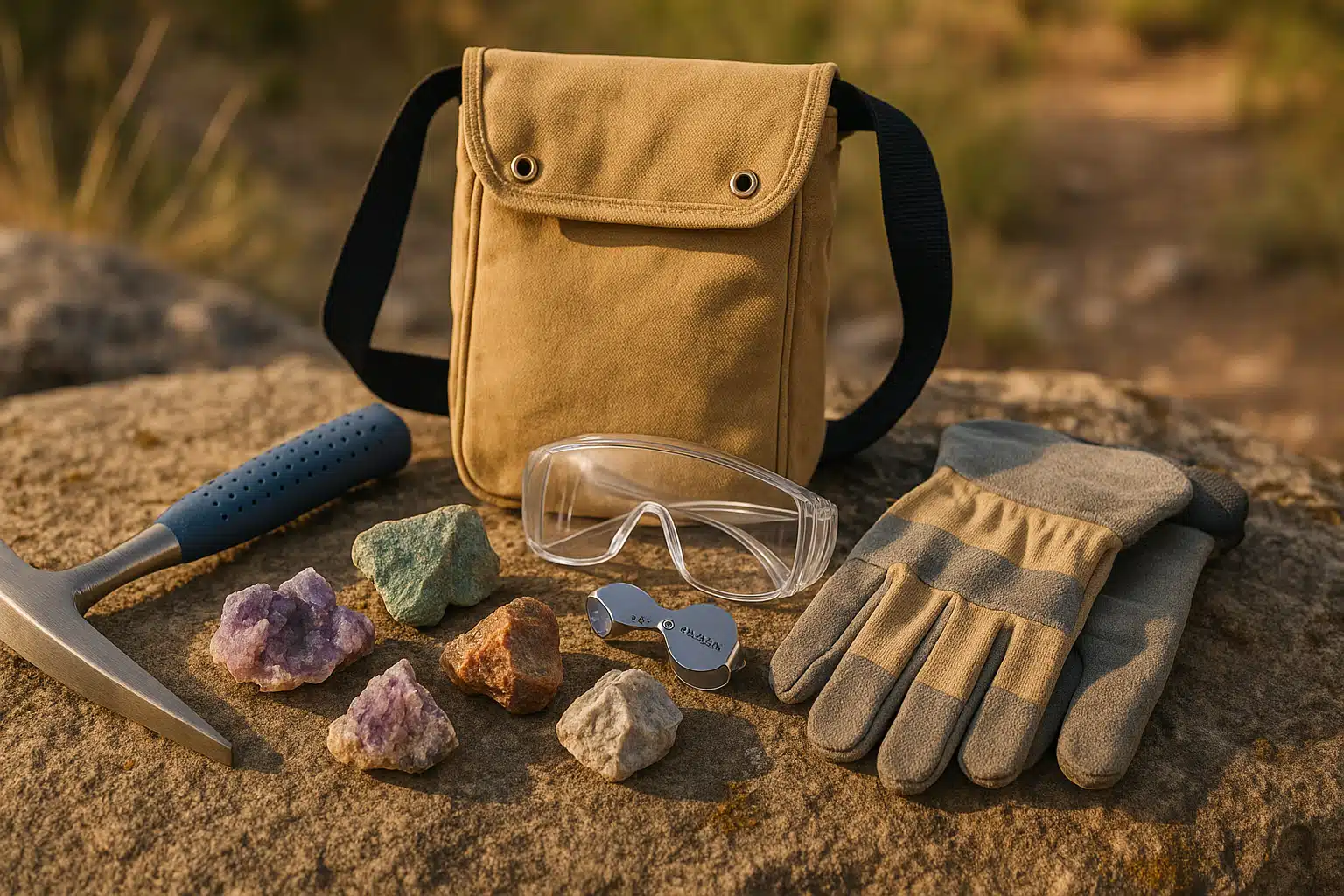
If you’ve recently discovered the fascinating world of rockhounding, you’re likely wondering what tools are truly essential to get started. With countless options available online and in stores, choosing the right equipment can feel overwhelming, particularly when working within a budget. This comprehensive guide will help you understand the fundamental tools needed to begin your rockhounding adventure without unnecessary expense, ensuring you’re properly equipped for safe and successful exploration.
Why Rockhounding Matters
Rockhounding is far more than a simple hobby—it’s an enriching activity that connects you directly with the natural world while offering insights into Earth’s geological history. Whether you’re searching for colorful gemstones, ancient fossils, unique minerals, or interesting rock formations, each discovery provides both educational value and personal satisfaction. This outdoor pursuit combines physical activity, scientific learning, and the thrill of discovery, making it appealing to people of all ages and backgrounds across the globe.
The right tools don’t just make rockhounding more productive; they ensure your safety and help preserve the specimens you find. Quality equipment allows you to explore more confidently, extract samples without damage, and properly examine your discoveries in the field. With proper tools, you’ll maximize your time outdoors while minimizing frustration and potential hazards.
Essential Tools for Rockhounding
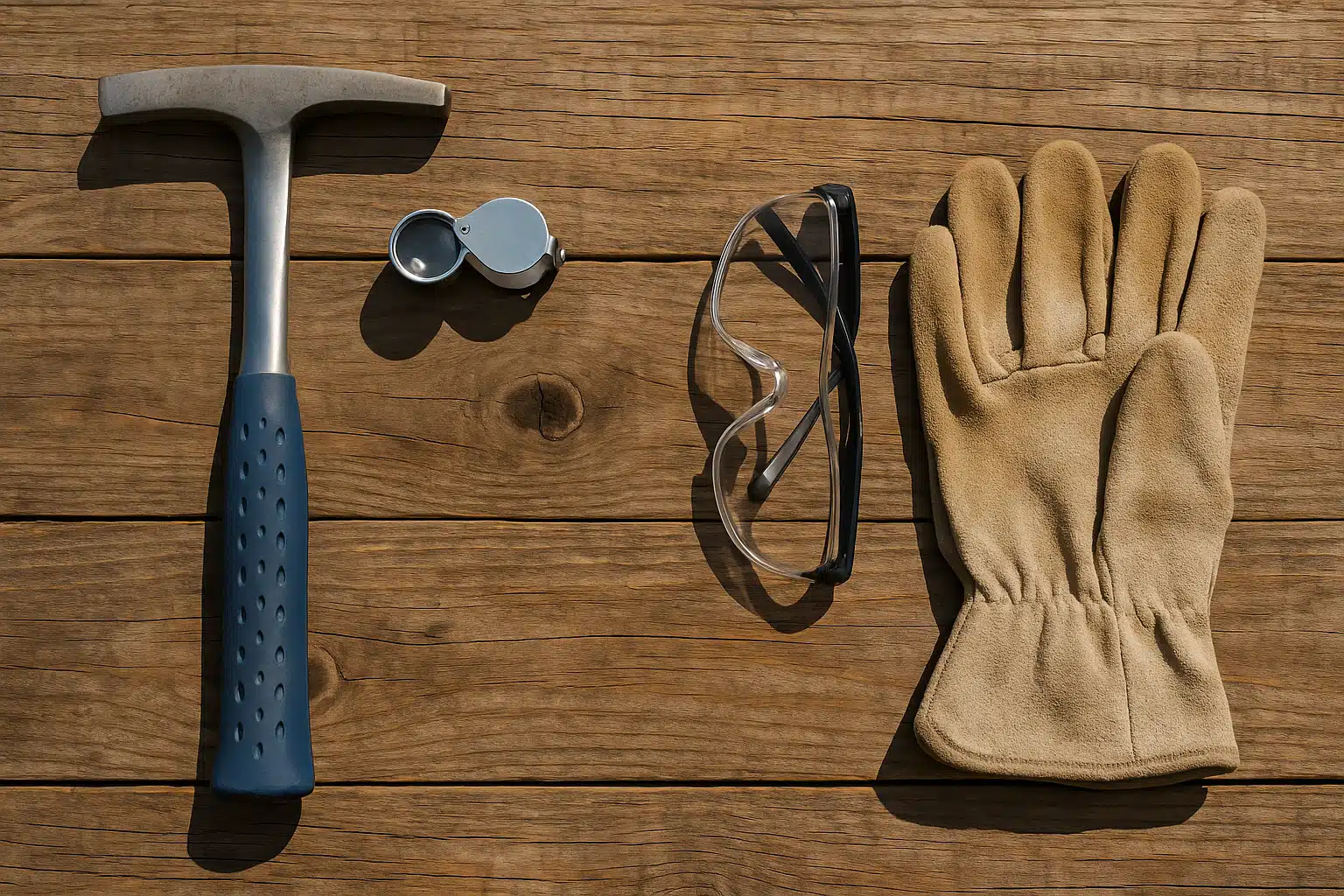
Building your first rockhounding kit doesn’t require a significant investment. Focus on these core tools that will serve you well for years to come, and expand your collection as your interest and expertise grow.
1. Rock Hammer (Geological Hammer)
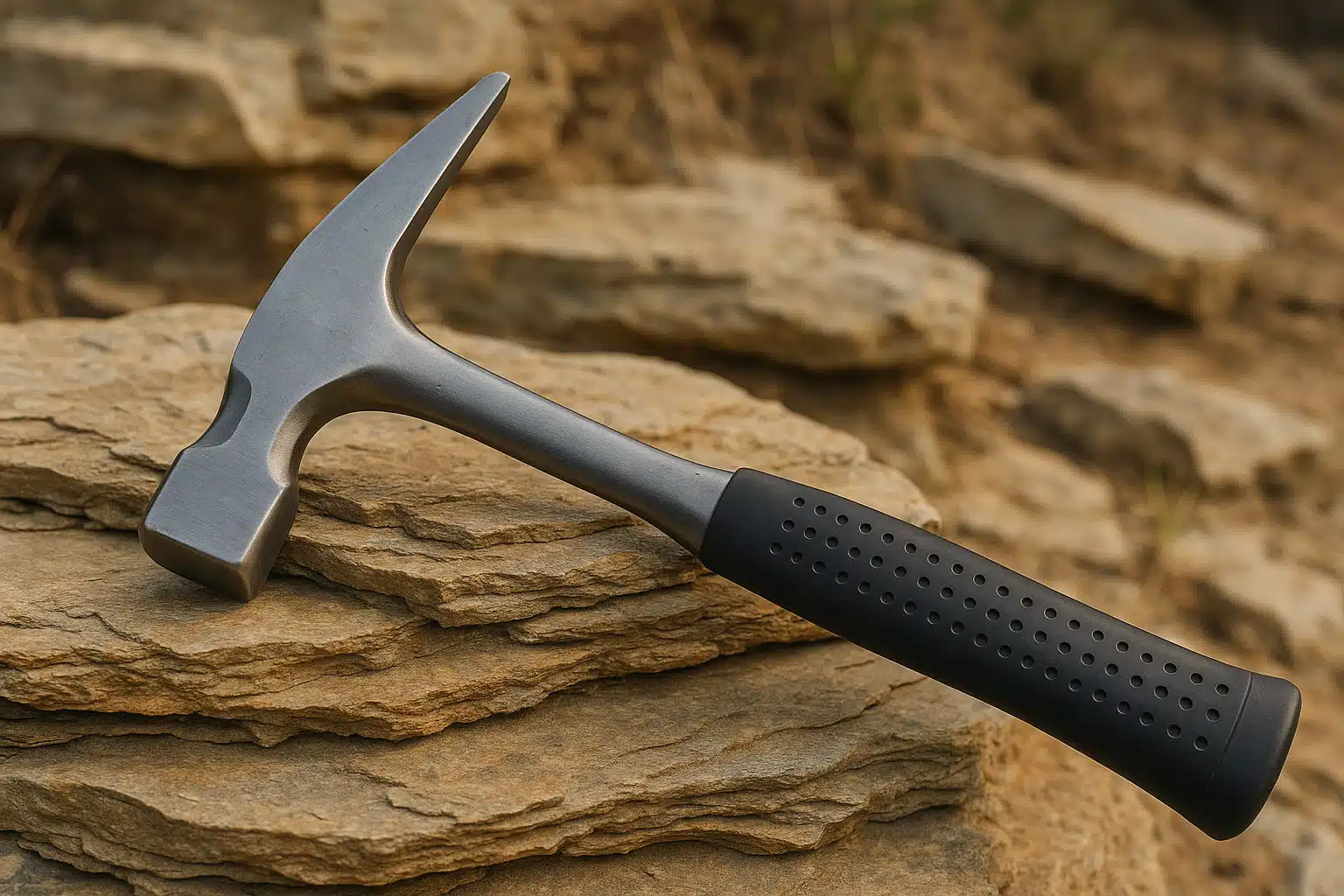
The rock hammer, also called a geological hammer or rock pick, is the cornerstone of any rockhounding kit. This specialized tool is specifically engineered for breaking rocks, splitting specimens, and extracting samples from their natural settings. Unlike regular hammers, geological hammers feature designs optimized for working with stone and mineral formations.
Key Features to Consider:
- Construction Material: Look for hammers made from hardened steel with a durable finish that resists rust and corrosion. The head should be securely attached to the handle to withstand repeated impact.
- Weight: Most geological hammers range from 400 to 900 grams (14 to 32 ounces). Choose a weight you can comfortably swing for extended periods without causing arm fatigue. Lighter hammers offer better control, while heavier ones provide more breaking force.
- Head Design: The classic design features a flat striking face on one end for breaking rocks and a pointed chisel or pick end for prying, splitting, and precise work. This dual-purpose design maximizes versatility in the field.
- Handle: Handles come in wood, fiberglass, or rubber-coated materials. Ergonomic grips reduce hand strain and improve control, while shock-absorbing materials minimize vibration during use.
A quality rock hammer is an investment that will serve you throughout your rockhounding journey, making it worth choosing a well-constructed model from the start.
2. Hand Lens or Loupe
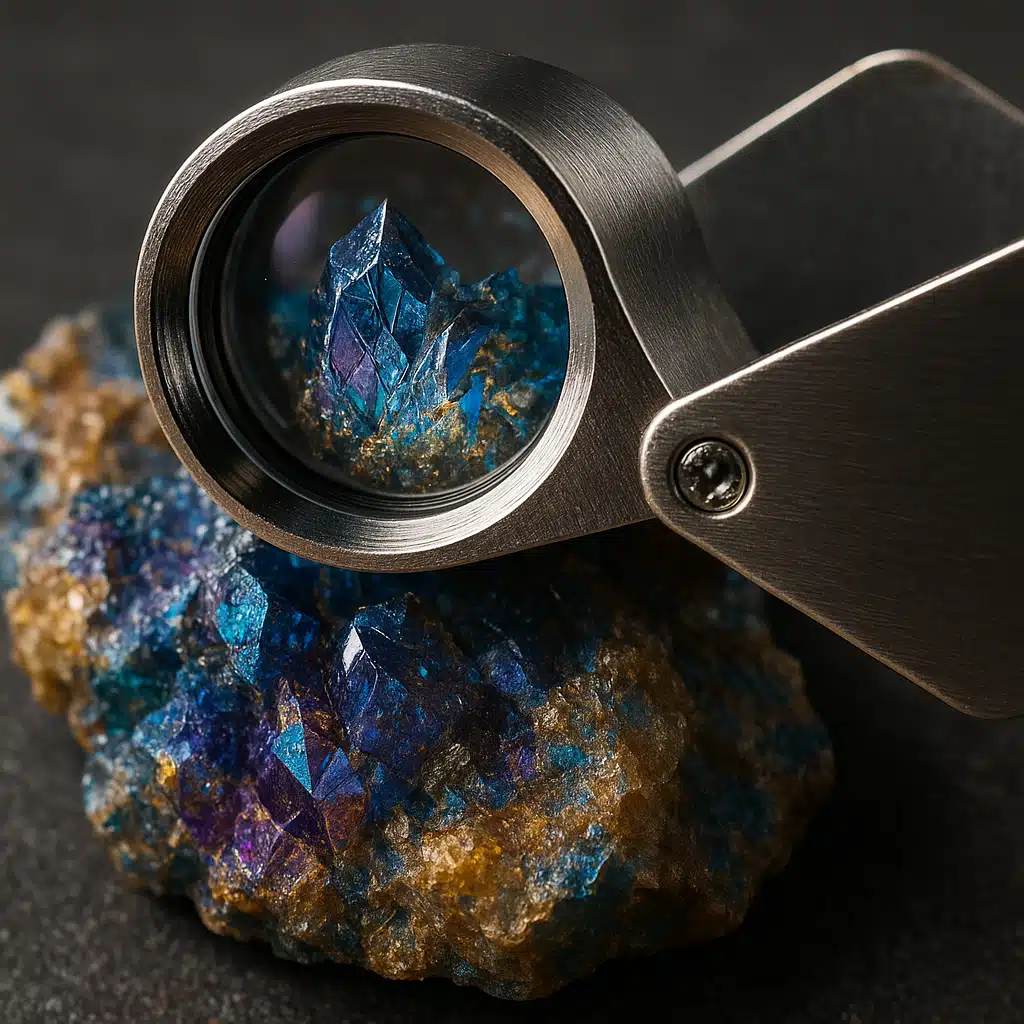
A hand lens or loupe is an indispensable tool for examining your finds in detail. This small, portable magnifying device allows you to identify minerals, observe crystal structures, detect inclusions, and appreciate fine details invisible to the naked eye. Proper identification often depends on observing specific characteristics that only become apparent under magnification.
Key Features to Consider:
- Magnification Power: A 10x (ten times) magnification is the standard for geological fieldwork and mineral identification. This power provides excellent detail while maintaining a reasonable field of view and depth of focus.
- Lens Quality: Look for glass lenses rather than plastic, as they provide superior clarity and scratch resistance. Achromatic or triplet lenses offer the best optical quality by minimizing color distortion.
- Portability: Choose a compact, lightweight design that easily fits in your pocket or attaches to a lanyard. Folding loupes with protective cases prevent lens scratches during transport.
- Lighting: Some modern loupes include built-in LED lighting, which can be invaluable for examining specimens in varying light conditions or shadowed areas.
Learning to use a loupe effectively takes practice, but it quickly becomes second nature and dramatically enhances your ability to identify and appreciate your specimens.
3. Safety Equipment
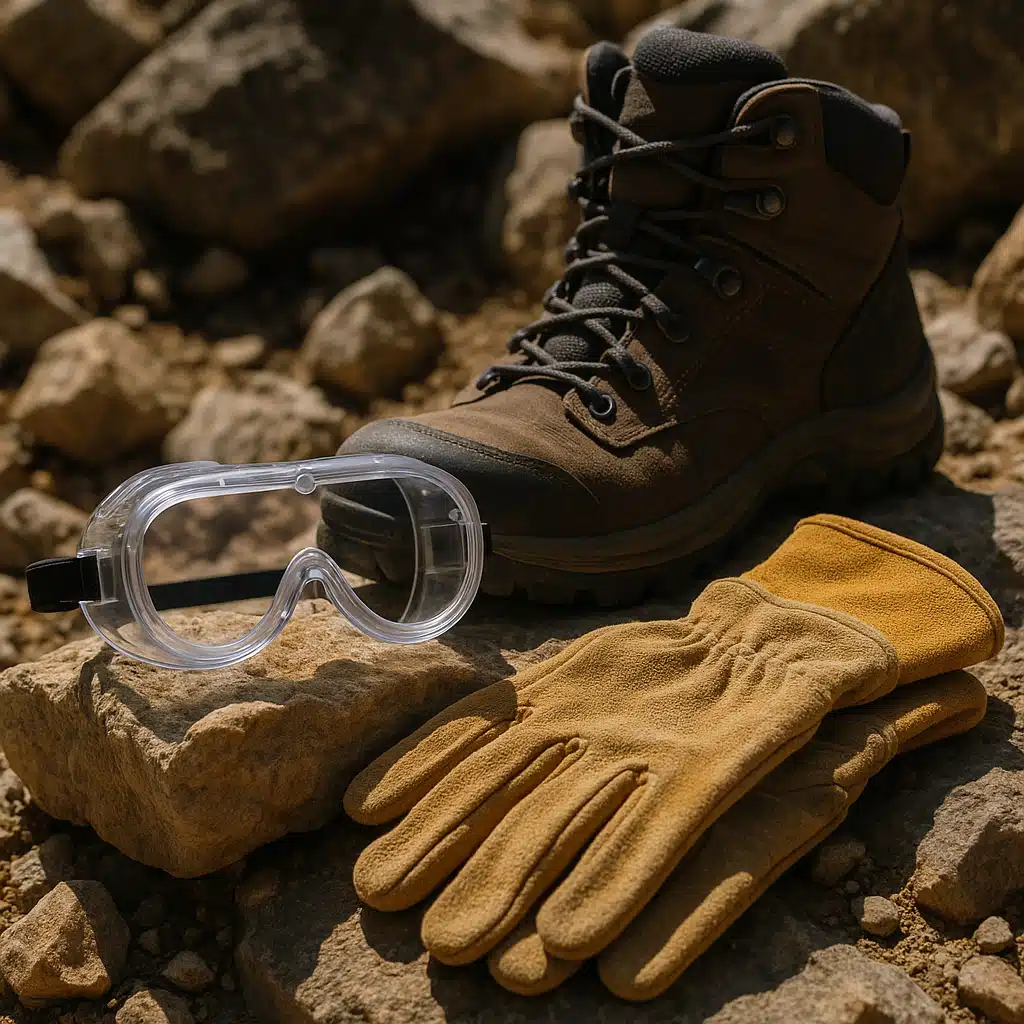
Safety should always be your top priority when rockhounding. Rock fragments can fly unpredictably when struck, sharp edges can cause cuts, and uneven terrain presents various hazards. Proper safety gear protects you from common injuries and allows you to focus on the enjoyable aspects of your hobby.
Essential Safety Items:
- Safety Goggles or Glasses: Impact-resistant eye protection is absolutely essential when breaking rocks. Flying chips and rock fragments can cause serious eye injuries. Choose goggles that fit comfortably and provide wraparound protection. Ensure they meet recognized safety standards for impact resistance.
- Work Gloves: Heavy-duty gloves protect your hands from sharp edges, rough surfaces, and potential cuts. Look for gloves that balance protection with dexterity—you need to maintain grip and feel while handling specimens. Leather or synthetic materials designed for construction or landscaping work well.
- Sturdy Footwear: Proper boots are crucial for navigating rocky, uneven terrain safely. Choose footwear with ankle support, slip-resistant soles with good tread, and toe protection. Hiking boots or work boots designed for rugged conditions are ideal.
- Additional Considerations: Depending on your location and season, consider sun protection (hat, sunscreen), hydration supplies, a basic first aid kit, and weather-appropriate clothing.
Never compromise on safety equipment. The small investment in proper protective gear is insignificant compared to the cost of treating preventable injuries.
Helpful Additional Tools
While the three categories above cover your essential needs, these additional items can enhance your rockhounding experience as you develop your skills:
- Chisel Set: Cold chisels in various sizes help with precise extraction and splitting of specimens without excessive force.
- Backpack or Collection Bag: A comfortable way to carry tools and specimens, ideally with padded compartments to prevent damage.
- Specimen Wrapping Materials: Newspaper, bubble wrap, or small containers protect delicate finds during transport.
- Field Notebook: Recording location, date, and observations helps you learn and remember important details about your discoveries.
- GPS Device or Smartphone: Useful for navigating to rockhounding sites and marking productive locations for future visits.
- Water and Brush: A small water bottle and soft brush help clean specimens for better field identification.
Practical Insights and Real-World Application
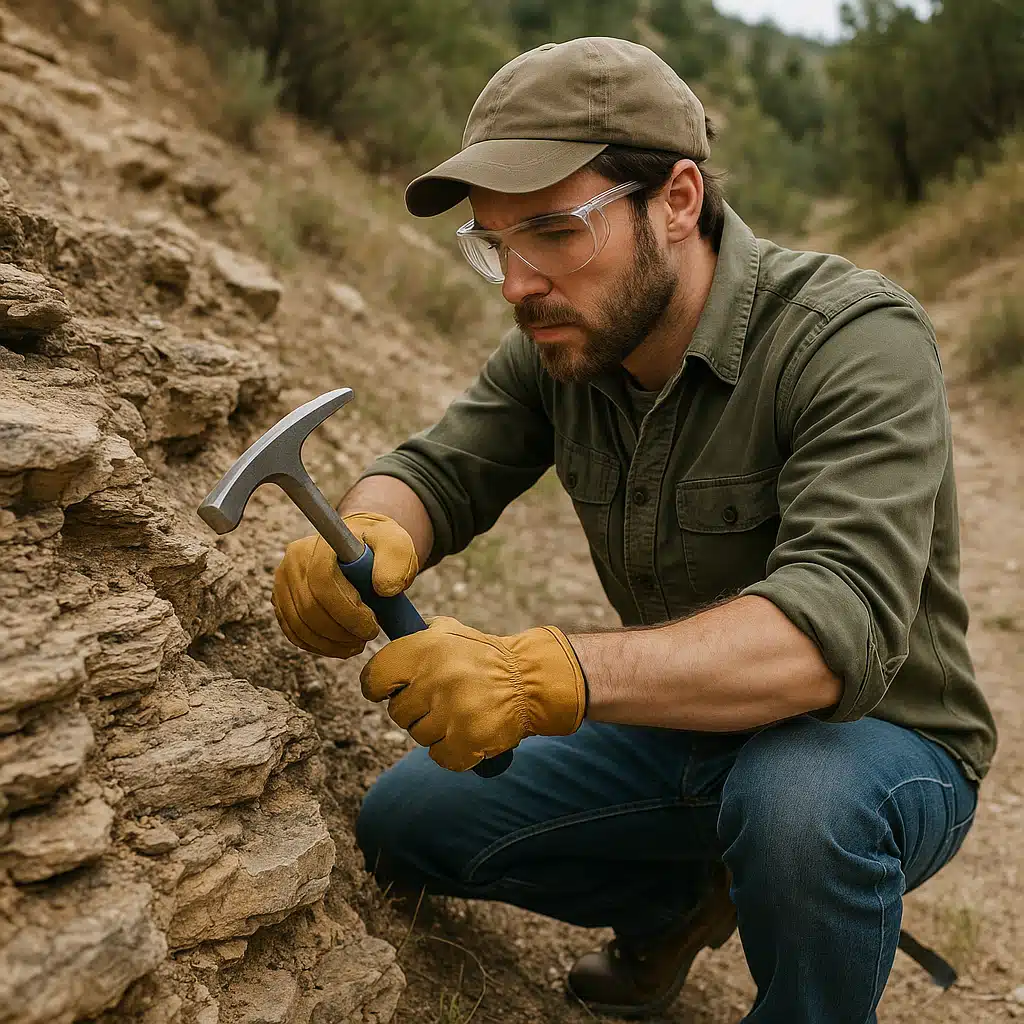
Understanding how these tools work together in practice helps you appreciate their importance. Imagine you’re exploring a promising geological area known for interesting mineral formations. You arrive equipped with your rock hammer, loupe, and safety gear, along with a backpack for carrying specimens.
As you examine an exposed rock face, you notice a promising vein of quartz with unusual coloration. After putting on your safety goggles, you use your rock hammer’s chisel end to carefully probe around the formation. A few controlled strikes with the flat end reveal a beautiful cluster of purple amethyst crystals embedded in the matrix. Using your loupe, you examine the crystal structure, noting the hexagonal formations and subtle color zoning that confirm the specimen’s quality.
Your gloves protect your hands as you handle the freshly broken rock with sharp edges. After wrapping the specimen carefully, you record notes about the location and geological context. This systematic approach, enabled by having the right tools, transforms a simple walk into a successful and educational rockhounding expedition.
Common Questions and Beginner Mistakes
Many newcomers to rockhounding share similar concerns and misconceptions. Addressing these upfront can save you time, money, and frustration:
“Do I need expensive, professional-grade tools to start?”
Not at all. While professional geologists may use specialized equipment, beginners can achieve excellent results with quality entry-level tools. Focus on well-made basic equipment rather than premium features you may not yet need. As your skills and interests develop, you can gradually upgrade specific tools based on your experience.
“Can I use a regular hammer instead of a geological hammer?”
While technically possible, it’s not recommended. Regular hammers lack the specialized design features that make geological hammers effective and safe for rockhounding. The wrong tool can damage specimens, prove less effective, and potentially be dangerous due to metal fragments from the hammer itself.
“Isn’t safety gear optional for casual collecting?”
Safety equipment is never optional. Accidents happen in moments, regardless of experience level. Rock fragments travel at high speed when struck and can cause permanent eye damage. Sharp edges cause cuts that can quickly become infected in outdoor environments. Twisted ankles on uneven terrain can end your hobby prematurely. Proper safety gear is essential, not optional.
“Can I wear any comfortable shoes for rockhounding?”
Footwear is one area where compromise leads to problems. Running shoes, casual sneakers, or sandals lack the ankle support, toe protection, and traction needed for rocky terrain. Inadequate footwear is a leading cause of rockhounding injuries. Invest in proper boots—your ankles and feet will thank you.
“How much should I budget for a starter kit?”
A complete beginner’s kit including a quality rock hammer, loupe, safety goggles, gloves, and sturdy boots can typically be assembled for a modest investment. Prices vary by region and retailer, but expect to spend roughly what you might on other outdoor hobby equipment. Remember that quality tools last for years, making them a worthwhile investment in a hobby that provides ongoing enjoyment.
Getting Started: Your Action Plan
Now that you understand the essential tools, here’s how to begin your rockhounding journey:
- Acquire the Essentials: Start with a quality rock hammer, 10x loupe, safety goggles, work gloves, and sturdy boots. Don’t skip any of these items.
- Research Local Opportunities: Identify rockhounding locations accessible to you. Look for public lands where collecting is permitted, organized club sites, or commercial fee-based collecting areas.
- Learn Basic Techniques: Watch instructional videos or join local rockhounding clubs to learn proper hammer technique, safety practices, and identification skills.
- Start Simple: Your first outings should focus on learning to use your tools safely and effectively rather than finding rare specimens. Success comes with experience.
- Join the Community: Rockhounding clubs, online forums, and social media groups provide valuable knowledge sharing, site recommendations, and identification help.
- Respect Regulations: Always verify that collecting is permitted in your chosen location and follow any quantity limits, protected species rules, or permit requirements.
Conclusion
Starting your rockhounding adventure doesn’t require complicated equipment or substantial financial investment. With just three essential categories of tools—a geological hammer, a quality loupe, and proper safety equipment—you’re fully prepared to begin exploring and discovering Earth’s geological treasures. These fundamental tools will serve you well whether you’re collecting colorful minerals, interesting fossils, or unique rock specimens.
The key to successful rockhounding lies not in having the most extensive tool collection, but in having the right basic equipment and knowing how to use it safely and effectively. As you gain experience, you’ll naturally discover which additional tools suit your specific interests and collecting style. For now, focus on mastering these essentials, prioritizing safety, and enjoying the process of exploration and discovery.
Remember that rockhounding connects you with the natural world in a unique and tangible way. Each specimen you find tells a story millions of years in the making. So gather your essential kit, identify a suitable location, and begin your journey into this rewarding hobby. The Earth’s hidden gems are waiting to be discovered—and you now have exactly what you need to find them.