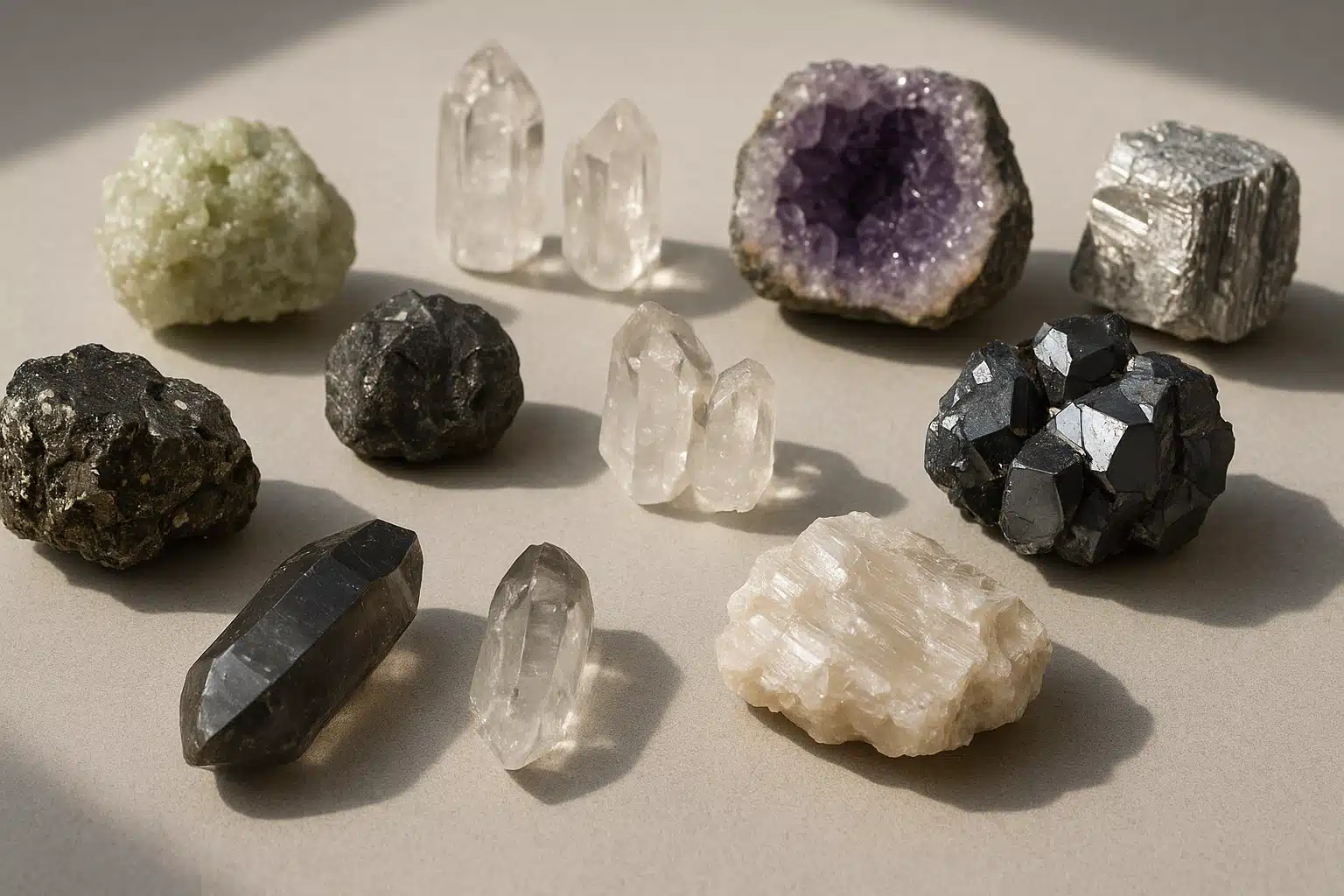
Understanding Mineral Luster: A Complete Guide to Identifying Rocks and Minerals
Mineral identification is a fascinating skill that combines observation, knowledge, and practice. One of the most important characteristics used by geologists, collectors, and hobbyists worldwide is luster—the way a mineral’s surface interacts with and reflects light. Whether you’re a beginner rock collector, a student of earth sciences, or simply curious about the natural world, understanding luster will significantly enhance your ability to identify and appreciate minerals. This comprehensive guide explores the different types of luster, why they matter, and how to use this knowledge effectively in your mineral identification journey.
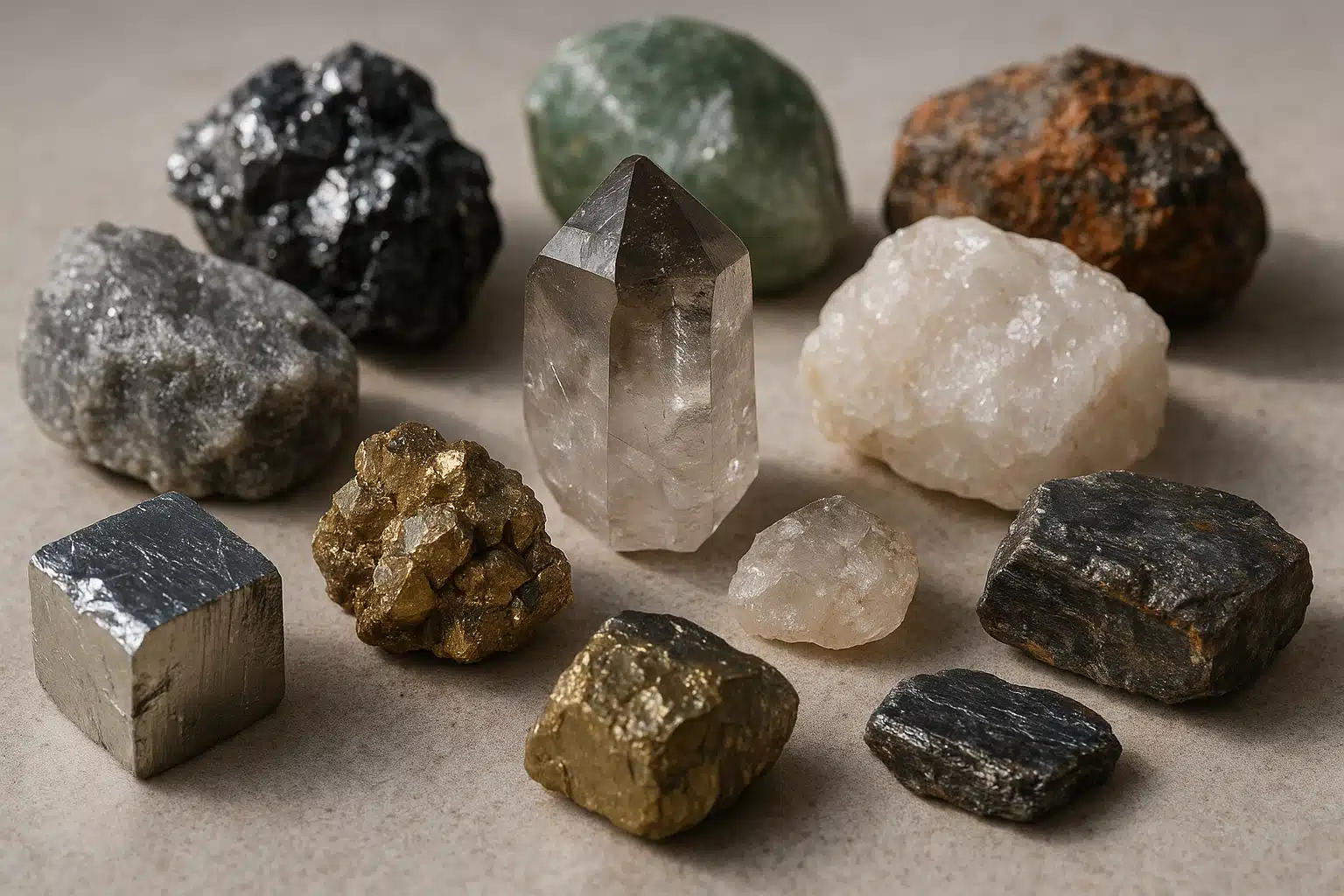
What is Mineral Luster?
Luster describes the appearance of a mineral’s surface when light reflects off it. It’s one of the most immediately observable properties of any mineral specimen and serves as a critical diagnostic feature. Unlike color, which can vary significantly within the same mineral species due to impurities, luster tends to be more consistent and reliable for identification purposes.
Think of luster as the quality of reflected light rather than the quantity. It answers the question: “How does this mineral shine?” rather than “How much does it shine?” This distinction is important because two minerals might both be bright, but one could have a metallic luster while the other has a glassy (vitreous) appearance—immediately placing them in different categories.
Geologists and mineralogists divide luster into two main categories: metallic and non-metallic. Within non-metallic luster, there are several subcategories that describe specific appearances. Understanding these distinctions will give you a systematic framework for mineral identification that’s used by professionals and enthusiasts around the world.
The Major Types of Mineral Luster
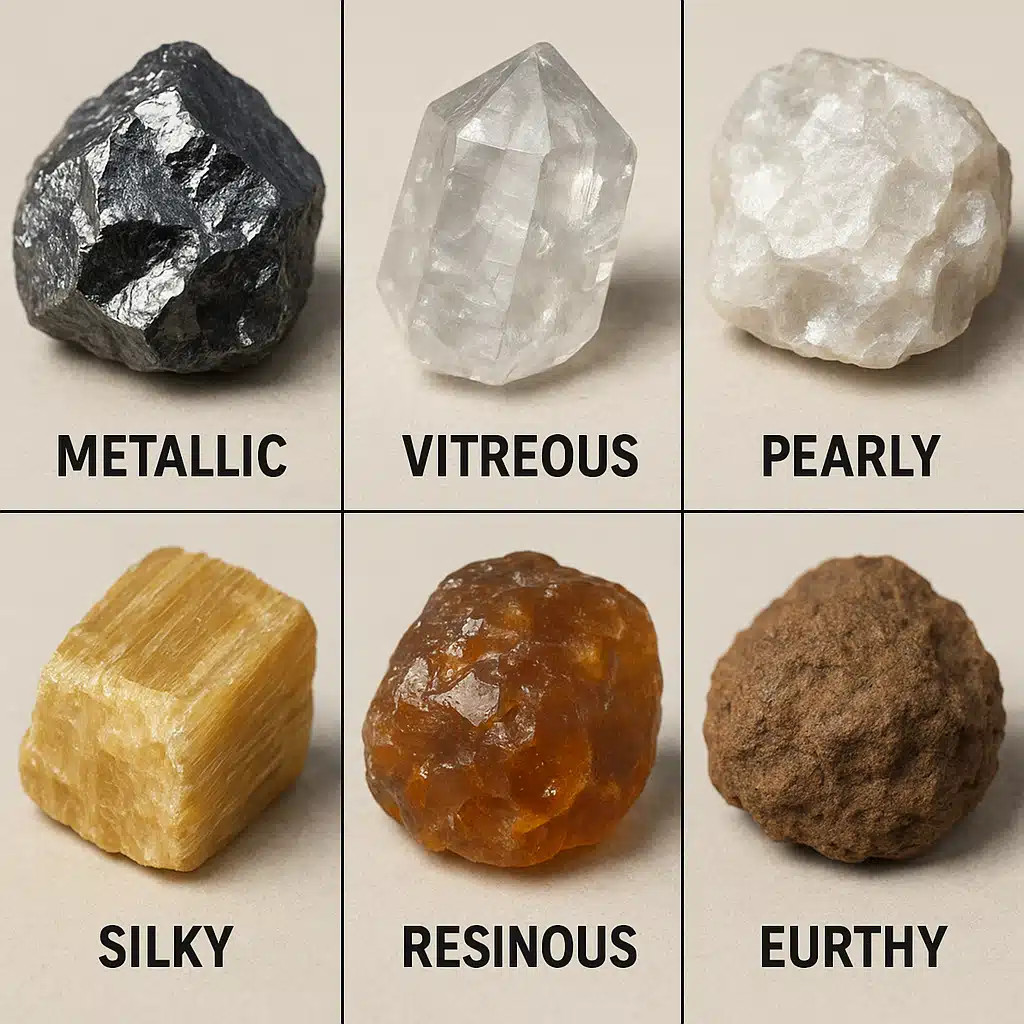
Metallic Luster
Metallic luster appears exactly as the name suggests—like polished or tarnished metal. Minerals with metallic luster are typically opaque, meaning light doesn’t pass through them even in thin sections. This luster is characteristic of native metals and many sulfide minerals. Examples include pyrite (fool’s gold), galena, and native copper. When you see a mineral that looks like it could be made of metal, you’re observing metallic luster. This property often correlates with higher density and specific gravity, making these minerals feel heavier than similarly sized non-metallic specimens.
Vitreous (Glassy) Luster
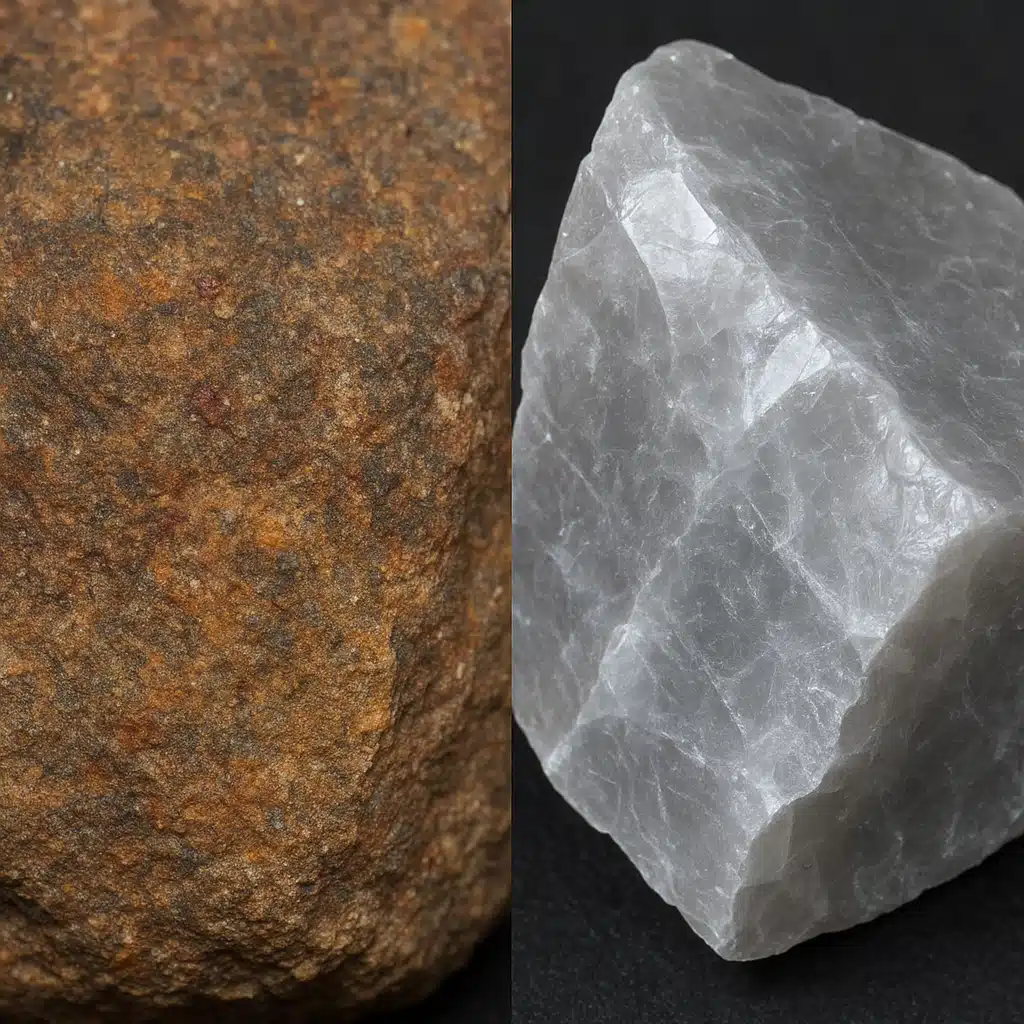
Vitreous luster resembles the appearance of broken glass—smooth, bright, and reflective. This is the most common type of luster among minerals, particularly silicates. Quartz, one of the most abundant minerals on Earth, exhibits excellent vitreous luster. Other examples include beryl, topaz, and tourmaline. The glassy appearance results from the way light interacts with the mineral’s crystalline structure, and it’s typically associated with minerals that have moderate to high transparency.
Pearly Luster
Pearly luster has a soft, iridescent quality similar to the interior of a pearl or an abalone shell. This luster often appears on minerals with a layered or platy structure, where light reflects from multiple parallel surfaces beneath the mineral’s exterior. Talc, muscovite mica, and some varieties of gypsum display pearly luster. When you tilt a mineral with pearly luster, you’ll notice a gentle play of light across its surface, creating a subtle shimmer that distinguishes it from the harder reflection of vitreous minerals.
Silky Luster
Silky luster resembles the sheen of silk fabric or satin ribbon. This appearance is caused by the presence of fine, parallel fibers within the mineral structure. Fibrous forms of gypsum (satin spar), asbestos minerals, and some varieties of malachite exhibit silky luster. The parallel arrangement of microscopic crystals creates a directional reflection that gives the characteristic silk-like appearance. This luster is often seen in minerals that have undergone specific formation processes involving aligned crystal growth.
Greasy or Oily Luster
Greasy luster gives the impression that the mineral’s surface has been coated with oil or grease, even when completely dry. This appearance results from light scattering across a slightly irregular surface. Graphite is a classic example, often feeling slippery to the touch while also appearing greasy. Some specimens of nepheline and certain weathered surfaces of other minerals also display this luster. The greasy appearance can sometimes be subtle and is best observed under good lighting conditions.
Resinous Luster
Resinous luster looks like hardened tree resin or amber—somewhere between glassy and greasy but with its own distinct character. Sphalerite (zinc sulfide) commonly displays resinous luster, as do some varieties of sulfur and certain forms of opal. This luster suggests a somewhat softer, warmer reflection than vitreous minerals, with light penetrating slightly into the mineral before reflecting back.
Adamantine Luster
Adamantine luster is the brilliant, sparkling quality seen in diamonds and a few other minerals with very high refractive indices. It’s the most brilliant of all non-metallic lusters, creating exceptionally bright reflections. Besides diamond, minerals like cerussite, anglesite, and some varieties of zircon display adamantine luster. This luster is relatively rare and immediately distinctive when present, often indicating minerals with exceptional optical properties.
Dull or Earthy Luster
Dull or earthy luster shows little to no reflection—the surface appears matte and non-reflective, similar to dry clay or chalk. This luster is common in fine-grained or porous minerals, weathered surfaces, and minerals composed of microscopic crystals. Kaolinite (china clay), limonite, and bauxite typically exhibit dull luster. While it might seem like the least interesting luster type, it’s extremely important for identifying certain economically valuable minerals and understanding weathering processes.
Why Understanding Luster is Essential for Mineral Identification
Luster serves as a primary diagnostic property because it directly reflects a mineral’s chemical composition and internal structure. When combined with other properties like hardness, streak, crystal form, and cleavage, luster helps narrow down possibilities quickly and accurately.
For example, if you find a mineral with metallic luster, you’ve immediately eliminated the vast majority of non-metallic minerals from consideration. You can then focus on properties that distinguish between various metallic minerals—perhaps testing hardness or observing the streak color. This systematic approach makes identification far more efficient than random guessing.
Additionally, luster can provide clues about a mineral’s practical applications. Minerals with metallic luster are often ore minerals containing valuable metals. Those with vitreous luster and other desirable properties might be gemstones. Minerals with greasy luster, like graphite, often have lubricating properties. Understanding these connections helps you appreciate not just what a mineral is, but why it matters.
The consistency of luster across specimens of the same mineral also makes it particularly valuable. While color can vary dramatically—for instance, quartz can be clear, purple, pink, yellow, brown, or black—the vitreous luster remains constant. This reliability makes luster one of the most trustworthy identification characteristics available.
How to Properly Observe and Evaluate Luster
Accurately assessing luster requires proper technique and favorable conditions. Here’s a comprehensive approach to evaluating this important property:
Ensure Adequate Lighting
Natural daylight is ideal for observing luster, as it provides full-spectrum illumination without color distortion. If working indoors, use bright white light rather than yellow incandescent bulbs, which can affect your perception of the mineral’s appearance. A good-quality LED flashlight or headlamp is an excellent tool for field work and allows you to control the angle and intensity of illumination.
Examine a Fresh Surface
Weathering, oxidation, and surface contamination can significantly alter a mineral’s apparent luster. Whenever possible, examine a freshly broken surface or a clean, unweathered face of the specimen. This is particularly important for minerals that tarnish easily or develop weathering coatings. If you’re collecting in the field, bringing a small rock hammer allows you to create fresh surfaces for more accurate observation.
Rotate and Tilt the Specimen
Luster can appear different from various angles, especially with pearly, silky, or metallic minerals. Slowly rotate the specimen while observing how light reflects from its surface. Tilt it toward and away from your light source. This movement helps you understand the quality of reflection and can reveal subtle characteristics that distinguish one luster type from another.
Compare with Reference Specimens
Building a personal reference collection of minerals with known luster types provides invaluable comparison standards. When evaluating an unknown specimen, placing it alongside a mineral with confirmed vitreous luster, for example, makes subtle differences immediately apparent. Many educational mineral sets are organized specifically to demonstrate various physical properties including luster.
Use Magnification When Necessary
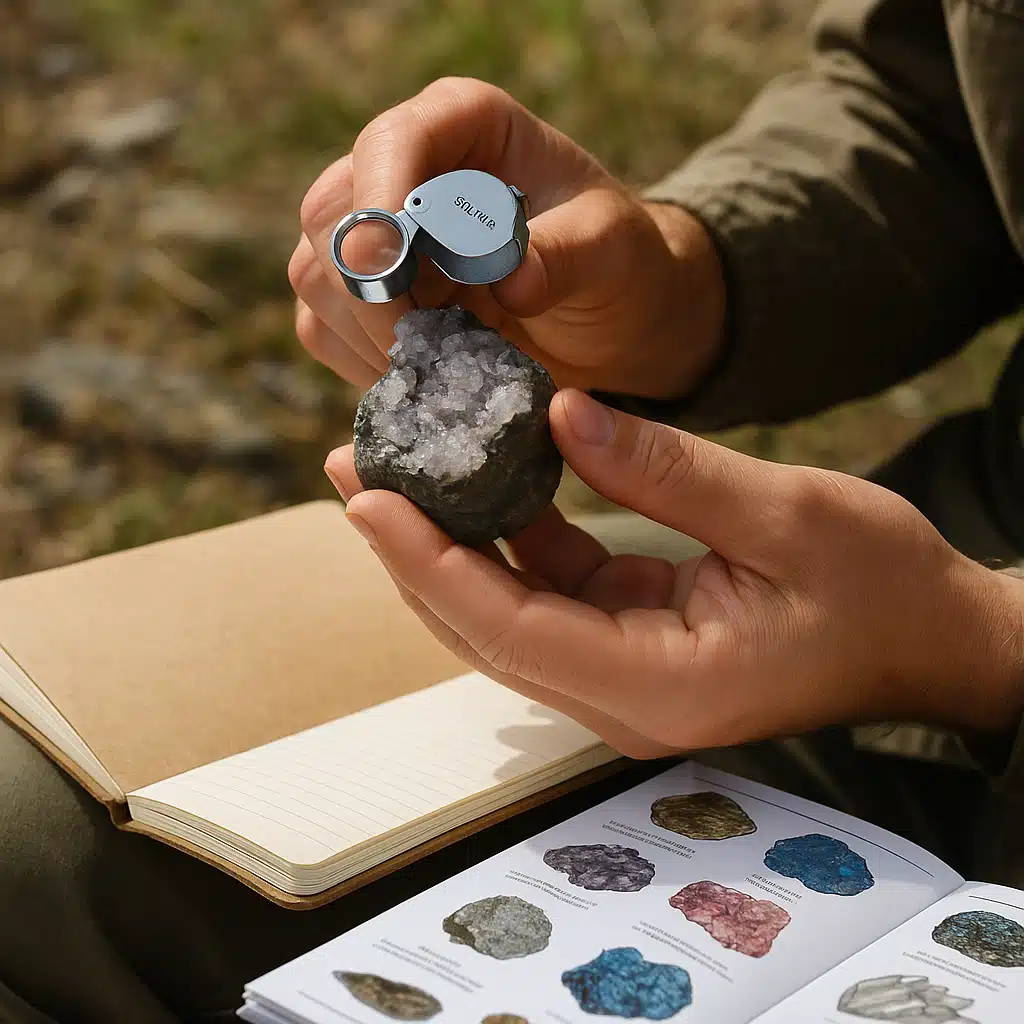
A hand lens (typically 10x magnification) can help you observe fine details that affect luster, such as the presence of tiny parallel fibers (silky luster) or microcrystalline surfaces (dull or earthy luster). Magnification also helps distinguish between a truly smooth vitreous surface and one that only appears smooth to the naked eye.
Common Mistakes and Misconceptions About Luster
Confusing Luster with Brightness
One of the most common mistakes is equating luster with how bright or shiny a mineral appears. Luster describes the quality of reflected light, not the quantity. A mineral can have strong vitreous luster even if it’s dark colored and doesn’t appear particularly bright. Conversely, a light-colored mineral with dull luster might appear bright due to its color but still lacks reflective quality.
Assuming Shiny Means Valuable
The brilliance of a mineral’s luster has no direct correlation with its economic or collectible value. Pyrite has excellent metallic luster but is relatively common and inexpensive. Meanwhile, some highly valuable rare earth minerals may have quite ordinary, even dull luster. Value depends on rarity, demand, industrial applications, and aesthetic appeal—not luster alone.
Overlooking Surface Conditions
Weathered, dirty, or wet surfaces can completely misrepresent a mineral’s true luster. A wet mineral almost always appears more lustrous than when dry. Weathering products, such as iron oxides or carbonate coatings, can obscure the original luster entirely. Always clean specimens when possible and observe dry surfaces for accurate assessment.
Relying on Luster Alone
While luster is an important diagnostic property, it should never be used in isolation. Effective mineral identification requires evaluating multiple properties systematically. Two entirely different minerals might share the same luster type, so you must also consider hardness, specific gravity, crystal form, cleavage, fracture, streak, and other characteristics to make a confident identification.
Practical Applications: Using Luster in the Field
When you’re out collecting specimens or examining minerals in their natural setting, luster becomes one of your first and most accessible diagnostic tools. Here’s how to apply your knowledge effectively:
Begin with the fundamental question: metallic or non-metallic? This single observation immediately divides the mineral kingdom into two broad groups. If metallic, you’re likely looking at a sulfide mineral, a native metal, or possibly an oxide. If non-metallic, you can then refine further by identifying the specific type—vitreous, pearly, greasy, and so on.
Create a systematic observation routine. When you encounter a new specimen, first ensure you have good lighting. Clean any dirt from the surface if possible. Observe a fresh face if available. Note the luster type, then proceed to test hardness, examine any crystal faces or cleavage, and check other diagnostic properties. Recording your observations in a field notebook creates a valuable personal reference over time.
Photography can help document luster, though it’s challenging to capture accurately. Take photos from multiple angles under consistent lighting. Note that camera sensors and image processing can alter appearance, so in-person observation remains the gold standard.
Building Your Skills: Practice and Resources
Like any observational skill, accurately identifying luster improves dramatically with practice. Start by familiarizing yourself with clear examples of each luster type. Educational mineral collections specifically designed for teaching physical properties are excellent investments for beginners.
Visit natural history museums, university geology departments, or rock and mineral clubs where you can examine well-documented specimens. Many institutions offer public viewing hours or educational programs. Handling confirmed examples while reading their labels creates powerful learning associations.
Online resources, including mineral databases with high-quality photographs, can supplement hands-on learning. However, remember that photographs cannot fully capture the three-dimensional, interactive nature of luster observation. Use them for general reference, but prioritize direct examination whenever possible.
Join local or online communities of mineral collectors and enthusiasts. These groups often organize field trips, swap meets, and identification workshops where experienced collectors share knowledge with beginners. The collective expertise in these communities is invaluable for developing your skills.
Consider starting a personal reference collection organized by physical properties. Having a “luster collection” with confirmed examples of metallic, vitreous, pearly, silky, greasy, resinous, adamantine, and dull luster creates an immediately accessible comparison standard. Label each specimen clearly with its name and the property it demonstrates.
Advanced Considerations: When Luster Varies
Some minerals display different luster on different crystal faces or surfaces. For example, certain minerals might show vitreous luster on crystal faces but pearly luster on cleavage surfaces. This variation itself becomes a diagnostic feature for experienced collectors.
Weathering processes can systematically alter luster. Fresh surfaces of some copper minerals show metallic luster, but weathered surfaces develop dull, earthy green or blue coatings. Understanding these transformations helps you look beyond surface appearances to identify the underlying mineral.
Massive versus crystalline forms of the same mineral can display noticeably different luster. Well-formed crystals typically show the mineral’s characteristic luster most clearly, while massive or granular forms might appear duller or less distinctive.
Conclusion: Mastering Luster for Confident Identification
Understanding mineral luster transforms mineral identification from guesswork into systematic science. By learning to recognize and accurately describe how minerals reflect light—whether with the brilliant flash of adamantine luster, the metallic gleam of pyrite, the glassy smoothness of quartz, or the soft sheen of talc—you gain a powerful diagnostic tool used by professionals worldwide.
Remember that luster is just one piece of the identification puzzle, but it’s often the first piece you’ll observe and one of the most reliable. Combined with careful observation of other physical properties, it enables confident identification of specimens from virtually anywhere on Earth.
The journey from curious beginner to confident identifier requires patience, practice, and persistence. Build your reference collection, spend time examining diverse specimens, and don’t hesitate to seek guidance from experienced collectors. Every mineral you examine teaches something new, and each successful identification reinforces your growing expertise.
Whether you’re collecting minerals as a hobby, studying geology academically, or simply fascinated by the natural world, mastering luster observation enriches your understanding and appreciation of these remarkable natural formations. The next time you pick up a mineral specimen, take a moment to really observe how it interacts with light—you’ll see not just a rock, but a window into the Earth’s geological processes and chemical diversity.