Have you ever picked up a beautiful stone and wondered what it might be? For those new to the fascinating world of minerals and gemstones, distinguishing between different crystals can seem challenging at first. This comprehensive guide explores quartz—the most abundant crystalline mineral on Earth—and provides you with the knowledge to identify it confidently and understand what makes it unique compared to other precious and semi-precious stones.
Introduction to Crystal Identification
Quartz is far more than just another mineral—it’s a cornerstone of our planet’s geology and a material that has fascinated humans for thousands of years. Whether you encounter it in jewelry, decorative objects, healing crystals, or natural geological formations, understanding quartz opens up a deeper appreciation for the mineral world around us.
This guide will walk you through everything you need to know about identifying quartz, understanding its varieties, and distinguishing it from similar-looking minerals and gemstones. Whether you’re a curious beginner, a jewelry enthusiast, or someone interested in minerals and geology, this information will help you develop a more informed eye for crystal identification.
What Exactly is Quartz?
Quartz is a crystalline mineral composed of silicon dioxide (SiO₂), one of the most abundant chemical compounds found in Earth’s continental crust. Its molecular structure creates a remarkably stable crystal formation that can withstand various environmental conditions, which explains why it’s found virtually everywhere on our planet.
The prevalence of quartz means it appears in countless contexts—from the sand on beaches to the components in electronic devices, from affordable jewelry pieces to collector’s specimens. Its versatility stems from its durability, variety of colors, and the ease with which it can be shaped and polished.
What makes quartz particularly interesting is its ability to form in different conditions, resulting in numerous varieties that range from perfectly clear to deeply colored, from transparent to completely opaque. This diversity is part of what makes quartz identification both challenging and rewarding.
Key Characteristics for Identifying Quartz
Learning to identify quartz becomes much easier when you know which specific characteristics to examine. Here are the fundamental properties that will help you recognize quartz specimens:
Color Variations
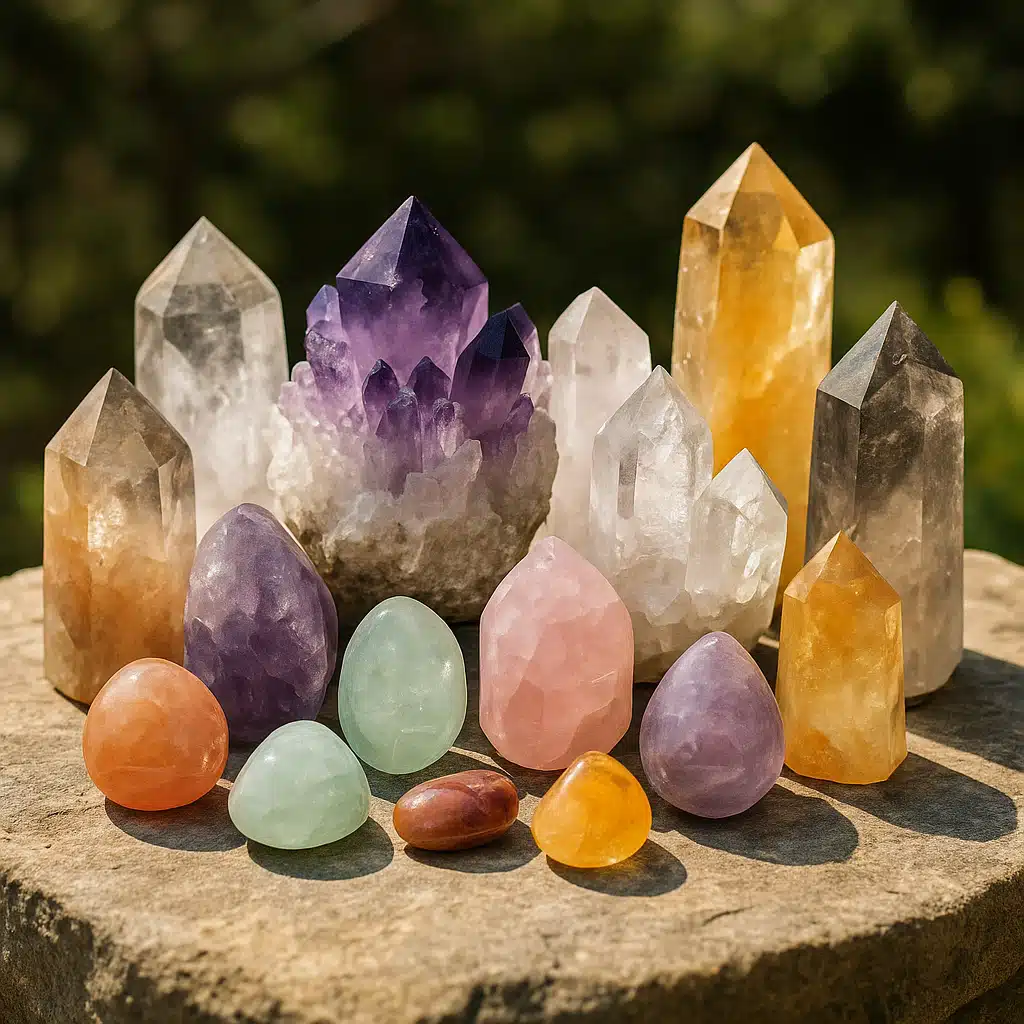
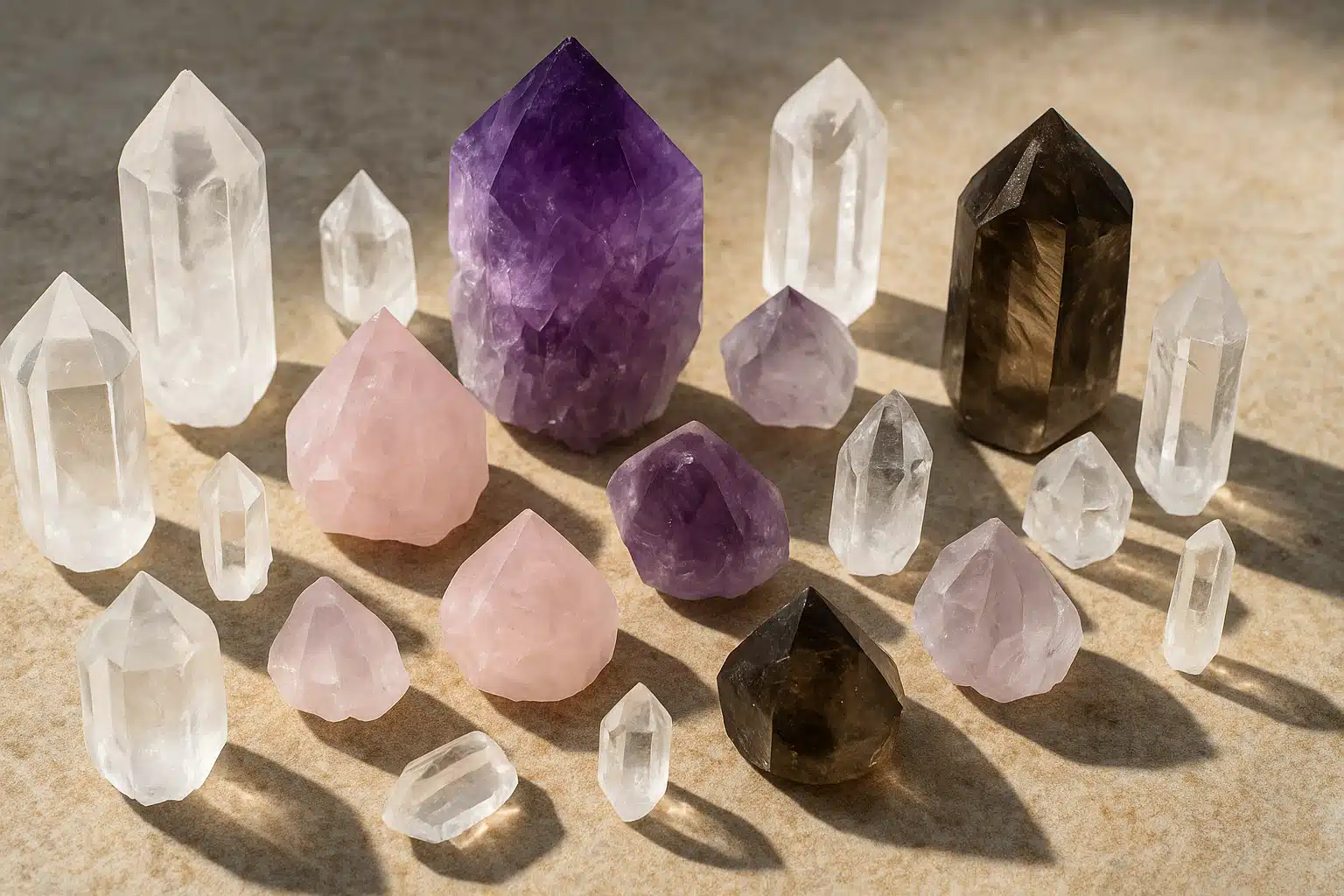
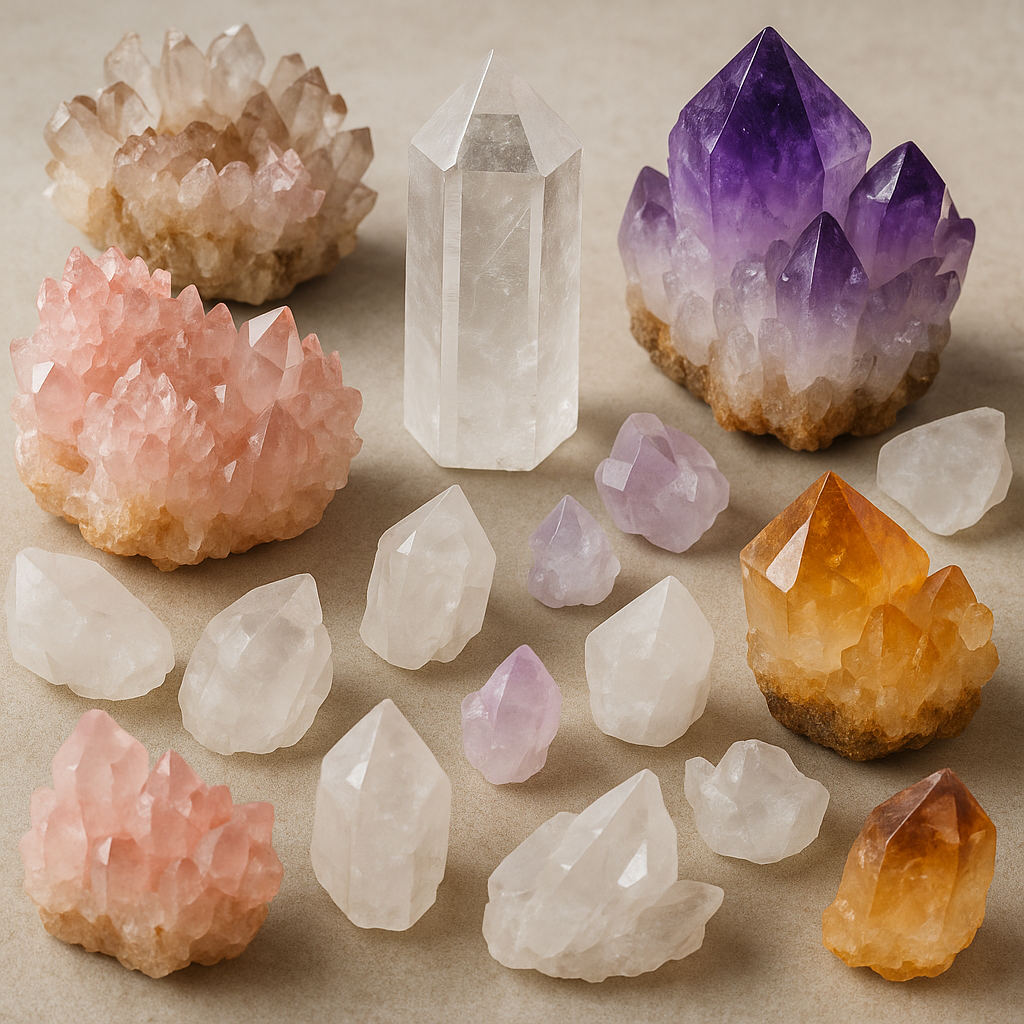
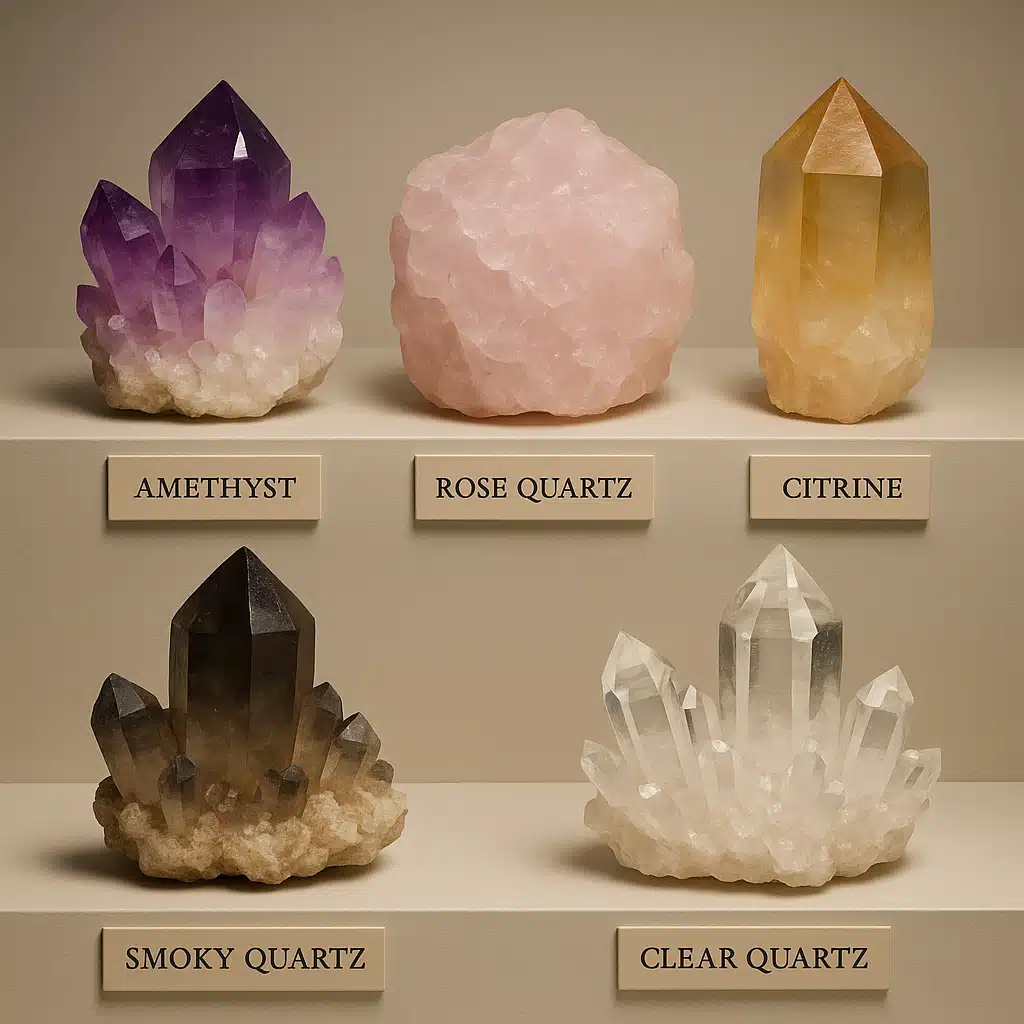
Quartz exhibits an impressive spectrum of colors, though pure quartz is actually completely colorless and transparent (known as rock crystal). The various hues you see in quartz specimens result from trace minerals, radiation exposure, or inclusions of other materials during formation. Common colors include clear, white (milky quartz), purple, pink, yellow, brown, gray, and even black.
Hardness and Durability
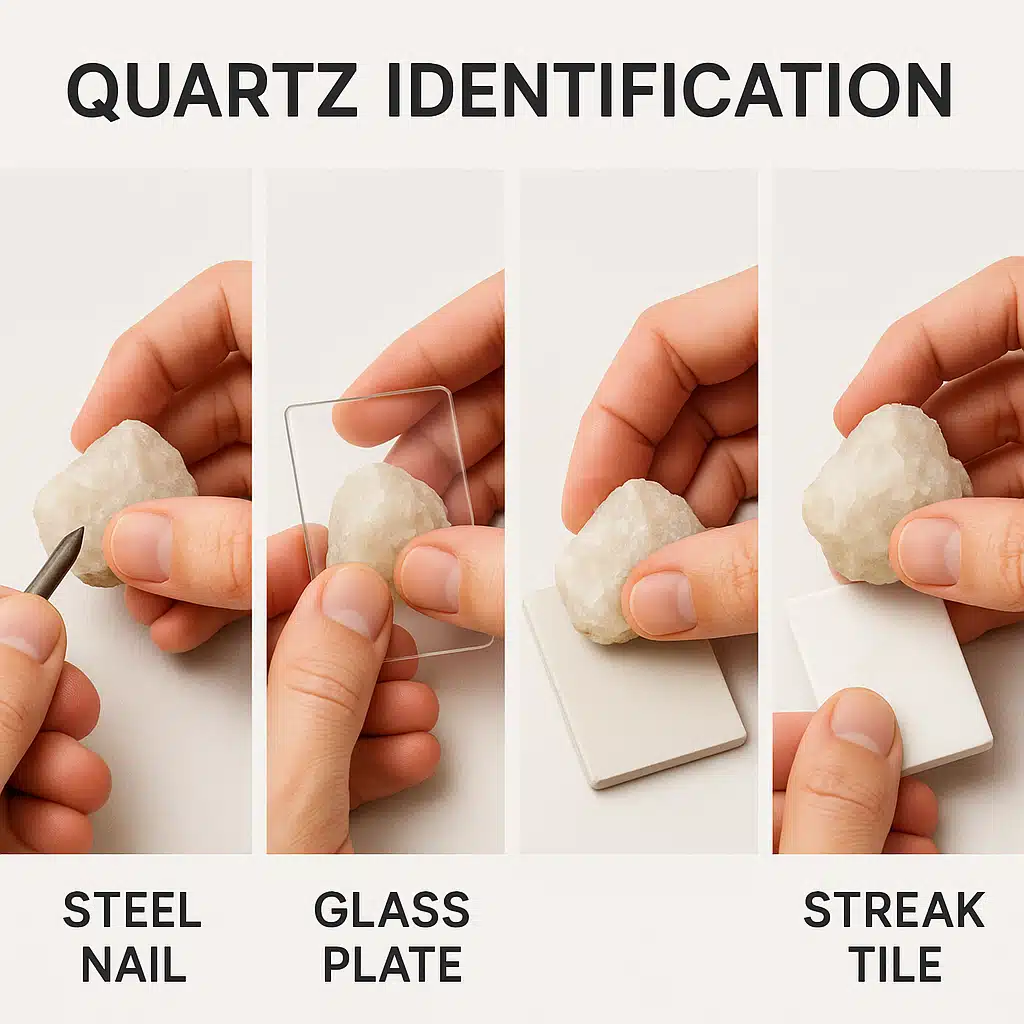
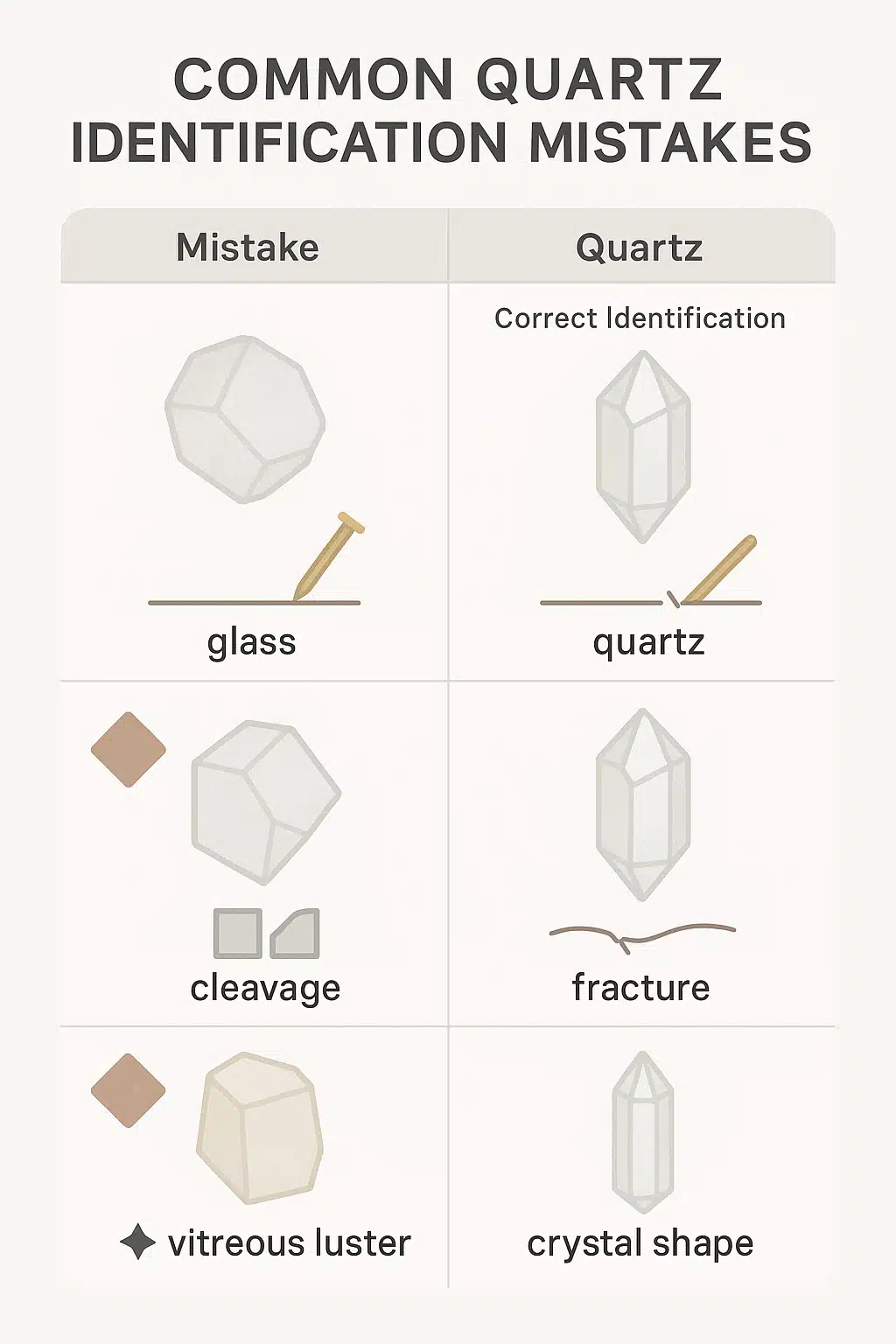
Quartz ranks at 7 on the Mohs hardness scale, which measures a mineral’s resistance to scratching. This places it firmly in the “hard” category—it will scratch glass (which rates around 5.5) and most steel, but can be scratched by harder minerals like topaz, sapphire, or diamond. This hardness makes quartz excellent for jewelry and decorative items that need to withstand regular handling.
Crystal Structure and Fracture Pattern
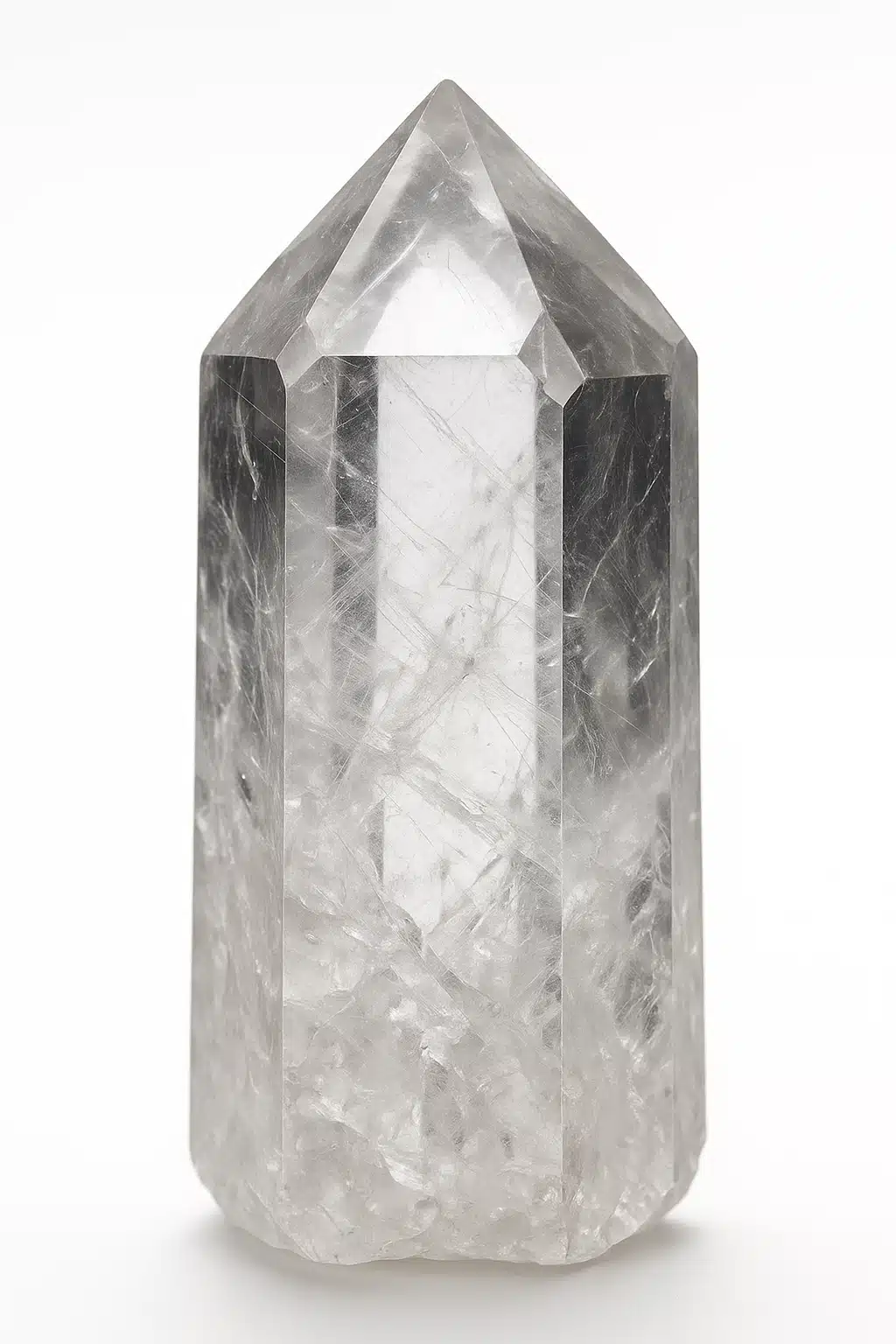
Unlike minerals that break along flat cleavage planes, quartz exhibits what’s called conchoidal fracture—it breaks with smooth, curved surfaces similar to broken glass. When quartz crystals form freely, they typically develop six-sided (hexagonal) prisms with pyramid-shaped terminations at the ends. However, many quartz specimens don’t show perfect crystal shapes because they formed in confined spaces or were broken from larger formations.
Luster and Transparency
Quartz displays a vitreous (glass-like) luster when polished or on freshly broken surfaces. Depending on the variety and inclusions present, quartz can range from completely transparent to translucent to opaque. This transparency variation is one of the factors that creates such diverse appearances among quartz types.
Popular Varieties of Quartz You Should Know
The quartz family includes numerous distinct varieties, each with unique characteristics and appeal. Understanding these common types will significantly expand your ability to identify quartz in various contexts:
Amethyst
Perhaps the most famous colored variety, amethyst displays purple to violet hues ranging from pale lilac to deep purple. The color comes from iron impurities and natural irradiation within the Earth. Amethyst has been treasured throughout history and remains one of the most popular gemstones for jewelry, decorative objects, and crystal collections.
Rose Quartz
Recognized by its delicate pink to rose-red color, this variety gets its hue from trace amounts of titanium, iron, or manganese. Rose quartz typically appears translucent rather than transparent and is widely used in jewelry, carvings, and decorative items. It’s particularly popular in practices related to crystal healing and meditation.
Citrine
Displaying warm yellow to golden-orange tones, natural citrine is relatively rare compared to other quartz varieties. Much of the citrine available in the marketplace is actually heat-treated amethyst, which produces similar coloring. Natural citrine gets its color from iron impurities and is valued for its sunny, attractive appearance.
Smoky Quartz
Ranging from light gray to deep brown or nearly black, smoky quartz derives its color from natural radiation exposure affecting aluminum impurities in the crystal structure. This variety can be transparent to translucent and is appreciated for its sophisticated, neutral tones.
Rock Crystal
This is the colorless, transparent form of pure quartz. The name “rock crystal” dates back centuries when people believed these clear crystals were ice that had frozen so completely it would never melt. Rock crystal is used in jewelry, optical instruments, and various industrial applications.
Other Notable Varieties
Additional quartz varieties include milky quartz (white and translucent), rutilated quartz (containing golden needle-like rutile inclusions), aventurine (containing sparkling mica or other minerals), tiger’s eye (with chatoyant bands), and many others. Each variety has unique visual characteristics while maintaining the fundamental properties of quartz.
Distinguishing Quartz from Diamonds and Other Precious Stones
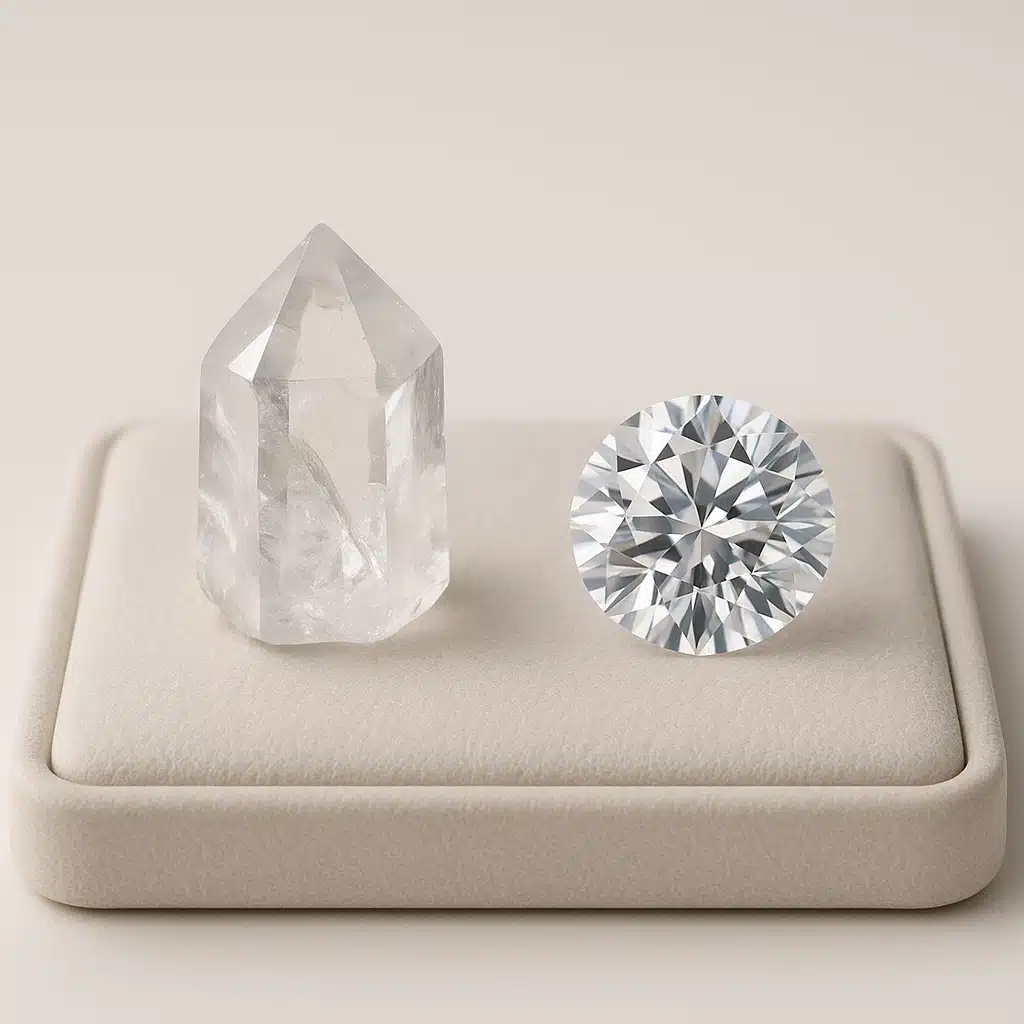
One of the most common questions in mineral identification concerns the difference between quartz and more valuable gemstones, particularly diamonds. While clear quartz can superficially resemble a diamond to the untrained eye, several distinct characteristics separate these minerals:
Hardness Differences
Diamonds rate 10 on the Mohs hardness scale—the hardest natural substance known. Quartz, at 7, is significantly softer. This means a diamond will easily scratch quartz, while quartz cannot scratch a diamond. However, for practical identification purposes, hardness testing can damage specimens and should be done cautiously or avoided with valuable stones.
Optical Properties and Brilliance
Diamonds possess exceptional brilliance and “fire”—the dispersion of white light into spectral colors—due to their high refractive index. When properly cut, diamonds sparkle intensely with rainbow flashes. Quartz, while it can be quite attractive when cut and polished, has a much lower refractive index and produces considerably less sparkle and fire. A diamond’s brilliance is immediately apparent even to casual observers when compared side-by-side with quartz.
Value and Market Price
The price difference between diamonds and quartz is substantial. Diamonds command premium prices based on the “four Cs” (cut, clarity, color, and carat weight), while quartz is far more affordable due to its abundance. If you’re purchasing what’s claimed to be a diamond at an unusually low price, it’s worth having it professionally verified, as it may actually be quartz or another diamond simulant.
Cutting and Faceting Styles
Because of their value, diamonds are typically cut with precise, complex faceting patterns designed to maximize brilliance—such as round brilliant, princess, or emerald cuts. Quartz, being more abundant and less expensive, is often found in simpler cuts, cabochons (smooth, rounded shapes), or even in natural crystal form. However, high-quality quartz can also receive elaborate faceting, so cut alone isn’t a definitive identifier.
Comparing Quartz to Other Gemstones
Beyond diamonds, quartz can be confused with various other minerals. Clear quartz might resemble topaz or white sapphire; amethyst could be mistaken for purple sapphire or tanzanite; citrine might look similar to yellow topaz or yellow sapphire. Generally, these other gemstones are harder than quartz, have different refractive properties, and command higher prices. Professional gemological testing can definitively distinguish between these minerals.
Common Misconceptions About Quartz Identification
As you develop your skills in identifying quartz, it’s helpful to understand common misconceptions that can lead to confusion:
Clarity Doesn’t Equal Value
A perfectly clear, sparkling stone isn’t automatically a diamond or other precious gemstone. Clear quartz can be beautifully transparent and reflective, especially when well-cut and polished. The clarity and shine of a mineral specimen don’t directly indicate its rarity or monetary value—quartz proves this perfectly by being both common and potentially quite beautiful.
Not All “Crystals” Are Quartz
In popular usage, the term “crystal” often refers to quartz, but technically, a crystal is any solid material whose constituents are arranged in a highly ordered microscopic structure. Many minerals form crystals—including diamonds, emeralds, rubies, salt, and countless others. When someone refers to “crystals” in the context of healing stones or metaphysical practices, they often mean quartz specifically, but this isn’t universally true.
Color Doesn’t Always Indicate Authenticity
Some people assume that colored stones are more valuable or rare than clear ones, but this isn’t necessarily true with quartz. While natural colored varieties like fine amethyst or natural citrine are beautiful, they’re still relatively common compared to truly rare gemstones. Additionally, many quartz specimens in the marketplace have been heat-treated or otherwise enhanced to improve or change their color, which is an accepted practice as long as it’s disclosed.
Size Isn’t a Reliable Indicator
Unlike diamonds and many precious gemstones where size significantly increases rarity and value, quartz can form in extremely large crystals. Some of the largest natural crystals ever discovered are quartz. Therefore, a large clear stone is more likely to be quartz than diamond simply because large quartz formations are geologically common while large diamonds are exceptionally rare.
Perfect Appearance Might Indicate Synthetic Origin
Ironically, a “too perfect” specimen might actually be synthetic or lab-grown rather than natural. Both quartz and many other minerals can be synthesized in laboratories, often producing specimens with fewer inclusions and more uniform color than natural examples. Synthetic quartz isn’t necessarily inferior—it has many important industrial applications—but it should be accurately represented as such.
Practical Tips for Building Your Identification Skills
Developing confidence in identifying quartz and other minerals takes practice and exposure. Here are practical steps you can take to improve your skills:
Handle authenticated specimens: Visit mineral shops, museums, or gem and mineral shows where you can examine confirmed examples of various quartz types and compare them with other minerals. Physical interaction with known specimens builds intuitive recognition that’s difficult to develop from photos alone.
Invest in basic tools: A simple 10x loupe (magnifying glass), a hardness testing kit, and a good field guide to minerals can significantly enhance your identification abilities. These tools are affordable and provide hands-on ways to examine the characteristics discussed in this guide.
Join communities: Online forums, social media groups, and local mineral clubs connect you with experienced collectors who can answer questions and provide identification help. Many enthusiasts are generous with their knowledge and happy to assist beginners.
Document your findings: Keep notes or a journal of specimens you examine, including where you found them (if collecting in nature), their characteristics, and what you identify them as. This creates a personal reference library and helps you track your learning progress.
Understand your limitations: Recognize when professional gemological testing is necessary, especially for valuable specimens or when making purchasing decisions. Certified gemologists have specialized equipment and training that can provide definitive identification beyond what visual inspection alone can achieve.
Conclusion: Appreciating Quartz in All Its Forms
Quartz stands as one of nature’s most versatile and beautiful minerals, and learning to identify it opens a window into the geological processes that shape our planet. While it may lack the monetary value of diamonds and other precious gemstones, quartz offers its own rewards—accessibility, variety, and the satisfaction of understanding the natural world at a deeper level.
By familiarizing yourself with quartz’s key characteristics—its hardness, luster, fracture pattern, and diverse color varieties—you’ll develop the foundation for broader mineral identification skills. Understanding how quartz differs from diamonds and other gemstones protects you from potential misidentification and helps you appreciate each mineral for its unique properties rather than confusing one for another.
Whether you’re examining a specimen you found during a hike, considering a jewelry purchase, building a mineral collection, or simply cultivating curiosity about the natural world, the knowledge you’ve gained here will serve you well. Remember that expertise develops gradually through observation, comparison, and hands-on experience with authentic specimens.
Quartz reminds us that abundance doesn’t diminish beauty, and that understanding the common and familiar can be just as rewarding as seeking the rare and exotic. As you continue exploring the world of minerals and crystals, you’ll find that each specimen—whether quartz or otherwise—has a story to tell about the Earth’s history and the remarkable processes that create the mineral diversity we enjoy today.