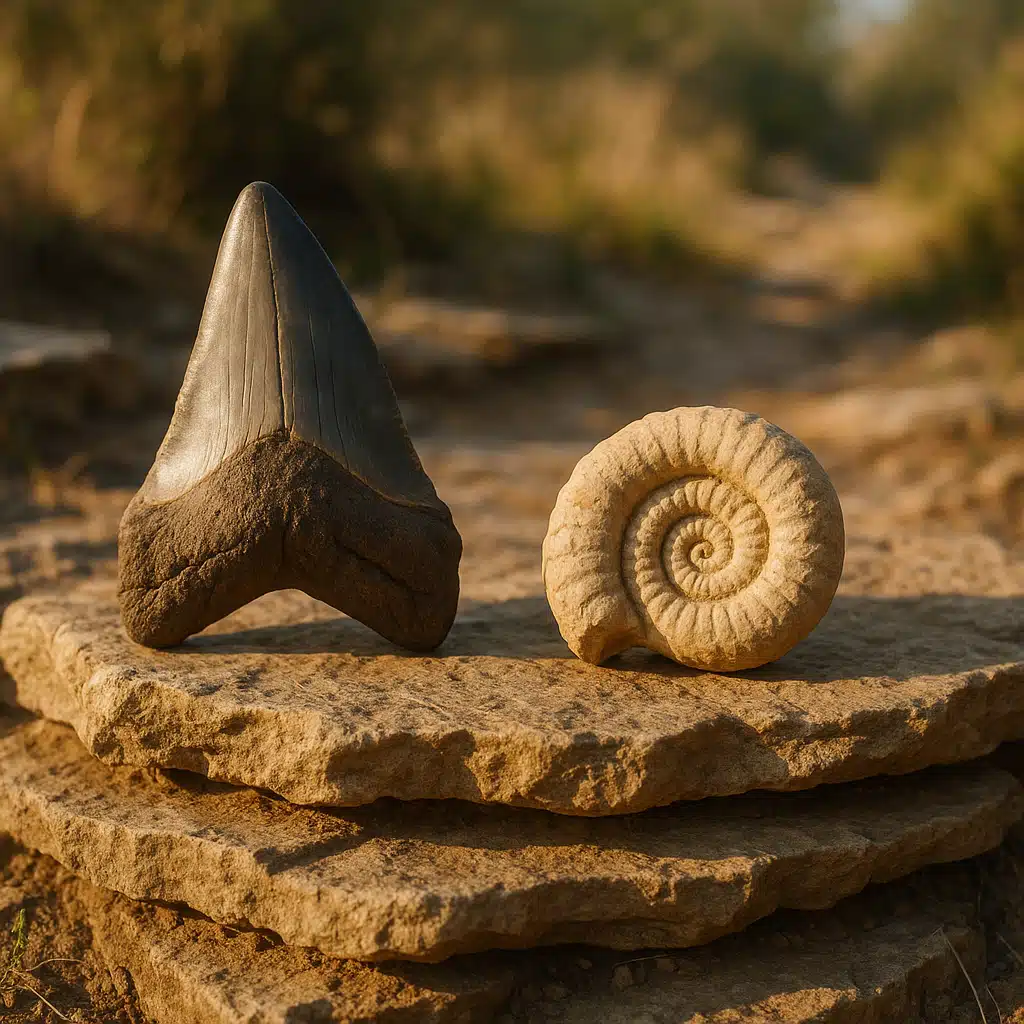
Discovering unusual objects during outdoor explorations can be an exciting experience. That smooth, dark triangle or spiral-shaped object you found might not be an ordinary stone—it could be a fossil millions of years old. Marine fossils, particularly shark teeth and shells, are surprisingly common in areas far from modern coastlines, offering tangible connections to ancient oceans that once covered much of our planet’s surface.
This comprehensive guide will help you understand, identify, and appreciate these remarkable remnants of prehistoric marine life, whether you’re a casual nature enthusiast, an amateur paleontologist, or simply curious about the treasures hidden beneath our feet.
The Fascinating World of Marine Fossils
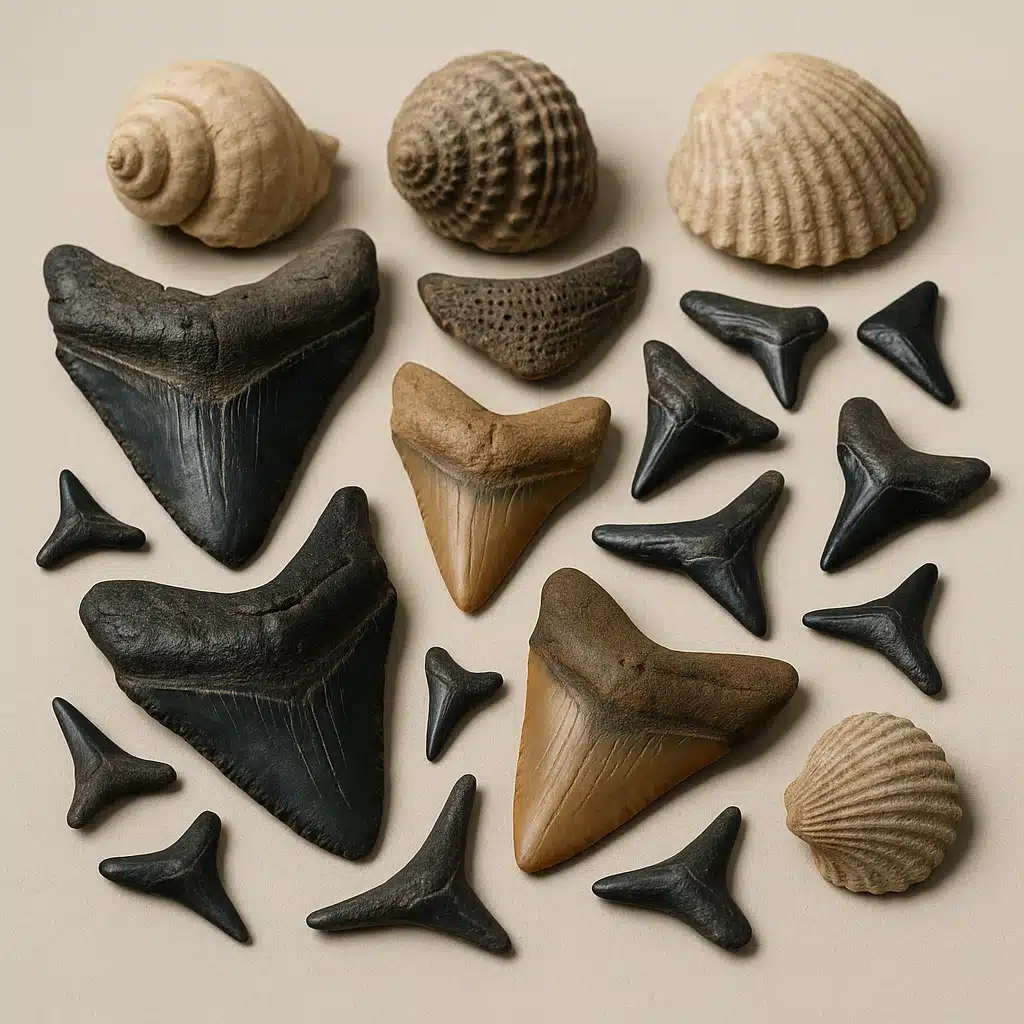
Marine fossils serve as windows into Earth’s distant past, preserving evidence of life forms that inhabited our planet’s oceans tens or even hundreds of millions of years ago. These preserved remains tell stories of ancient ecosystems, climate patterns, and the evolution of life itself.
What makes marine fossils particularly intriguing is their widespread distribution. You don’t need to live near an ocean to find them—many inland areas were once submerged beneath prehistoric seas. Continental drift, sea level changes, and geological uplifting have transformed ancient ocean floors into the landscapes we inhabit today, leaving behind fossilized evidence of their aquatic past.
Shark Teeth: Ancient Predators’ Signatures
Shark teeth are among the most commonly found marine fossils, and for good reason. Unlike most vertebrates that replace their teeth only once or twice in a lifetime, sharks continuously produce new teeth throughout their lives. A single shark can shed thousands of teeth over its lifespan, and with sharks having existed for over 400 million years, the cumulative number of fossilized teeth is staggering.
These teeth are composed of a dense mineral structure that resists decomposition, making them excellent candidates for fossilization. When a shark loses a tooth, it sinks to the ocean floor where sediment gradually buries it. Over millions of years, minerals replace the original tooth structure, creating a durable fossil that can survive geological processes that destroy softer organic materials.
Shells: Protective Homes Turned Timeless Records
Fossilized shells represent the preserved remains of marine invertebrates, primarily mollusks such as clams, snails, oysters, and ammonites. These creatures secreted calcium carbonate to build protective outer coverings during their lifetimes. After death, these hard shells often became buried in sediment, where they underwent the same mineralization process as shark teeth.
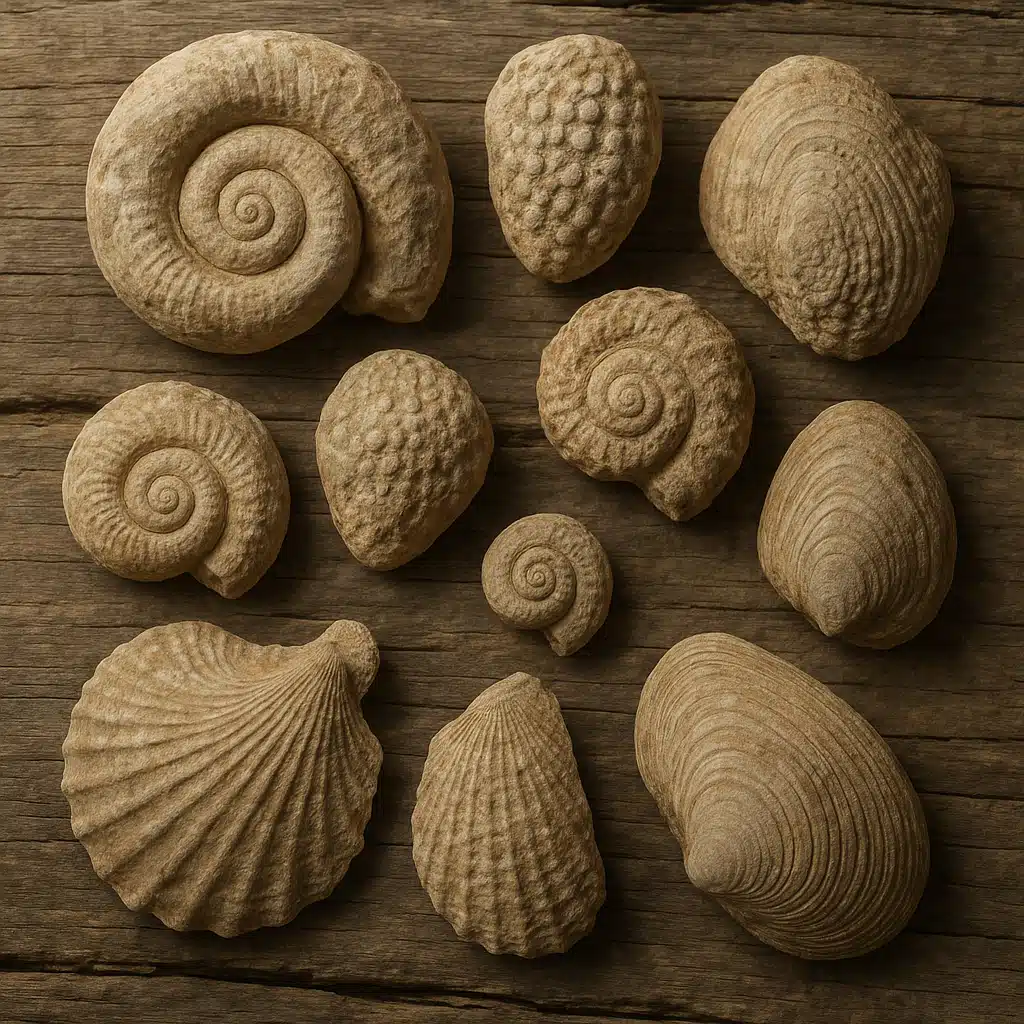
Shell fossils come in remarkable variety—spiral gastropods, ribbed bivalves, chambered nautiloids, and many others. Each shape reflects the specific lifestyle and environmental adaptations of the creature that built it. Some shells show evidence of predation, growth patterns, or environmental stress, making them valuable scientific records beyond their aesthetic appeal.
Ancient Oceans and Modern Landscapes
The presence of marine fossils in landlocked areas might seem puzzling at first, but it reflects the dynamic nature of our planet’s surface over geological time. Earth’s history includes numerous periods when sea levels were dramatically higher than today, submerging vast continental areas under shallow seas.
Sea Level Fluctuations Through Time
Sea levels have risen and fallen repeatedly throughout Earth’s history due to several interconnected factors. During ice ages, massive amounts of water became locked in glaciers and ice sheets, causing sea levels to drop significantly. Conversely, during warmer periods, melting ice returned water to the oceans, flooding low-lying continental areas.
Tectonic plate movements also play a crucial role. As continents drift and collide, land can be thrust upward or submerged. Ocean basins change shape and volume, displacing water onto continental margins. Areas that were once deep ocean floors can become mountain ranges, while coastal plains can sink beneath the waves.
Geological Time: Understanding Earth’s Calendar
Geological time operates on scales almost incomprehensible to human experience. The fossils you might find today could be from creatures that lived 5 million, 50 million, or even 500 million years ago. Geologists divide this vast timeline into hierarchical units:
- Eons: The largest divisions, spanning hundreds of millions to billions of years
- Eras: Major divisions marked by significant biological or geological changes
- Periods: Subdivisions characterized by distinct fossil assemblages
- Epochs: Smaller time units reflecting more subtle changes
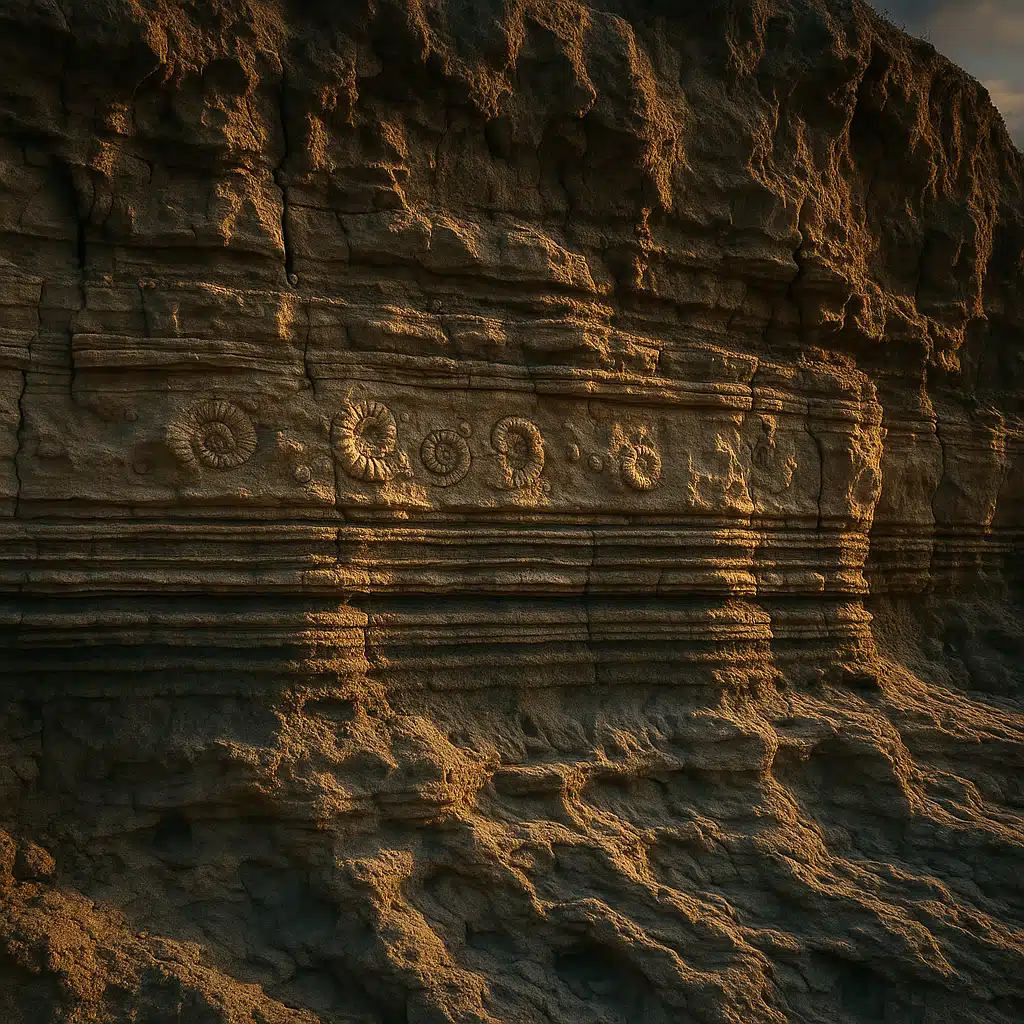
Rock layers, or strata, preserve this timeline. Deeper layers are generally older, with each layer representing a snapshot of the environment at a particular time. By examining the fossils within these layers, scientists can reconstruct ancient ecosystems and track how life evolved over time.
How to Identify Shark Teeth and Shells
Distinguishing marine fossils from ordinary rocks and identifying specific types requires observation and knowledge of key characteristics. Here’s what to look for when examining potential finds.
Identifying Shark Teeth
Fossilized shark teeth possess several distinctive features that aid identification:
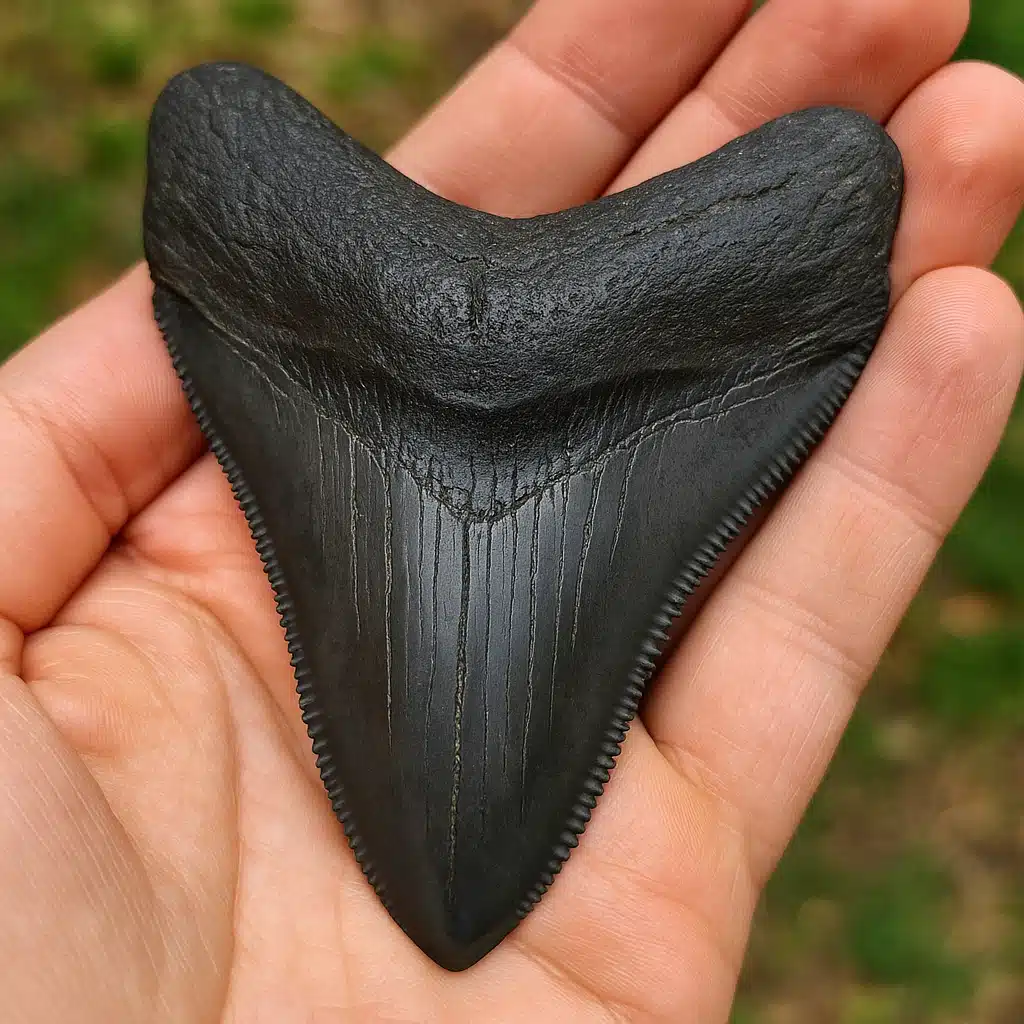
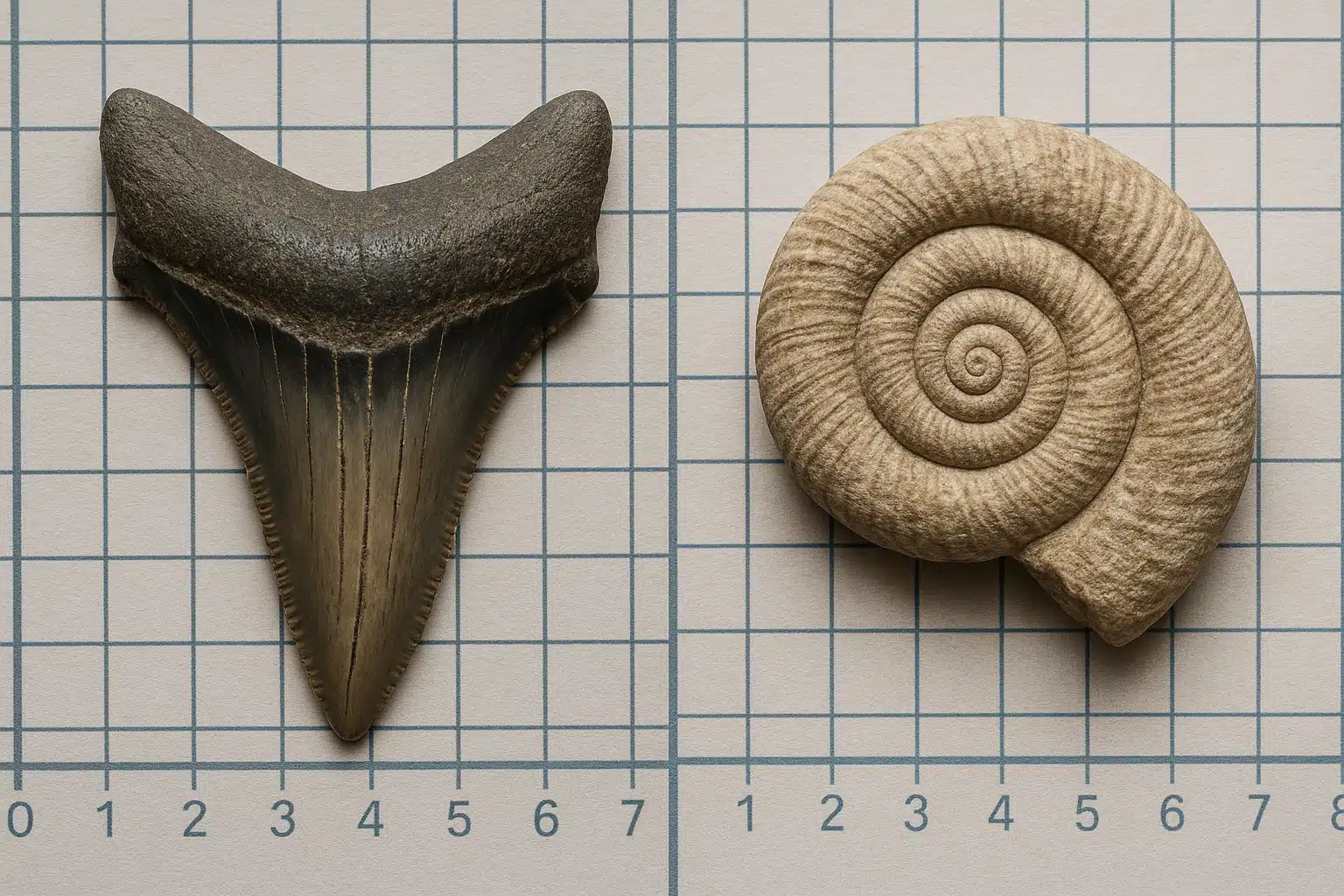
- Shape: Most shark teeth are triangular or blade-like, though some species have more specialized forms. The shape often indicates the shark’s diet and hunting strategy
- Serrations: Many shark teeth feature tiny, saw-like edges along one or both sides, designed for cutting through prey
- Root structure: The base of the tooth typically shows a distinctive root formation where it attached to the shark’s jaw
- Color: Fossilized shark teeth are often black, gray, or brown due to mineral replacement, though colors can vary based on the minerals present during fossilization
- Smooth enamel surface: Despite their age, shark teeth often retain a glossy, smooth surface on the crown
- Weight and density: Fossilized teeth are surprisingly heavy for their size due to mineral replacement
Size varies enormously depending on the species. Some teeth measure only a few millimeters, while prehistoric megalodon teeth can exceed 15 centimeters in length.
Identifying Fossilized Shells
Shell fossils display characteristics that distinguish them from rocks and other fossils:
- Distinct shape: Shells maintain recognizable forms—spirals, fans, tubes, or hinged pairs—even when fossilized
- Surface patterns: Look for growth lines, ribs, spines, or other ornamentation that served biological functions
- Layered structure: Broken shells may reveal internal chambers or layered construction
- Symmetry: Many shells display bilateral or radial symmetry uncommon in non-biological formations
- Texture variation: Shells often have different textures between interior and exterior surfaces
- Hollow or chambered interiors: Unlike solid rocks, shells were originally hollow or contained internal chambers
Preservation quality varies significantly. Some fossils retain fine details, while others may be partially dissolved, compressed, or replaced by different minerals, altering their appearance while maintaining basic structure.
Common Identification Challenges
Even experienced fossil hunters occasionally encounter specimens that prove difficult to identify. Understanding common sources of confusion can help avoid misidentification.
Shark Teeth vs. Other Fossils
Several types of fossils can be mistaken for shark teeth:
- Ray teeth and plates: Stingrays and their relatives have flattened, pavement-like teeth quite different from typical shark teeth
- Fish teeth: Bony fish teeth are generally smaller, more delicate, and lack the robust structure of shark teeth
- Reptile teeth: In areas with marine reptile fossils, mosasaur or ichthyosaur teeth might be confused with shark teeth, though they typically show a more conical shape and different root structure
- Worn bone fragments: Weathered bone can sometimes resemble tooth shapes but lacks the characteristic enamel surface and root structure
Careful examination of serrations, root structure, and surface texture usually resolves these ambiguities.
Shells vs. Rock Formations
Natural geological processes can create rock formations that superficially resemble shells:
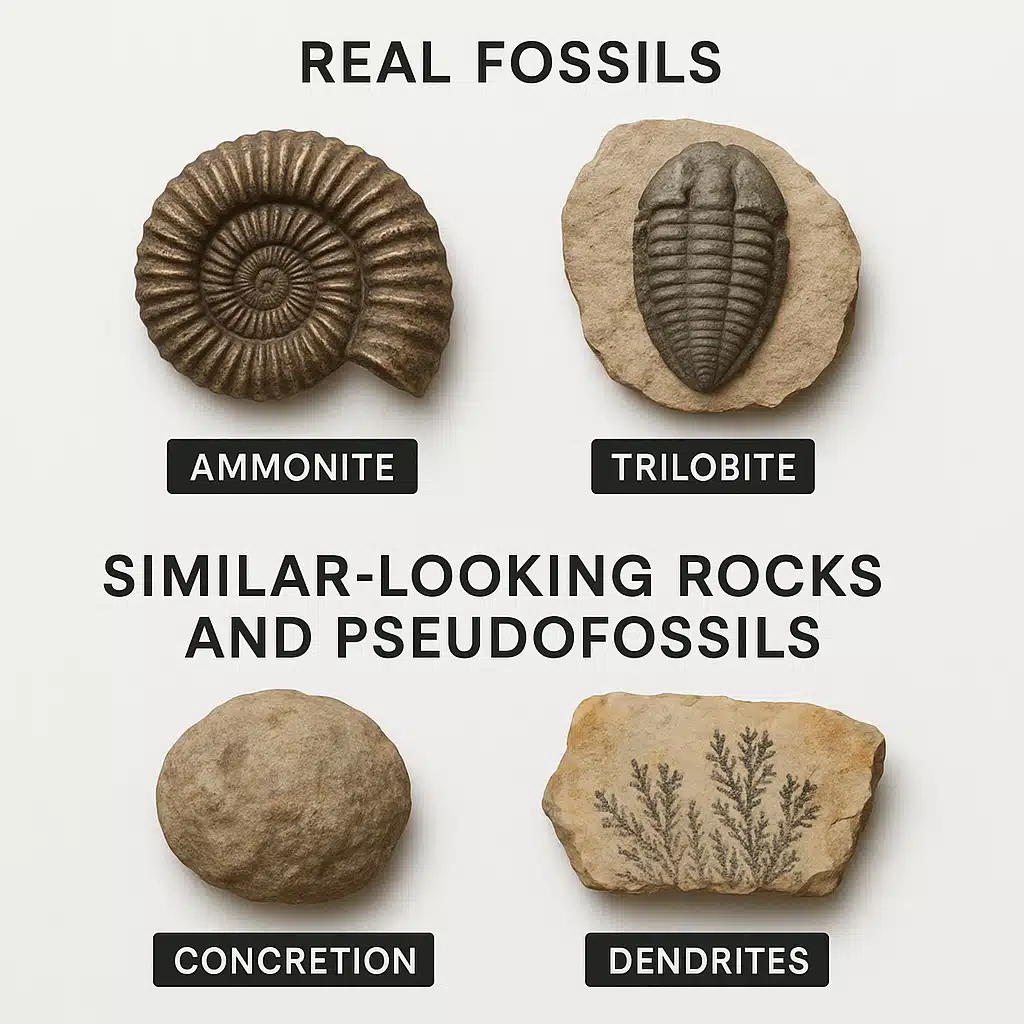
- Concretions: These rounded mineral formations can mimic shell curvature but lack biological structure and patterns
- Weathered limestone: Differential erosion can create shapes suggesting shells, but without the organized symmetry or growth patterns
- Crystal formations: Some minerals grow in patterns that might suggest biological origin but show geometric crystal faces rather than organic curves
- Pseudofossils: Various geological phenomena create fossil-like patterns including dendrites (mineral branching patterns) and sedimentary structures
The key distinction is organization. True biological structures show purposeful design with consistent patterns, while purely geological formations display randomness or geometric crystalline patterns.
Where to Find Marine Fossils
Knowing where to search significantly improves your chances of finding marine fossils. Certain geological settings are much more productive than others.
Promising Locations
- Eroded areas: Stream banks, road cuts, and construction sites expose fresh layers where fossils become visible
- Sedimentary rock outcrops: Limestone, shale, and sandstone formations often contain marine fossils
- Beaches and shorelines: Both marine and freshwater shores can yield fossils washed from underwater deposits
- Agricultural fields: Plowing brings buried fossils to the surface, especially in areas with marine sedimentary bedrock
- Quarries and mines: These sites expose deep layers, though access requires permission and safety awareness
- Designated fossil collecting areas: Many regions maintain public sites specifically for fossil hunting
Research the geological history of your area. Regions known to have been covered by ancient seas are most promising. Geological surveys and paleontological societies often provide maps and information about fossil-bearing formations.
Best Practices for Fossil Hunting
Responsible fossil collecting ensures these scientific resources remain available for future generations while keeping you safe and within legal boundaries.
Legal and Ethical Considerations
- Obtain permission: Always secure permission before collecting on private property
- Know the regulations: Protected lands, parks, and certain geological formations prohibit fossil collection
- Report significant finds: Exceptional or scientifically important specimens should be reported to local museums or universities
- Collect responsibly: Take only what you need and avoid damaging fossil-bearing formations
- Document your finds: Record location, geological context, and other details that add scientific value
Safety Guidelines
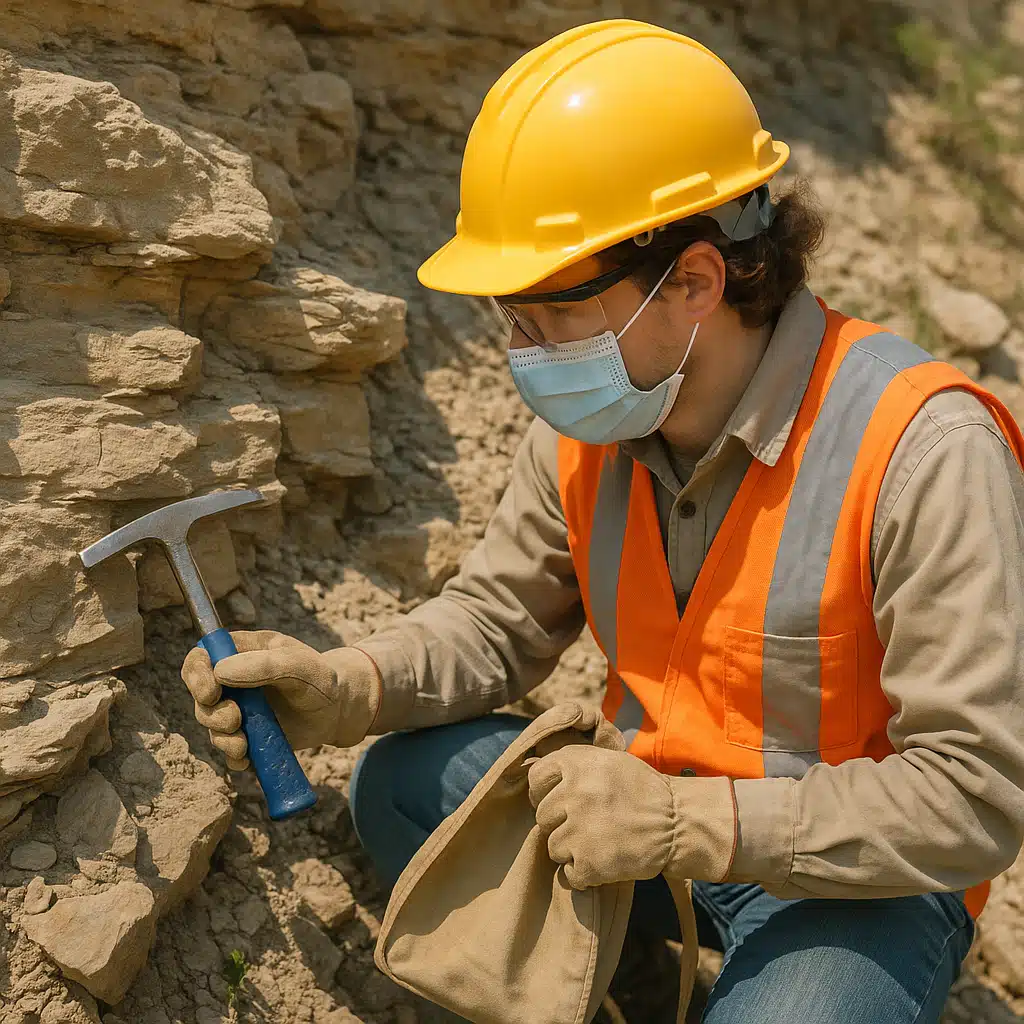
- Wear appropriate safety gear: Sturdy footwear, eye protection, and gloves protect against injuries
- Be aware of your surroundings: Unstable cliffs, loose rocks, and changing tides pose hazards
- Bring necessary supplies: Water, sun protection, first aid, and communication devices
- Never collect alone: Having a companion improves safety in remote locations
- Respect wildlife: Avoid disturbing nesting sites or sensitive habitats
Preserving and Displaying Your Finds
Once you’ve collected fossils, proper care ensures they remain in good condition for study and enjoyment.
Cleaning Fossils
Different fossils require different cleaning approaches. Shark teeth are generally durable and can be cleaned with water and a soft brush. Shells may be more delicate, especially if partially dissolved or replaced by fragile minerals. For valuable or delicate specimens, consult resources specific to fossil preparation or seek expert advice.
Storage and Display
Proper storage protects fossils from damage and deterioration:
- Individual containers: Store specimens separately to prevent scratching
- Label everything: Include location, date, formation, and identification
- Control environment: Avoid extreme temperature fluctuations and high humidity
- Display considerations: Use protective cases for valuable specimens, especially if displayed in high-traffic areas
- Catalog your collection: Maintain records with photographs and detailed information
The Scientific Value of Marine Fossils
Beyond their collectible appeal, marine fossils contribute significantly to scientific understanding. They help researchers reconstruct ancient climates, track evolutionary changes, correlate rock layers across vast distances, and understand how ecosystems responded to environmental changes throughout Earth’s history.
Amateur collectors have made numerous important discoveries. Your finds, when properly documented, can contribute to this growing body of knowledge. Many museums and universities welcome information about fossil discoveries, and some maintain databases where collectors can record their findings.
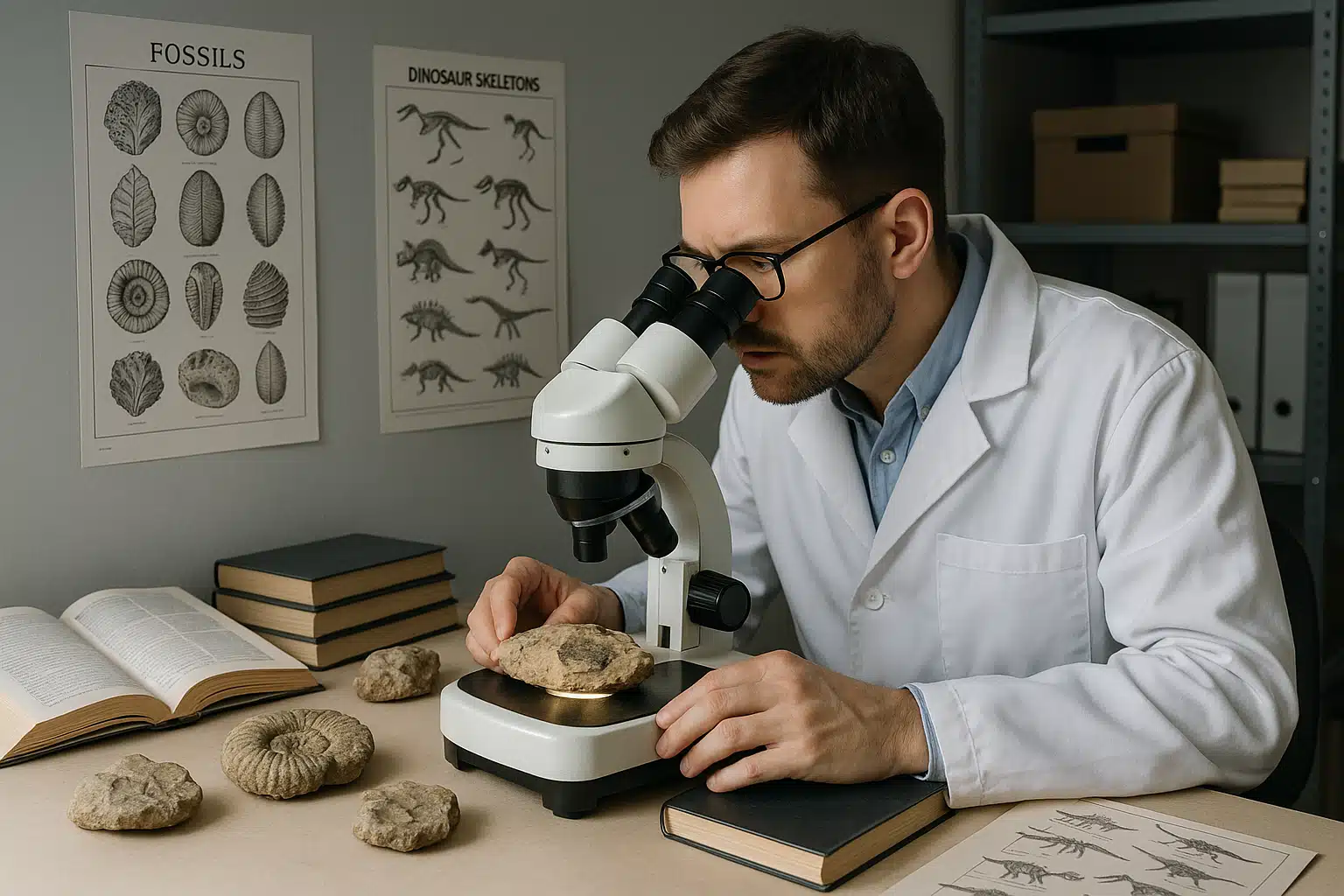
Connecting with the Fossil Community
Fossil hunting becomes more rewarding when shared with others who appreciate these ancient treasures. Paleontological societies, fossil clubs, and online communities offer opportunities to learn from experienced collectors, participate in organized collecting trips, share discoveries, and stay informed about fossil hunting opportunities and regulations.
Many communities host fossil shows, swap meets, and educational programs where you can expand your knowledge, see exceptional specimens, and connect with fellow enthusiasts. These networks also provide resources for identification help when you encounter puzzling finds.
Conclusion
Marine fossils like shark teeth and shells offer accessible entry points into the fascinating world of paleontology. These durable remnants of ancient life connect us directly to Earth’s deep history, providing tangible evidence of the dynamic planet we inhabit. Whether you’re drawn to the thrill of discovery, the scientific insights fossils provide, or simply the aesthetic beauty of these natural artifacts, fossil hunting offers rewards for all skill levels and interests.
As you explore areas far from modern oceans, remember that you’re walking on what was once seafloor, home to diverse marine communities now preserved in stone. Each fossil you find represents an individual organism that lived, died, and through remarkable preservation became a messenger from the distant past. By learning to identify, collect responsibly, and appreciate these fossils, you become part of a tradition of discovery that spans centuries and continues to reveal new insights about our planet’s remarkable history.
Start your fossil hunting journey with patience, respect for the resource, and openness to learning. The ancient oceans have left treasures waiting to be discovered—you just need to know where to look and what you’re seeing. Happy fossil hunting!