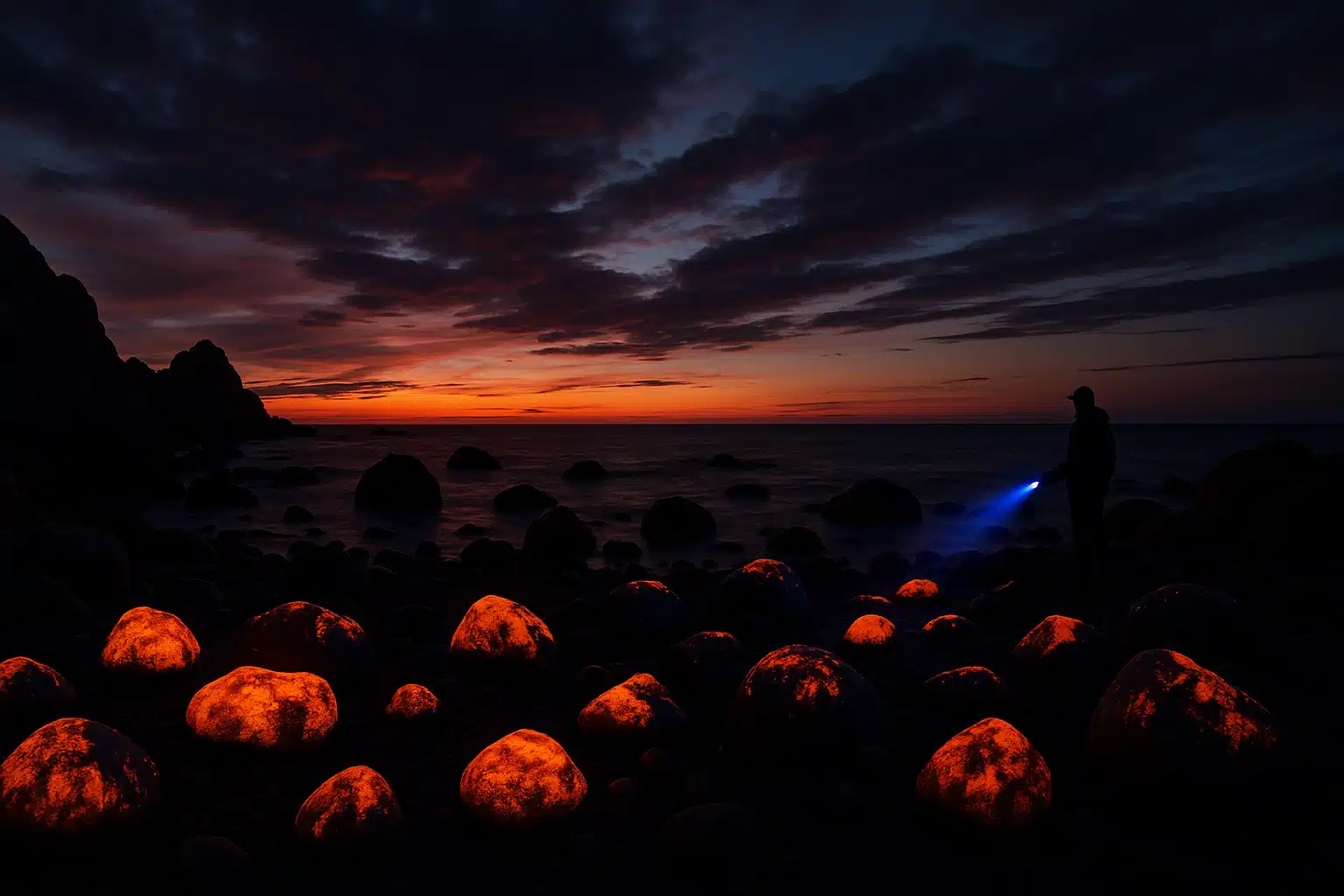
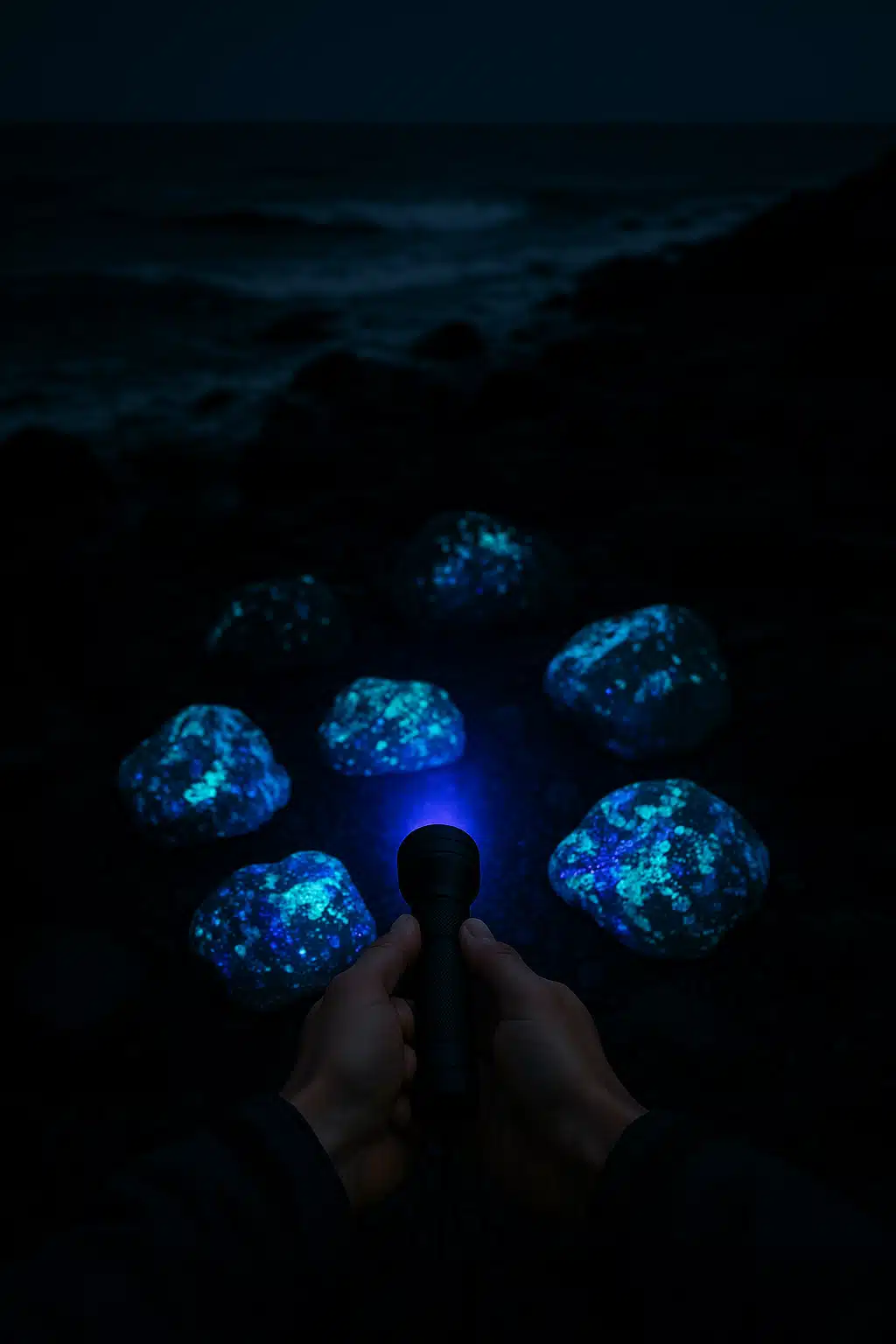
Imagine walking along a shoreline at night and discovering rocks that glow with an ethereal light when illuminated with a special flashlight. This isn’t science fiction—it’s the fascinating world of fluorescent rocks, a geological phenomenon that has captured the imagination of rock enthusiasts, collectors, and nature lovers around the globe. These remarkable stones reveal hidden beauty invisible to the naked eye, transforming ordinary rock hunting into an extraordinary adventure. In this comprehensive guide, we’ll explore everything you need to know about these luminescent treasures and how you can begin your own glowing rock discovery journey.
What Are Fluorescent Rocks?
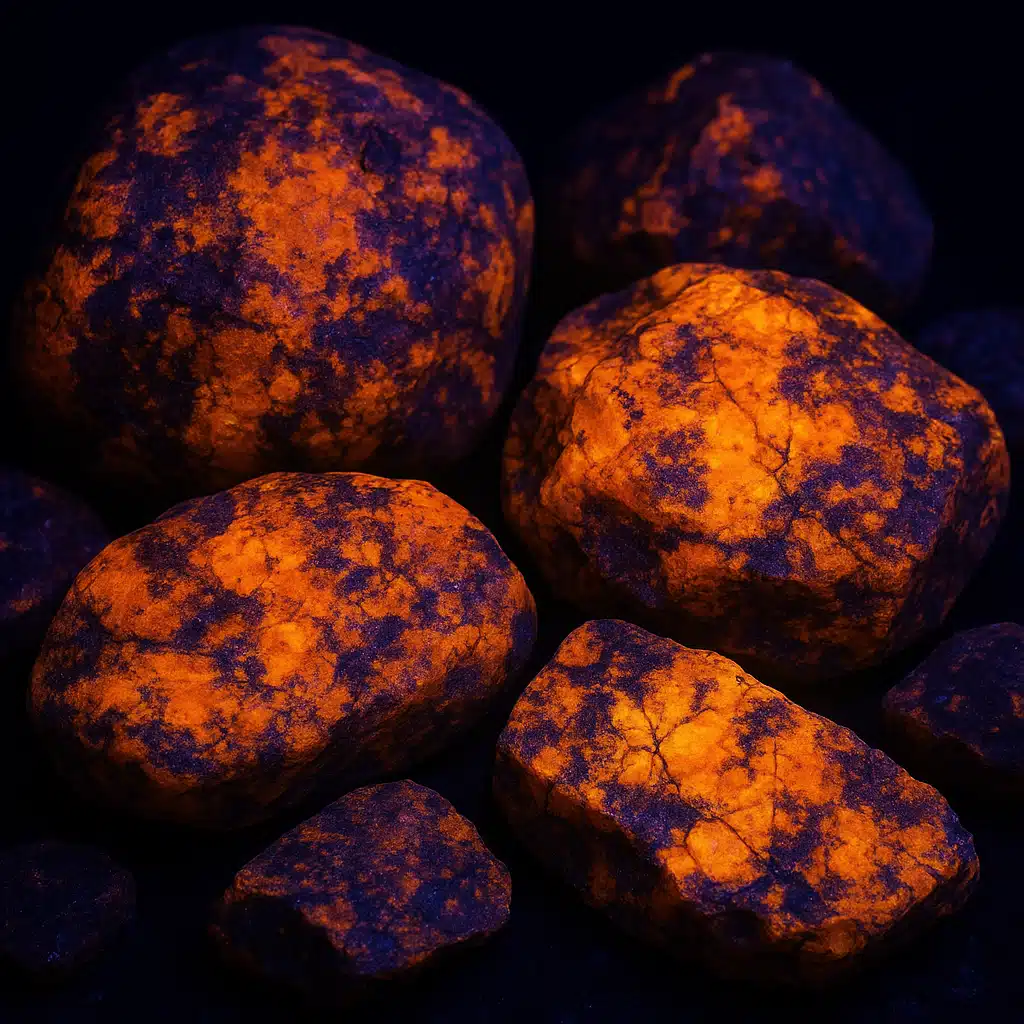
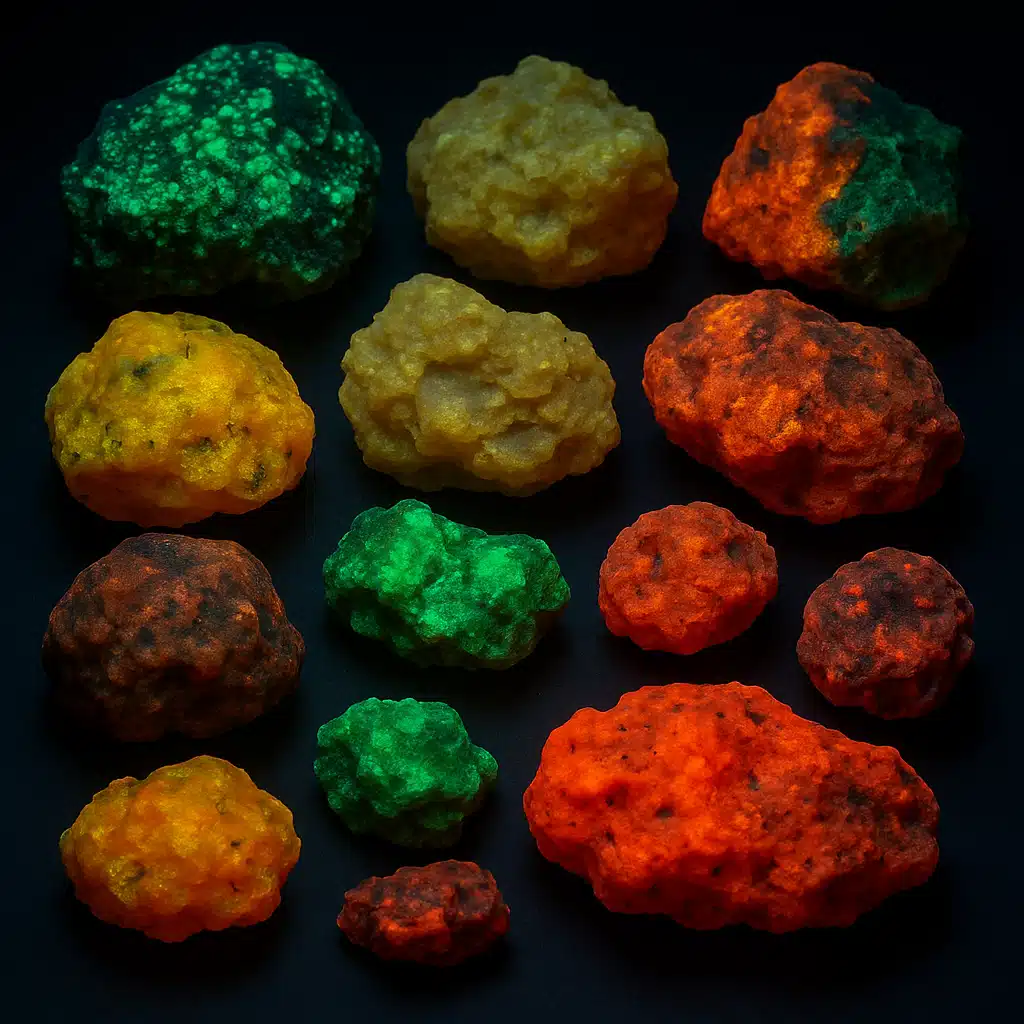
Fluorescent rocks are naturally occurring stones that emit visible light when exposed to ultraviolet (UV) radiation. This captivating phenomenon occurs due to specific minerals within the rock structure that absorb UV light energy and re-emit it as visible light, creating a spectacular glowing effect. The most sought-after fluorescent rocks are syenite-rich formations containing fluorescent sodalite, a mineral that produces brilliant orange, yellow, or red glows under UV illumination.
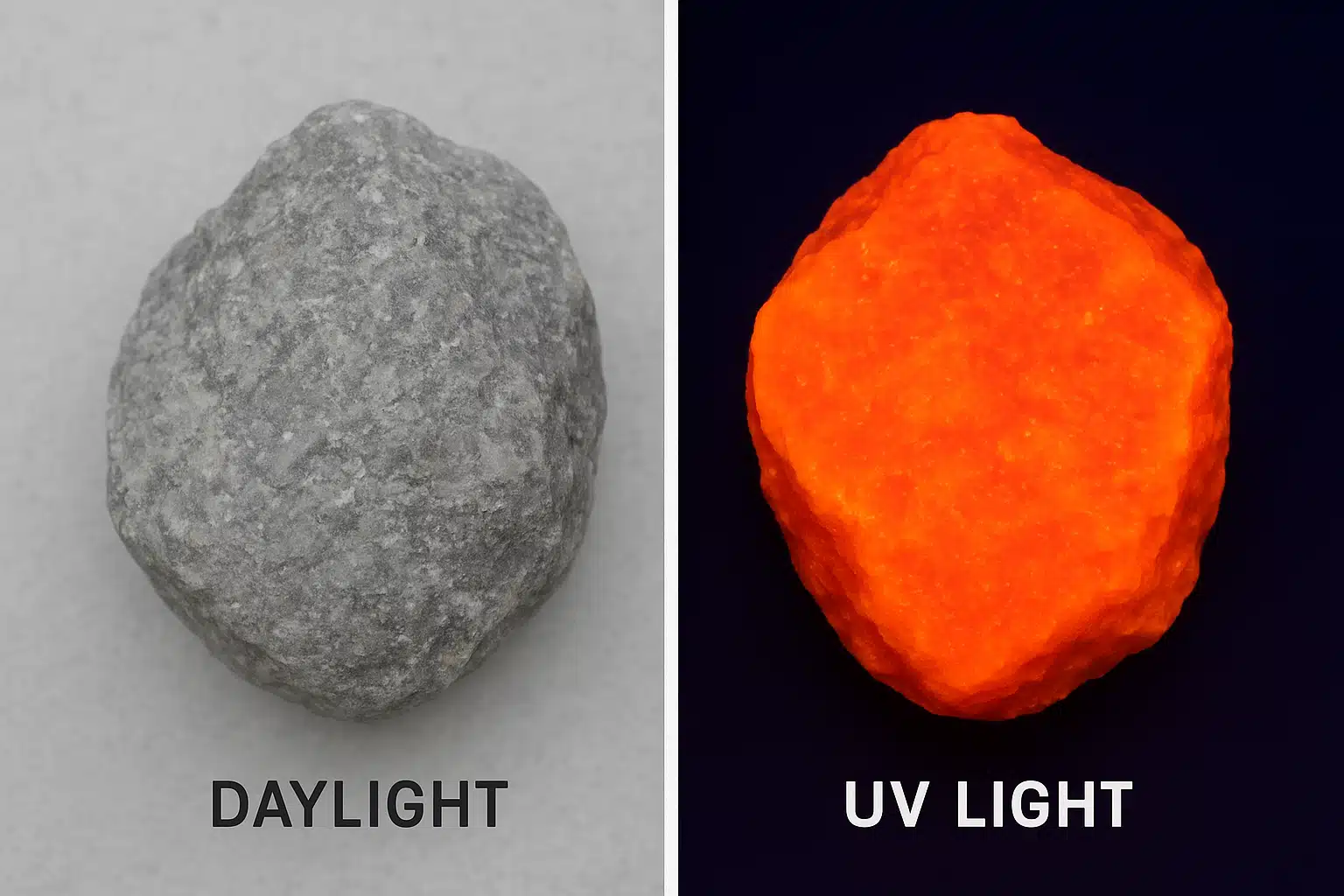
These rocks appear completely ordinary under normal lighting conditions—typically grey, beige, or mottled in appearance. However, when a UV flashlight shines upon them in darkness, they transform dramatically, revealing luminescent patterns and colors hidden within their mineral composition. This dual nature makes fluorescent rock hunting a uniquely rewarding experience, as treasures can be hiding in plain sight among ordinary stones.
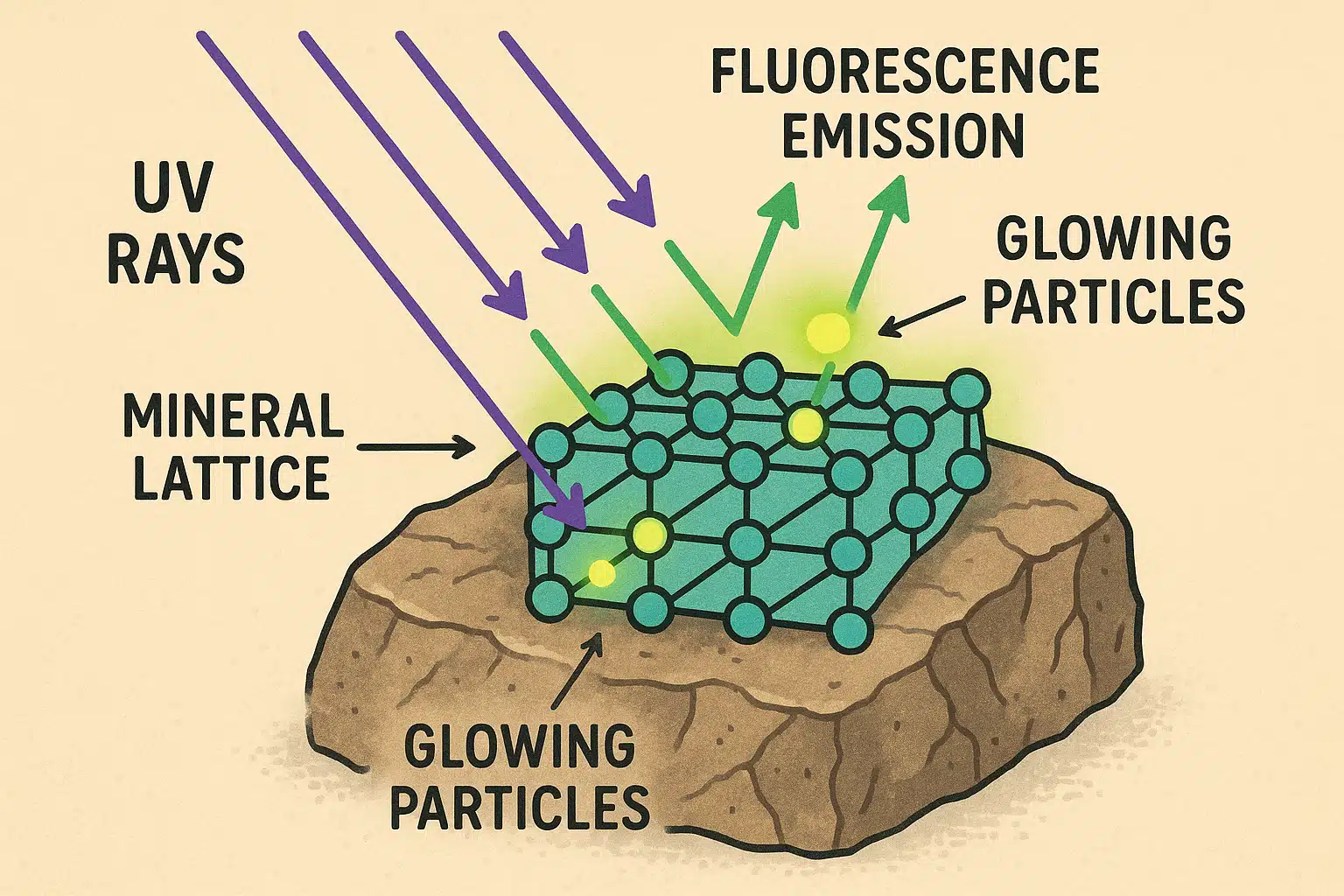
The fluorescence is caused by the sodalite mineral’s chemical structure, which contains sodium, aluminum, silicon, chlorine, and oxygen. When UV photons strike these molecular arrangements, electrons become excited and jump to higher energy states. As they return to their normal state, they release energy in the form of visible light—the glow that makes these rocks so mesmerizing.
Why Fluorescent Rocks Matter: Scientific and Cultural Significance
Fluorescent rocks represent far more than just beautiful curiosities—they hold genuine scientific, educational, and cultural value for communities worldwide. Understanding their importance helps us appreciate both the geological processes that created them and the human connections they inspire.
Educational Value and Scientific Learning
These glowing stones serve as exceptional educational tools for teaching fundamental concepts in geology, mineralogy, chemistry, and physics. Students can directly observe fluorescence—a quantum mechanical phenomenon—with simple equipment, making abstract scientific principles tangible and memorable. Schools, science centers, and educational programs worldwide use fluorescent minerals to demonstrate how light interacts with matter, how minerals form under specific geological conditions, and how chemical composition determines physical properties.
For amateur geologists and hobbyists, fluorescent rock collecting provides a hands-on introduction to field geology, mineral identification, and earth sciences. The hobby encourages outdoor exploration, careful observation, and systematic documentation—all valuable scientific skills applicable across many disciplines.
Community Building and Shared Experience
Fluorescent rock hunting has created vibrant communities of enthusiasts who share their discoveries, techniques, and favorite locations through social media, forums, and organized events. These communities span continents, connecting people through shared fascination with natural beauty and the thrill of discovery. Local clubs organize group hunts, workshops, and exhibitions, fostering connections between generations and building appreciation for local geology and natural heritage.
Tourism and Economic Impact
Regions known for fluorescent rock deposits have experienced increased tourism as visitors travel specifically to hunt for these glowing treasures. This geological tourism supports local economies, encouraging sustainable outdoor recreation and raising awareness about geological conservation. Tour operators, equipment suppliers, and local businesses benefit from the growing interest in fluorescent rock collecting, while visitors gain meaningful experiences connecting with nature and learning about regional geology.
How to Find Fluorescent Rocks: A Complete Guide
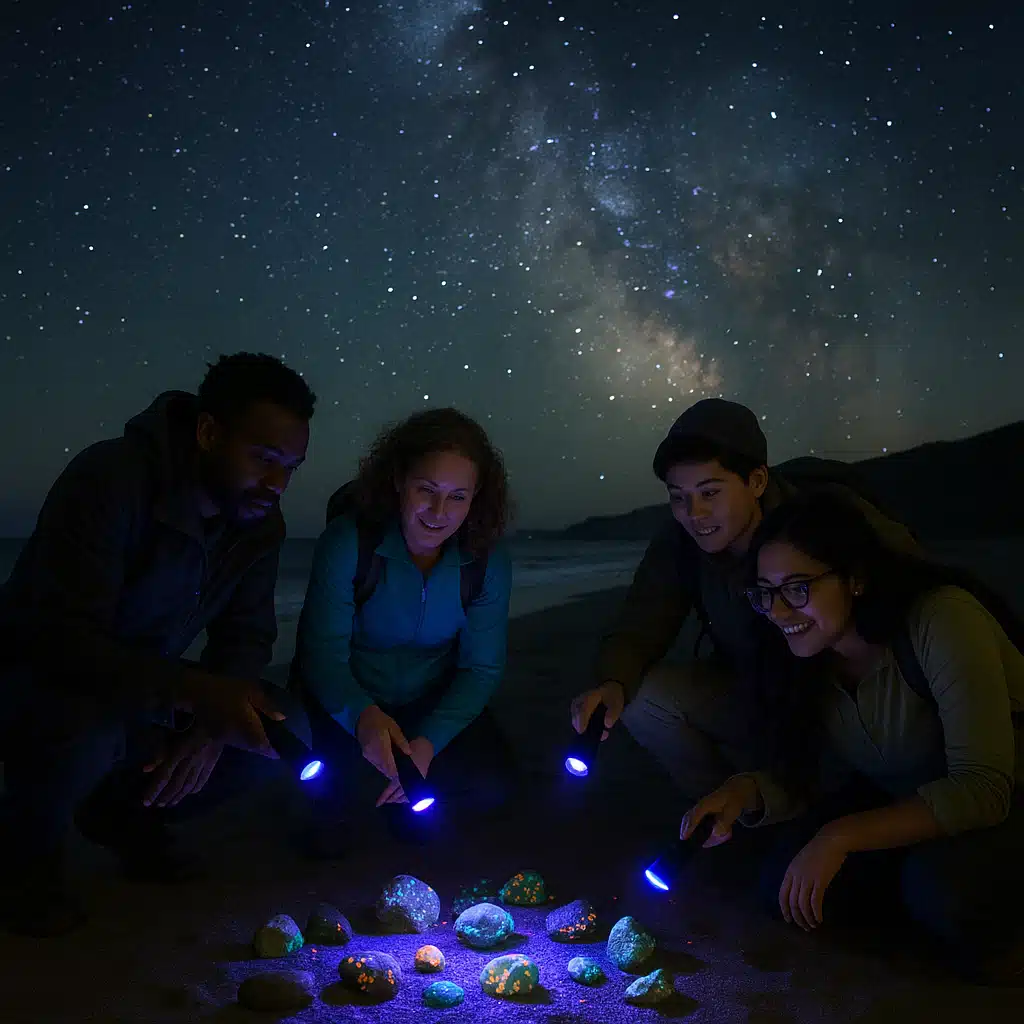
Ready to begin your own fluorescent rock hunting adventure? Success requires the right equipment, timing, location knowledge, and techniques. Follow this comprehensive guide to maximize your chances of discovering these glowing geological treasures.
Essential Equipment for Fluorescent Rock Hunting
The single most important tool for finding fluorescent rocks is a quality UV flashlight. These specialized lights emit ultraviolet radiation in wavelengths that trigger fluorescence in sodalite and other fluorescent minerals. Look for flashlights that emit longwave UV (365-395 nanometers) for the best results with most fluorescent rocks. Higher-powered models with 3-5 watts illuminate larger areas and reveal fluorescence from greater distances, making searching more efficient.
Beyond the UV light, consider bringing a sturdy collection bag or backpack, comfortable footwear suitable for uneven terrain, a standard flashlight for navigation, protective eyewear (as prolonged UV exposure can strain eyes), and a camera to document your finds. Some hunters also carry field notebooks to record locations, conditions, and characteristics of discovered specimens.
Best Locations and Geological Settings
Fluorescent sodalite-bearing rocks typically form in specific geological environments, particularly in syenite formations and related igneous rocks. These geological formations occur in various locations worldwide, though some regions have become particularly famous for accessible deposits. Shorelines, riverbanks, and areas where glacial activity has transported and deposited rocks offer excellent hunting grounds, as natural erosion constantly exposes fresh specimens.
Research the geology of your region to identify areas with appropriate rock types. Geological surveys, university geology departments, and local rock and mineral clubs can provide valuable information about promising locations. Always respect private property, follow local regulations regarding collecting, and practice Leave No Trace principles to preserve natural areas for future visitors.
Coastal areas with rocky beaches, particularly those near ancient volcanic or plutonic formations, often yield excellent specimens. Gravel pits, road cuts, and construction sites (with proper permission) sometimes expose fresh rock that hasn’t been thoroughly searched by other collectors.
Optimal Timing and Conditions
Darkness is essential for effective fluorescent rock hunting, as the glow is easily overwhelmed by ambient light. The darkest nights—during new moon phases and away from urban light pollution—provide ideal conditions. Cloud cover can actually help by blocking moonlight, though clear skies are preferable if you’re hunting during new moon periods.
Seasonal considerations vary by region, but generally, mild weather months offer the most comfortable hunting conditions. However, dedicated collectors hunt year-round, adapting their gear and techniques to weather conditions. Some find that post-storm periods expose fresh rocks, creating new opportunities for discovery.
Plan your hunting trips to begin after sunset when darkness is complete, allowing 2-4 hours for thorough searching. Your eyes will gradually adapt to darkness, improving your ability to spot the fluorescent glow against the surrounding terrain.
Effective Search Techniques
Systematic searching yields better results than random wandering. Work in grid patterns, slowly sweeping your UV light across the ground at a consistent height and angle. The fluorescent glow is often subtle at first, appearing as faint orange or yellow spots among ordinary stones. As you gain experience, you’ll develop an eye for the characteristic glow and can scan more quickly.
Different rocks fluoresce with varying intensities. Some specimens produce brilliant, unmistakable glows visible from several feet away, while others show only faint fluorescence requiring close inspection. Don’t overlook smaller stones—spectacular fluorescence sometimes hides in pocket-sized specimens.
When you spot fluorescence, mark the location and systematically search the surrounding area. Geological processes often deposit similar rocks in clusters, so finding one fluorescent specimen suggests others may be nearby.
Frequently Asked Questions About Fluorescent Rocks
As interest in fluorescent rock collecting grows, newcomers naturally have questions about these fascinating geological specimens. Here are detailed answers to the most common inquiries.
Do All Rocks Glow Under UV Light?
No, fluorescence is a relatively rare property possessed by rocks containing specific minerals. While hundreds of mineral species exhibit some degree of fluorescence, the vast majority of common rocks show no reaction to UV light. Fluorescent minerals require particular chemical compositions and crystal structures that absorb UV energy and re-emit it as visible light. This rarity is part of what makes finding fluorescent rocks so exciting—they’re genuinely special discoveries among countless ordinary stones.
Are Fluorescent Rocks Rare or Common?
The answer depends on location. In regions with appropriate geology—particularly areas with syenite formations or other rocks containing fluorescent sodalite—these specimens can be relatively abundant along shorelines and in gravel deposits. However, on a global scale, the specific geological conditions that create fluorescent sodalite-bearing rocks are geographically limited, making them regionally common but globally uncommon.
Even in prime hunting locations, fluorescent rocks may represent only a small percentage of total stones present, requiring patience and persistence to find. The thrill of discovery remains strong because each specimen must be individually located—there’s no substitute for careful searching.
How Should I Display and Store Fluorescent Rocks?
The unique properties of fluorescent rocks inspire creative display approaches that showcase both their ordinary appearance and their spectacular glow. Shadow boxes with built-in UV LED strips create stunning wall displays, allowing you to demonstrate the fluorescence to visitors with a simple switch. Display cases with dual lighting—normal white light and UV blacklight—let viewers appreciate the dramatic transformation.
For storage, keep specimens in compartmentalized containers, separated to prevent scratching. Label each rock with collection date, location, and any notable characteristics. This documentation becomes increasingly valuable over time and helps you track your collecting journey.
Some collectors arrange specimens by fluorescence color, creating gradient displays from pale yellow through orange to deep red. Others organize geographically or by size, creating personalized collections that reflect their individual interests and experiences.
Is Fluorescent Rock Hunting Safe?
When practiced with common-sense precautions, fluorescent rock hunting is a safe, family-friendly activity. The primary safety considerations involve the outdoor environment rather than the rocks themselves. Hunt in groups when possible, inform someone of your plans and expected return time, bring adequate water and weather-appropriate clothing, and be cautious on uneven terrain, especially in darkness.
Regarding UV light exposure, the wavelengths used for rock hunting (365-395nm) are the same used in commercial blacklights and are generally considered safe for recreational use. However, avoid shining UV lights directly into eyes, and consider UV-protective eyewear for extended hunting sessions. The fluorescent rocks themselves are completely safe to handle and display—they contain no radioactive materials or harmful substances.
Can Fluorescent Rocks Be Found Worldwide?
Fluorescent minerals occur on every continent, though the specific types vary by regional geology. While sodalite-bearing syenite rocks have become famous in certain regions, other fluorescent minerals create similar glowing effects in different geological settings. Calcite, willemite, scapolite, and many other minerals exhibit fluorescence under UV light, offering collecting opportunities in diverse locations.
Research your local geology to discover what fluorescent minerals might exist in your area. You may find entirely different specimens with unique characteristics, colors, and geological stories. The principles of UV hunting remain the same regardless of location—darkness, proper equipment, and patient searching.
Building Your Fluorescent Rock Collection: Tips for Success
Developing a meaningful collection involves more than simply accumulating specimens. Thoughtful collectors focus on quality, documentation, and continuous learning, creating collections that grow in both size and personal significance over time.
Start by setting collection goals that align with your interests. Some collectors pursue the brightest fluorescence, seeking specimens with the most intense glow. Others focus on variety, collecting rocks from different locations or with varying fluorescent colors. Still others prioritize aesthetic qualities, selecting specimens with interesting shapes, patterns, or combinations of fluorescent and non-fluorescent minerals.
Document each find thoroughly. Photograph specimens under both normal light and UV illumination, recording the location, date, weather conditions, and any interesting circumstances of the discovery. These records transform a simple collection into a personal archive of experiences and geological observations.
Connect with other collectors through online communities, social media groups, and local clubs. Experienced collectors generously share knowledge about techniques, locations, and identification, accelerating your learning curve. Many lasting friendships form through shared passion for these glowing geological treasures.
Consider contributing to citizen science by sharing your finds with geological surveys or university research programs. Your discoveries might provide valuable data about mineral distributions, glacial deposits, or geological processes, giving your hobby genuine scientific value.
The Science Behind the Glow: Understanding Fluorescence
For those curious about the physics and chemistry creating this spectacular natural phenomenon, fluorescence represents a fascinating intersection of quantum mechanics, crystallography, and geology. When UV photons strike fluorescent minerals, their energy excites electrons in the mineral’s crystal lattice to higher energy states. These elevated energy states are unstable, and electrons quickly return to their ground state, releasing the absorbed energy as photons of visible light.
The specific wavelength (color) of emitted light depends on the energy difference between excited and ground states, which is determined by the mineral’s chemical composition and crystal structure. In fluorescent sodalite, the interaction between sodium, aluminum, silicon, and chlorine atoms creates energy transitions that produce characteristic orange to red fluorescence.
This phenomenon differs from phosphorescence, where minerals continue glowing after the UV source is removed. Fluorescent minerals only glow while actively illuminated by UV light, instantly ceasing when the light source is turned off. This immediate response makes fluorescent rock hunting particularly interactive—the glow appears and disappears with your flashlight beam, creating a dynamic searching experience.
Understanding the science deepens appreciation for these remarkable stones. Each glowing rock represents specific geological conditions, chemical processes, and millions of years of earth history, all revealed in an instant of ultraviolet illumination.
Conclusion: Begin Your Glowing Rock Adventure
Fluorescent rocks offer something for everyone—natural beauty for nature lovers, scientific intrigue for curious minds, outdoor adventure for active explorers, and collecting satisfaction for those who appreciate building meaningful collections. These glowing geological treasures hide in plain sight worldwide, waiting for the right combination of darkness, UV light, and patient searching to reveal their spectacular secret.
Whether you’re drawn by the science, the outdoor experience, the thrill of discovery, or simply the mesmerizing beauty of rocks that glow in the dark, fluorescent rock hunting provides a unique and rewarding hobby accessible to all ages and experience levels. The investment is minimal—a quality UV flashlight and willingness to explore—but the returns are substantial: connection with nature, understanding of geology, and a collection of natural treasures that never cease to amaze.
Start your journey tonight. Research the geology of your region, acquire a UV flashlight, wait for darkness, and begin exploring. The rocks you’ve walked past countless times may harbor hidden fluorescence, transforming familiar landscapes into treasure grounds waiting for discovery. Each glowing specimen you find tells a geological story millions of years in the making, now yours to hold, study, and share.
The world of fluorescent rocks awaits—grab your UV light and discover the glowing secrets hidden in stone all around you.