Understanding Mineral Properties
For anyone interested in geology, mineralogy, or simply exploring the natural world, understanding how minerals break is essential. The way these natural materials shatter or split reveals critical information about their internal structure, atomic composition, and formation history. Whether you’re a hobbyist collector, student, outdoor enthusiast, or professional geologist, learning about cleavage and fracture patterns will significantly enhance your ability to identify and appreciate minerals.
This comprehensive guide will walk you through the fundamental concepts of mineral breakage, providing you with the knowledge needed to recognize and classify minerals based on these distinctive characteristics. By the end, you’ll have practical skills that can be applied during field trips, when examining collections, or when studying geological specimens.
The Two Primary Ways Minerals Break
Minerals exhibit two fundamental breaking behaviors: cleavage and fracture. These characteristics are determined by the mineral’s internal atomic structure and the strength of chemical bonds holding the atoms together. Understanding the distinction between these two properties is crucial for accurate mineral identification and provides insight into the conditions under which minerals formed.
Cleavage: Breaking Along Predetermined Planes
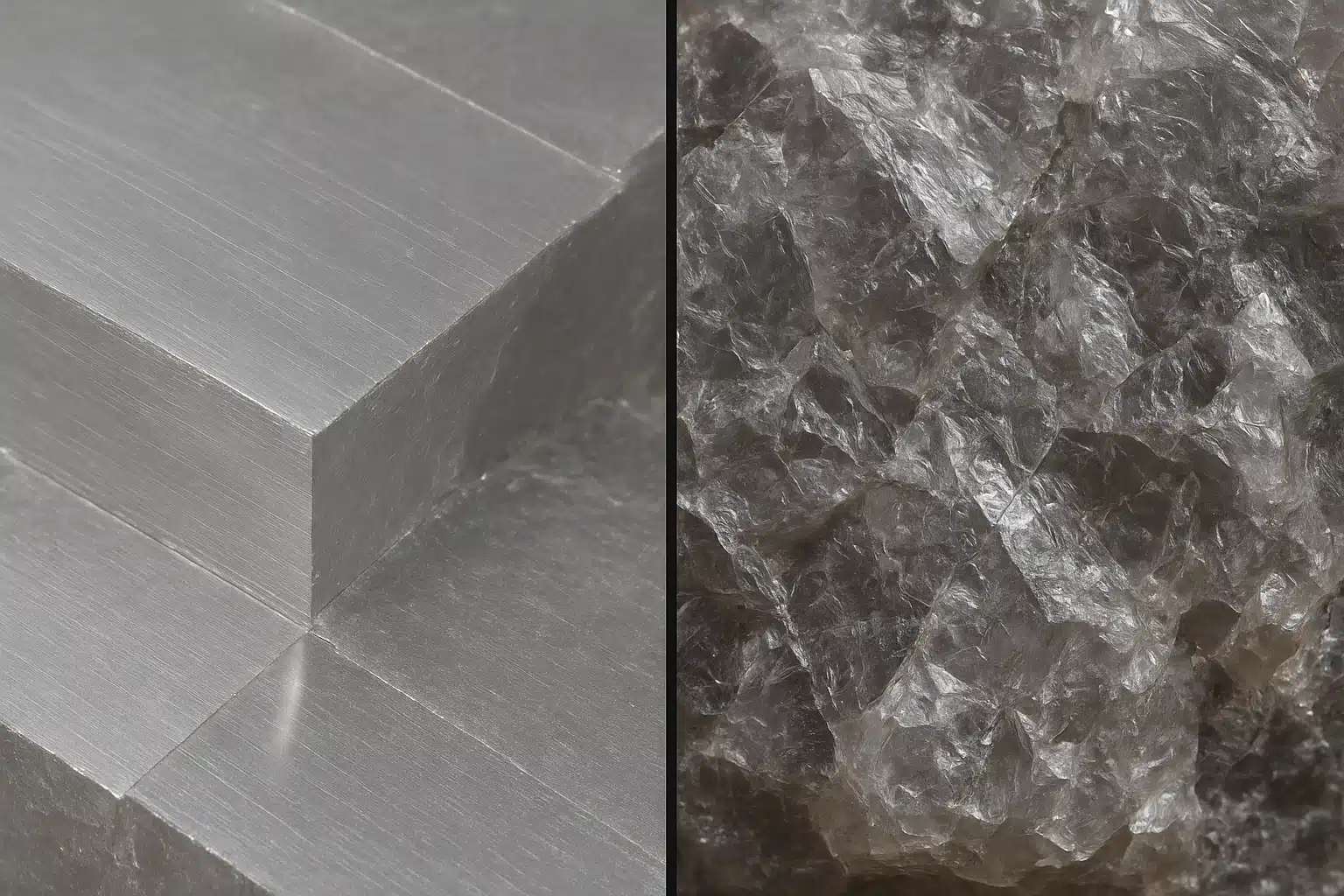
Cleavage is the tendency of a mineral to break along specific, flat planes of weakness within its crystal structure. These planes exist where atomic bonds are weaker than in other directions. When force is applied to a mineral with cleavage, it splits cleanly along these predetermined surfaces, creating smooth, flat faces that often reflect light uniformly.
Characteristics of Cleavage
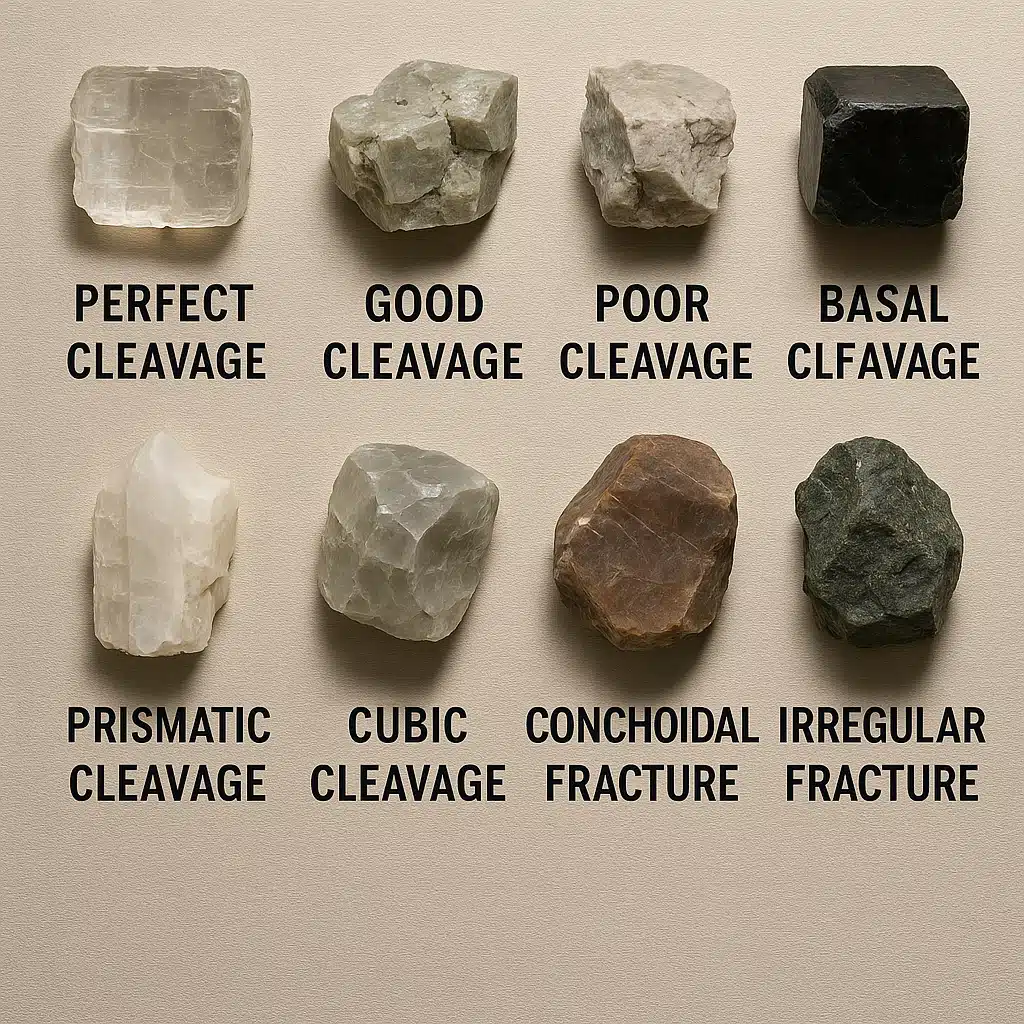
Cleavage produces predictable, repeatable breaking patterns. The resulting surfaces are typically smooth and planar, often appearing shiny or reflective. Minerals may have one or multiple cleavage directions, and the quality of cleavage can range from perfect (splitting extremely easily with very smooth surfaces) to poor (still visible but requiring more force and producing less perfect surfaces).
Common cleavage patterns include:
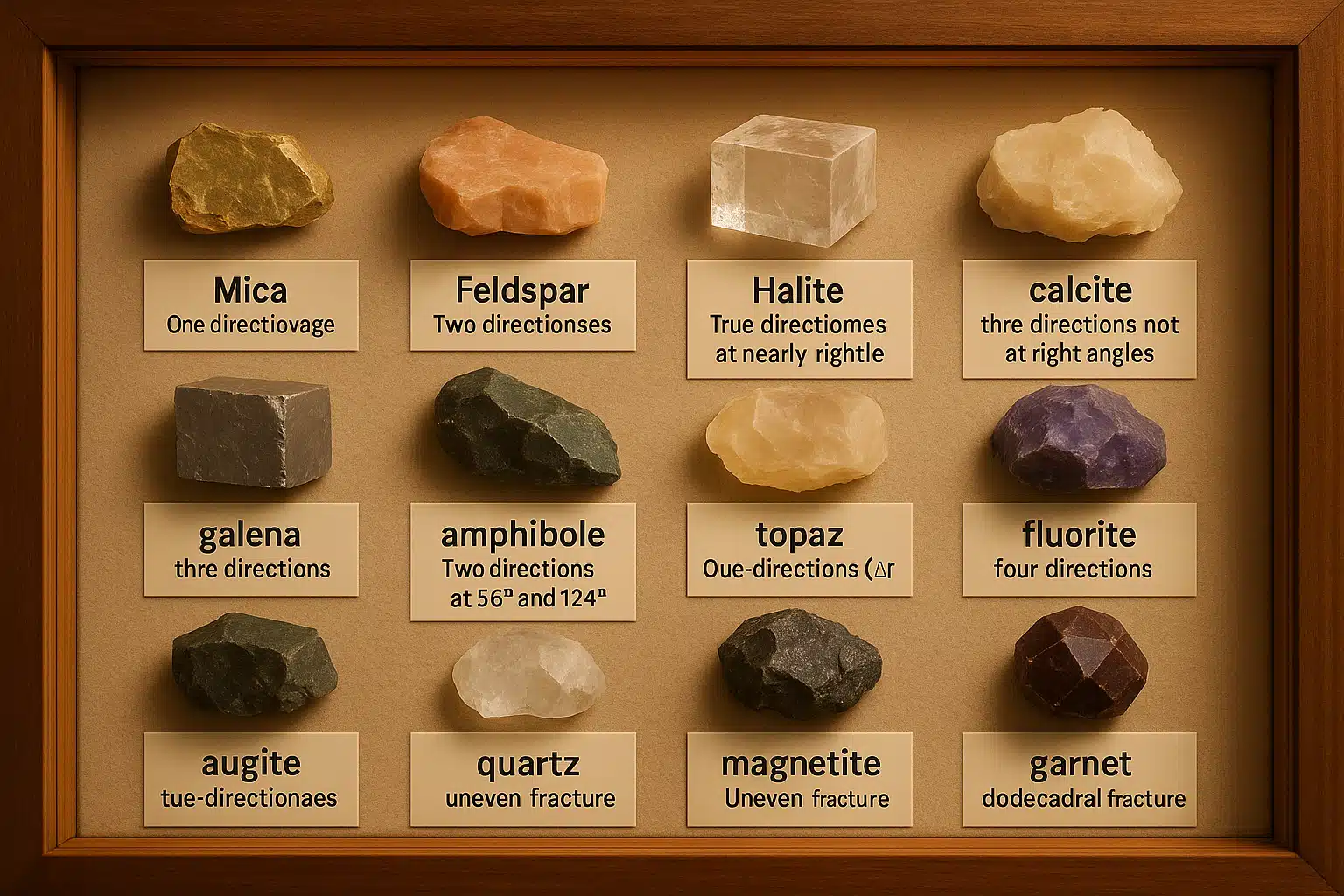
- Basal cleavage: Minerals split into thin sheets or plates, like mica, which separates into flexible, paper-thin layers
- Cubic cleavage: Minerals break into cube-shaped fragments, such as halite and galena
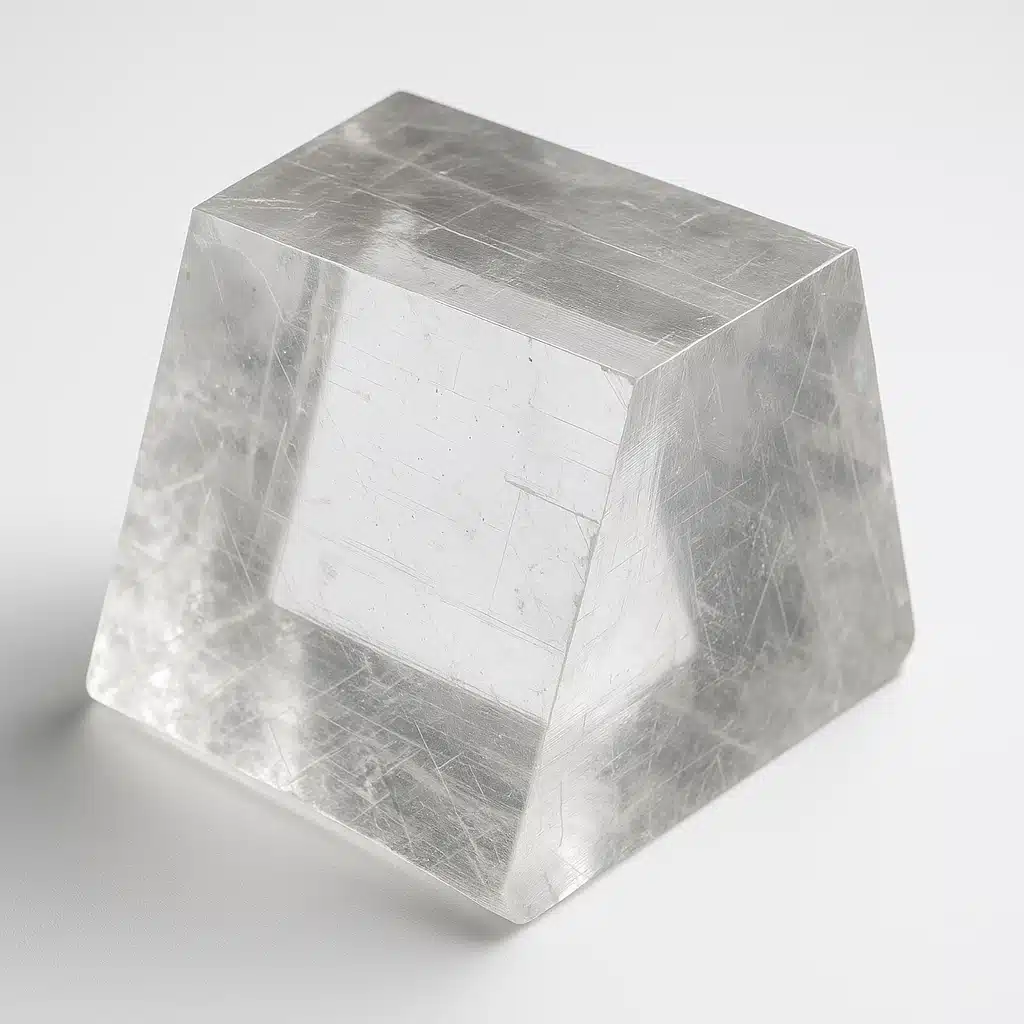
- Rhombohedral cleavage: Minerals split into rhombus-shaped pieces, like calcite
- Prismatic cleavage: Minerals break along parallel planes, creating elongated prism-like shapes
Why Cleavage Occurs
The atomic structure of minerals determines whether cleavage will occur and in which directions. In the crystal lattice, some directions have weaker chemical bonds than others. When stress is applied, the mineral preferentially breaks along these planes of weakness rather than through areas of stronger bonding. This structural property is consistent for each mineral species, making cleavage a reliable identification characteristic.
Fracture: Irregular Breaking Patterns
Fracture describes the way minerals break when they do not have planes of weakness or when the break occurs across the crystal structure rather than along cleavage planes. Unlike the smooth, flat surfaces of cleavage, fractured surfaces are irregular, curved, or jagged. Fracture is characteristic of minerals with uniformly strong bonds in all directions or amorphous materials without a crystalline structure.
Types of Fracture
Mineralogists recognize several distinct fracture types, each providing clues about the mineral’s composition and structure:
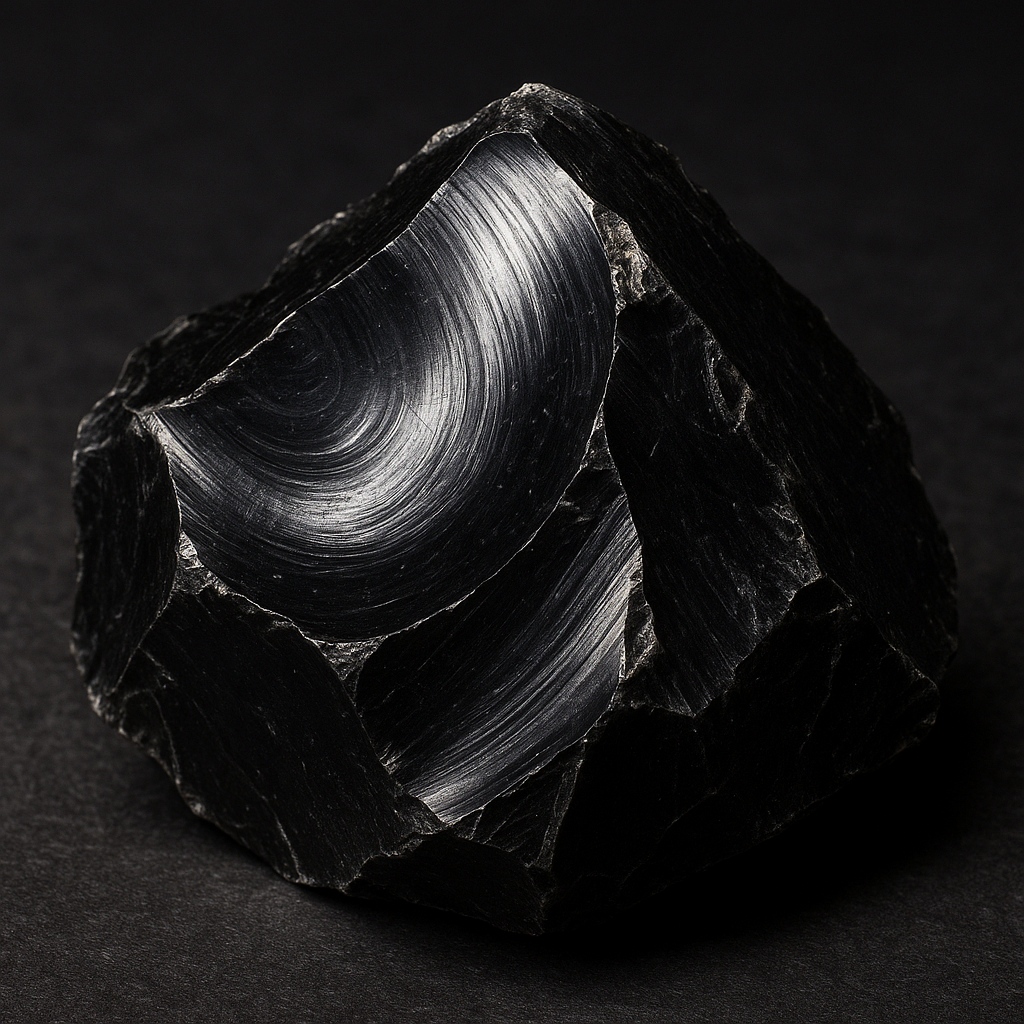
- Conchoidal fracture: Produces smooth, curved, shell-like surfaces with concentric ridges, similar to broken glass. This is common in quartz, obsidian, and other materials with very uniform structures
- Uneven or irregular fracture: Creates rough, non-uniform surfaces without any particular pattern, typical of many common minerals
- Hackly fracture: Produces surfaces with sharp, jagged points, often seen in native metals like copper
- Splintery fracture: Creates elongated, needle-like or fibrous fragments, characteristic of some asbestos minerals and fibrous materials
- Earthy fracture: Results in a powdery or granular surface, typical of soft or weathered minerals
Understanding Fracture Patterns
Fracture occurs when bonds throughout the mineral structure are approximately equal in strength, or when the breaking force exceeds the structural integrity in a way that doesn’t align with cleavage planes. Conchoidal fracture, in particular, indicates a very homogeneous structure where energy from impact travels uniformly through the material, creating the characteristic curved breaking pattern.
The Geological Significance of Breaking Patterns
Understanding how minerals break extends beyond simple identification—it provides valuable information about geological processes and conditions. The presence or absence of cleavage tells us about the mineral’s atomic arrangement and the conditions under which it crystallized.
Formation Environment Clues
Minerals with well-developed cleavage typically formed under conditions that allowed atoms to arrange themselves in ordered crystal structures with directional bonding. This often occurs during slow cooling or crystallization under specific pressure and temperature conditions. The quality of cleavage can indicate how completely a mineral crystallized—perfect cleavage suggests ideal formation conditions, while poor cleavage might indicate rapid crystallization or chemical impurities.
Fracture patterns also reveal formation stories. Conchoidal fracture in volcanic glass (obsidian) indicates extremely rapid cooling that prevented crystal formation entirely, while irregular fracture in granular rocks reflects their composite nature.
Practical Applications
Beyond academic interest, understanding cleavage and fracture has practical applications in various industries. Mining operations consider cleavage when extracting minerals, as cleavage planes affect how easily materials can be broken or separated. In gemology, cleavage planes represent potential weaknesses that cutters must work around or utilize strategically. Materials scientists study these properties when developing synthetic materials or understanding material strength and durability.
Distinguishing Between Cleavage and Fracture: Common Challenges
Even experienced mineralogists sometimes find it challenging to distinguish between cleavage and fracture, especially when examining weathered specimens or minerals with poorly developed cleavage. Here are key distinguishing features to help you differentiate these properties:
Surface Appearance
- Cleavage surfaces: Flat, smooth, often reflective, consistent across multiple breaks
- Fracture surfaces: Curved, rough, or irregular, variable appearance
Repeatability
- Cleavage: Breaks along the same planes repeatedly, creating parallel surfaces
- Fracture: Each break produces different surface patterns
Light Reflection
- Cleavage: Multiple parallel surfaces reflect light uniformly, creating a distinctive luster
- Fracture: Light reflection is inconsistent due to irregular surfaces
Remember that some minerals can display both cleavage and fracture. When examining specimens, look for the predominant breaking pattern and whether any flat, reflective surfaces repeat in parallel orientations.
Practical Tips for Examining Mineral Breakage
When examining minerals to determine their breaking characteristics, follow these practical guidelines for best results:
- Use proper lighting: Good illumination helps you see subtle surface features and light reflection patterns
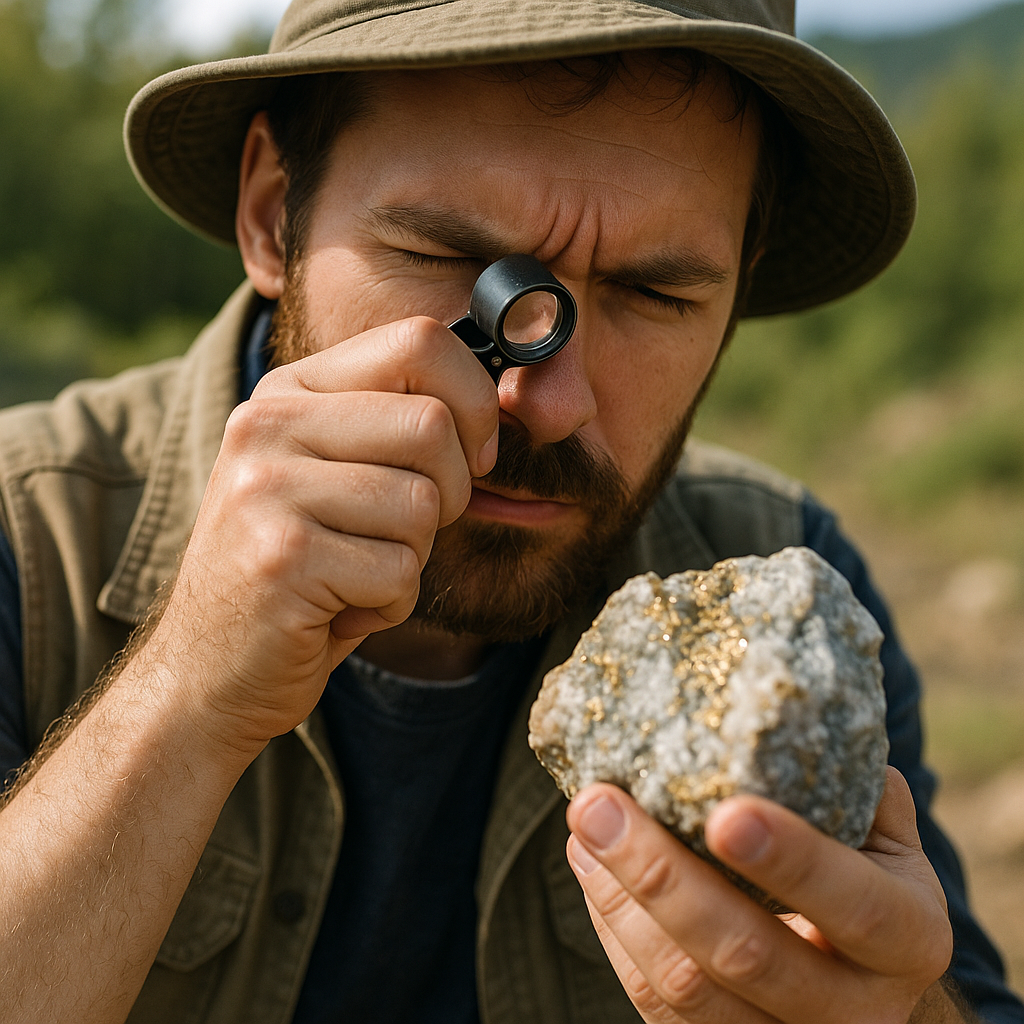
- Employ magnification: A hand lens (10x magnification) reveals fine details of surfaces that aren’t visible to the naked eye
- Examine multiple surfaces: Look at several broken surfaces to identify consistent patterns
- Consider the mineral context: Fresh breaks show characteristics more clearly than weathered surfaces
- Handle specimens carefully: Some minerals with perfect cleavage are fragile and can separate easily
- Document your observations: Take notes or photographs to build your identification skills over time
Building Your Identification Skills
Mastering the recognition of cleavage and fracture requires practice and exposure to diverse mineral specimens. Start with common, easily obtained minerals that display clear characteristics. Build a reference collection that includes examples of different cleavage types and fracture patterns. Over time, you’ll develop an intuitive sense for these properties that complements your theoretical knowledge.
Consider joining local geology clubs, attending mineral shows, or visiting natural history museums where you can examine labeled specimens and learn from experienced collectors. Online communities and forums also provide excellent opportunities to share observations and get feedback on mineral identifications.
Key Points to Remember
- Cleavage and fracture represent two fundamentally different ways minerals break, each reflecting their internal atomic structure
- Cleavage produces smooth, flat, repeatable breaks along planes of atomic weakness
- Fracture creates irregular, non-planar surfaces when minerals lack directional weakness or break across crystal structures
- Understanding these properties significantly improves mineral identification accuracy
- Breaking patterns provide valuable information about formation conditions and geological processes
- Both cleavage and fracture have practical applications in mining, gemology, and materials science
- Developing recognition skills requires practice with diverse specimens under good lighting conditions
Conclusion: The Story Minerals Tell Through Breaking
The way minerals break is far more than a simple physical property—it’s a window into their atomic architecture and geological history. Every smooth cleavage surface and every irregular fracture pattern tells a story about atomic bonds, crystallization conditions, and the forces that shaped these natural materials over millions of years.
As you continue exploring the mineral world, whether in the field, in collections, or through study, pay close attention to how specimens break. These breaking patterns will become one of your most reliable tools for identification and appreciation. With practice and patience, you’ll find yourself reading the stories written in every fractured surface and cleaved plane, gaining deeper insight into the remarkable diversity and beauty of the mineral kingdom.
The next time you encounter a mineral specimen, take a moment to examine its surfaces carefully. Look for the telltale signs of cleavage or fracture. Consider what these characteristics reveal about the mineral’s identity and origin. In doing so, you’re not just identifying a rock—you’re connecting with geological processes that have been shaping our planet since its formation.