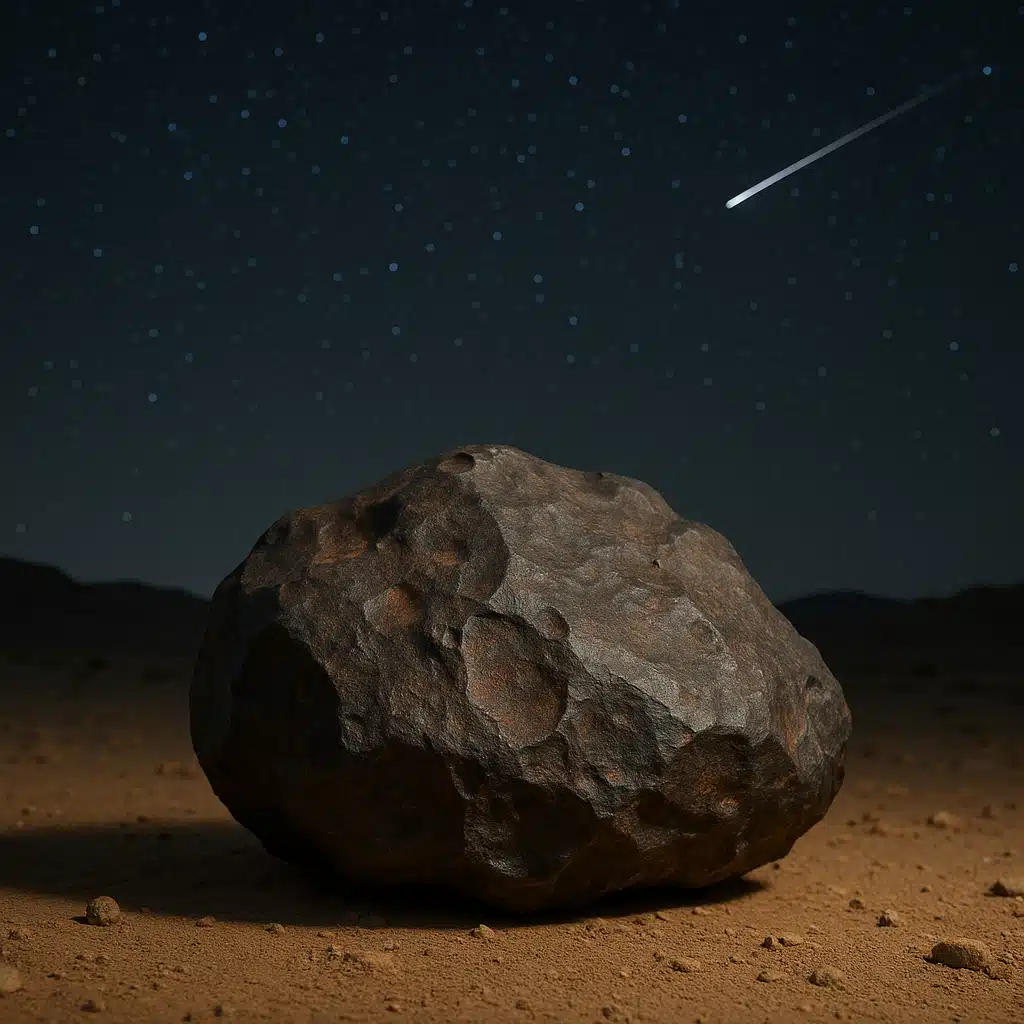
The possibility of discovering a genuine piece of space material is captivating for many enthusiasts and hobbyists around the world. However, the reality is that most suspected “meteorites” turn out to be terrestrial materials, most commonly industrial slag or weathered rocks. This comprehensive guide will help you understand what meteorites truly are, how to distinguish them from common imposters, and what characteristics to look for when evaluating potential space rocks.
What Are Meteorites?
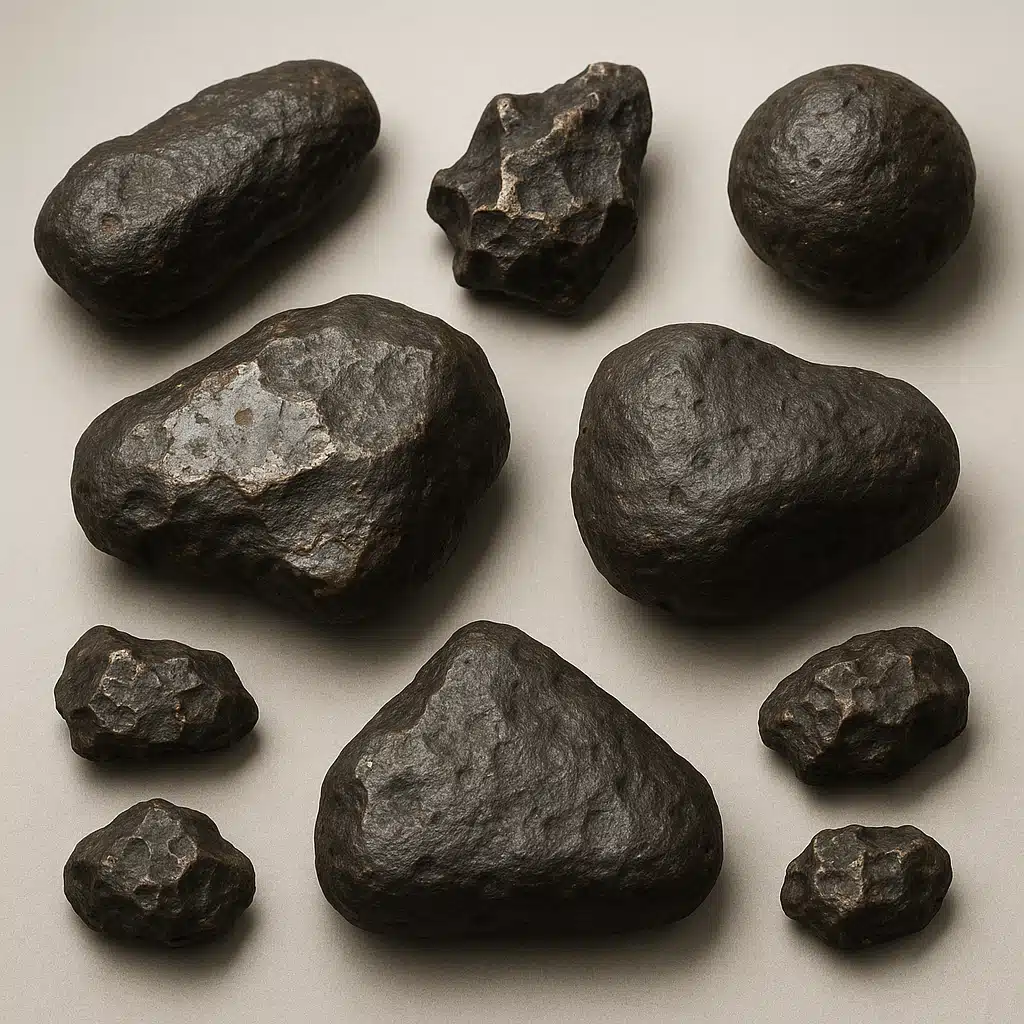
A meteorite is a solid piece of debris from celestial objects such as asteroids, comets, or planetary fragments that survives the intense heat and friction of atmospheric entry and reaches the Earth’s surface intact. These extraterrestrial materials are among the oldest objects we can hold in our hands, often dating back over 4.5 billion years to the formation of our solar system.
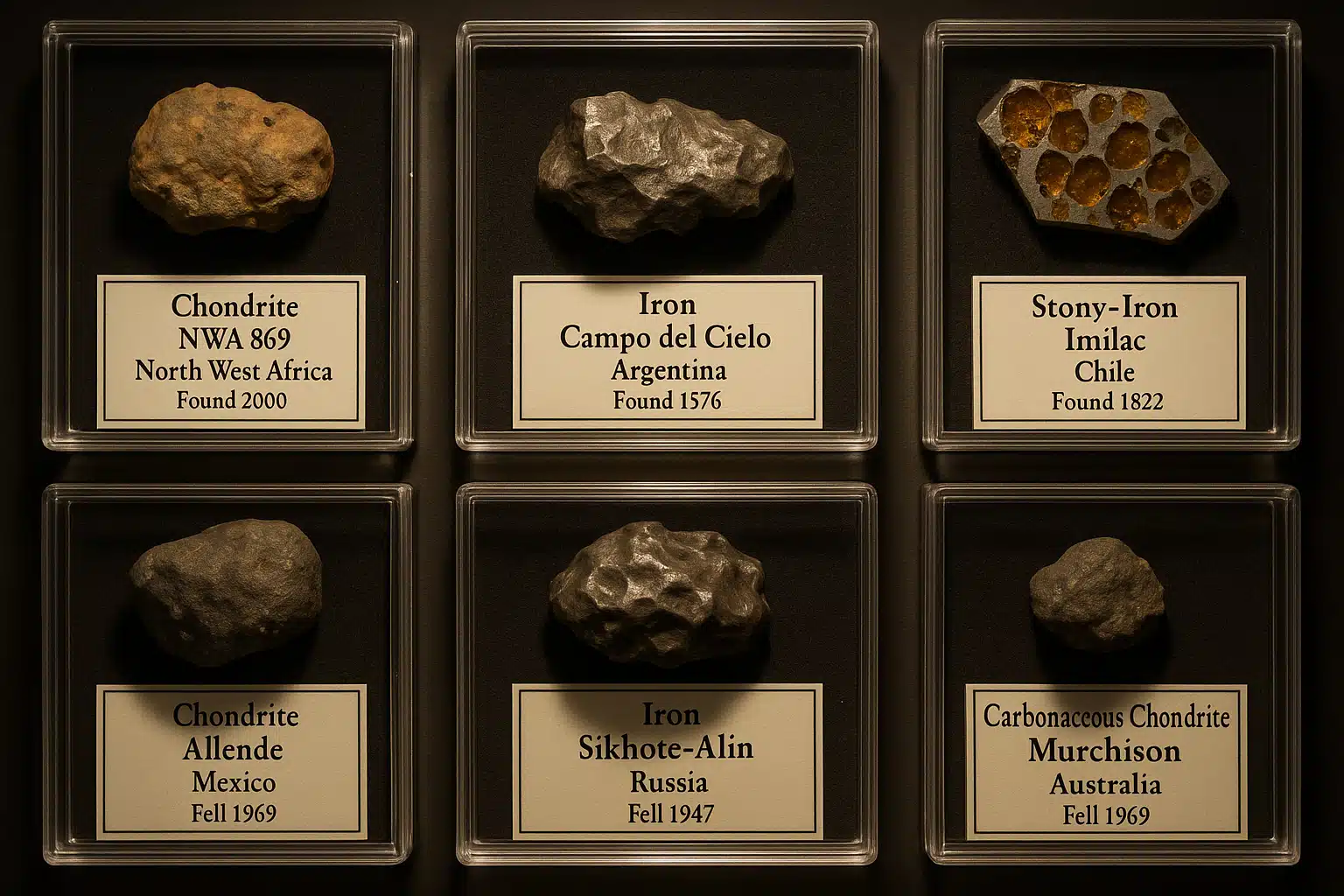
Meteorites are classified into three main categories: stony meteorites (composed primarily of silicate minerals), iron meteorites (consisting largely of iron-nickel alloys), and stony-iron meteorites (containing roughly equal amounts of metallic and rocky material). Each type has distinct characteristics that can aid in identification, though all share certain universal features that distinguish them from terrestrial rocks.
Understanding these cosmic visitors requires knowledge of both their journey through space and their transformation during atmospheric entry. The extreme temperatures experienced during this descent—often exceeding 1,600 degrees Celsius—create unique surface features that serve as key identification markers.
Why Meteorite Identification Matters
Meteorite identification extends far beyond the excitement of personal discovery. These space rocks serve as time capsules, containing pristine materials from the early solar system that have remained largely unchanged for billions of years. Scientists analyze meteorites to understand planetary formation, the composition of asteroids, and even the potential for life beyond Earth.
For collectors and enthusiasts, verified meteorites hold significant scientific, educational, and monetary value. Authentic specimens contribute to research institutions and museums worldwide, advancing our understanding of the cosmos. Additionally, knowing how to properly identify meteorites prevents the waste of resources on analysis of common terrestrial materials and helps build a knowledgeable community of amateur astronomers and rock hunters.
The skills developed through meteorite hunting also foster a deeper appreciation for planetary science, geology, and the natural world. This hobby connects people across continents through a shared fascination with the universe and encourages outdoor exploration and scientific thinking.
Essential Characteristics for Meteorite Identification
Visual Appearance and Surface Features
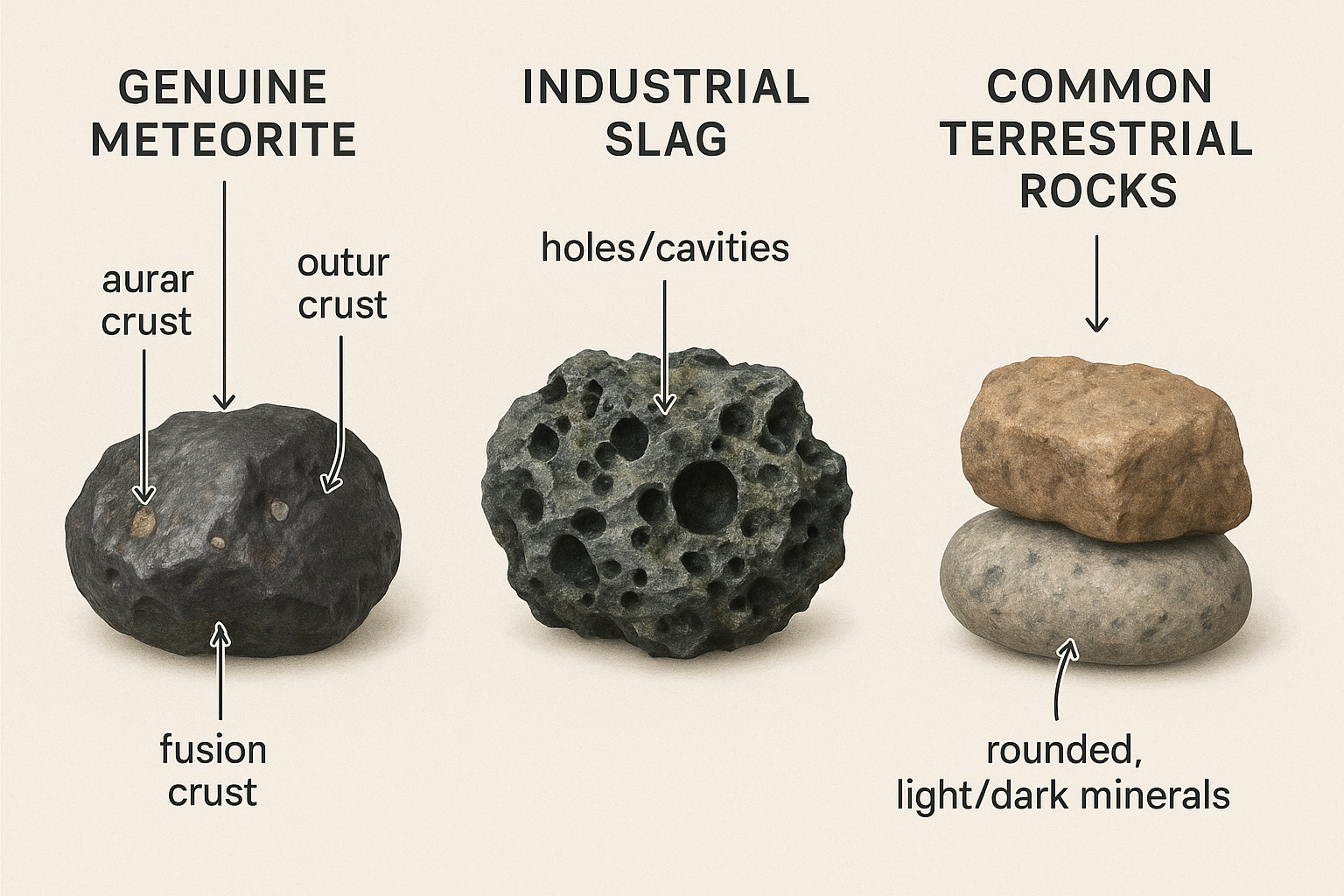
The exterior of a meteorite tells the story of its violent entry through Earth’s atmosphere. Genuine meteorites typically display a fusion crust—a thin, dark coating that forms when the outer surface melts and then rapidly cools during atmospheric passage. This crust is usually black or dark brown when fresh, though it may weather to lighter shades over time when exposed to the elements.
The fusion crust is typically less than two millimeters thick and may show flow lines or patterns indicating the direction of atmospheric flight. Some meteorites exhibit regmaglypts—thumbprint-like depressions on their surface caused by differential ablation during entry. These features are rarely seen in terrestrial rocks and are strong indicators of extraterrestrial origin.
The overall shape of meteorites varies, but they often lack sharp edges or angular features due to ablation during atmospheric entry. Unlike many terrestrial rocks that show weathering patterns from water and wind, meteorites display smoothed, rounded contours with the distinctive surface textures mentioned above.
Weight and Density Testing
One of the most reliable field tests for potential meteorites is the weight-to-size ratio. Meteorites are notably denser than most terrestrial rocks of similar size. This increased density comes from their metallic content—even stony meteorites typically contain between 10-25% metal by weight, while iron meteorites are almost entirely composed of dense iron-nickel alloys.
When you pick up a suspected meteorite, it should feel surprisingly heavy for its size. A rock that feels like an ordinary stone is probably just that—an ordinary stone. This simple heft test can immediately eliminate many candidates, though it should be combined with other identification methods for confirmation.
For those seeking more precision, calculating specific gravity (density relative to water) can provide quantitative data. Most stony meteorites have specific gravities between 3.0 and 3.7, while iron meteorites range from 7.3 to 7.9. Common terrestrial rocks typically fall between 2.5 and 3.0, making density a distinguishing factor.
Magnetic Properties
The presence of metallic iron-nickel alloys in most meteorites makes magnetism one of the simplest and most accessible field tests available. Carrying a strong magnet during rock hunting expeditions can quickly identify promising candidates. If a rock shows strong magnetic attraction, it warrants further investigation, though this alone does not confirm extraterrestrial origin.
It’s important to note that while most meteorites are magnetic, not all magnetic rocks are meteorites. Terrestrial rocks containing magnetite or other iron-bearing minerals can also attract magnets. However, the lack of magnetic properties almost certainly rules out a specimen as a meteorite, making this a valuable elimination test.
Iron and stony-iron meteorites display very strong magnetic properties and will firmly attach to even moderate magnets. Stony meteorites show weaker but still detectable magnetism due to their metallic inclusions. Testing various parts of the rock can reveal the distribution of metal throughout the specimen.
Internal Structure and Composition
Examining the interior of a suspected meteorite provides crucial identification evidence, though this requires creating a fresh surface through cutting or breaking. The internal structure of meteorites differs markedly from terrestrial rocks and reveals features that formed in space under conditions impossible on Earth.
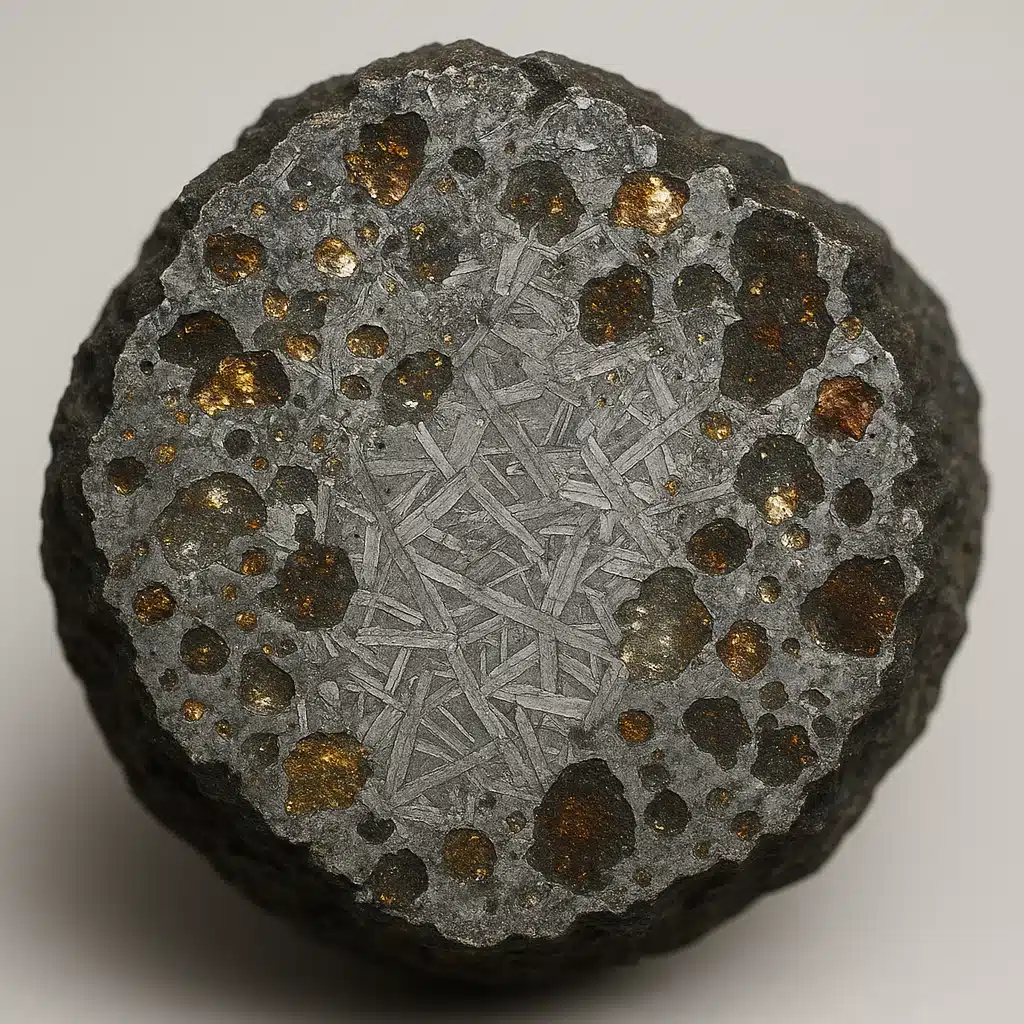
Stony meteorites, when cut and polished, often display chondrules—small, spherical grains that formed during the early solar system. These appear as tiny circular or oval inclusions within the rock matrix and are definitive proof of extraterrestrial origin. Additionally, metallic flecks scattered throughout the interior appear as bright, reflective specks when viewed under good lighting.
Iron meteorites, when etched with acid, may reveal Widmanstätten patterns—distinctive crystalline structures that form only during extremely slow cooling over millions of years in space. These geometric patterns of intersecting lines are impossible to replicate terrestrially and serve as conclusive evidence of meteoritic origin.
The interior color of fresh meteorites typically shows lighter tones than the dark exterior crust, with stony meteorites displaying gray to light brown interiors. The presence of rust or oxidation on the interior suggests terrestrial iron or prolonged weathering rather than a recent meteorite fall.
Common Imposters: What Meteorites Are Not
Industrial Slag: The Most Common Misidentification
Industrial slag—the waste product from metal smelting and refining processes—is by far the most commonly misidentified material. Slag can superficially resemble meteorites with its dark color, irregular shape, vesicular texture, and sometimes significant weight. However, several key differences distinguish slag from genuine meteorites.
Slag typically contains numerous bubbles or vesicles created by gases escaping during the smelting process, giving it a porous, foam-like appearance in many cases. While some rare meteorites may contain vesicles, the size, distribution, and abundance in slag are distinctly different. Slag also often shows a glassy or enamel-like surface texture rather than the matte appearance of fusion crust.
The weight of slag can be deceptive—some types are surprisingly heavy due to residual metal content, while others are unusually light due to high porosity. Slag may be magnetic if iron-bearing materials were processed, adding to the confusion. However, slag typically lacks the internal metallic flecks, proper density ratios, and structural features characteristic of meteorites.
Context also matters in identification. Slag is commonly found near industrial sites, railroad tracks, construction areas, or anywhere metal processing has occurred. Its presence in such locations should immediately raise suspicion about its true nature.
Terrestrial Rocks with Misleading Features
Several types of terrestrial rocks can fool the untrained eye. Hematite and magnetite, iron oxide minerals, create heavy, dark, magnetic rocks that superficially resemble meteorites. However, these lack the metallic inclusions, fusion crust, and internal structure of genuine space rocks.
Basalt, a common volcanic rock, sometimes displays surface features that might be mistaken for fusion crust, particularly when weathered. However, basalt typically contains visible mineral crystals or holes from gas bubbles, shows layering or flow banding, and lacks the density and metallic content of meteorites.
Weathered or burnt rocks may develop dark surfaces that resemble fusion crust to inexperienced observers. Lightning strikes, forest fires, or other natural processes can alter rock surfaces, creating superficial similarities to meteorites while lacking all the definitive internal characteristics.
Location and Context Considerations
While meteorites can theoretically fall anywhere on Earth, certain environments yield more finds than others. Desert regions and ice fields provide ideal settings for meteorite recovery due to minimal vegetation, stable surfaces, and color contrast that makes dark meteorites stand out against light-colored substrates.
However, finding an unusual rock in an unexpected location does not automatically indicate extraterrestrial origin. Focus should remain on the physical characteristics of the specimen rather than the circumstances of discovery. Many people assume that rocks found on their property must be meteorites simply because they seem out of place, but geological processes, human activity, and natural transport can explain most unusual rock locations.
Conversely, genuine meteorites are occasionally found in seemingly ordinary locations—residential areas, agricultural fields, forests, and urban environments. Documented meteorite falls have occurred in virtually every type of terrestrial environment, so no location should be automatically discounted if the specimen displays authentic meteoritic features.
Essential Tools for Meteorite Hunting
Successful meteorite identification begins with having the right equipment for field examination and testing. While professional analysis ultimately confirms extraterrestrial origin, several portable tools enable preliminary assessment and help focus efforts on the most promising specimens.
A strong handheld magnet is perhaps the most essential tool for meteorite hunting. Neodymium (rare-earth) magnets provide superior strength in a compact size, making them ideal for field testing. A magnet attached to a string or pole allows for scanning areas without constant bending and can attract meteoritic material from a short distance.
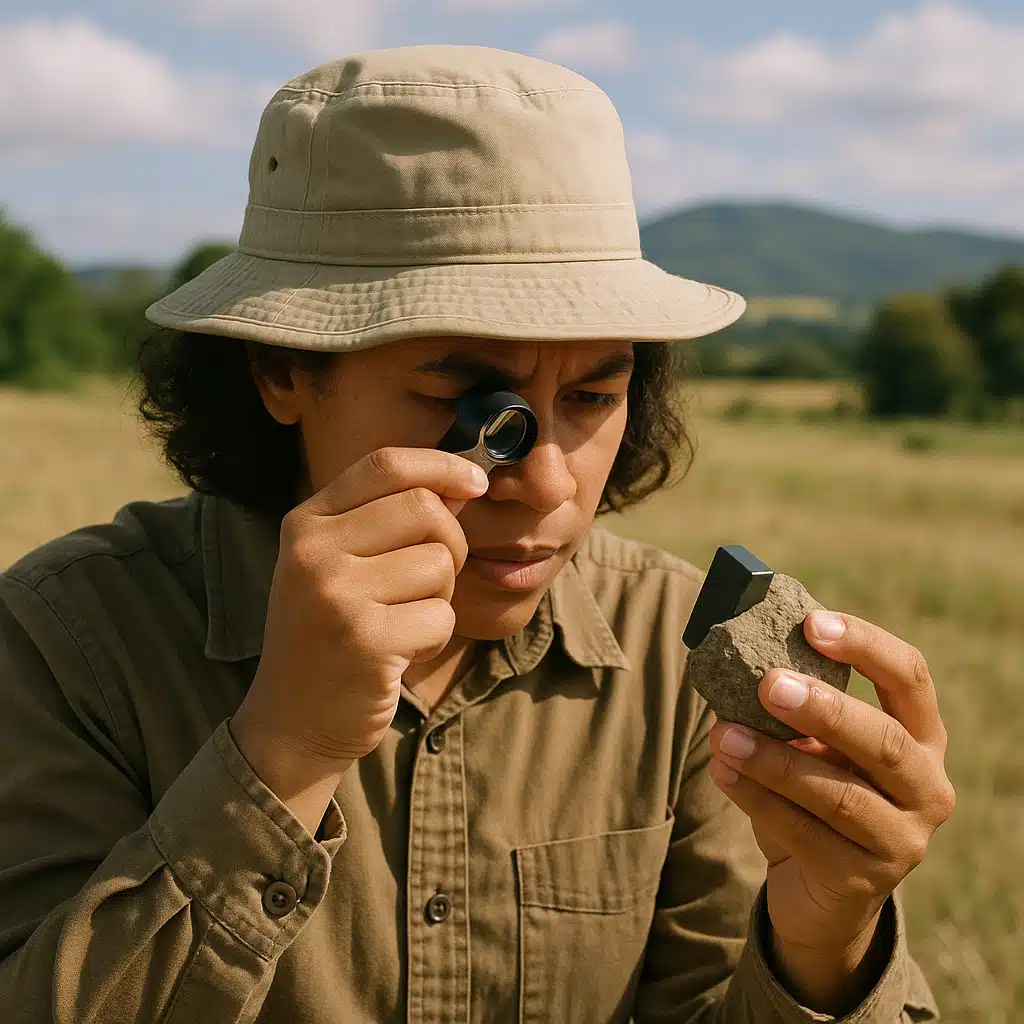
A quality hand lens or jeweler’s loupe (10x magnification is standard) enables close examination of surface features, fusion crust characteristics, and internal structures. This simple optical tool reveals details invisible to the naked eye and helps distinguish genuine meteoritic features from superficial similarities in terrestrial materials.
A small file or grinding stone allows for creating fresh surfaces to examine interior composition, though this should be done carefully to preserve specimen integrity. Many hunters carry a small ceramic tile for streak testing—while meteorites typically don’t leave colored streaks like many terrestrial minerals, this can help eliminate certain imposters.
Digital scales, while less portable, provide objective weight measurements that can be compared to volume estimates for density calculations. Photography equipment—even a smartphone camera—documents finds and allows for later review and comparison with reference materials.
Step-by-Step Identification Process
Approaching potential meteorite identification systematically increases accuracy and prevents hasty conclusions. Follow this structured process when evaluating suspected space rocks:
Step 1: Visual Inspection
Begin with careful observation of the specimen’s overall appearance. Look for a dark fusion crust, absence of large holes or bubbles, rounded shape without sharp angles, and regmaglypt depressions. Document the specimen with photographs from multiple angles, including close-ups of surface features.
Step 2: Weight Assessment
Evaluate whether the specimen feels unusually heavy for its size compared to ordinary rocks. This subjective test provides immediate feedback, though it requires some experience with handling various rock types for accurate interpretation.
Step 3: Magnetic Testing
Apply a strong magnet to multiple areas of the specimen. Note the strength of attraction—strong attraction suggests high metal content, while weak attraction indicates lower metallic content but doesn’t eliminate meteorite possibility. Complete lack of magnetic response makes meteoritic origin highly unlikely.
Step 4: Surface Examination
Use a hand lens to examine the surface texture in detail. Look for the thin, smooth fusion crust characteristic of meteorites rather than the bubbly, glassy appearance of slag. Check for flow lines or patterns in the crust that indicate atmospheric melting.
Step 5: Interior Inspection
If the specimen shows promise after previous tests, carefully create a small window to view the interior—either by grinding a small spot or examining a naturally broken surface. Look for metallic flecks distributed throughout, appropriate interior color, and absence of large holes or layering typical of terrestrial rocks.
Step 6: Research and Comparison
Compare your findings with reference photographs and descriptions from reliable sources. Note which characteristics match known meteorites and which suggest terrestrial origin. Be honest in this assessment—most suspected meteorites prove to be earthly materials.
Step 7: Expert Consultation
If the specimen passes all preliminary tests, consult with experts for verification. University geology departments, natural history museums, and meteorite laboratories can provide professional analysis. Many institutions accept photographs for preliminary assessment before requiring physical samples.
Professional Analysis and Verification
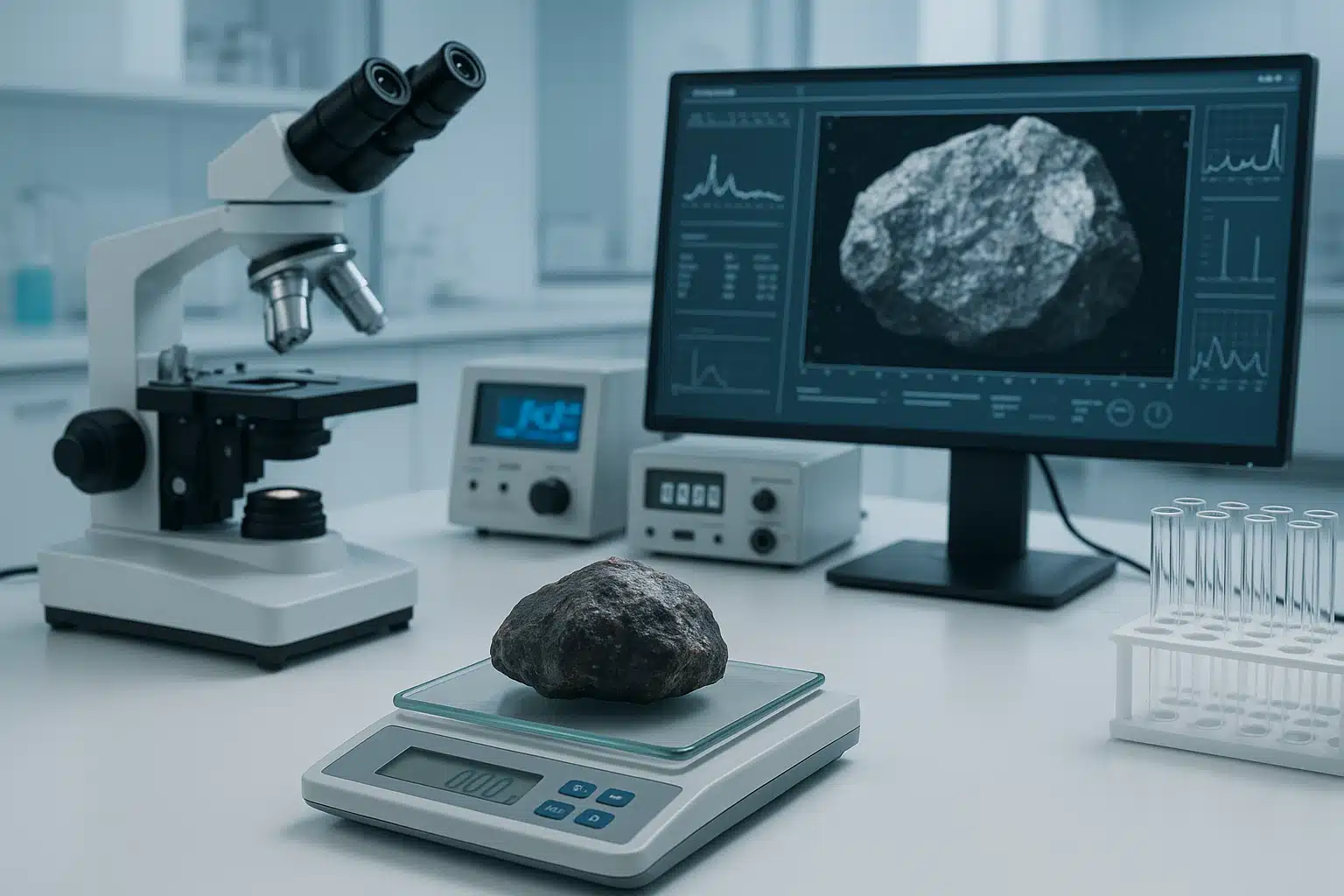
While field testing provides valuable preliminary information, definitive meteorite identification requires professional laboratory analysis. Several sophisticated techniques confirm extraterrestrial origin and classify meteorite type with certainty.
Elemental analysis through techniques like X-ray fluorescence or electron microprobe examination reveals the precise chemical composition of a specimen. Meteorites show characteristic element ratios—particularly oxygen isotope ratios—that differ from terrestrial materials and definitively prove space origin.
Microscopic examination of thin sections allows identification of chondrules, metal grains, mineral compositions, and crystalline structures unique to meteorites. This analysis requires specialized preparation and equipment but provides conclusive evidence when diagnostic features are present.
For iron meteorites, acid etching reveals Widmanstätten patterns when present. This procedure uses dilute nitric acid to preferentially dissolve certain crystal phases, exposing the distinctive geometric patterns formed during slow cooling in space. This test should only be performed by professionals as it permanently alters the specimen surface.
Several universities, museums, and private laboratories offer meteorite identification services. Some provide free preliminary assessment based on photographs and descriptions, while comprehensive analysis typically involves fees that vary depending on the extent of testing required. Reputable institutions maintain strict scientific standards and provide detailed reports of findings.
When submitting specimens for analysis, follow institutional guidelines carefully. Provide complete information about discovery location, circumstances, and any testing already performed. Be prepared for the likelihood that your specimen is not a meteorite—professionals report that well over 95% of submitted samples prove to be terrestrial materials.
Realistic Expectations and Success Stories
Understanding the rarity of meteorite finds helps maintain appropriate expectations while pursuing this fascinating hobby. Estimates suggest that between 10,000 and 80,000 meteorites larger than 10 grams fall to Earth annually, but the vast majority land in oceans, remote areas, or locations where they’re unlikely to be recovered. Only a small fraction—typically several hundred to a few thousand—are actually found and reported each year worldwide.
The probability of any given unusual rock being a meteorite is quite low, which explains why experts often encounter skepticism when people claim discoveries. However, genuine meteorites are found by ordinary people regularly, often during routine outdoor activities rather than dedicated searches.
Documented cases include agricultural workers discovering meteorites while plowing fields, hikers noticing unusual rocks on trails, and residents finding specimens in yards or gardens after witnessed fireball events. These discoveries share common elements: the finders noticed something unusual, had enough knowledge to recognize potentially meteoritic features, and took steps to verify their finds.
Some of the world’s most significant meteorite specimens were found accidentally by people with no special expertise in planetary science. The lesson from these success stories is that awareness, observation, and willingness to investigate unusual findings can lead to genuine discoveries.
Increasing your chances of finding meteorites involves spending time in areas where they’re more easily detected—open spaces with minimal vegetation and ground cover. Timing expeditions after reported fireball sightings in your area can focus searches in locations where recent falls may have occurred. Participating in organized meteorite hunting expeditions in productive areas offers both educational value and enhanced discovery potential through group efforts.
Even if you never find a genuine meteorite, the process of learning identification techniques, exploring outdoor environments, and connecting with the broader community of astronomy and geology enthusiasts provides rewarding experiences. The knowledge gained makes you a more informed observer of the natural world and the cosmic environment surrounding our planet.
Ethical Considerations and Legal Aspects
Meteorite collecting involves ethical responsibilities and legal considerations that vary by location. Understanding these aspects ensures that your hobby respects scientific interests, property rights, and applicable regulations.
Many countries and regions have laws governing meteorite collection and ownership. Some nations classify meteorites as national heritage items requiring official reporting of finds, while others allow finders to claim ownership. Private land meteorites typically belong to the property owner, making permission essential before collecting. Public lands often have specific regulations about removing natural materials, including meteorites.
From an ethical standpoint, scientifically significant meteorites—particularly those from witnessed falls or representing rare types—contribute most value when made available for research. Many collectors donate or sell specimens to institutions where they can be studied and preserved for future generations while still receiving appropriate recognition and sometimes compensation.
Reputable collectors maintain detailed documentation of their specimens, including discovery location coordinates, date, circumstances, photographs, and any analysis performed. This provenance information significantly enhances scientific value and authenticity verification for future researchers or potential buyers.
The meteorite collecting community generally operates under principles of responsible collecting: obtaining proper permissions, accurately representing specimens, sharing significant finds with researchers, preserving associated data, and promoting education about these extraterrestrial materials. Following these principles maintains the hobby’s positive reputation and ensures continued access to collecting opportunities.
Building Knowledge and Connecting With the Community
Developing meteorite identification skills is an ongoing process that benefits greatly from education and community involvement. Numerous resources help enthusiasts deepen their knowledge and connect with others who share this specialized interest.
Online forums and social media groups dedicated to meteorite collecting provide spaces for sharing finds, asking questions, and learning from experienced collectors. These communities often include professional meteoriticists who generously share expertise and provide identification assistance. However, members should approach online identifications cautiously—photographs alone cannot definitively confirm meteoritic origin, though they can certainly rule out obvious imposters.
Museum collections and university geology departments often display meteorite specimens with informative descriptions. Viewing authenticated samples in person helps develop recognition skills by showing the range of appearances genuine meteorites can have. Many institutions host periodic public programs about meteorites and planetary science.
Specialized conferences and gem and mineral shows frequently feature meteorite dealers and exhibits. These events provide opportunities to handle specimens, speak with experts, and potentially acquire reference samples for personal study collections. Building a small reference collection of verified meteorites aids in comparison testing and deepens understanding of meteoritic characteristics.
Books, scientific publications, and online databases offer detailed information about meteorite classification, chemistry, and identification features. While technical literature can be challenging for beginners, many accessible resources explain core concepts without requiring advanced scientific background. Gradually building knowledge through varied sources develops well-rounded understanding.
Some enthusiasts take their interest further by volunteering with research institutions, participating in meteorite recovery expeditions, or even pursuing formal education in planetary science or geology. These deeper engagements transform a casual hobby into meaningful contributions to scientific understanding of our solar system.
Conclusion: The Journey of Discovery
Meteorite identification combines scientific knowledge, careful observation, systematic testing, and realistic expectations. While the vast majority of suspected space rocks prove to be terrestrial materials—most commonly industrial slag—developing the skills to distinguish genuine meteorites from imposters offers rewarding engagement with planetary science and natural history.
The key characteristics that identify authentic meteorites include fusion crust from atmospheric entry, significant density relative to size, magnetic properties from metallic content, and internal features such as metallic flecks or chondrules. These features, when present together, distinguish extraterrestrial materials from the common terrestrial rocks and industrial products that superficially resemble them.
Success in meteorite hunting comes not from examining every unusual rock with unfounded optimism, but from applying systematic identification criteria, seeking expert verification when warranted, and maintaining scientifically grounded skepticism. This approach respects both the rarity of genuine meteorites and the possibility that you might indeed discover one of these cosmic treasures.
Whether you find an authenticated meteorite or simply develop deeper appreciation for the rocks beneath your feet and the cosmic environment above your head, the pursuit of meteorite identification connects you with fundamental questions about our solar system’s formation and the materials that built our planet. Each specimen examined—meteorite or not—represents an opportunity to engage with the natural world through the lens of scientific inquiry.
As you continue your exploration, remember that knowledge, patience, and proper methodology serve you far better than wishful thinking. Approach suspected meteorites with informed curiosity, apply the identification techniques outlined in this guide, and don’t hesitate to seek expert opinions for promising specimens. The next rock you examine just might be a genuine visitor from space—but more likely, it’s slag, and knowing the difference is what makes the occasional real discovery so extraordinarily special.