Affinage at Home: Creating the Perfect Aging Environment for Artisan Cheese
The art of aged cheese has captivated food enthusiasts worldwide for centuries. Behind every perfectly aged wheel of cheese lies a carefully controlled process known as affinage—the methodical refinement of cheese through precise environmental conditions. Whether you’re a culinary hobbyist, a cheese connoisseur, or simply curious about expanding your food crafting skills, creating your own cheese aging environment at home is an achievable and rewarding endeavor. This comprehensive guide will walk you through the essential elements of affinage, focusing on the two most critical factors: temperature and humidity control.
Understanding Affinage: The Art of Cheese Refinement
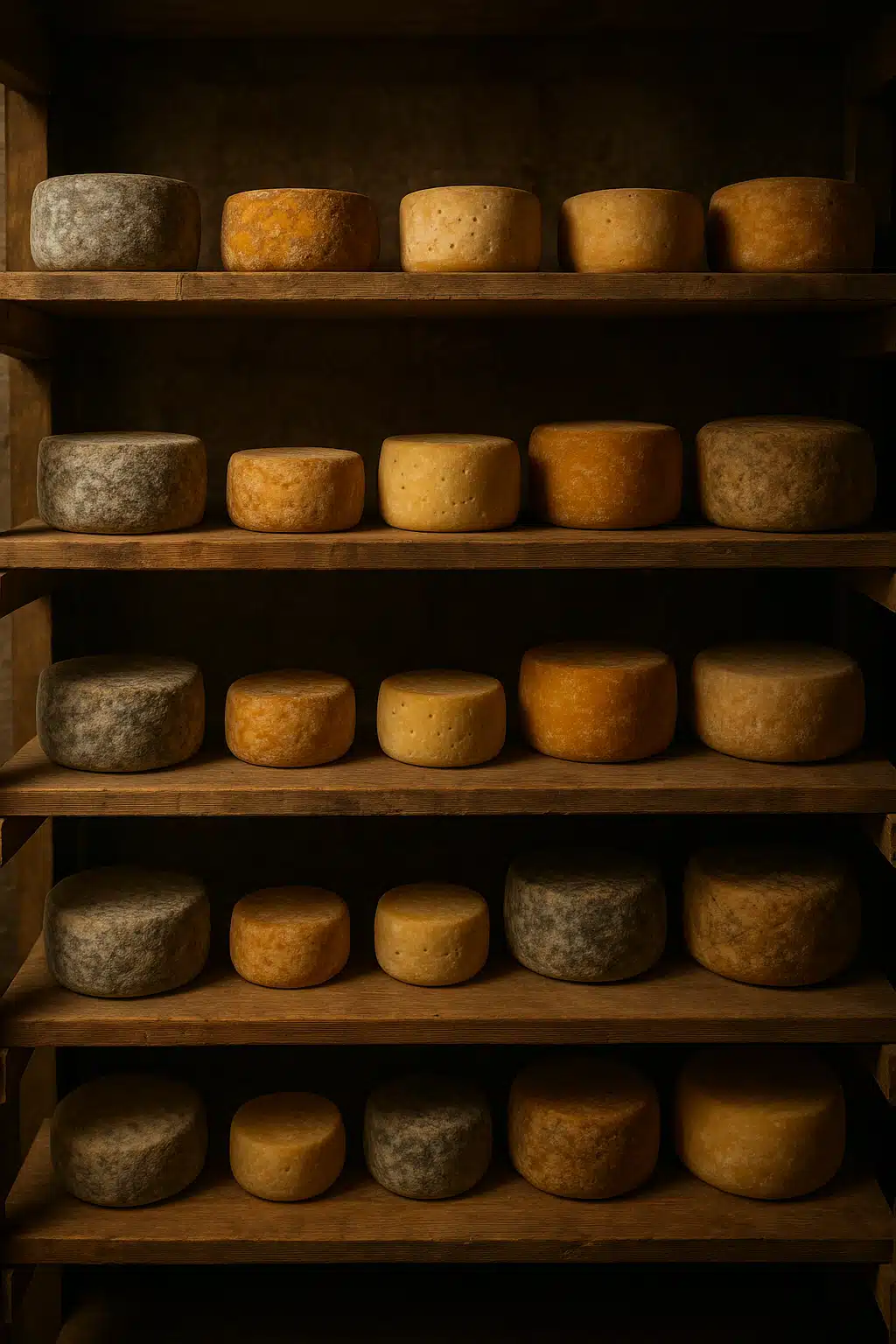
Affinage is a French term that translates to “refinement” or “maturation,” and it represents far more than simply storing cheese. This sophisticated process involves the careful nurturing of cheese as it develops its characteristic flavors, textures, and aromatic profiles over time. During affinage, complex biochemical transformations occur within the cheese: proteins break down into flavorful amino acids, fats develop nuanced taste compounds, and beneficial microorganisms work to create the distinctive qualities that separate exceptional aged cheese from ordinary varieties.
Professional cheese makers, known as affineurs, dedicate years to mastering this craft. However, home enthusiasts can achieve impressive results by understanding and controlling the fundamental environmental factors that influence cheese maturation. The process requires patience, attention to detail, and a willingness to learn from both successes and occasional setbacks. With the right knowledge and equipment, you can transform fresh cheese into complex, flavorful creations that rival those found in specialty shops.
The Critical Role of Temperature in Cheese Aging
Temperature stands as one of the most influential factors in successful cheese affinage. The thermal environment determines the rate of enzymatic activity, microbial growth, and moisture migration within the cheese—all processes that directly impact the final flavor profile and texture. Understanding how to maintain proper temperature conditions is essential for achieving consistent, high-quality results.
Most cheese varieties thrive within a specific temperature range during the aging process. The optimal temperature typically falls between 50°F and 60°F (10°C to 15°C), though some cheese types may require slightly different conditions. This moderate, cool temperature range encourages beneficial microbial activity while preventing the growth of harmful bacteria. It also allows the cheese to develop flavors gradually, resulting in more complex and balanced taste profiles.
Temperature consistency is equally important as the actual temperature range. Fluctuations can cause stress to the cheese, leading to uneven aging, cracking, or the development of off-flavors. Even variations of just a few degrees can affect the moisture content and texture of the cheese surface. For this reason, investing in quality temperature monitoring equipment and maintaining stable conditions should be a top priority for anyone serious about home cheese aging.
- Optimal Temperature Range: Maintain temperatures between 50°F and 60°F (10°C to 15°C) for most cheese varieties to promote proper microbial activity and flavor development
- Temperature Stability: Minimize fluctuations to prevent surface cracking, uneven aging, and moisture imbalances within the cheese structure
- Variety-Specific Requirements: Research your specific cheese type, as some varieties like alpine-style cheeses may prefer slightly warmer conditions, while others benefit from cooler temperatures
- Seasonal Adjustments: Be prepared to make modifications to your setup as ambient temperatures change throughout the year
Mastering Humidity Control for Perfect Cheese Maturation
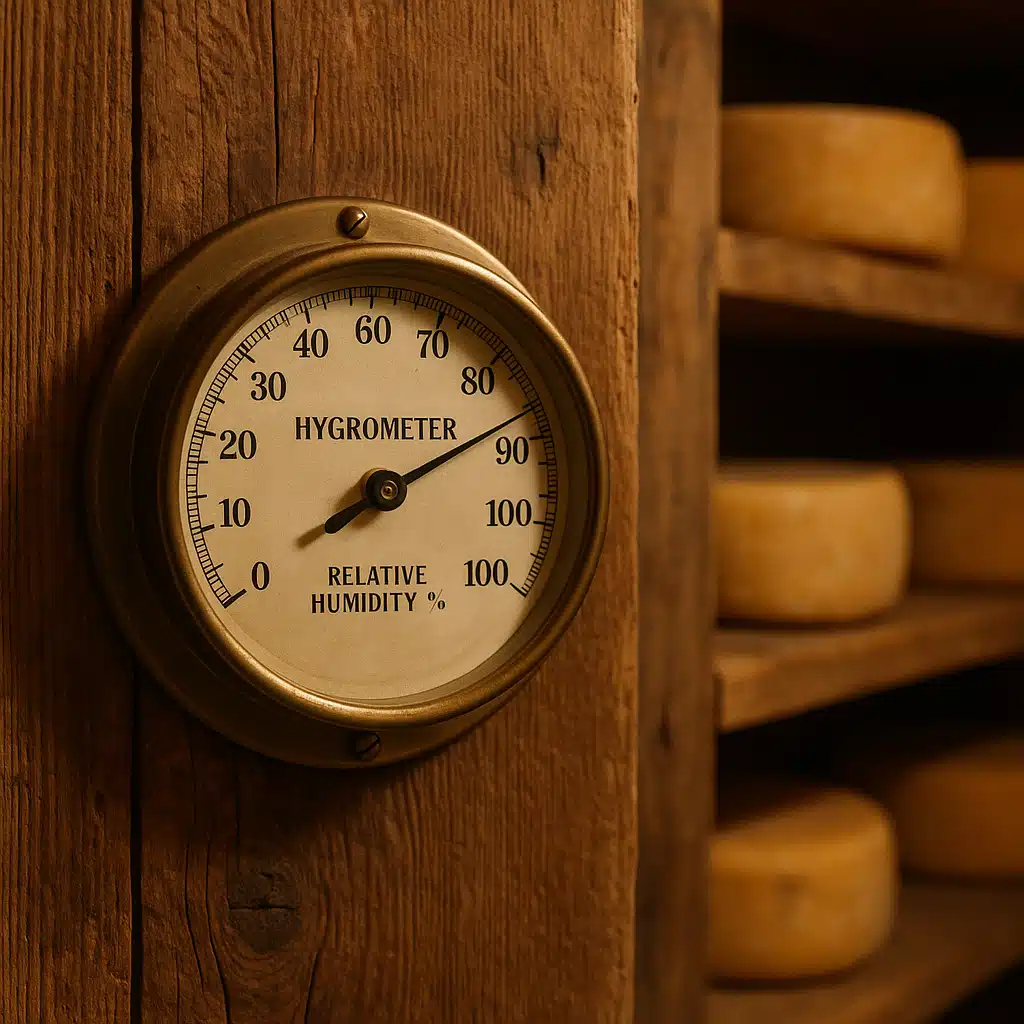
While temperature often receives the most attention, humidity control is equally crucial for successful cheese affinage. The moisture level in your aging environment directly affects the rate at which cheese loses water, the development of its rind, and its susceptibility to various molds and bacteria. Striking the right balance creates the ideal conditions for flavor development while preventing common problems like excessive drying or unwanted microbial growth.
The ideal relative humidity for most cheese aging applications falls between 80% and 90%. This range provides enough moisture in the air to prevent the cheese from drying out too quickly, which would result in hard, cracked surfaces and stunted flavor development. Simultaneously, it avoids excessive moisture that could promote the growth of undesirable molds or create overly soft, deteriorating rinds. Different cheese styles may require adjustments within or slightly outside this range, but it serves as an excellent starting point for most home aging projects.
Monitoring humidity requires specific tools and ongoing attention. Unlike temperature, which tends to remain relatively stable once established, humidity can fluctuate more readily based on factors like air circulation, the moisture content of the cheese itself, and even the number of cheeses in your aging space. Regular monitoring allows you to make timely adjustments, ensuring your cheese develops properly throughout the entire aging period.
- Target Humidity Range: Maintain relative humidity between 80% and 90% for most cheese types to balance proper rind development with moisture retention
- Preventing Excessive Drying: Insufficient humidity leads to rapid moisture loss, resulting in hard, cracked surfaces and concentrated, sometimes harsh flavors
- Avoiding Over-Humidification: Excessive moisture encourages unwanted mold growth, can cause rinds to become slimy, and may lead to structural problems in the cheese
- Humidity Adjustment Methods: Use water containers, humidity-generating devices, or controlled ventilation to fine-tune moisture levels in your aging space
Practical Aging Environment Setups for Home Cheese Makers
Creating an effective cheese aging environment doesn’t necessarily require extensive construction or expensive equipment. Many successful home cheese makers have developed creative solutions using existing spaces and readily available materials. The key is understanding the principles of temperature and humidity control, then adapting them to your specific circumstances and available resources.
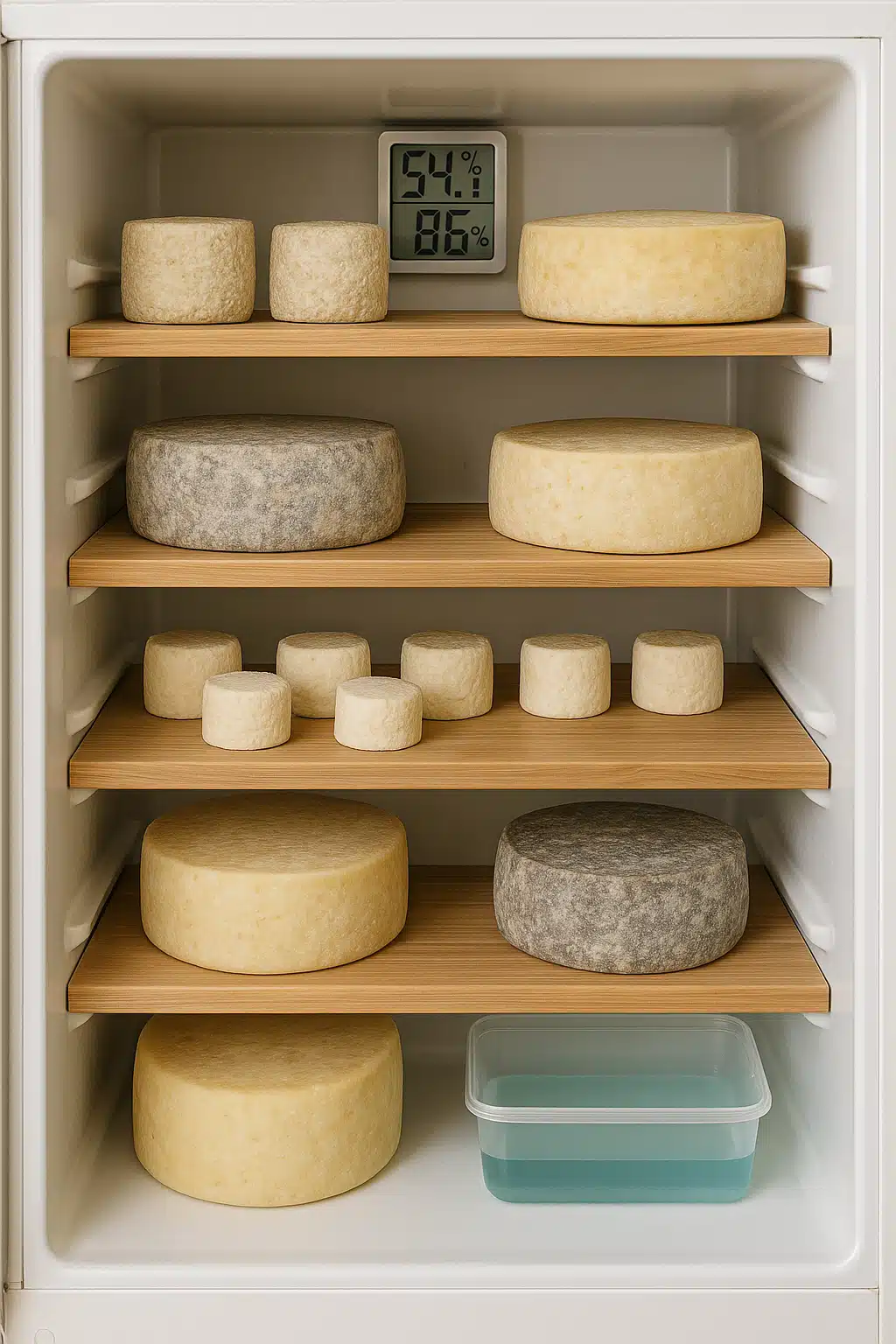
One of the most accessible options is converting an existing refrigerator into a dedicated cheese aging space, often called a “cheese cave.” Standard refrigerators typically operate at temperatures too cold for proper aging and at humidity levels far too low. However, with some modifications—such as adding a temperature controller to raise the internal temperature and introducing humidity sources like water-filled containers or small humidifiers—a refrigerator can become an excellent aging environment. The enclosed space makes it easier to maintain stable conditions, and the existing insulation helps buffer against external temperature fluctuations.
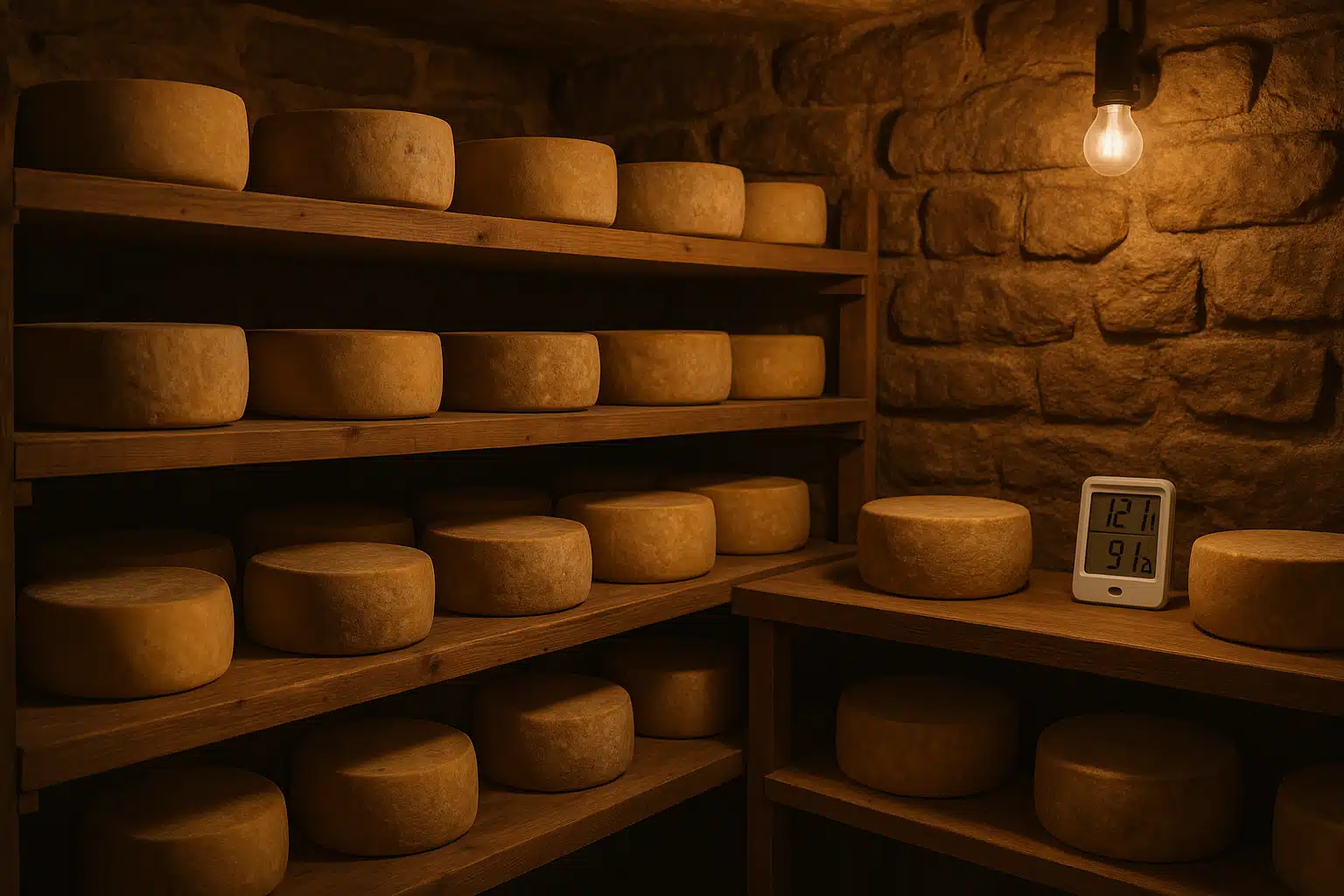
For those fortunate enough to have basement spaces or cellars, these naturally cool, humid environments often require minimal modification. Traditional wine cellars, in particular, frequently provide conditions very close to ideal for cheese aging. The stable underground temperature and naturally higher humidity found in many cellars create a ready-made aging space. Even without a formal cellar, a cool basement corner can often be adapted with relatively simple additions like shelving, monitoring equipment, and perhaps some humidity or temperature adjustment devices.
- Modified Refrigerator Cave: Transform a standard or beverage refrigerator using an external temperature controller, humidity sources, and proper air circulation to create a contained aging environment
- Basement or Cellar Space: Utilize naturally cool, stable underground areas that often provide excellent baseline conditions requiring only minor adjustments and monitoring
- Wine Cellar Adaptation: Leverage existing wine storage spaces that typically offer ideal temperature and humidity ranges suitable for cheese aging with minimal modification
- Dedicated Aging Cabinet: Invest in or construct a purpose-built aging cabinet with integrated temperature and humidity controls for precise environmental management
- Closet or Cupboard Conversion: Adapt interior spaces in climate-controlled areas of your home with careful insulation, temperature management, and humidity control systems
Common Mistakes and How to Avoid Them
Even with the best intentions and careful planning, home cheese makers often encounter challenges during their affinage journey. Understanding common pitfalls and learning how to prevent them can save significant time, effort, and disappointment. Many mistakes stem from underestimating the importance of environmental control or from attempting to rush a process that inherently requires patience and attention to detail.
One of the most frequent errors is neglecting consistent monitoring of aging conditions. Cheese aging is a dynamic process where conditions can shift unexpectedly due to various factors: changes in ambient temperature, variations in humidity from seasonal weather, or even the moisture released by the cheeses themselves as they age. Installing monitoring equipment is only the first step—regularly checking and recording these measurements allows you to identify trends, catch problems early, and make informed adjustments before issues become serious.
Another common mistake involves unrealistic expectations about aging timelines. Quality affinage cannot be rushed. Each cheese variety has its own optimal aging period, which can range from a few weeks to many months or even years. Attempting to accelerate this process by increasing temperature or making other environmental changes typically results in inferior flavor development, texture problems, or spoilage. Patience is not just a virtue in cheese aging—it’s an absolute requirement for success.
- Inconsistent Environmental Monitoring: Failing to regularly check and record temperature and humidity readings can allow problems to develop unnoticed until significant damage occurs
- Inadequate Air Circulation: Stagnant air promotes uneven aging and can encourage mold growth in localized areas; ensure gentle air movement without creating drafts that dry out cheese surfaces
- Overcrowding the Aging Space: Placing too many cheeses in close proximity restricts air circulation, creates localized humidity spikes, and can lead to cross-contamination between different cheese types
- Ignoring Cheese-Specific Requirements: Different cheese varieties have unique aging needs; applying a one-size-fits-all approach often produces suboptimal results
- Rushing the Aging Process: Attempting to accelerate maturation by increasing temperature or other means typically compromises flavor development and can lead to spoilage
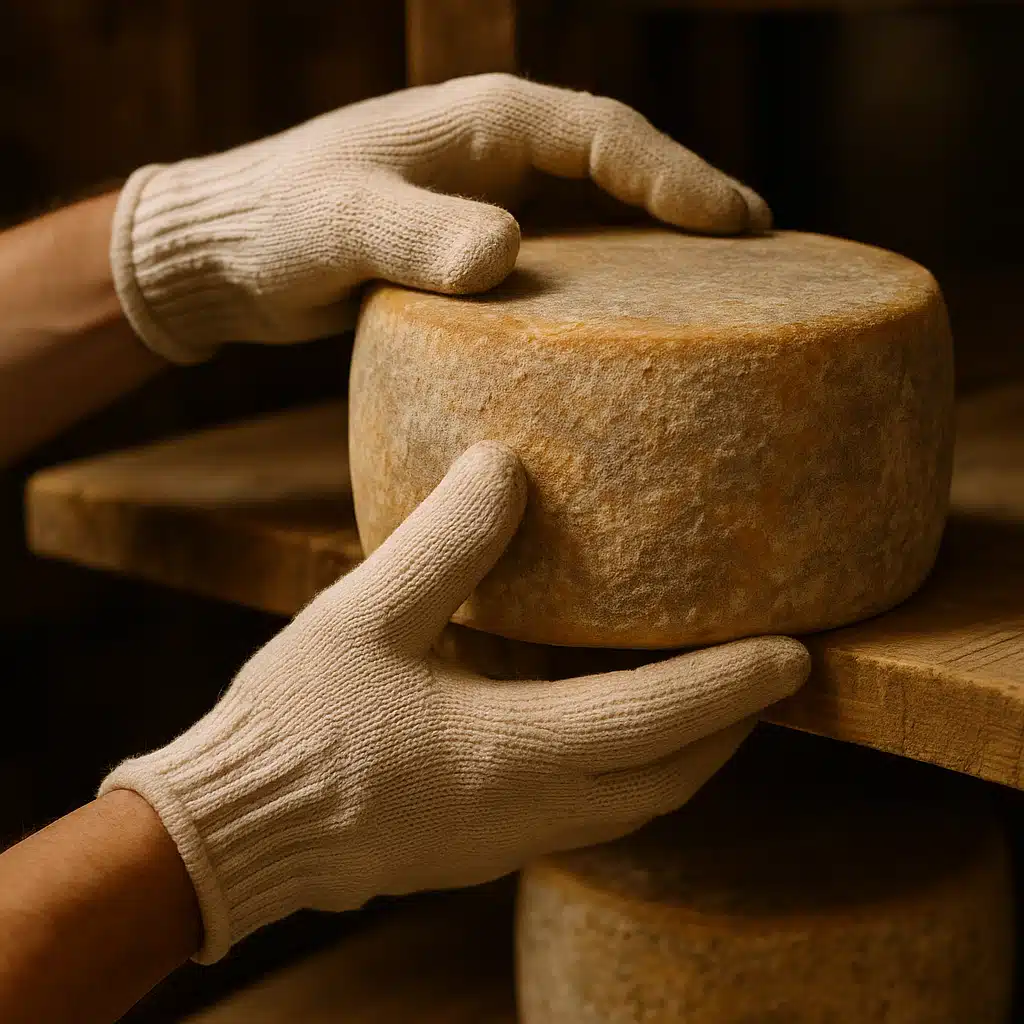
- Neglecting Regular Maintenance: Cheese aging requires ongoing care including turning, brushing, washing, or other maintenance depending on the cheese type
- Poor Initial Cheese Quality: Starting with inferior raw materials or improperly made fresh cheese will result in disappointing aged products regardless of perfect environmental conditions
Essential Tools and Equipment for Home Affinage
Successful cheese aging requires more than just a suitable space—having the right tools and equipment makes the process significantly easier and more reliable. While it’s possible to start with minimal investment and gradually expand your setup, certain items are essential from the beginning. These tools help you maintain precise control over your aging environment, monitor conditions accurately, and care for your cheese properly throughout the maturation process.
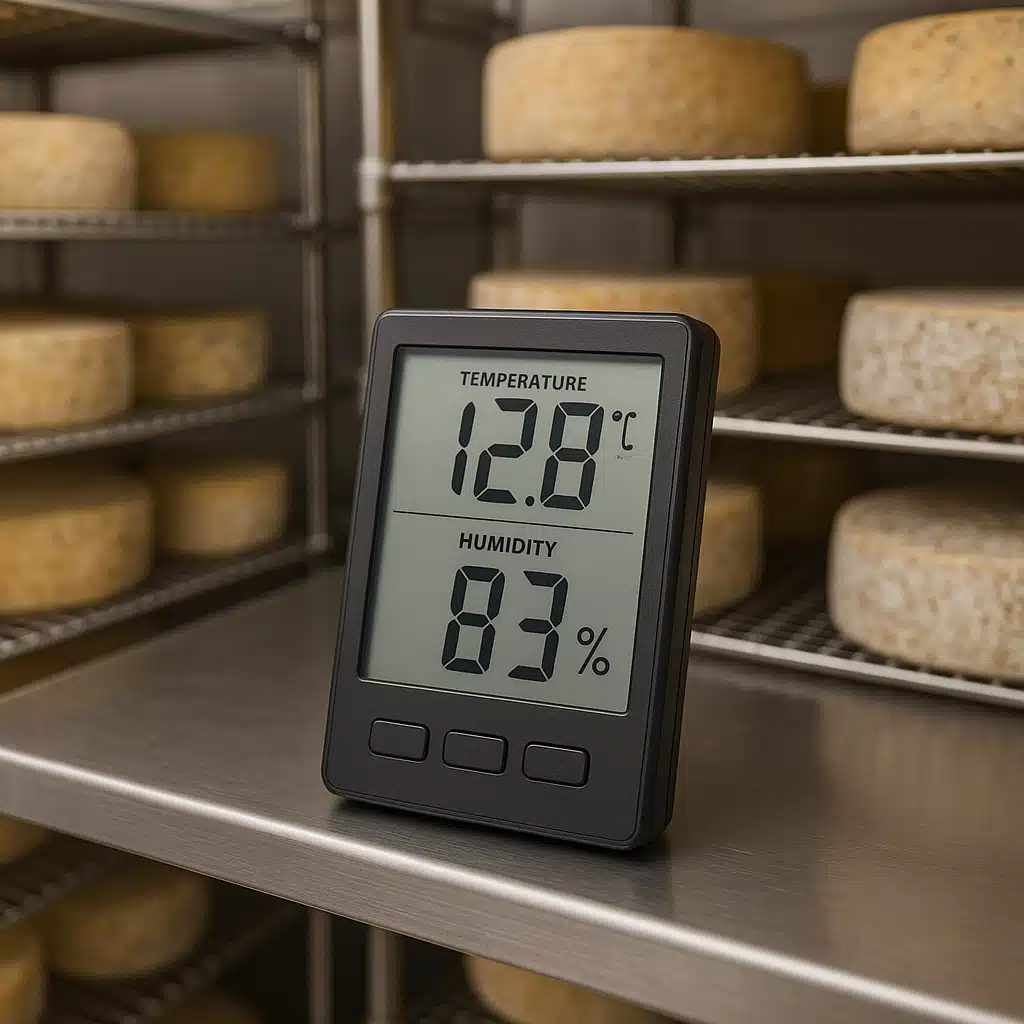
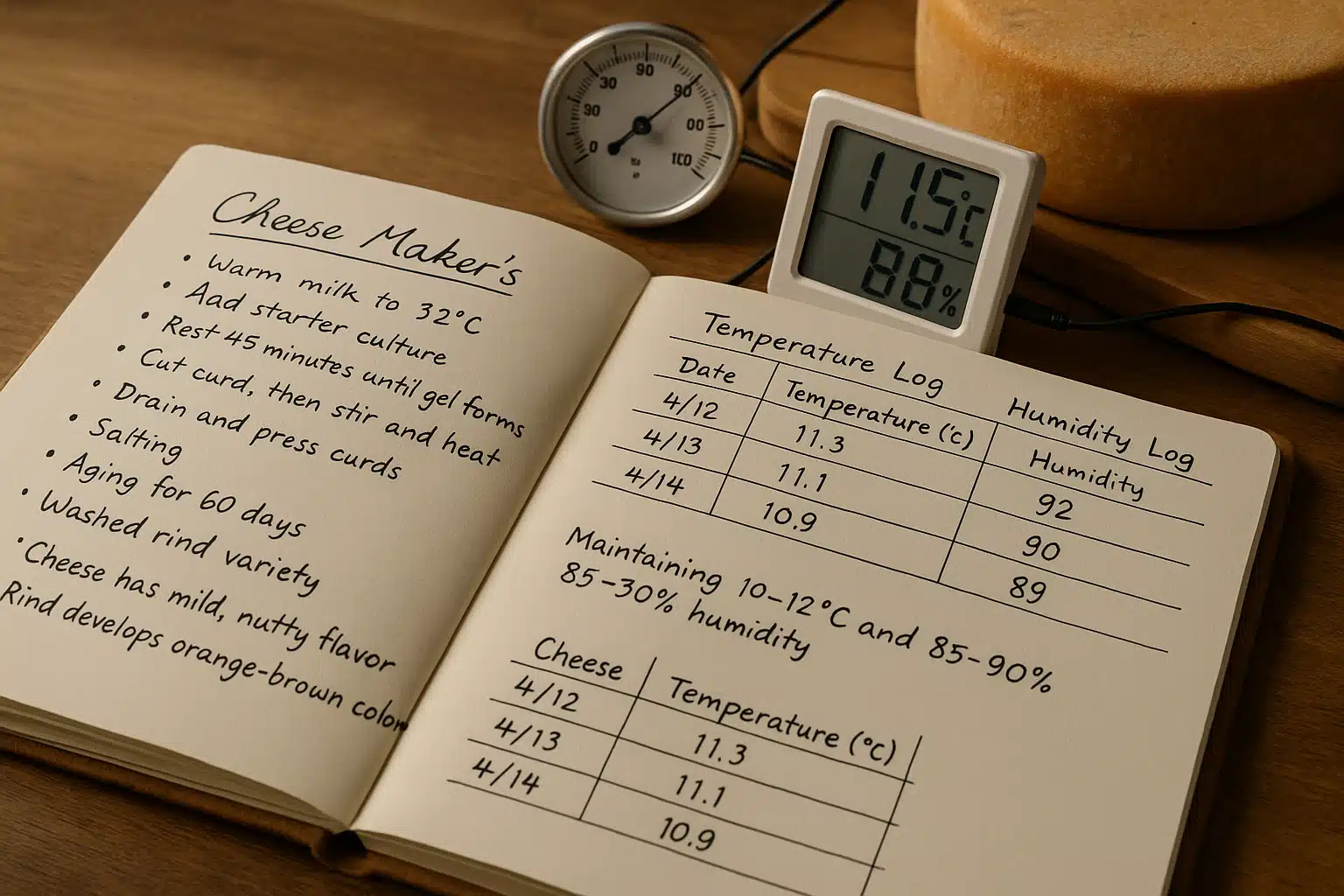
Monitoring equipment forms the foundation of any aging setup. Quality thermometers and hygrometers are non-negotiable investments that pay dividends in successful cheese production. Digital models with remote sensors allow you to check conditions without opening your aging space, minimizing environmental disturbances. Some advanced systems even offer data logging and smartphone connectivity, enabling you to track trends over time and receive alerts if conditions drift outside acceptable ranges.
Beyond monitoring, you’ll need equipment for maintaining and adjusting your cheese during the aging process. This includes brushes for cleaning rinds, turning boards or mats to prevent cheese from sticking to surfaces, and various wrapping or covering materials appropriate for different cheese styles. Investing in quality tools designed specifically for cheese making and aging ensures better results and makes the entire process more enjoyable.
Developing Your Affinage Skills Over Time
Mastering the art of cheese affinage is a journey that unfolds over months and years rather than days or weeks. Like any sophisticated culinary skill, it combines technical knowledge with sensory development, practical experience, and an understanding that comes only through repeated practice. As you progress in your cheese aging endeavors, you’ll develop an intuitive sense for how different cheeses respond to various conditions, how to identify potential problems before they become serious, and how to coax the most desirable flavors from each variety you age.
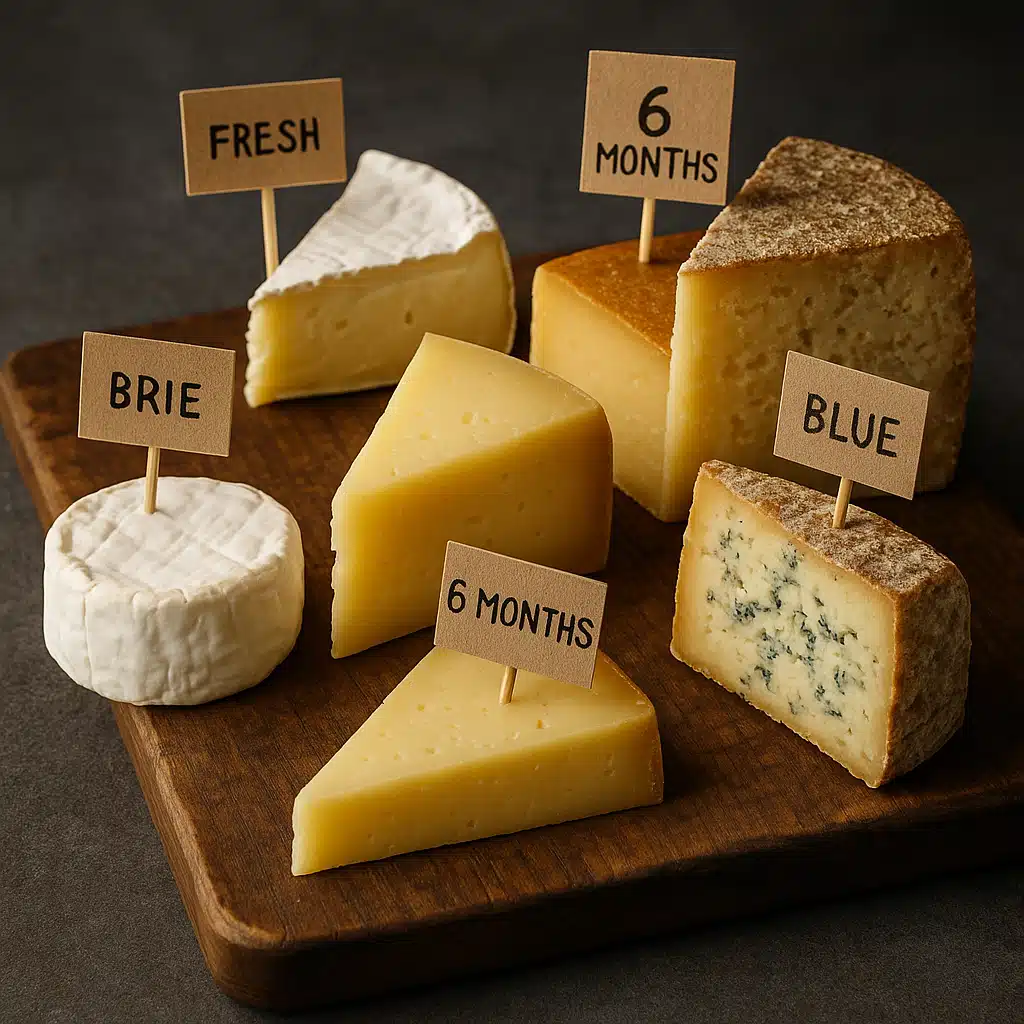
Start your affinage journey with simpler, more forgiving cheese varieties before attempting complex or lengthy aging projects. Fresh cheeses with short aging periods provide quicker feedback on your techniques and environmental controls, allowing you to learn and adjust without investing months in a single project. As you gain confidence and your palate develops, gradually progress to more challenging varieties that require longer aging times and more nuanced care.
Documentation becomes increasingly valuable as you expand your affinage activities. Maintain detailed records of each cheese you age, including the variety, starting date, environmental conditions throughout the aging period, maintenance activities performed, and tasting notes at various stages. This information becomes an invaluable reference library that helps you replicate successes, understand what went wrong with less successful attempts, and continuously refine your techniques based on accumulated experience.
Conclusion: Embracing the Art and Science of Home Cheese Aging
Creating the perfect aging environment for cheese at home represents a unique intersection of culinary art and applied science. While the fundamental principles of temperature and humidity control are straightforward, their application requires attention, patience, and a willingness to learn through experience. The rewards, however, are substantial: the satisfaction of crafting exceptional aged cheeses with your own hands, the development of a deeper appreciation for this ancient food craft, and the pleasure of sharing unique, artisanal creations with friends and family.
Remember that every experienced cheese maker began as a novice, making mistakes and learning from them along the way. Your first attempts may not produce perfect results, but each cheese you age teaches valuable lessons that improve your skills and deepen your understanding. With proper equipment, careful monitoring, and consistent attention to environmental conditions, you’ll find that home affinage is not only achievable but deeply rewarding.
Start with a modest setup, focus on mastering the basics of temperature and humidity control, and gradually expand your capabilities as your confidence and experience grow. The world of cheese affinage is rich with possibilities, offering endless opportunities for exploration, experimentation, and the creation of truly exceptional artisanal cheeses. Your journey into this fascinating craft begins with a single wheel of cheese and the commitment to creating the ideal environment for its transformation.