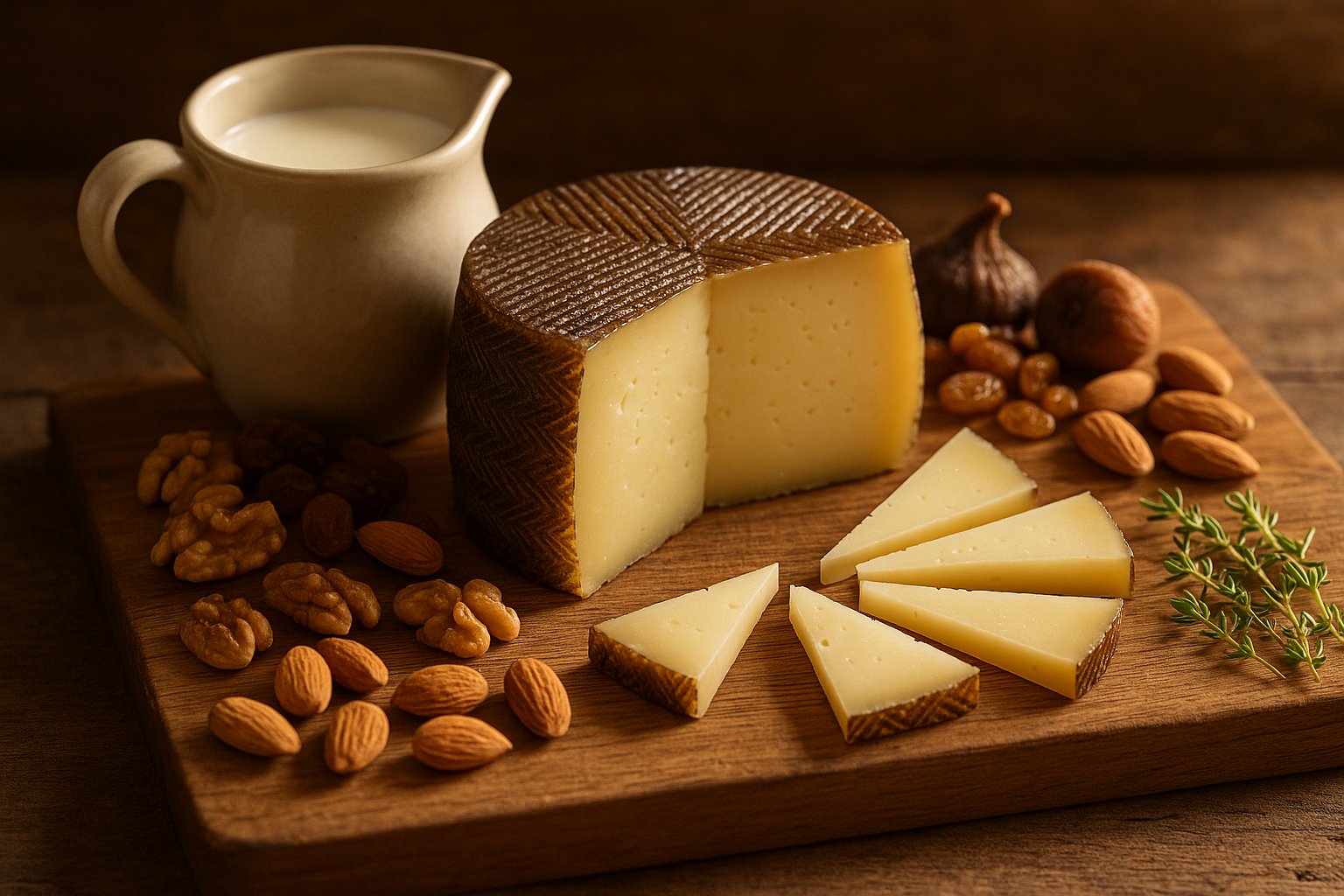
Introduction to Sheep Milk Cheese Making
Welcome to the fascinating world of artisanal sheep milk cheese! If you’ve ever been captivated by the rich, complex flavors of premium aged cheeses, you’re about to discover why sheep’s milk has been treasured by cheese makers for thousands of years. This guide will take you through the complete journey of creating Manchego-style cheese at home—from understanding what makes sheep milk exceptional to mastering the traditional techniques that transform simple ingredients into culinary gold.
Whether you’re a curious beginner looking to explore cheese making as a new hobby, or an experienced home cook seeking to expand your skills, this comprehensive guide will provide you with the knowledge, techniques, and confidence to craft your own premium sheep milk cheese in your own kitchen.
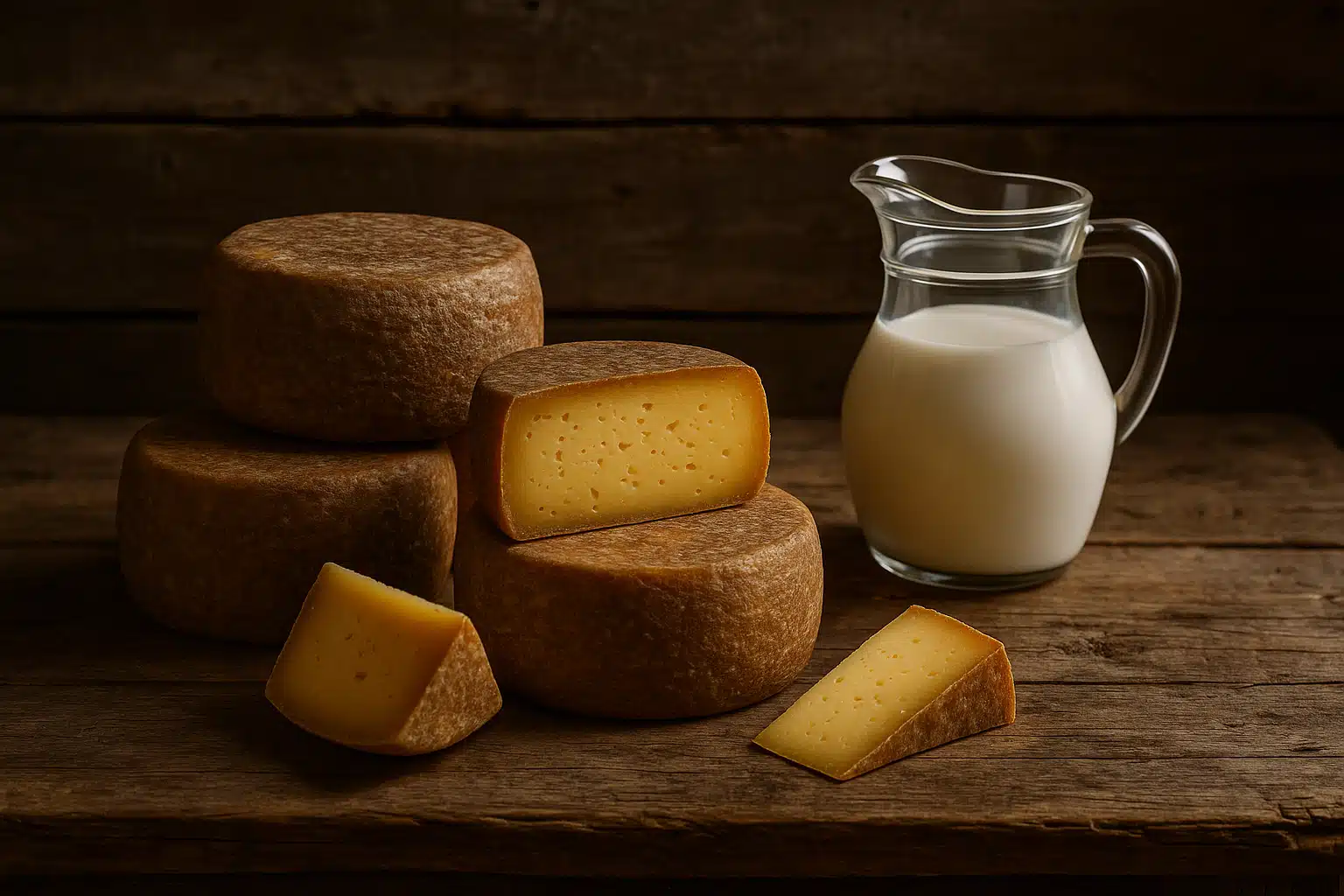
The Science and Art of Sheep Milk in Cheese Making
Why Sheep Milk Creates Superior Cheese
Sheep’s milk stands apart from other dairy sources due to its exceptional nutritional composition and unique flavor profile. Compared to cow’s milk, sheep milk contains approximately 60% more protein, 40% more fat, and significantly higher concentrations of essential vitamins including B12, folate, and vitamin D. This rich composition translates directly into cheese with superior texture, deeper flavor, and greater nutritional value.
The higher fat and protein content means that sheep milk produces nearly twice as much cheese per volume compared to cow’s milk, making it remarkably efficient for cheese production. The fat molecules in sheep milk are smaller and more easily digestible than those in cow’s milk, which contributes to the characteristic creamy mouthfeel and makes sheep milk cheese more tolerable for some individuals with dairy sensitivities.
The flavor profile of sheep milk cheese is distinctively rich, slightly sweet, and nutty with subtle grassy notes. These characteristics develop from the natural composition of the milk and are enhanced through the aging process, creating complex taste layers that cheese connoisseurs worldwide appreciate.
The Global Family of Sheep Milk Cheeses
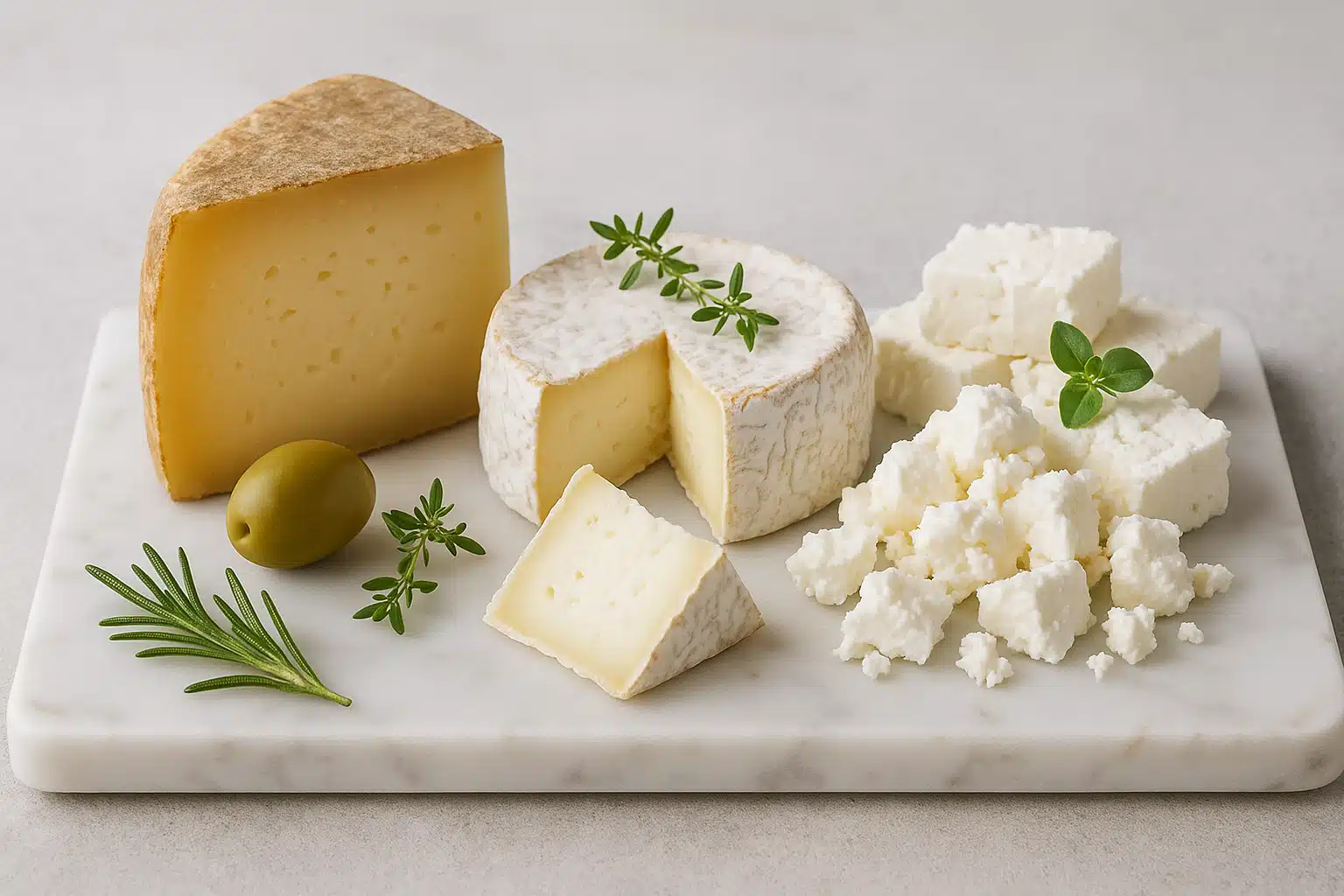
Sheep milk has been used to create celebrated cheeses across many cultures and continents. Understanding the broader family of sheep milk cheeses helps contextualize Manchego-style cheese and provides inspiration for your cheese-making journey:
- Manchego-Style: Firm-textured with a distinctive herringbone rind pattern, featuring nutty and slightly tangy flavors that intensify with aging
- Pecorino: Hard, granular cheeses perfect for grating, with sharp, salty characteristics ideal for cooking and finishing dishes
- Roquefort-Style: Blue-veined cheeses with creamy texture and bold, complex flavors resulting from specific mold cultures
- Feta-Style: Brined cheeses with tangy, salty profiles and crumbly texture, traditionally stored in brine solution
- Soft-Ripened Varieties: Creamy cheeses with bloomy rinds, offering delicate, buttery flavors and smooth textures
Each style represents different techniques, aging periods, and flavor development processes, demonstrating the versatility of sheep milk as a cheese-making medium.
Creating Manchego-Style Cheese at Home
Essential Ingredients and Their Roles
Successful cheese making begins with understanding your ingredients and their specific functions in the transformation process:
Sheep’s Milk: The foundation of your cheese. Fresh sheep milk is ideal, though properly pasteurized milk works excellently for home cheese makers. You’ll need approximately 4-5 liters (about 1-1.3 gallons) to produce a 500-gram (approximately 1-pound) wheel of cheese. The milk should be as fresh as possible and stored properly to prevent unwanted bacterial growth.
Cultures: These beneficial bacteria are responsible for acidifying the milk and developing flavor during aging. Mesophilic cultures are typically used for Manchego-style cheese, working at moderate temperatures to create the characteristic tangy flavor profile. The culture type and quantity will significantly influence your final cheese’s taste and texture.
Rennet: This enzyme (available in animal, vegetable, or microbial forms) causes milk proteins to coagulate, forming curds. The type of rennet can subtly affect flavor development, with traditional animal rennet often preferred for aged cheeses. Precise measurement is critical—too little results in weak curds, while too much can create bitter flavors.
Salt: Beyond flavor enhancement, salt controls moisture, inhibits unwanted bacteria, and contributes to rind development. Non-iodized salt is essential, as iodine can interfere with beneficial bacterial cultures.
Calcium Chloride (Optional): If using pasteurized milk, calcium chloride helps restore calcium balance disrupted by heat treatment, resulting in firmer curds and better cheese structure.
Equipment You’ll Need
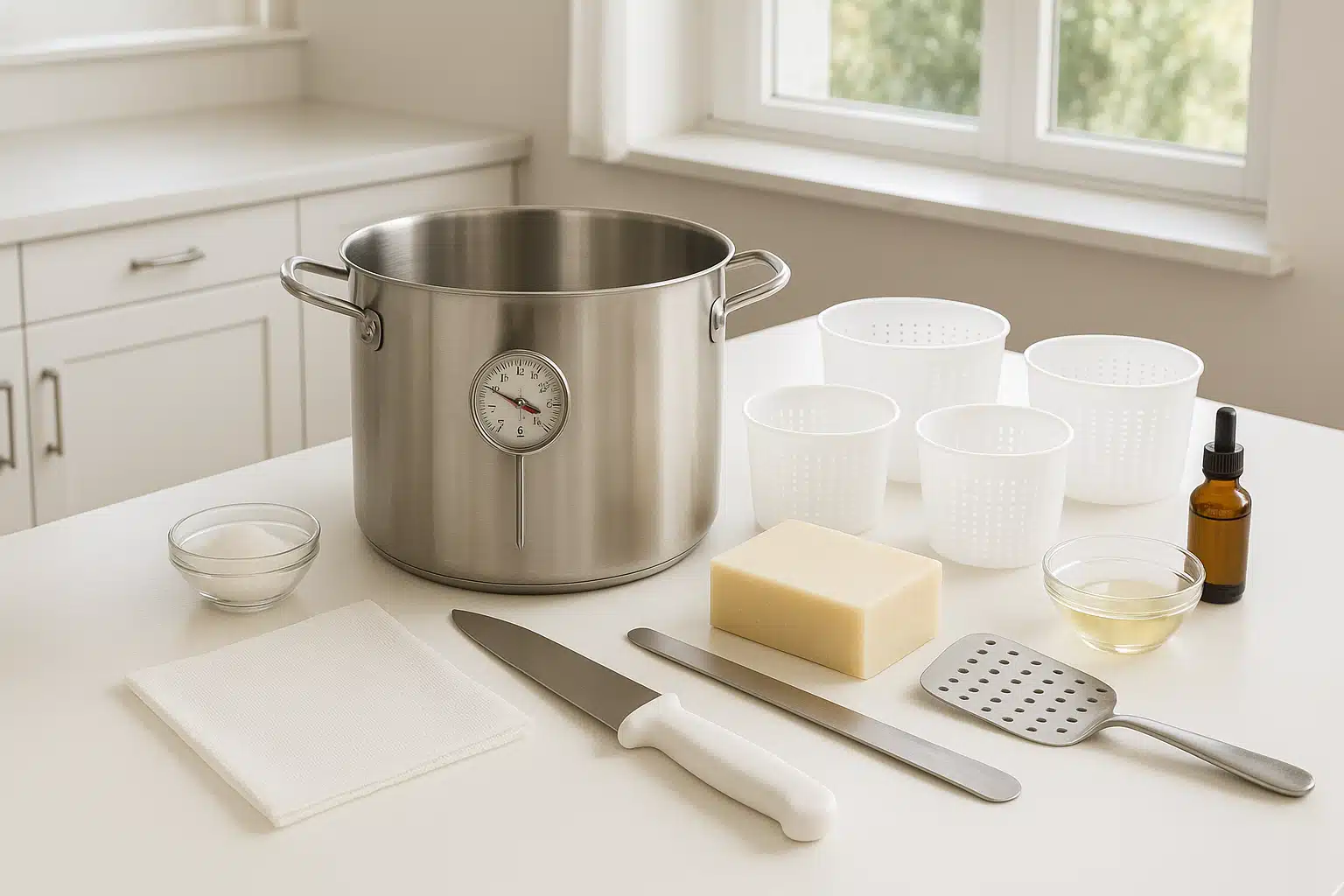
Proper equipment ensures consistent results and makes the process more manageable:
- Large stainless steel pot: Minimum 6-liter capacity with heavy bottom for even heat distribution
- Accurate thermometer: Digital or dairy thermometer reading 10-100°C (50-212°F) for precise temperature control
- Long knife or curd cutter: For cutting curds into uniform pieces
- Slotted spoon or skimmer: For gently handling curds
- Cheese mold: Cylindrical mold with drainage holes, typically 500g-1kg capacity for home production
- Cheese press: Can be purchased or improvised with weights for applying consistent pressure
- Cheesecloth or butter muslin: Fine-weave cloth for draining and wrapping
- Aging container: Temperature and humidity-controlled space or cheese aging box
Step-by-Step Cheese Making Process
Step 1: Preparing and Heating the Milk
Begin by slowly warming your sheep’s milk in the stainless steel pot over medium-low heat. Stir gently and regularly to ensure even temperature distribution and prevent scorching on the bottom. Heat the milk to approximately 32°C (90°F)—this is the optimal temperature for adding your culture. Use your thermometer to monitor closely, as temperature precision is critical throughout the process.
Once at temperature, remove from heat. If using calcium chloride (recommended for pasteurized milk), dissolve it in a small amount of cool, non-chlorinated water and stir gently into the milk.
Step 2: Adding Culture and Ripening
Sprinkle the mesophilic culture over the milk surface and let it rehydrate for 2-3 minutes without stirring. This allows the culture to absorb moisture and activate. Then, using an up-and-down motion rather than circular stirring, gently incorporate the culture throughout the milk for about 1 minute.
Cover the pot and maintain the temperature at 32°C (90°F) for 45-60 minutes. This “ripening” period allows the culture to begin acidifying the milk, developing the foundation for your cheese’s flavor. The longer ripening time contributes to more complex flavor development.
Step 3: Adding Rennet and Coagulation
Dilute your rennet in cool, non-chlorinated water according to package directions (typically 1/4 teaspoon rennet in 60ml water for 4 liters of milk). Add the diluted rennet to your milk using the same gentle up-and-down stirring motion for about 1 minute to distribute evenly.
Stop all movement and cover the pot. Maintain temperature at 32°C (90°F) and let the milk sit undisturbed for 45-90 minutes. During this time, the rennet will cause the milk proteins to coagulate, forming a custard-like mass called curd.
Test for “clean break” by inserting a knife at an angle into the curd and lifting gently. If the curd breaks cleanly with clear whey pooling in the cut, coagulation is complete. If it’s still too soft and milky, wait another 15 minutes and test again.
Step 4: Cutting the Curds
Using your long knife or curd cutter, cut the curd into uniform cubes approximately 1-1.5 cm (roughly 1/2 inch). Make parallel cuts in one direction, then perpendicular cuts to create columns. Finally, angle your knife to cut horizontally through the curd mass, creating small cubes.
Let the cut curds rest for 5 minutes to firm up slightly. This resting period helps prevent the delicate curds from breaking into too-small pieces during the next steps.
Step 5: Cooking and Stirring the Curds
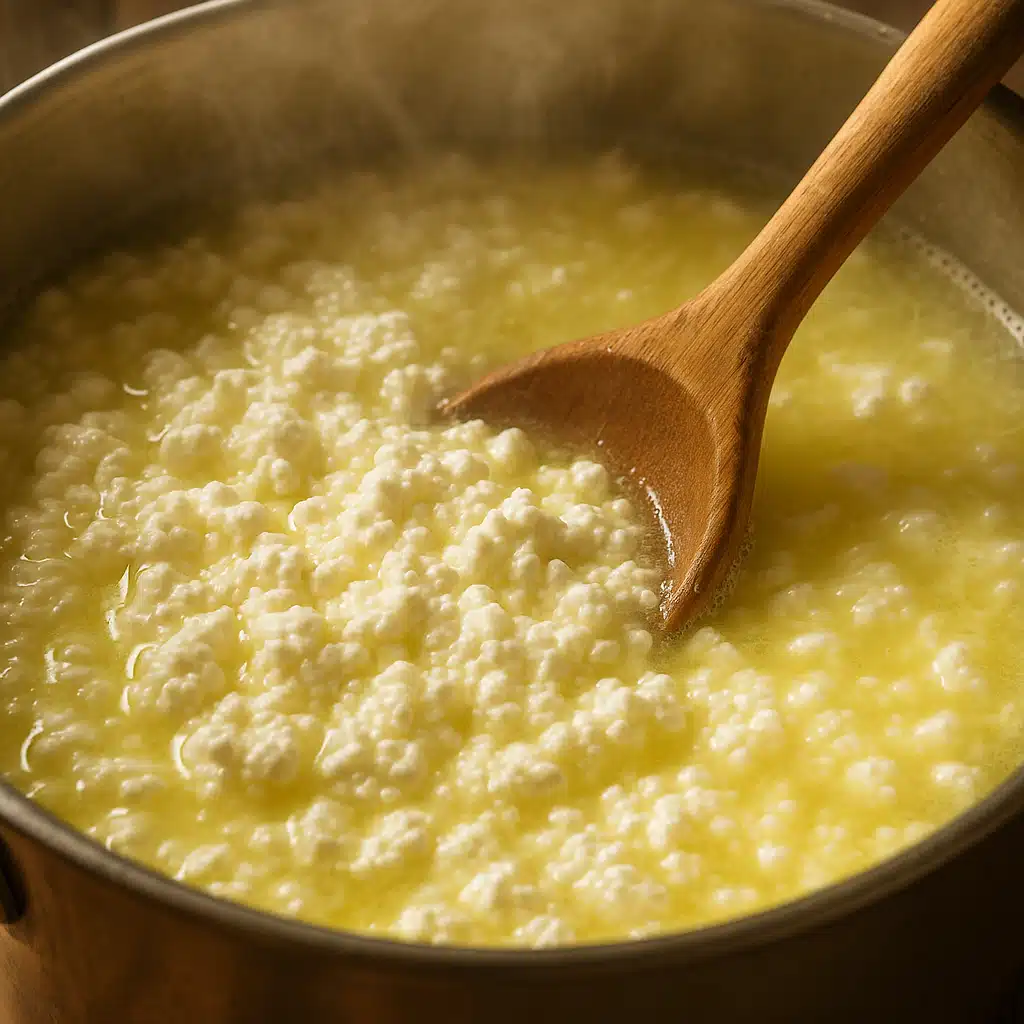
Slowly warm the curds and whey, raising the temperature by about 2°C (3-4°F) every 5 minutes until reaching 38-40°C (100-104°F). Stir gently but continuously during heating to prevent curds from matting together. This gradual heating process expels moisture from the curds, creating the firm texture characteristic of Manchego-style cheese.
Once at target temperature, maintain heat and continue stirring for another 30-45 minutes. The curds will shrink noticeably and become firmer. They should feel slightly springy when squeezed and should separate rather than stick together.
Step 6: Draining and Molding
Line your cheese mold with dampened cheesecloth, allowing excess cloth to hang over the edges. Using your slotted spoon, transfer curds into the mold, distributing evenly. Once filled, fold the excess cheesecloth over the top of the curds to cover completely.
Place the follower (the disk that fits inside your mold) on top and begin pressing. Start with light pressure—about 2-3 kg (5-7 pounds)—for 15 minutes. Remove from the press, unwrap the cheese, flip it over, rewrap in fresh cheesecloth, and return to the mold.
Step 7: Pressing
Gradually increase pressure throughout the pressing process:
- Press at 5 kg (11 pounds) for 30 minutes, then flip
- Press at 8 kg (18 pounds) for 2 hours, then flip
- Press at 10-12 kg (22-26 pounds) for 12-24 hours
Each flipping redistributes pressure and helps create uniform texture. Whey will continue draining throughout pressing—this is normal and desired.
Step 8: Salting
After pressing, remove your cheese from the mold. You can salt using two methods:
Dry Salting: Rub coarse non-iodized salt over all surfaces of the cheese. Let it absorb for several hours, then brush off excess. Repeat once or twice over 24 hours.
Brine Salting: Create a saturated brine solution (about 300g salt per liter of water). Submerge your cheese in the brine for 8-12 hours, flipping halfway through for even salt absorption.
Brine salting typically provides more even salt distribution and is preferred for achieving consistent results.
Step 9: Air Drying
After salting, place your cheese on a clean mat in a cool area with good air circulation. Turn the cheese daily for 3-5 days until the surface is completely dry to touch. This drying period allows a protective rind to begin forming and prepares the cheese for aging.
The Art and Science of Aging
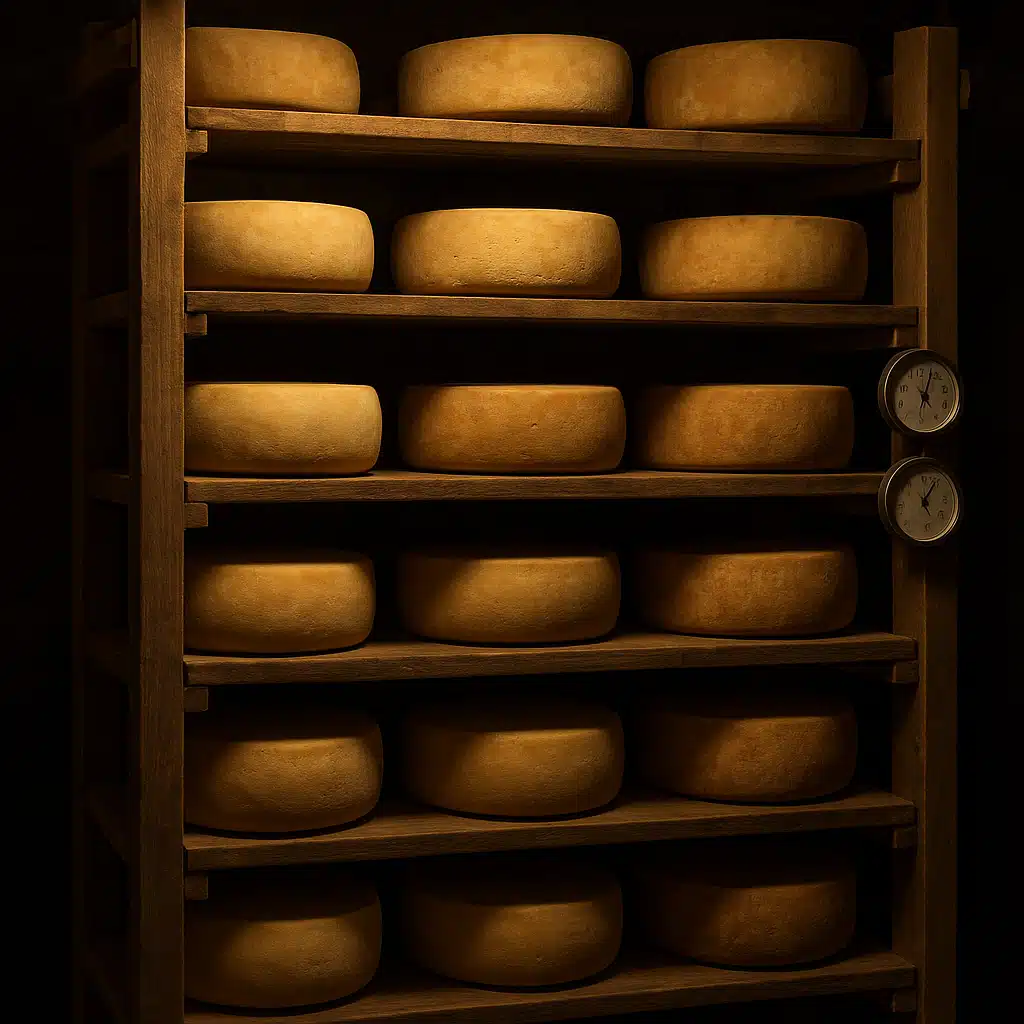
Aging transforms your freshly made cheese into the complex, flavorful product that Manchego-style cheese is celebrated for. This maturation process requires patience and proper conditions but rewards you with extraordinary results.
Ideal Aging Conditions:
- Temperature: 10-15°C (50-59°F)—consistent temperature is more important than exact degrees
- Humidity: 80-85%—prevents excessive drying while allowing proper rind development
- Air circulation: Gentle movement prevents mold accumulation
- Darkness: Light can cause off-flavors and uneven aging
Aging Timeline and Flavor Development:
- 2-4 weeks (Fresh): Mild, slightly tangy flavor with soft, moist texture
- 2-3 months (Semi-Curado): Developing nutty notes, firmer texture, more pronounced flavors
- 4-6 months (Curado): Complex nutty and caramel flavors, firm and slightly crumbly texture
- 7-12 months (Viejo): Intense, sharp flavors with crystalline texture, deep complexity
During aging, turn your cheese 2-3 times weekly to ensure even moisture distribution. Check regularly for unwanted mold growth. Small amounts of white mold can be brushed off or wiped with vinegar-dampened cloth. Blue or black molds should be cut away with clean knife.
Natural rind development is normal and desirable. The rind may be treated with olive oil rubbed onto the surface monthly to prevent cracking and enhance flavor development.
Serving and Enjoying Your Artisanal Cheese
Proper Serving Techniques
To fully appreciate your handcrafted cheese, proper serving is essential. Remove cheese from refrigeration 30-60 minutes before serving, allowing it to reach room temperature. This warming period allows fats to soften and aromatic compounds to volatilize, significantly enhancing flavor perception and texture.
Cut your cheese just before serving to preserve freshness. For wedges, cut from the point to the rind in thin slices. For wheels, cut into pie-shaped wedges, then slice each wedge thinly. Use a sharp, non-serrated knife for clean cuts without crumbling.
Creative Serving Suggestions
Cheese Board Presentations: Create visually appealing and flavor-balanced cheese boards by pairing your Manchego-style cheese with complementary elements:
- Fruits: Dried apricots, figs, dates, fresh grapes, apple slices, or pear wedges provide sweetness that contrasts beautifully with the cheese’s savory notes
- Nuts: Almonds, walnuts, hazelnuts, or marcona-style roasted nuts add textural contrast and complementary flavors
- Olives: Briny olives provide salty contrast and Mediterranean character
- Crackers and Breads: Water crackers, artisan bread slices, or crisp flatbreads serve as neutral carriers
- Condiments: High-quality honey, fruit preserves (especially quince paste or fig jam), whole grain mustard, or aged balsamic vinegar
Culinary Applications: Beyond serving as table cheese, Manchego-style cheese excels in cooking:
- Grated over pasta dishes for nutty, savory depth
- Melted into risotto for creamy richness
- Sliced onto flatbreads or pizzas before baking
- Cubed into salads with bitter greens and vinaigrette
- Layered in sandwiches with roasted vegetables
- Shaved over roasted vegetables or soups as finishing element
Beverage Pairings
The rich, complex flavors of aged sheep milk cheese pair beautifully with various beverages:
Wine: Medium to full-bodied red wines with moderate tannins, aged white wines with good acidity, or fortified wines like port complement the cheese’s nutty, caramel notes.
Beer: Belgian ales, brown ales, or wheat beers provide malty sweetness and carbonation that refresh the palate.
Non-Alcoholic: Sparkling water with lemon, apple cider, or strong black tea offer palate-cleansing acidity.

Troubleshooting Common Cheese Making Challenges
Issue: Curds Won’t Form or Form Weakly
Possible Causes:
- Milk was overheated, damaging proteins
- Insufficient or expired rennet
- Chlorinated water used to dilute rennet
- Milk was ultra-pasteurized (excessive heat treatment)
- Incorrect pH due to culture issues
Solutions: Always use a reliable thermometer and monitor temperature carefully. Check rennet expiration dates and store properly. Use distilled or non-chlorinated water for all dilutions. Avoid ultra-pasteurized milk—look for “pasteurized” or “low-temperature pasteurized” labels. If using pasteurized milk, always add calcium chloride to restore calcium balance.
Issue: Cheese Is Too Crumbly or Dry
Possible Causes:
- Curds were cooked at too high temperature
- Excessive pressing pressure
- Over-stirring during cooking phase
- Too much salt absorbed
- Aging environment too dry
Solutions: Increase temperature gradually during cooking phase, never rushing. Follow recommended pressure guidelines and increase gradually. Stir gently and avoid excessive agitation. Reduce brining time or dry-salting applications. Monitor aging environment humidity and increase if below 75%.
Issue: Cheese Is Too Soft or Doesn’t Hold Shape
Possible Causes:
- Insufficient cooking time or temperature
- Inadequate pressing
- Curds retained too much moisture
- Insufficient aging time
Solutions: Ensure curds reach proper temperature and maintain heat for full recommended time. Increase pressing pressure and duration. Allow curds to firm properly during cooking before molding. Be patient—cheese continues firming during aging.
Issue: Off-Flavors or Unpleasant Taste
Possible Causes:
- Poor quality or old milk
- Contamination during process
- Incorrect culture or expired cultures
- Aging environment issues (temperature fluctuations, contamination)
Solutions: Always use fresh, high-quality milk from reliable sources. Sanitize all equipment thoroughly before use. Store cultures properly and check expiration dates. Maintain consistent aging conditions and keep aging area clean.
Issue: Unwanted Mold Growth During Aging
Possible Causes:
- Aging environment too humid
- Insufficient air circulation
- Cheese wasn’t properly dried before aging
- Cross-contamination from other cheeses or environment
Solutions: Small amounts of white mold are normal and can be wiped away with vinegar-dampened cloth. Reduce humidity slightly if mold appears frequently. Ensure proper air circulation in aging space. Fully dry cheese surface before placing in aging environment. Age different cheese types separately to prevent cross-contamination.
Can I Substitute Cow or Goat Milk?
While you can technically make cheese using cow or goat milk following similar procedures, the results will differ significantly from authentic Manchego-style cheese. Cow’s milk produces milder, less complex flavors with different texture characteristics. Goat’s milk creates tangier, distinctly caprine flavors. The unique composition of sheep’s milk—including its higher fat and protein content—is fundamental to achieving the characteristic rich, nutty flavor and creamy-firm texture that defines Manchego-style cheese. If sheep milk is unavailable in your area, consider seeking specialty dairy suppliers or online sources that ship high-quality sheep’s milk specifically for cheese making.
Food Safety and Storage Guidelines
Sanitation Best Practices
Proper sanitation is critical for safe, successful cheese making. Before beginning, thoroughly clean all equipment with hot, soapy water, then sanitize using either:
- Commercial food-grade sanitizer following package directions
- Solution of 1 tablespoon unscented bleach per 4 liters water (let equipment soak for 2 minutes, then air dry)
- Boiling water poured over or immersing equipment (where safe for material type)
Maintain clean work surfaces, use clean utensils, and wash hands thoroughly. Avoid touching curds directly with bare hands when possible—use sanitized spoons and tools.
Proper Storage Methods
During Aging: Store cheese in dedicated aging space with proper temperature and humidity control. Keep different batches separated and clearly labeled with production dates.
After Aging: Once cheese reaches desired age, wrap tightly in specialty cheese paper (allows breathing while preventing moisture loss) or waxed paper followed by loose plastic wrap. Store in refrigerator vegetable drawer where temperature is most consistent. Properly wrapped aged cheese keeps for several weeks. Check periodically for mold and unwrap to allow cheese to breathe occasionally.
Freezing: While not ideal, cheese can be frozen for longer storage. Wrap tightly in multiple layers, removing as much air as possible. Freeze for up to 3 months. Thaw slowly in refrigerator. Note that texture may become slightly more crumbly after freezing, though flavor remains intact.
Signs of Spoilage
Discard cheese if you notice:
- Pink, orange, or fuzzy black mold (different from normal white surface mold)
- Slimy or excessively wet surface
- Ammonia or strongly unpleasant odors (beyond normal aged cheese aroma)
- Significant cracking with liquid pooling
Trust your senses—properly made and stored cheese has pleasant aroma and appearance even when strongly flavored.
Expanding Your Cheese Making Journey
Experimenting with Variations
Once you’ve mastered basic Manchego-style cheese, countless variations await exploration:
Herb-Infused Varieties: Add dried herbs (rosemary, thyme, lavender) to curds before molding for aromatic complexity.
Spiced Versions: Incorporate crushed black pepper, smoked paprika, or dried chili flakes for flavor dimension.
Truffle-Enhanced: Add truffle salt during salting phase or truffle oil rubs during aging for luxurious character.
Different Aging Approaches: Experiment with varying aging times, humidity levels, or rind treatments (wine-washed, herb-rubbed) to create unique flavor profiles.
Exploring Other Sheep Milk Cheese Styles
Your Manchego-style cheese making skills provide an excellent foundation for exploring other sheep milk varieties:
- Fresh soft cheeses: Require less aging, offering quicker gratification
- Brined cheeses: Stored in salt solution for distinctive texture and flavor
- Blue-veined varieties: Introduce beneficial mold cultures for complex, bold flavors
- Washed-rind cheeses: Regular washing during aging creates distinctive aromatic characters
Each style teaches different techniques and expands your understanding of cheese making as both craft and art.
Connecting with the Cheese Making Community
Cheese making has vibrant communities worldwide, both online and local. Consider joining:
- Online forums and social media groups dedicated to home cheese making
- Local cheese making clubs or workshops
- Cheese making courses (in-person or online) for advanced techniques
- Farm visits to dairy producers to learn from professionals
Sharing experiences, troubleshooting challenges together, and learning from others’ experiments accelerates your development and makes the journey more enjoyable.

Conclusion: Your Journey to Artisanal Cheese Mastery
Creating your own Manchego-style cheese at home represents far more than simply making food—it connects you to ancient culinary traditions, develops valuable skills, and produces something genuinely special that commercial products rarely match. The process combines scientific precision with artistic intuition, rewarding patience and attention to detail with extraordinary results.
While the techniques require practice and the aging demands patience, the satisfaction of slicing into a wheel of cheese you crafted yourself, sharing it with family and friends, and experiencing the complex flavors you developed makes every step worthwhile. Each batch teaches new lessons, and your skills will continuously improve with experience.
The world of sheep milk cheese offers endless possibilities for exploration, experimentation, and enjoyment. Whether you’re drawn to the rich nutritional benefits, the superior flavor profiles, or the meditative satisfaction of traditional craftsmanship, cheese making provides a deeply rewarding hobby that produces tangible, delicious results.
Start your cheese making journey today with quality ingredients, proper equipment, and patient attention to technique. Your first wheel may not be perfect, but it will be uniquely yours—and with each subsequent batch, you’ll move closer to creating truly exceptional artisanal cheese that rivals the finest traditional producers.
The path from fresh sheep’s milk to aged, complex cheese is a transformation worth experiencing. Gather your supplies, prepare your workspace, and begin crafting your own liquid gold into something truly extraordinary. Your artisanal cheese making adventure awaits!