Understanding Cheese Texture: From Crumbly to Creamy
Have you ever wondered why some cheeses crumble easily in your hands while others spread like butter? The texture of cheese is a fascinating subject that combines food science with sensory experience, creating the diverse range of cheeses enjoyed worldwide. Whether you’re a casual cheese enthusiast or a dedicated connoisseur, understanding what makes cheese behave the way it does can transform how you select, store, and enjoy it.
In this comprehensive guide, we’ll explore the science behind cheese texture, focusing on the critical roles of moisture content and calcium structure. You’ll discover why certain cheeses are perfect for spreading, others ideal for grating, and some best enjoyed crumbled over salads. By the end, you’ll have the knowledge to make informed choices when selecting cheese for any occasion, and you’ll appreciate the craftsmanship that goes into creating each unique variety.
The Science Behind Cheese Texture
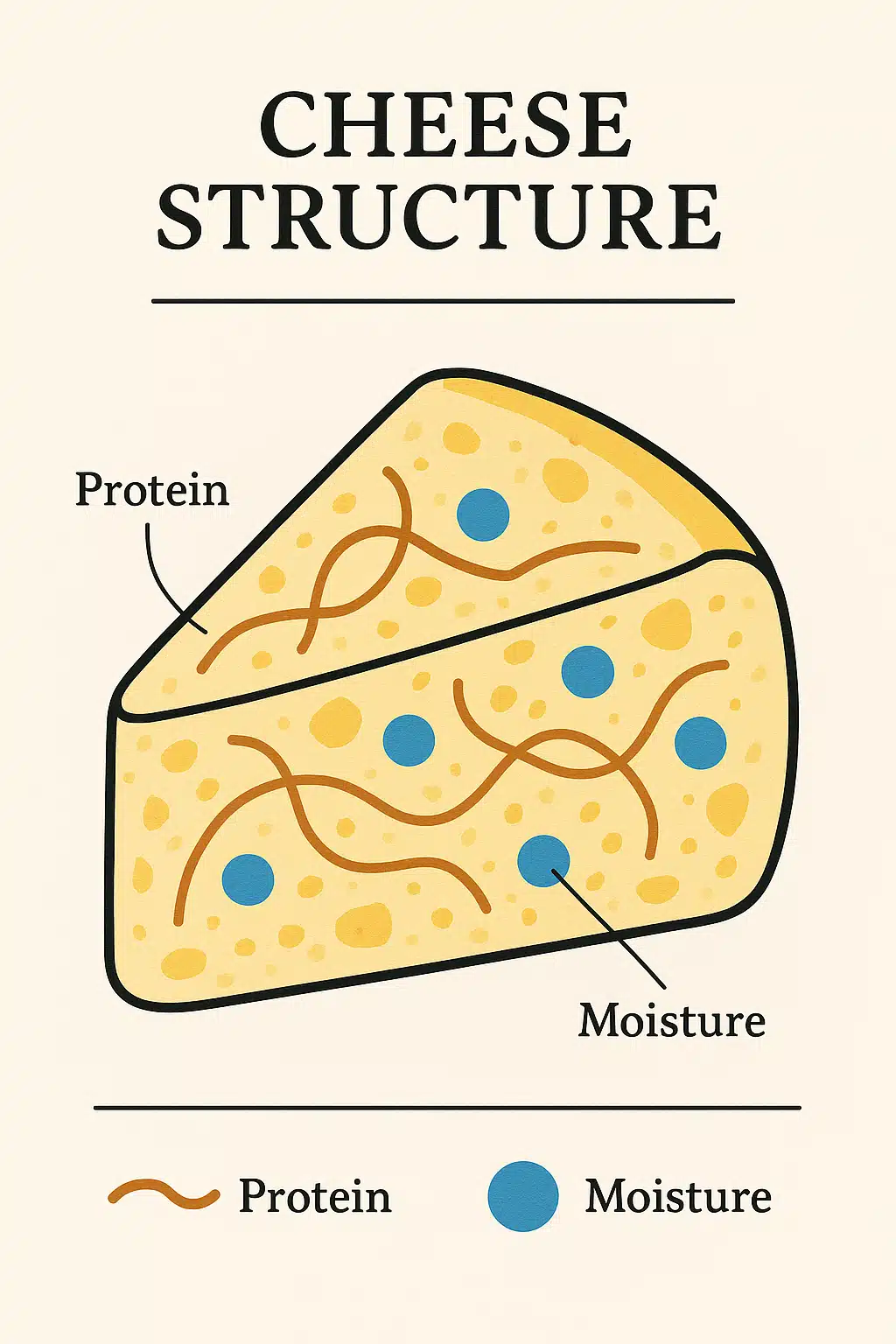
Cheese texture is the result of complex interactions between various components during the cheese-making and aging processes. While many factors contribute to the final product, two elements stand out as the primary determinants of texture: moisture content and calcium structure. These components work together to create the physical characteristics we experience when we touch, cut, and taste cheese.
Understanding these fundamental principles helps explain why cheeses from different parts of the world, made with varying techniques and aging periods, can have such dramatically different textures. It also explains why certain cheeses work better for specific culinary applications—melting, grating, spreading, or crumbling.
Moisture Content: The Primary Texture Determinant
The amount of water retained in cheese is perhaps the single most important factor affecting its texture. During the cheese-making process, the moisture level is carefully controlled through techniques such as cutting the curd, heating, pressing, and salting. Each decision made by the cheesemaker influences how much moisture remains in the final product.
- High Moisture Cheeses (50-80% moisture): These cheeses have a soft, pliable, and often creamy texture. Fresh mozzarella, ricotta, and cottage cheese fall into this category. They’re typically mild in flavor and have a shorter shelf life due to their high water content. These cheeses are excellent for spreading, melting smoothly, or incorporating into dishes where a creamy consistency is desired.
- Medium Moisture Cheeses (40-50% moisture): This category includes many popular semi-soft and semi-hard cheeses. They strike a balance between firmness and creaminess, making them versatile for both eating and cooking. These cheeses often have more developed flavors and can be sliced cleanly while still maintaining some suppleness.
- Low Moisture Cheeses (30-40% moisture or less): Hard and extra-hard cheeses like aged parmesan, pecorino, and aged gouda contain minimal moisture. This gives them a firm, dense, and often crumbly or granular texture. The reduced water content also concentrates flavors and allows for extended aging, which develops complex taste profiles. These cheeses are ideal for grating and can be stored for extended periods.
The moisture level also affects how cheese melts. Higher moisture cheeses generally melt more readily and smoothly, while very low moisture cheeses may not melt at all, instead becoming oily or simply softening without flowing.
Calcium Structure: The Hidden Framework
While moisture gets most of the attention, the role of calcium in determining cheese texture is equally crucial yet often overlooked. Calcium acts as a binding agent that helps create the protein network structure within cheese. The way calcium bonds with proteins during cheese-making fundamentally influences the final texture.
- Intact Calcium Bonds: In traditional cheese-making using rennet coagulation, calcium remains tightly bound to the protein network. This creates a strong, elastic structure that gives cheese its characteristic firmness and ability to maintain shape. Cheeses with intact calcium structures tend to have a more cohesive, sliceable texture.
- Disrupted Calcium Bonds: When cheese is made using acid coagulation or when calcium is intentionally removed or redistributed during processing, the protein network becomes weaker and less organized. This results in cheeses with a crumblier, more friable texture. Feta cheese is a classic example where calcium dissolution during brining contributes to its characteristic crumbly nature.
- Calcium Migration: During the aging process, calcium can migrate or redistribute within the cheese, affecting texture development. In some aged cheeses, you may notice crunchy crystals—these are often calcium lactate crystals that have formed over time, adding a pleasant textural element to the eating experience.
The interaction between calcium structure and moisture content creates the wide spectrum of textures we see in the cheese world. A cheese with high moisture but weak calcium bonds will be soft and spreadable, while one with low moisture and strong calcium structure will be hard and firm.
A World Tour of Cheese Textures
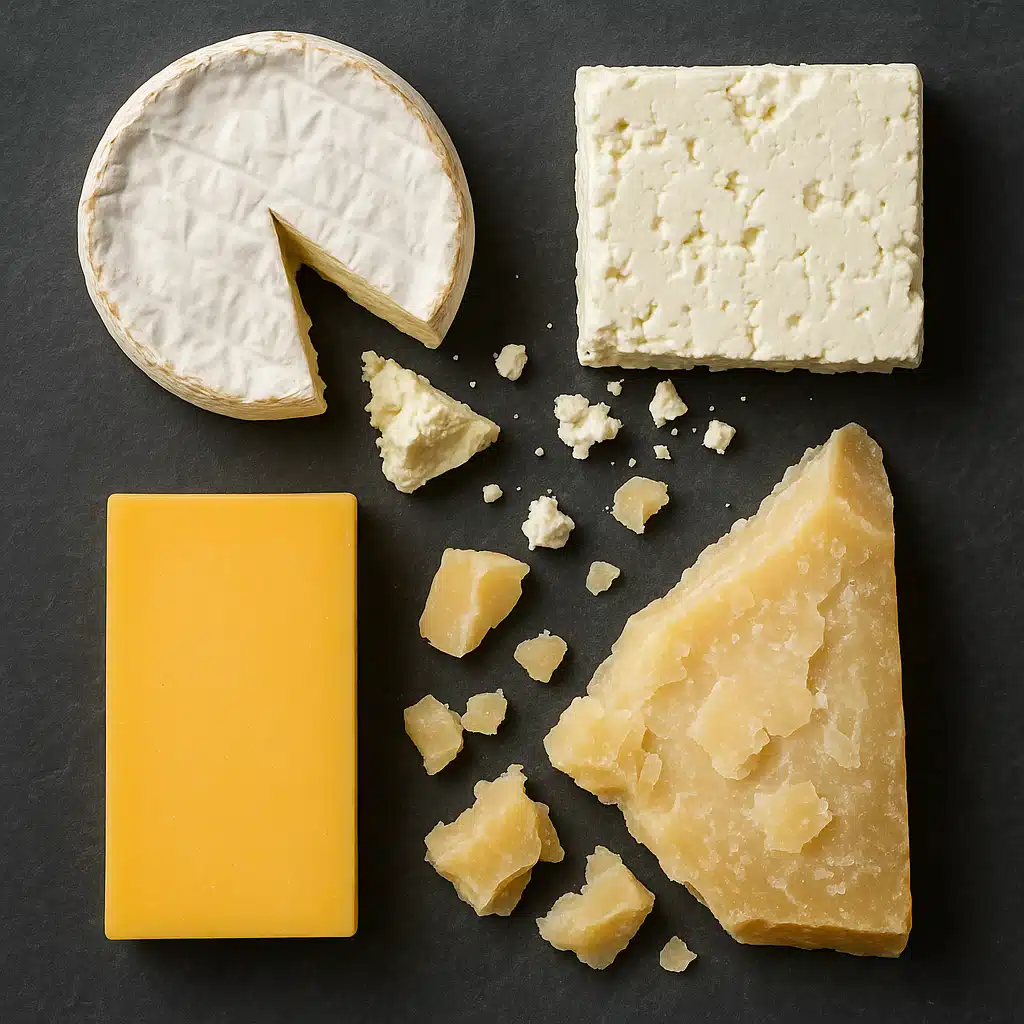
Exploring different cheese varieties from around the world provides the best education in understanding texture variations. Each cheese style represents specific choices made during production that result in its characteristic texture. Let’s examine some popular examples that illustrate the principles we’ve discussed.
Soft and Creamy Cheeses
Brie and Camembert: These iconic soft-ripened cheeses exemplify high moisture content combined with enzymatic breakdown of proteins during aging. Starting with a relatively firm texture, they develop a creamy, almost liquid interior as they ripen. The white mold on the surface produces enzymes that gradually break down proteins from the outside in, creating the characteristic flowing texture. When perfectly ripe, these cheeses should be spreadable and luxuriously smooth.
Cream Cheese: With its smooth, spreadable consistency, cream cheese achieves its texture through high moisture content (typically around 55%) and significant fat content. The production process involves acid coagulation, which creates a weak protein structure that, combined with the fat and moisture, results in the familiar smooth, spreadable texture perfect for bagels and baking.
Mozzarella: Fresh mozzarella is exceptionally soft and elastic due to its high moisture content (often 50-60%) and the pasta filata (stretched curd) production method. The stretching aligns proteins in a way that creates both softness and that characteristic pull when melted. Low-moisture mozzarella, commonly used for pizza, has a firmer texture and superior melting properties for cooking applications.
Semi-Soft and Semi-Hard Cheeses
Gouda: Young gouda is semi-soft with a smooth, creamy texture and mild flavor. As it ages, moisture gradually decreases, and the texture becomes firmer and develops small protein crystals. Aged gouda can become quite hard with a granular, crystalline texture and concentrated flavor—a perfect example of how time transforms cheese texture.
Cheddar: This versatile cheese demonstrates how production methods affect texture. Young cheddar is relatively smooth and slightly elastic with moderate moisture. As it ages, moisture decreases, and the texture becomes more crumbly. The cheddaring process (stacking and turning the curd) creates a specific protein alignment that contributes to cheddar’s characteristic texture. Some aged cheddars develop crunchy tyrosine crystals that add textural interest.
Havarti: This Danish cheese is semi-soft with a creamy, supple texture created by small irregular holes throughout. Its relatively high moisture content and short aging period maintain a smooth, sliceable consistency that’s less firm than cheddar but more structured than brie.
Crumbly Cheeses
Feta: The characteristic crumbly texture of feta results from a combination of factors. Made through acid and rennet coagulation, feta is then stored in brine, which causes calcium to leach out of the cheese over time. This weakens the protein network, creating the distinctive crumbly, yet slightly creamy texture. The moisture content is moderate, but the disrupted calcium structure makes it break apart easily rather than slice cleanly.
Cheshire: One of Britain’s oldest cheese varieties, Cheshire has a crumbly, slightly moist texture. The production method involves a looser curd structure and less pressing than harder cheeses, combined with moderate moisture levels, creating a cheese that crumbles readily but still maintains some moisture on the palate.
Wensleydale: This English cheese is known for its moist, crumbly texture. The combination of relatively high moisture for a crumbly cheese, along with the specific acid development during production, creates a unique texture that’s simultaneously flaky and slightly creamy.
Hard and Extra-Hard Cheeses
Parmigiano-Reggiano: This king of Italian cheeses exemplifies how low moisture and long aging create exceptional texture. With moisture content around 30% or less and aging periods of 12-36 months or more, Parmigiano develops an extremely hard, granular texture with visible protein crystals. The texture is dry yet somehow rich, breaking into satisfying chunks rather than slicing. It’s ideal for grating and adds both flavor and texture to dishes.
Pecorino Romano: Similar to Parmigiano in hardness, this sheep’s milk cheese is dense, dry, and granular. The lower moisture content and extended aging create a cheese that’s best used grated or shaved. The firmness also means it can be stored for extended periods without spoiling.
Aged Manchego: Spanish manchego, particularly when aged for a year or more, develops a firm, compact texture with a slightly oily feel from the fat content in sheep’s milk. While hard, it’s slightly more pliable than Parmigiano, making it suitable for both grating and thin slicing.
Common Misconceptions About Cheese Texture
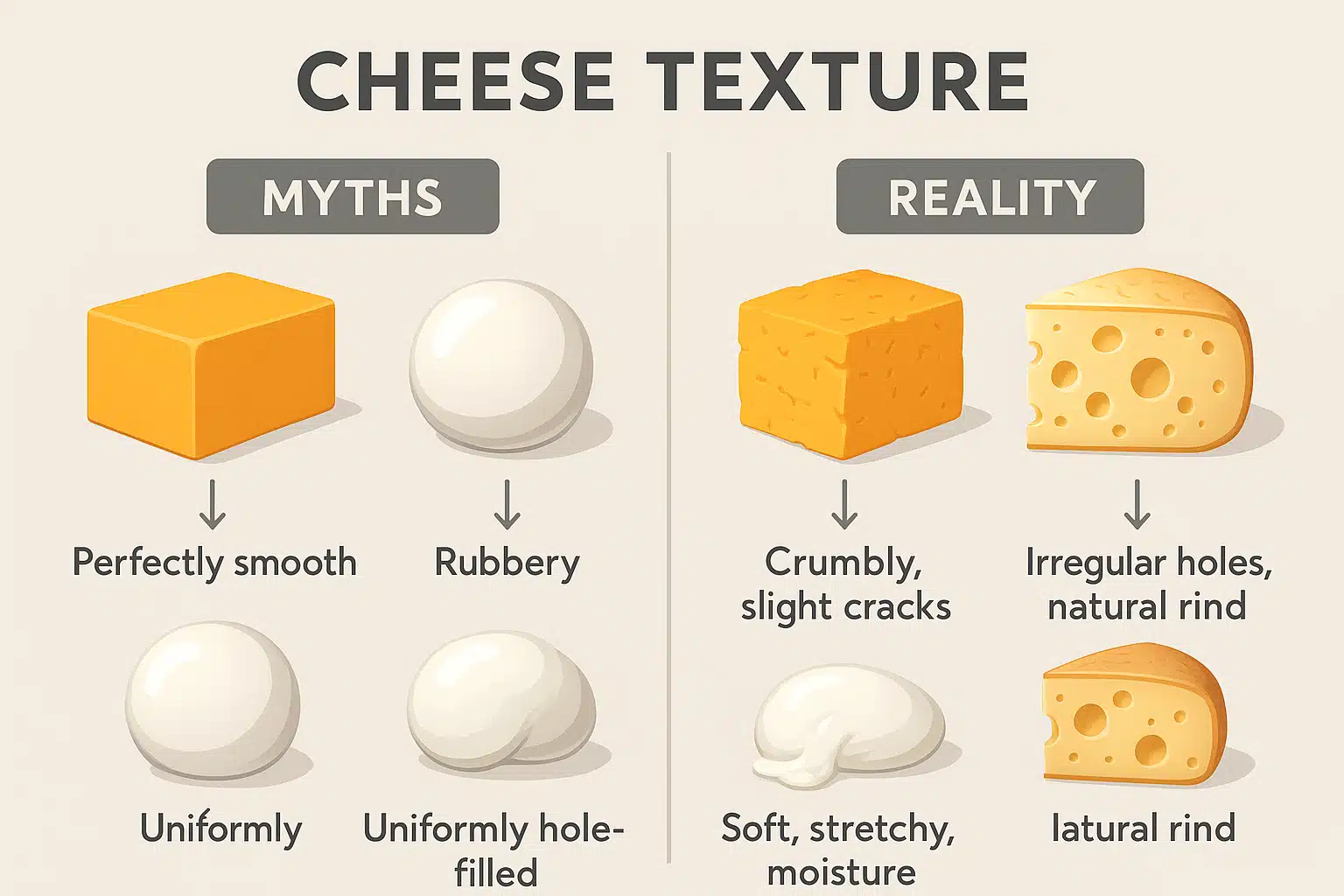
Despite cheese being a staple food enjoyed worldwide, several myths and misunderstandings persist about what determines its texture. Clearing up these misconceptions helps cheese lovers make better purchasing decisions and appreciate the complexity of cheese-making.
Myth 1: All Soft Cheeses Are High in Moisture
Reality: While softness often correlates with higher moisture content, it’s not the only factor. Fat content plays a crucial role in creating soft, spreadable textures. Cream cheese, for example, derives much of its smooth, soft texture from its high fat content (around 33% or more) working in combination with moisture. Some triple-crème cheeses can feel incredibly soft and rich despite not having exceptionally high moisture levels because their fat content creates a luscious, creamy mouthfeel.
Additionally, some soft cheeses achieve their texture through enzymatic breakdown of proteins during ripening rather than purely through moisture. A ripe Camembert may have lost some moisture during aging but becomes softer and more flowing as enzymes break down the protein structure.
Myth 2: Crumbly Cheese Means Old or Dried Out Cheese
Reality: Many cheeses are intentionally crafted to have a crumbly texture from the start—it’s a desired characteristic, not a defect. Feta, Cheshire, and Lancashire cheeses are meant to crumble. This texture results from specific production techniques, not age or improper storage. While it’s true that some cheeses become more crumbly as they age (like cheddar), and that improper storage can cause unwanted drying and crumbling, a crumbly texture in many cheese styles is exactly what the cheesemaker intended.
Conversely, you can distinguish intentional crumbliness from deterioration: properly crumbly cheese still has moisture and flavor, while dried-out cheese will be hard, chalky, and may have developed off-flavors.
Myth 3: Harder Cheeses Are Always Aged Longer
Reality: While aging does typically reduce moisture and create firmer textures, the initial production method is equally important. Some cheeses start firm due to low moisture from the beginning of production—through extensive cooking of the curd, heavy pressing, or specific production techniques—and may be ready to eat relatively quickly. Meanwhile, some softer cheeses require specific aging periods to develop their characteristic textures and flavors, even though they never become hard.
Fresh mozzarella is made to be consumed almost immediately and is soft, while a cheese like Parmigiano-Reggiano starts with a firm texture due to production methods and becomes even harder and more concentrated through aging. The initial production sets the foundation, and aging modifies it.
Myth 4: You Can Determine Cheese Quality by Texture Alone
Reality: Texture is one component of cheese quality, but it must be evaluated in the context of the cheese type and style. A perfectly made brie should have a soft, creamy texture; that same texture in a cheddar would indicate a problem. Quality assessment requires understanding what texture is appropriate for each cheese variety. A high-quality Parmigiano should be hard and granular; a high-quality Camembert should be soft and flowing when ripe.
Texture should be consistent with the cheese style, uniform throughout (unless intentionally varied, as in blue cheese), and free from defects like excessive dryness, sliminess, or inappropriate crystallization. Combined with aroma, flavor, and appearance, texture helps paint a complete picture of cheese quality.
Myth 5: Holes in Cheese Mean Better Quality or More Aging
Reality: Holes (called “eyes” in cheese terminology) are created by specific bacteria that produce carbon dioxide during fermentation. Swiss-style cheeses like Emmental develop their characteristic large holes from Propionibacterium bacteria. The presence, size, and distribution of holes are variety-specific characteristics, not universal indicators of quality or age. Some of the world’s finest cheeses have no holes at all, while some younger cheeses may have more pronounced holes than aged versions of the same variety.
Practical Applications: Choosing Cheese by Texture
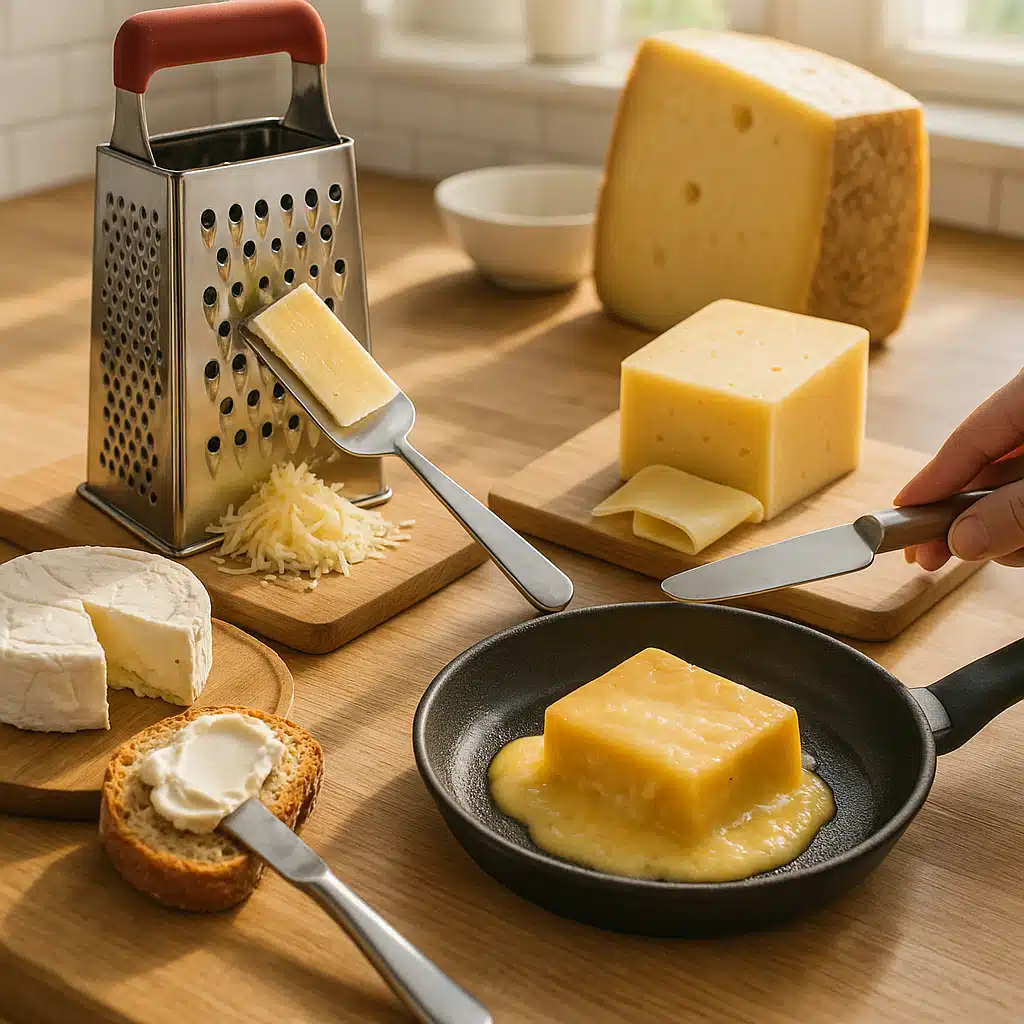
Understanding cheese texture goes beyond academic interest—it has practical implications for how you select, store, and use cheese in everyday life. Different textures suit different purposes, and knowing which texture to choose for specific applications will elevate your culinary results and snacking experiences.
For Melting
When choosing cheese for melting, look for varieties with moderate to high moisture content and good fat levels. Cheeses with these characteristics melt smoothly without separating or becoming greasy. Young, semi-soft cheeses generally perform best: mozzarella for pizza, fontina for fondues, young cheddar or Monterey Jack for quesadillas and grilled cheese sandwiches. Very hard, aged cheeses may not melt smoothly, instead becoming oily or remaining grainy even when heated.
For Grating
Hard, low-moisture cheeses are ideal for grating. Their firm texture allows them to be shredded into fine particles that distribute evenly over dishes. Parmigiano-Reggiano, Pecorino Romano, aged Manchego, and well-aged Gouda excel in this role. The low moisture content also means grated hard cheese doesn’t clump together and stores well after grating (though freshly grated always tastes best).
For Spreading
Soft, creamy cheeses work best for spreading on bread, crackers, or incorporating into dips. Look for varieties like cream cheese, soft chèvre (goat cheese), ripe Brie or Camembert, and boursin-style cheeses. These spread easily at room temperature without tearing bread and create a luxurious, creamy layer. For entertaining, soft-ripened cheeses should be removed from refrigeration 30-60 minutes before serving to reach optimal spreadable consistency.
For Slicing
Semi-hard and some semi-soft cheeses slice most cleanly for sandwiches and cheese boards. Cheddar, Gouda, Havarti, Emmental, and Gruyère all slice well without crumbling or becoming mushy. The texture holds together under the knife while remaining pleasant to bite through. For the cleanest slices, use a sharp knife and wipe it clean between cuts, or use a cheese wire for particularly clean edges.
For Crumbling Over Dishes
When you want cheese to add texture and flavor without melting completely, choose varieties with naturally crumbly textures. Feta, blue cheese, aged cheddar, and queso fresco work beautifully crumbled over salads, roasted vegetables, or pasta. These cheeses break into appealing, bite-sized pieces that distribute throughout dishes and provide textural contrast.
For Cheese Boards
A well-composed cheese board should feature a variety of textures to create interest and appeal to different preferences. Include at least three textures: one soft (brie or chèvre), one semi-hard (aged cheddar or Gouda), and one hard or crumbly (Parmigiano or blue cheese). This variety ensures guests experience different mouthfeels and can discover what they prefer. Provide appropriate tools for each texture: a spreader for soft cheese, a sharp knife for semi-hard varieties, and a specialized parmesan knife or small fork for hard, crumbly cheeses.
Storing Cheese to Preserve Optimal Texture
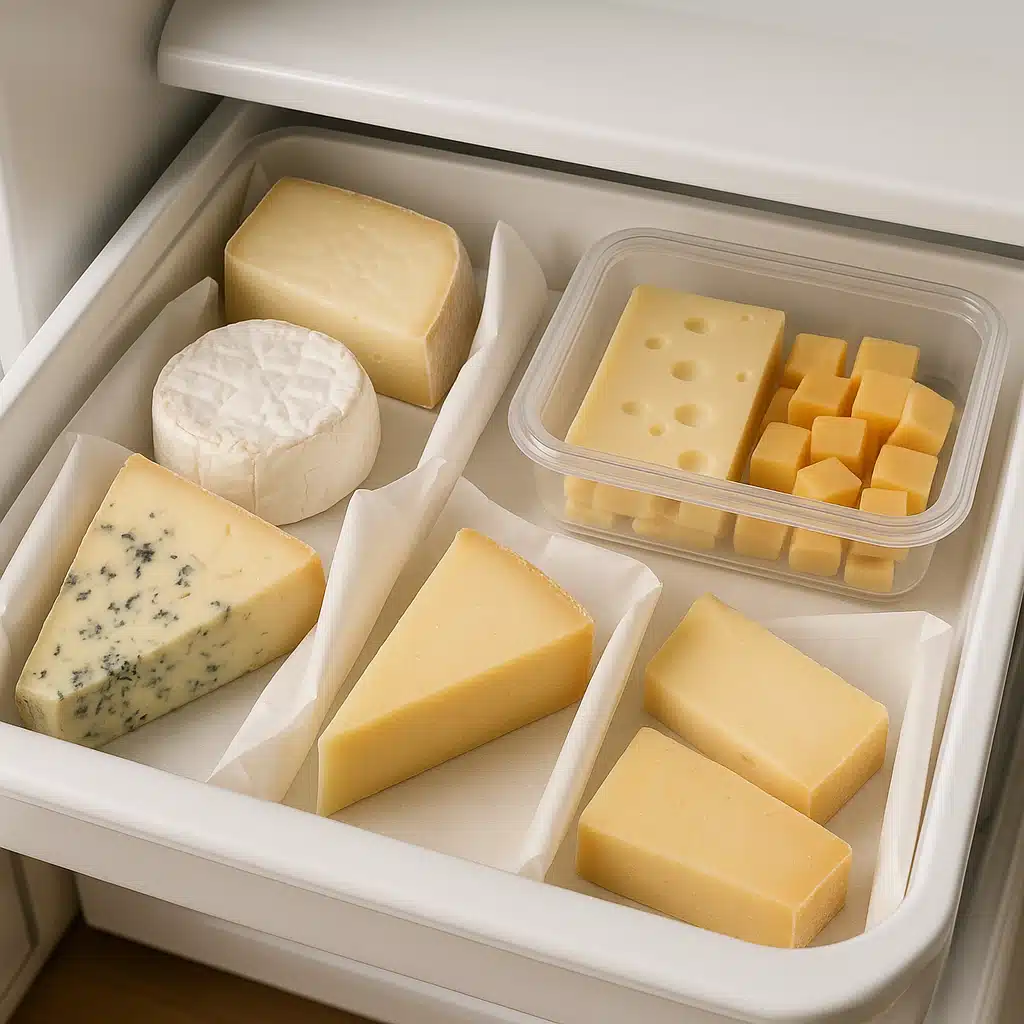
Proper storage is essential for maintaining the texture characteristics that make each cheese special. Incorrect storage can dry out cheese, make it slimy, cause unwanted mold growth, or lead to texture deterioration. Different cheese textures require different storage approaches.
General Storage Principles
All cheese should be stored in the refrigerator between 35-45°F (2-7°C). However, cheese is a living food, especially varieties that are aged or contain active cultures. It needs to breathe while also being protected from drying out. Never store cheese in airtight plastic wrap for extended periods, as this traps moisture against the surface and can lead to off-flavors and slimy textures.
Specialty cheese paper, which is porous yet moisture-retaining, is ideal for most cheeses. If unavailable, wax paper or parchment paper works reasonably well. Wrap cheese in paper, then place it in a partially sealed plastic container or plastic bag to provide an extra layer of protection while still allowing some air circulation.
Storing Soft Cheeses
Fresh, soft cheeses like ricotta, cottage cheese, and fresh mozzarella have high moisture content and limited shelf life. Keep these in their original containers with tight lids and consume within a few days of opening. For soft-ripened cheeses like Brie and Camembert, wrap in cheese paper and store in the vegetable drawer where humidity is slightly higher. These cheeses continue to ripen in the refrigerator, so purchase them at the ripeness level you desire and plan to consume them within a week or so.
Storing Semi-Hard and Hard Cheeses
These cheeses are more forgiving in storage due to lower moisture content. Wrap in cheese paper or wax paper and store in the refrigerator. They can typically be kept for several weeks if properly stored. If the cut surface dries out slightly, you can trim off the dried layer—the interior will still be fine. Very hard cheeses like Parmigiano can even be stored in a piece of slightly dampened cheesecloth to prevent excessive drying while maintaining the proper texture.
Storing Crumbly Cheeses
Feta and other brined cheeses should be stored in their brine in a sealed container. If you’ve purchased feta without brine, you can make a simple brine with water and salt to keep it moist. Other crumbly cheeses like Cheshire can be wrapped like semi-hard cheeses, though they’re more delicate and should be handled gently to prevent unnecessary breakage.
Freezing Cheese
While freezing is generally not recommended as it can significantly alter texture, some cheeses freeze better than others. Hard cheeses can be frozen and then used for grating or cooking, though the texture will be more crumbly after thawing. Soft and fresh cheeses do not freeze well, as the moisture separates upon thawing, creating an undesirable watery, grainy texture. If you must freeze cheese, grate or cut it into usable portions first, wrap tightly, and use it within two months for cooking purposes rather than eating fresh.
The Impact of Temperature on Cheese Texture Perception
An often overlooked aspect of enjoying cheese is serving temperature. The same cheese can feel and taste remarkably different depending on whether it’s served cold from the refrigerator or at room temperature. Temperature affects both the actual physical texture and our perception of it.
Cold temperatures firm up fats and proteins, making cheese seem harder, less aromatic, and less flavorful. Many of the volatile aromatic compounds in cheese are suppressed at cold temperatures, and the texture can seem rubbery or overly firm. As cheese warms, fats soften, proteins relax slightly, and aromatic compounds become more volatile, creating a more intense flavor experience and more pleasant texture.
For optimal texture and flavor, remove cheese from the refrigerator 30 minutes to 2 hours before serving, depending on the cheese type and room temperature. Soft cheeses need less time to warm than hard cheeses due to their higher moisture content. Very hard cheeses may need up to two hours to fully develop their flavor profile. However, don’t let cheese sit out for extended periods in warm conditions, as food safety becomes a concern.
The ideal serving temperature for most cheeses is around 60-68°F (15-20°C). At this temperature, soft cheeses become luxuriously creamy, semi-hard cheeses develop their full flavor complexity while maintaining good texture, and hard cheeses reveal nutty, complex notes that are muted when cold.
Conclusion: Appreciating the Art and Science of Cheese Texture
Understanding cheese texture transforms how we experience this ancient and beloved food. The interplay between moisture content and calcium structure, modified by production techniques and aging, creates the remarkable diversity we see in cheese from around the world. From spreadable fresh cheeses to crystalline aged varieties, each texture serves a purpose and offers unique pleasures.
Armed with this knowledge, you can make more informed choices when selecting cheese for specific culinary applications, build better cheese boards that showcase textural variety, store cheese properly to maintain its intended characteristics, and serve it at the right temperature to maximize enjoyment. You’ll recognize that a crumbly texture isn’t necessarily a flaw but often an intentional characteristic, and you’ll understand why certain cheeses excel in specific cooking applications.
The next time you visit a cheese shop or grocery store, take a moment to consider not just the flavor profiles but also the textures available. Ask questions about moisture content, aging periods, and production methods. And when you’re enjoying cheese at home, pay attention to how it feels in your hands and on your palate—there’s a fascinating story of craftsmanship and science behind every texture you experience.
Whether you’re spreading soft chèvre on a cracker, grating aged Parmigiano over pasta, melting mozzarella on pizza, or crumbling feta over a salad, you’re now experiencing cheese with a deeper appreciation for the complex factors that created its unique texture. This understanding enhances not just your knowledge but your actual enjoyment of one of humanity’s most enduring culinary achievements.