How to Store Cheese Properly: Essential Guide for Maximum Freshness and Flavor
Cheese is one of the world’s most beloved foods, enjoyed across cultures and cuisines. Whether you’re savoring an aged artisan variety or a creamy soft cheese, proper storage is the key to preserving its unique flavor, texture, and quality. Unfortunately, many cheese lovers unknowingly compromise their cheese by using incorrect storage methods. This comprehensive guide will walk you through everything you need to know about storing cheese effectively, helping you avoid common mistakes and enjoy your cheese at its absolute best.
Understanding the Science of Cheese Storage
Many people assume that simply wrapping cheese in plastic wrap and tossing it in the refrigerator is sufficient. However, this common practice can actually do more harm than good. Cheese is a living product that continues to age and develop even after purchase. It needs to breathe while simultaneously being protected from drying out or absorbing unwanted odors from other foods.
Plastic wrap creates an airtight seal that traps moisture against the cheese surface, creating condensation. This excess moisture can lead to premature spoilage, encourage unwanted mold growth, and create off-flavors that mask the cheese’s natural taste profile. Additionally, some cheeses can absorb the petroleum-based compounds from plastic, further compromising their flavor.
The goal of proper cheese storage is to create an environment that mimics traditional cheese caves: cool, humid, and with adequate air circulation. While most home kitchens can’t replicate these conditions perfectly, understanding these principles will help you make better storage decisions.
Proper Wrapping Techniques for Different Cheese Types
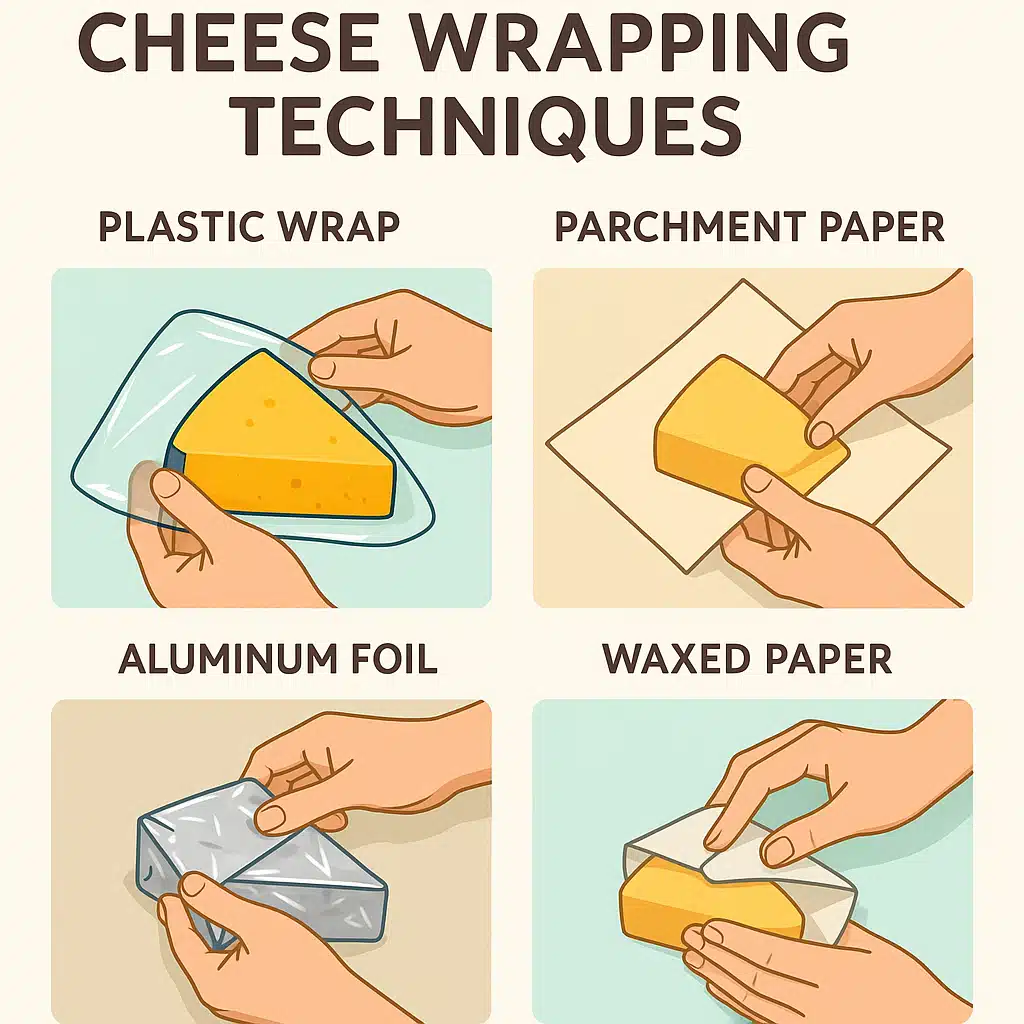
The wrapping material you choose plays a critical role in preserving your cheese’s quality. Different materials offer varying levels of breathability, moisture retention, and protection. Here are the most effective wrapping methods used by cheese professionals and enthusiasts worldwide:
Specialty Cheese Paper
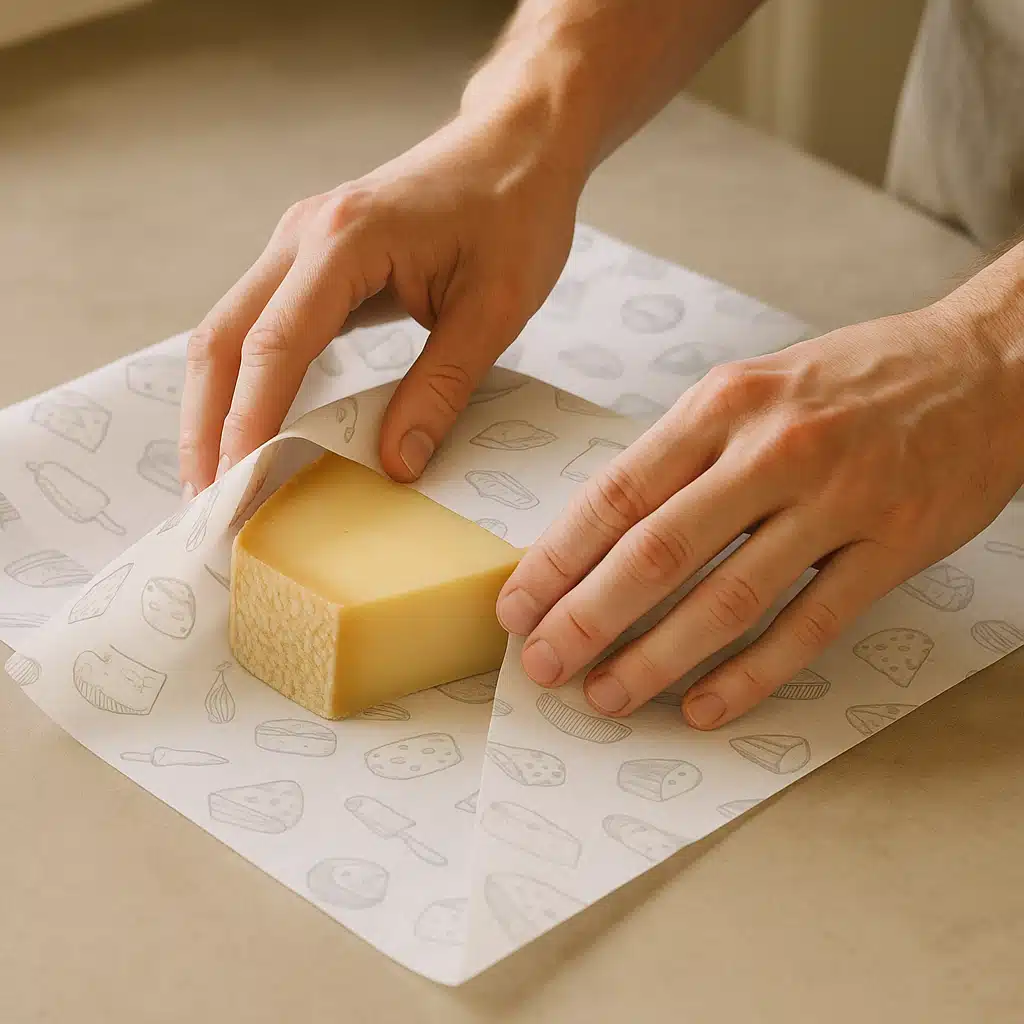
Cheese paper is specifically engineered for cheese storage, featuring a two-ply construction with a porous inner layer that allows the cheese to breathe and an outer wax-coated layer that retains essential moisture. This combination creates the ideal microenvironment for cheese, preventing it from drying out while allowing harmful gases to escape. Professional cheesemongers and serious cheese enthusiasts consider this the gold standard for cheese storage.
Parchment or Wax Paper
If specialty cheese paper isn’t available, parchment paper or wax paper serves as an excellent alternative. These materials are semi-permeable, allowing cheese to breathe while providing a protective barrier. After wrapping your cheese in parchment or wax paper, you can place it loosely in a container or wrap it gently in aluminum foil for additional protection. Avoid wrapping too tightly, as cheese needs some air circulation.
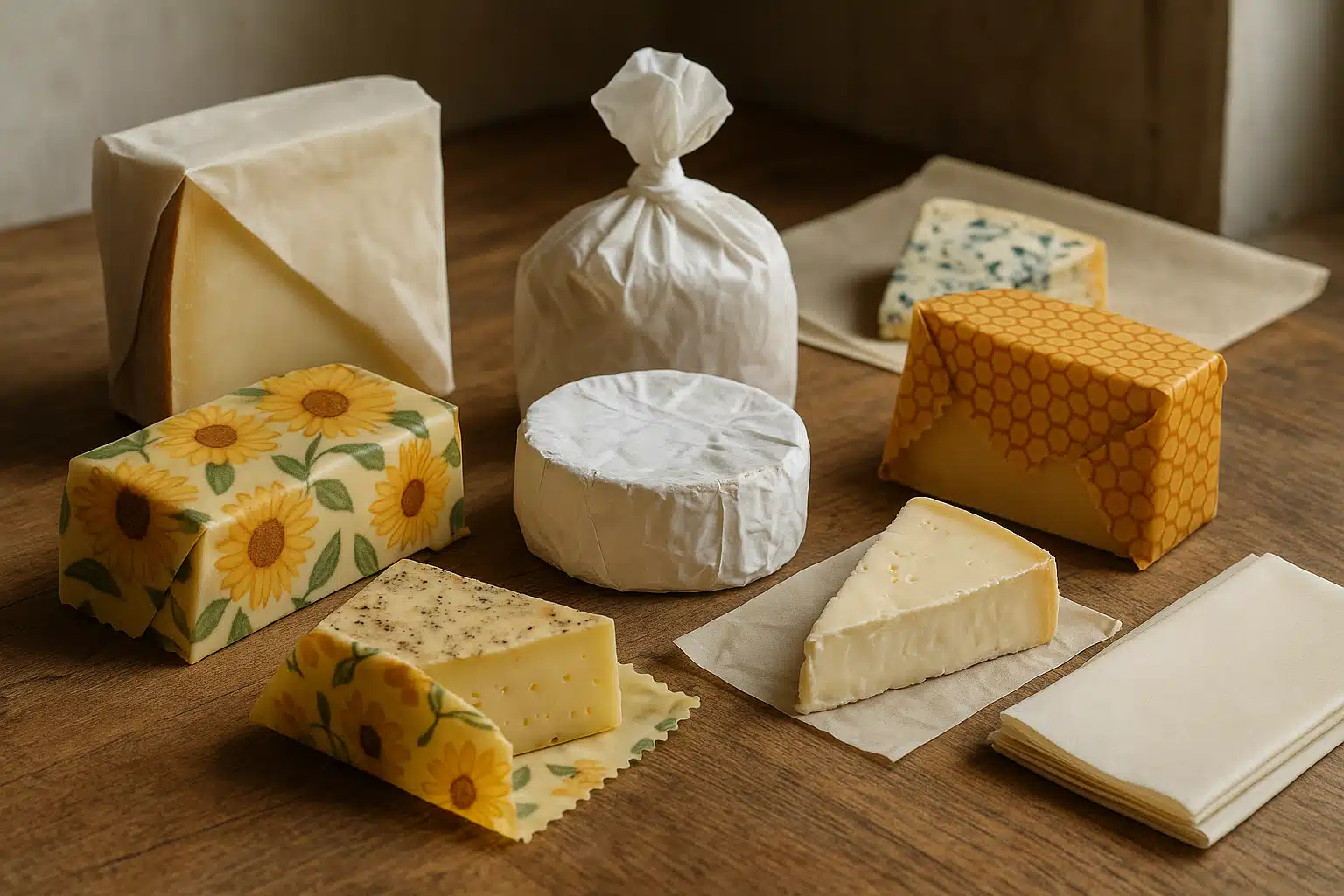
Reusable Beeswax Wraps
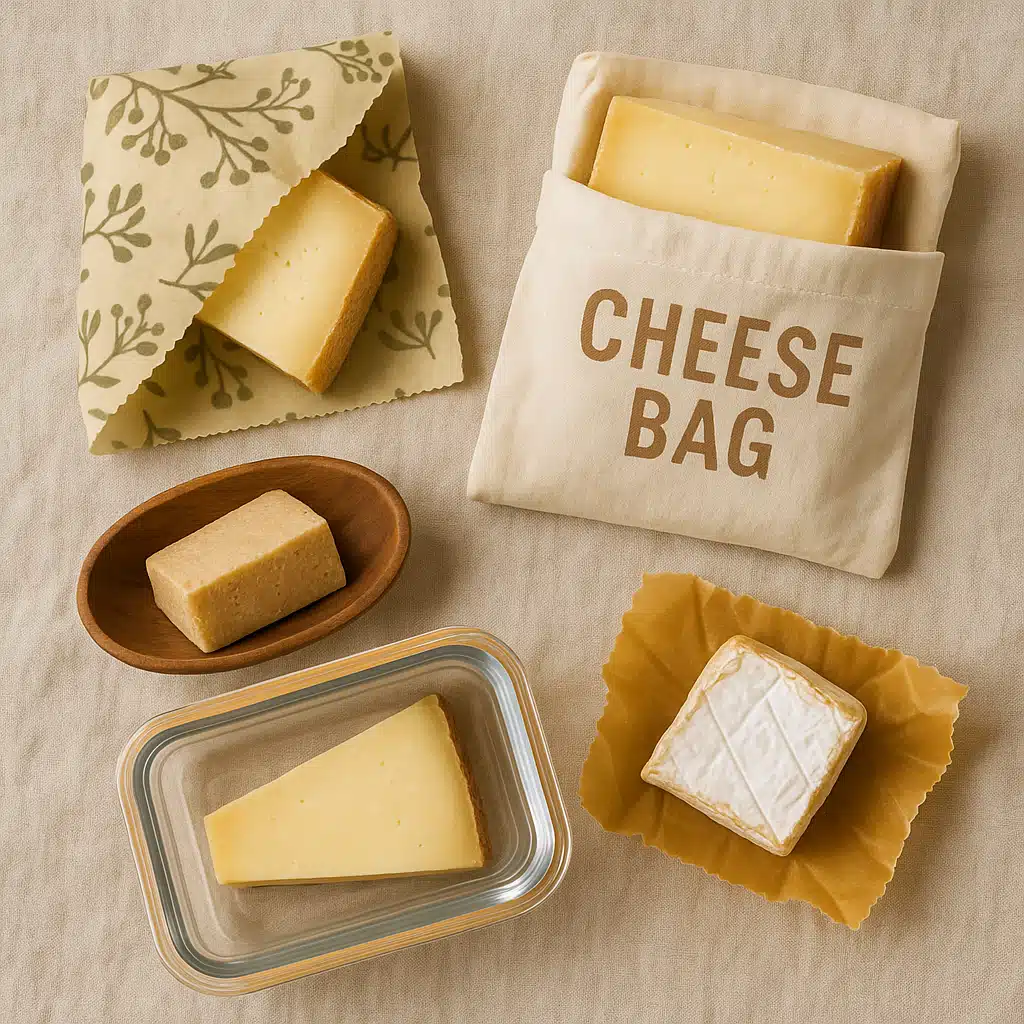
For environmentally conscious cheese lovers, reusable beeswax wraps offer a sustainable alternative to disposable materials. These cloth wraps are coated with beeswax, tree resin, and jojoba oil, creating a breathable, antimicrobial barrier. They conform to the shape of your cheese when warmed by your hands and can be washed and reused multiple times. They work particularly well for semi-hard and hard cheeses.
What to Avoid
Regular plastic wrap or cling film should be avoided for long-term cheese storage. While it might be acceptable for very short periods (a few hours), extended contact with plastic creates the “sweaty” environment that encourages spoilage. Similarly, airtight plastic containers can trap too much moisture unless they’re specifically designed for cheese storage with humidity control features.
Temperature and Humidity: Creating the Perfect Environment
Temperature control is just as crucial as proper wrapping. Different cheese types have different optimal storage temperatures, though most fall within a general range that typical home refrigerators can accommodate with some strategic placement.
Ideal Temperature Ranges
Understanding the temperature preferences of different cheese categories will help you store them optimally:
- Fresh and Soft Cheeses (Fresh Mozzarella, Ricotta, Chèvre): These cheeses contain higher moisture content and are more perishable. Store them at 35-40°F (1.5-4°C) in the coldest part of your refrigerator. Keep them in their original brine or whey when applicable, and consume them quickly for the best quality.
- Semi-Soft Cheeses (Brie, Camembert, Havarti): These benefit from slightly warmer storage at 40-45°F (4-7°C). The vegetable crisper drawer is often ideal, as it’s typically a few degrees warmer than the main refrigerator compartment.
- Semi-Hard and Hard Cheeses (Cheddar, Gouda, Manchego, Parmesan): These aged varieties prefer 45-50°F (7-10°C). They’re more forgiving of temperature fluctuations and can handle being stored in various parts of the refrigerator.
- Blue Cheeses (Roquefort, Gorgonzola, Stilton): Store between 40-50°F (4-10°C). These cheeses benefit from being wrapped separately and stored in a container to prevent their distinctive flavors and beneficial molds from affecting other foods.
Using Your Refrigerator Strategically
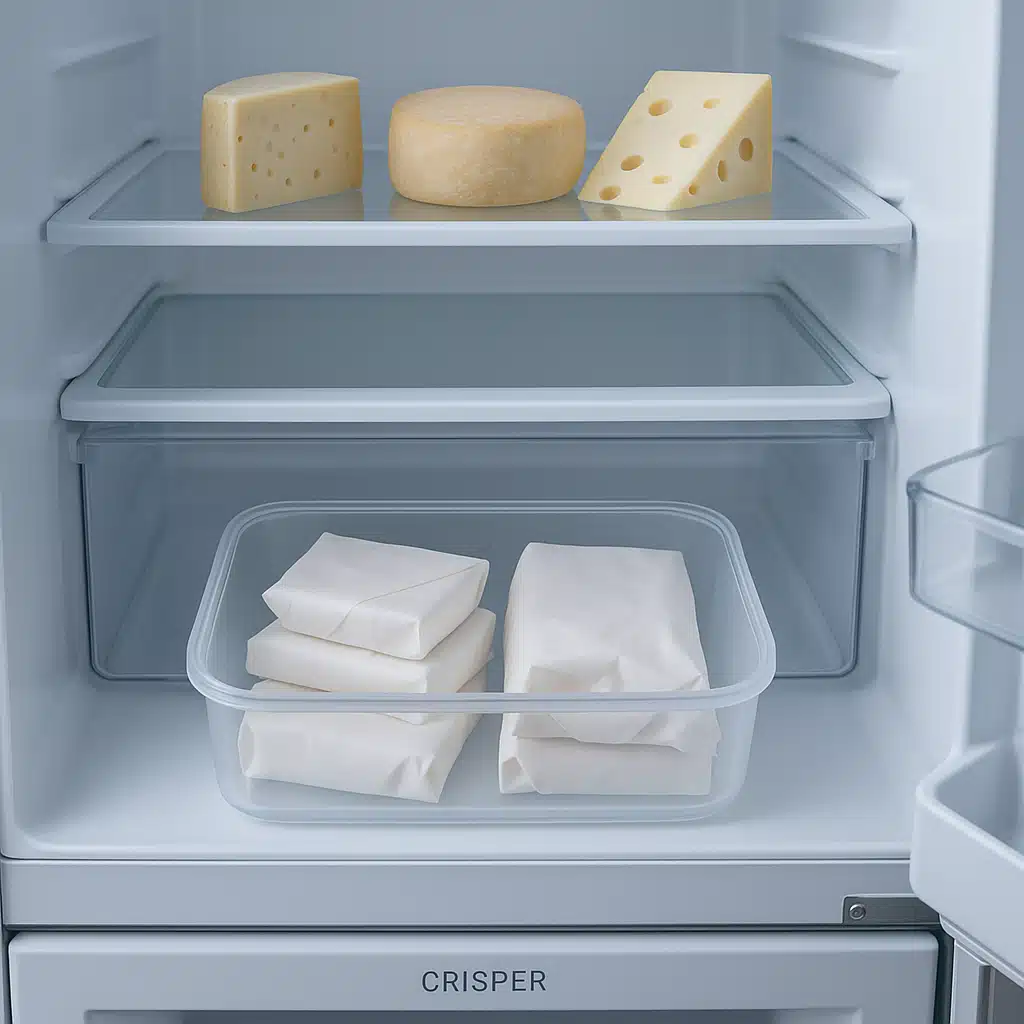
The vegetable crisper drawer is often the best location for cheese storage because it maintains slightly higher humidity and more stable temperatures than other refrigerator sections. If possible, dedicate one drawer exclusively to cheese, or use a separate container within the drawer to isolate cheese from produce.
Avoid storing cheese in the refrigerator door, where temperature fluctuations are most dramatic due to frequent opening and closing. Also, keep cheese away from foods with strong odors, as cheese readily absorbs surrounding smells.
Storage Guidelines for Specific Cheese Varieties
Different cheese families require slightly different approaches to storage. Here’s a detailed breakdown of how to handle the most common cheese types:
Hard Aged Cheeses
Examples: Parmesan, Pecorino Romano, aged Cheddar, aged Gouda, Gruyère
These low-moisture cheeses are the most forgiving and longest-lasting. Wrap them in parchment or cheese paper, then place them in a loosely sealed container or wrap the exterior with aluminum foil. If you notice surface mold (which is common and generally harmless on hard cheeses), simply cut away the affected area plus an extra half-inch margin, and the remaining cheese is perfectly safe to eat. Hard cheeses can last several weeks or even months when stored properly.
Semi-Hard Cheeses
Examples: Cheddar, Gouda, Edam, Jarlsberg, Emmental
These versatile cheeses strike a balance between moisture content and aging. Wrap them in cheese paper or parchment paper, then store in the crisper drawer. Change the wrapping every few days if you notice moisture accumulation. These cheeses typically maintain quality for 3-4 weeks when properly stored.
Soft and Creamy Cheeses
Examples: Brie, Camembert, fresh goat cheese, Burrata
Soft cheeses are more delicate and perishable. If possible, keep them in their original packaging until you’re ready to cut into them, as it’s designed to protect them during their shelf life. Once opened, wrap them loosely in cheese paper or place them in a small container with a slightly damp paper towel to maintain humidity. Consume within 1-2 weeks for optimal quality.
Blue Cheeses
Examples: Roquefort, Gorgonzola, Stilton, Danish Blue
Blue cheeses require special attention due to their distinctive mold cultures. Wrap them in foil (which provides a better barrier than paper for these pungent varieties) and store them in a separate container to prevent their strong flavors from affecting other foods. The beneficial blue mold should continue to develop slowly, which is normal. These cheeses typically last 3-4 weeks in the refrigerator.
Fresh Cheeses
Examples: Fresh mozzarella, ricotta, cottage cheese, queso fresco
These high-moisture cheeses are the most perishable. Keep fresh mozzarella in its original brine or whey, stored in an airtight container. Ricotta and cottage cheese should remain in their original containers with tight-fitting lids. Consume these cheeses within a few days to a week for the best flavor and texture.

Common Questions and Misconceptions About Cheese Storage
Can You Freeze Cheese?
Freezing cheese is possible but comes with significant trade-offs. The freezing process causes ice crystals to form within the cheese structure, which damages the protein matrix and fat distribution. When thawed, previously frozen cheese often becomes crumbly, grainy, or mealy in texture, with diminished flavor complexity.
If you must freeze cheese, hard and semi-hard varieties fare best. Grate or shred the cheese before freezing, as it will be difficult to slice properly after thawing. Use frozen cheese for cooking applications like casseroles, pizza, or pasta dishes where texture changes are less noticeable. Soft, fresh, and blue cheeses do not freeze well and should be avoided for freezing.
To freeze cheese, wrap it tightly in plastic wrap, then place it in a freezer bag with as much air removed as possible. Label with the date and cheese type. Frozen cheese can be stored for up to 6 months, though quality begins declining after 2-3 months. Thaw frozen cheese slowly in the refrigerator for 24-48 hours before using.
Should You Keep Cheese in Original Packaging?
Original packaging serves an important protective function during transportation and initial storage, but it’s not always optimal for long-term home storage after opening. Many commercial cheese packages use vacuum-sealing or modified atmosphere packaging that works well until the seal is broken. Once you’ve cut into the cheese, rewrap it using the proper materials discussed earlier.
Some specialty cheeses come with high-quality wrapping or in wooden boxes designed for aging. In these cases, you can often return the cheese to its original packaging, especially if it uses breathable materials.
How Long Does Cheese Last?
Shelf life varies dramatically depending on cheese type, moisture content, and storage conditions. Here are general guidelines:
- Fresh cheeses: 3-7 days
- Soft cheeses: 1-2 weeks
- Semi-soft cheeses: 2-3 weeks
- Semi-hard cheeses: 3-4 weeks
- Hard cheeses: 1-2 months or longer
- Very hard grating cheeses: Several months
Always trust your senses. If cheese develops an ammonia smell, shows unusual discoloration beyond normal aging, or has an off taste, it’s best to discard it.
What About Surface Mold?
Not all mold on cheese is problematic. For hard cheeses, surface mold can simply be cut away (remove at least half an inch beyond the visible mold) and the rest of the cheese is safe to consume. However, if you find mold on soft or fresh cheeses, it’s safest to discard the entire piece, as mold can penetrate deeply into high-moisture cheeses without visible signs.
Blue cheeses and bloomy-rind cheeses (like Brie and Camembert) have beneficial molds that are intentionally cultivated and are completely safe to eat. You can distinguish unwanted mold by color and texture—it’s often fuzzy, and appears in colors like black, pink, or green that don’t match the cheese’s characteristic mold.
Best Practices for Serving Cheese
Proper storage isn’t just about preservation—it’s also about preparing cheese for optimal enjoyment. Most cheeses taste best when served at room temperature, as cold temperatures mute flavors and alter textures. Remove cheese from the refrigerator 30 minutes to 1 hour before serving, depending on the cheese type and ambient temperature.
Keep cheese wrapped until just before serving to prevent it from drying out. If you’re preparing a cheese board, cut only what you plan to serve immediately, leaving the rest properly wrapped in the refrigerator.
Special Considerations for Artisan and Imported Cheeses
Premium artisan cheeses often represent significant investments and deserve extra care. These cheeses are frequently made using traditional methods with minimal preservatives, making proper storage even more critical.
If you’ve purchased cheese from a specialty shop, don’t hesitate to ask the cheesemonger for specific storage recommendations. They can provide insights about the particular cheese’s aging state, expected flavor evolution, and optimal consumption timeline.
Some natural-rind cheeses are meant to continue developing in your refrigerator, while others have reached their peak and should be consumed relatively quickly. Understanding where your cheese is in its lifecycle will help you store and enjoy it at its best.
Creating a Cheese Storage System
For cheese enthusiasts who regularly keep multiple varieties on hand, establishing an organized storage system makes cheese care easier and more effective:
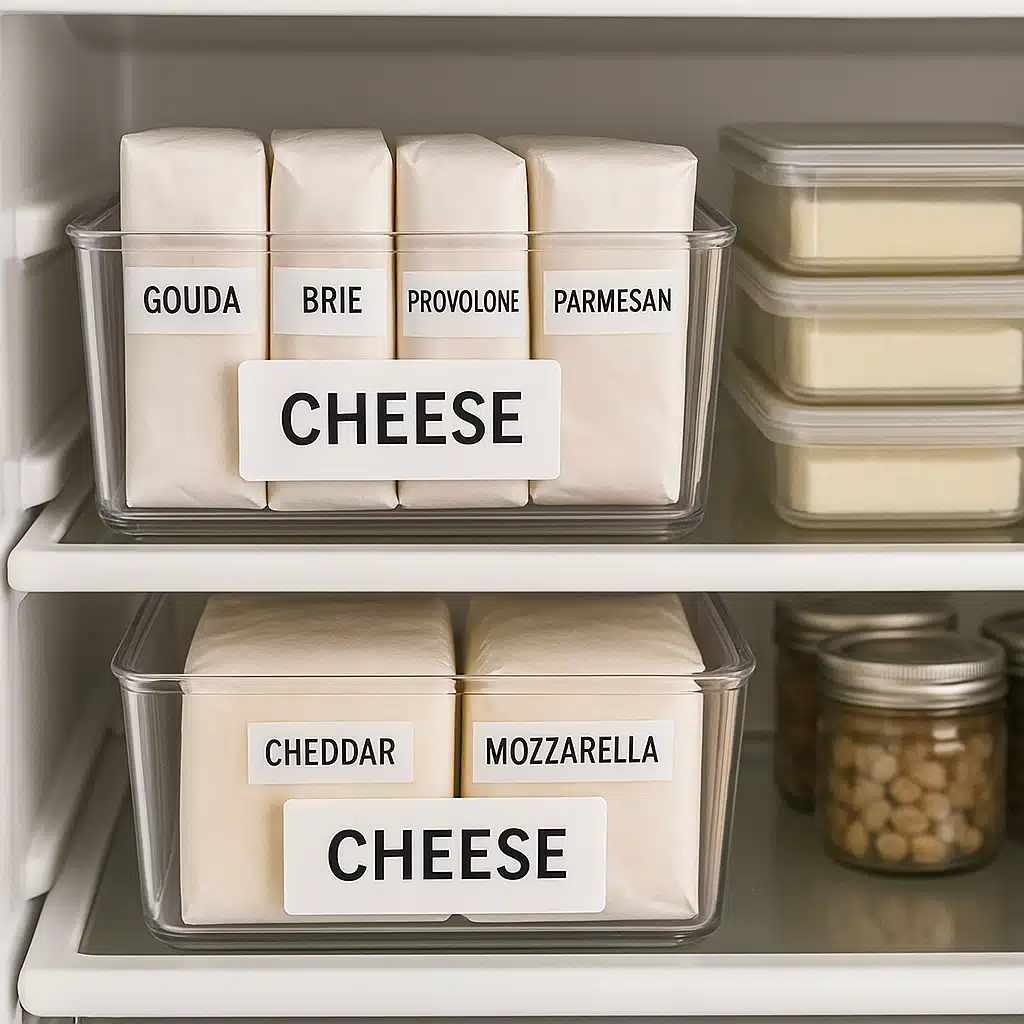
- Label everything: Include the cheese name, purchase date, and any special storage notes. This helps you track freshness and rotate your stock.
- Use separate containers: Group similar cheese types together and isolate strong-smelling varieties.
- Keep cheese paper or parchment readily available: Rewrap cheese in fresh material every few days for optimal freshness.
- Maintain a consistent location: Designate a specific drawer or shelf section for cheese to maintain stable conditions.
- Monitor regularly: Check your cheese supply every few days, removing any that show signs of spoilage and rewrapping those that need fresh paper.
Sustainability and Cheese Storage
As awareness of environmental impact grows, many cheese lovers are seeking more sustainable storage solutions. Reusable options like beeswax wraps, washable cheese bags made from cotton or linen, and quality glass or ceramic containers reduce waste while effectively protecting cheese.
Even if you opt for disposable materials like parchment paper, these are often more environmentally friendly than plastic wrap, as they’re typically biodegradable or compostable. Some specialty cheese papers are also designed to be compostable.
Conclusion: Preserving Quality, Enhancing Enjoyment
Proper cheese storage is an essential skill for anyone who appreciates quality cheese. By understanding the principles of temperature control, humidity management, and appropriate wrapping materials, you can significantly extend the life of your cheese while preserving its intended flavors and textures.
Remember that cheese is a living food that continues to develop character over time. The storage methods outlined in this guide work with cheese’s natural properties rather than against them, allowing you to experience each variety as its maker intended.
Whether you’re storing an everyday cheese for family meals or preserving a special artisan variety for a celebration, these techniques will help you get the most enjoyment from every purchase. The small investment in proper storage materials and the minor effort required to wrap and store cheese correctly pay dividends in flavor, texture, and reduced waste.
Start implementing these practices today, and you’ll immediately notice the difference in your cheese’s quality and longevity. Your taste buds—and your budget—will thank you.