Introduction
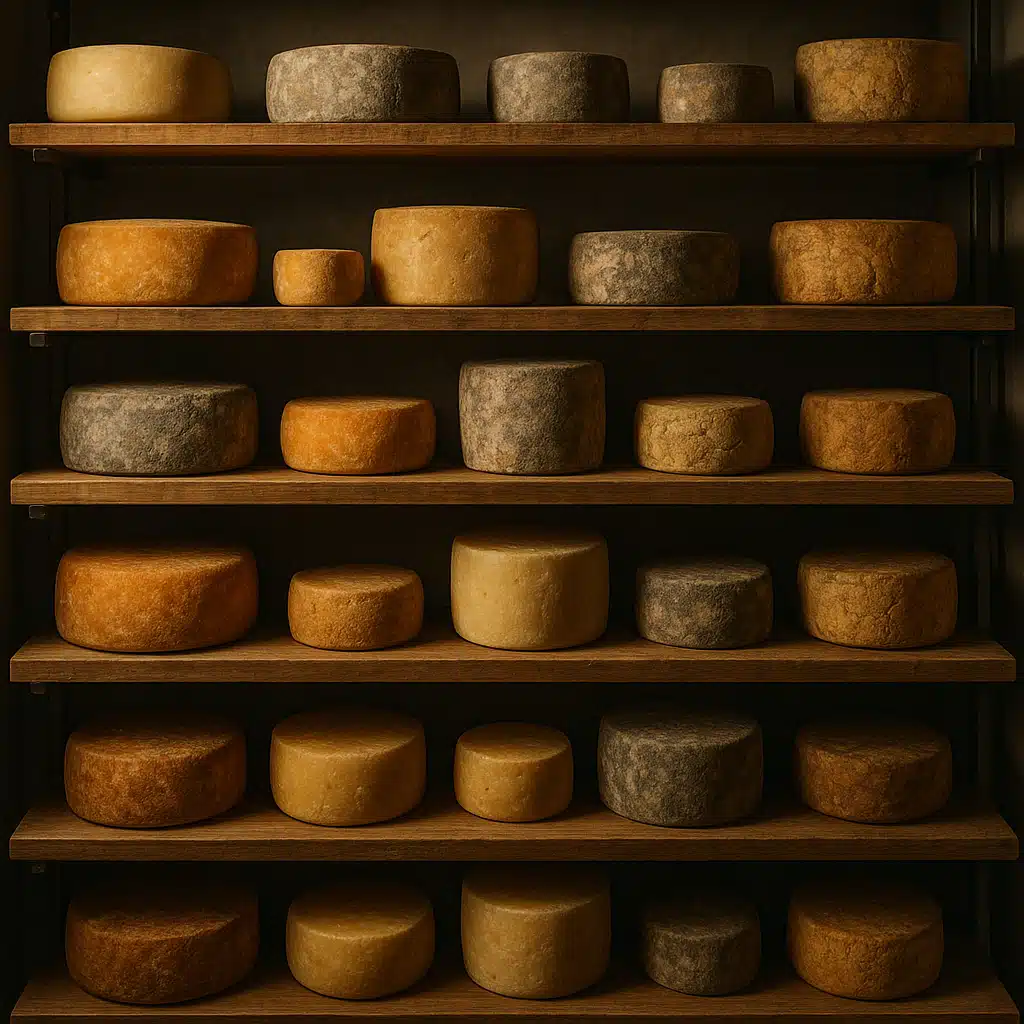
Have you ever lost track of how long your homemade cheese has been aging? Whether you’re a hobbyist cheese maker or considering starting your own small-scale cheese production, you already know that aging cheese is one of the most critical stages in the entire process. The transformation from fresh curd to a complex, flavorful aged cheese requires not just patience, but meticulous organization and tracking.
Keeping tabs on multiple batches, each with different aging requirements and timelines, can quickly become overwhelming without a proper system in place. That’s where effective inventory management becomes your most valuable tool. In this comprehensive guide, we’ll explore practical, accessible methods—from digital spreadsheets to traditional logbooks—that will help you stay organized, maintain quality control, and ensure every wheel of cheese reaches its optimal aging potential.
Whether you’re aging a single batch of cheddar or managing dozens of different cheese varieties simultaneously, the strategies outlined here will transform your cheese making experience from chaotic to controlled.
Understanding Inventory Management for Cheese Aging

Inventory management might initially sound like corporate jargon reserved for large-scale commercial operations, but it’s actually a fundamental skill that every serious cheese maker—regardless of scale—should master. At its core, inventory management for cheese aging is simply the systematic process of tracking what you have, when you created it, under what conditions it’s aging, and how long it’s been in the aging process.
This organizational approach allows you to maintain consistent quality across batches, identify patterns in successful aging profiles, troubleshoot problems before they affect entire batches, and optimize your production schedule based on historical data. For artisan cheese makers, this becomes especially important as you scale up operations or experiment with new varieties that have different aging requirements.
Think of inventory management as your cheese diary—a detailed record that captures the journey of each batch from creation through maturation. This documentation becomes invaluable when you’re trying to replicate a particularly successful batch or understand what went wrong with one that didn’t meet expectations.
Why Proper Tracking Matters
Maintaining detailed records of your cheese inventory delivers multiple significant benefits that directly impact both quality and efficiency. First and foremost, precise tracking ensures you can consistently create the optimal flavors and textures that define your cheese varieties. Different cheese types require specific aging periods—some as short as a few weeks, others extending to several years—and even a few days’ deviation can noticeably affect the final product.
Proper inventory management also prevents costly waste. Without accurate records, it’s surprisingly easy to let cheese age too long, developing undesirable flavors or textures, or conversely, to consume or sell cheese before it has reached its peak. Both scenarios result in lost time, ingredients, and potential revenue if you’re selling your products.
Additionally, systematic tracking allows you to plan future production more effectively. By understanding your aging capacity and timeline, you can stagger batches to ensure a steady supply of ready-to-consume cheese rather than experiencing feast-or-famine cycles. For those with commercial aspirations, this level of organization is essential for meeting customer demand consistently and maintaining food safety compliance.
Digital Spreadsheet Method: Modern Tracking Solutions
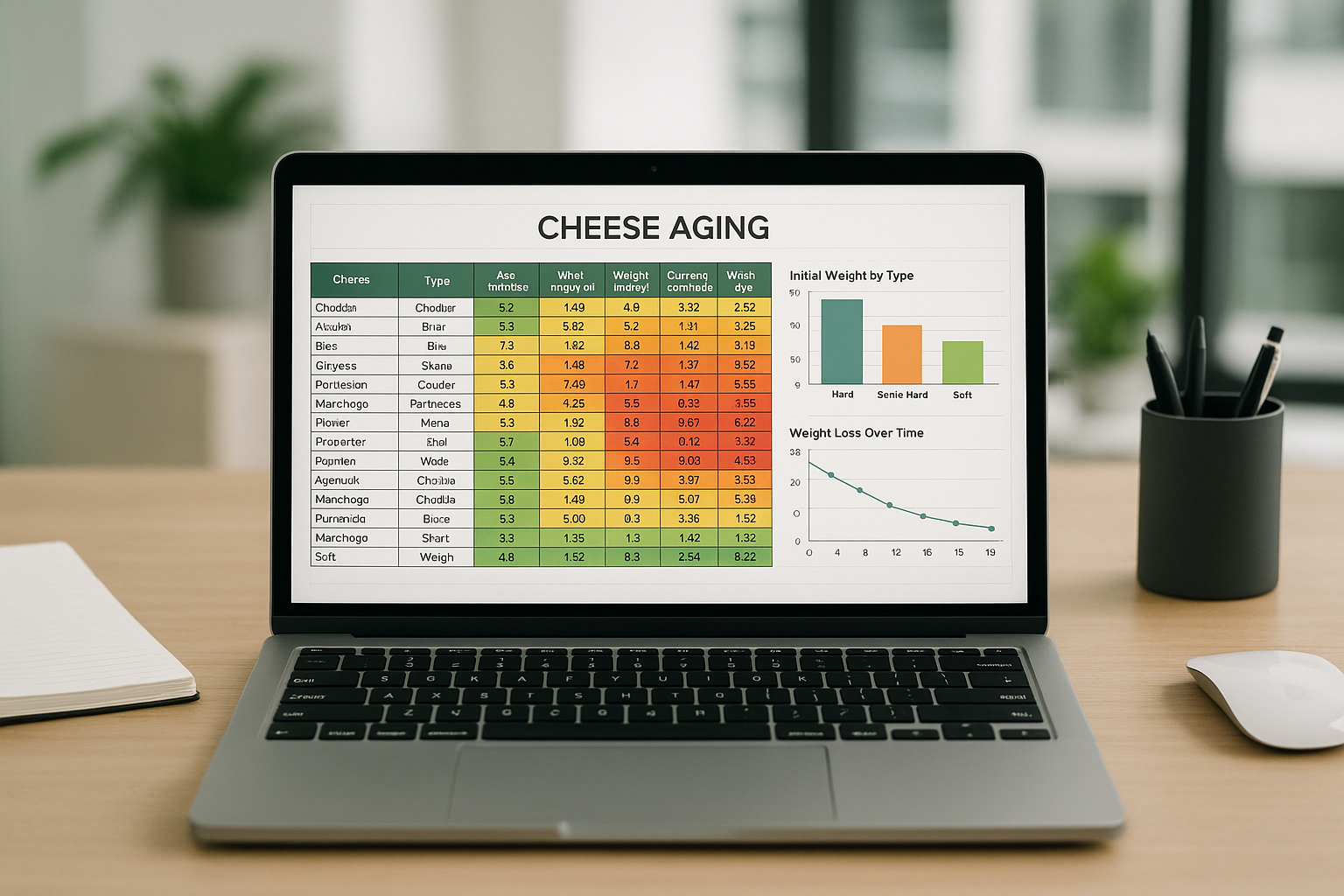
A digital spreadsheet represents one of the most versatile and powerful tools available for cheese inventory management. Whether you use dedicated spreadsheet software or cloud-based solutions, this approach offers flexibility, searchability, and computational capabilities that manual methods simply cannot match. The digital format allows you to access your records from multiple devices, share information with collaborators, and create automated alerts for batches approaching their target aging dates.
Setting Up Your Cheese Tracking Spreadsheet
Creating an effective spreadsheet begins with establishing the right columns to capture all essential information. Here’s a comprehensive structure that covers the critical data points:
- Batch Identifier: A unique number or code for each batch, making it easy to reference specific production runs
- Cheese Type/Variety: The specific kind of cheese (Cheddar, Gouda, Camembert, etc.)
- Production Date: When the cheese was made and placed into aging
- Target Aging Duration: How long this particular variety should age for optimal results
- Expected Completion Date: When the cheese should be ready (can be calculated automatically)
- Current Age: How many days/weeks/months it has been aging (can be calculated automatically)
- Quantity/Weight: How much cheese is in this batch
- Storage Location: Where in your aging space this batch is located
- Temperature/Humidity Settings: Environmental conditions for this batch
- Turning/Maintenance Schedule: When the cheese needs attention (flipping, washing, etc.)
- Tasting Notes: Observations from periodic quality checks
- Status: Current state (Aging, Ready, Consumed, Sold, etc.)
- Issues/Observations: Any problems or notable characteristics
Leveraging Formulas and Automation
The true power of spreadsheets emerges when you implement formulas that automatically calculate important information. For example, you can create a formula that calculates the current age of each batch by subtracting the production date from today’s date. Similarly, you can calculate the expected completion date by adding the target aging duration to the production date.
Conditional formatting can visually highlight batches that are approaching their target date (perhaps turning yellow when within two weeks) or have exceeded it (turning red). This visual system allows you to quickly scan your inventory and identify which batches require immediate attention without reading through every row of data.
Many spreadsheet applications also support filtering and sorting functions, enabling you to view only cheeses of a specific type, those within a certain age range, or batches stored in a particular location. This functionality becomes increasingly valuable as your inventory grows.
Traditional Logbook Method: Tangible Record-Keeping
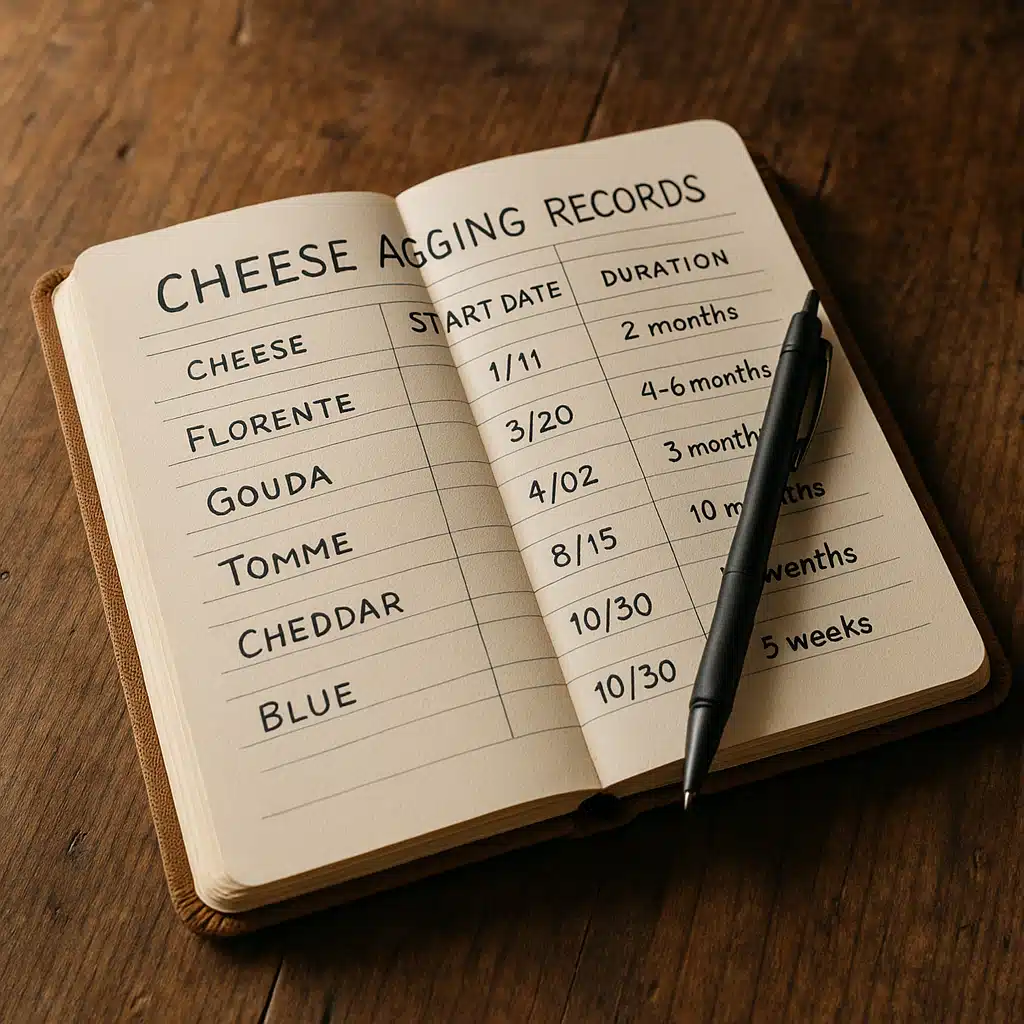
While digital solutions offer undeniable advantages, many cheese makers prefer the tactile, immediate nature of a physical logbook. There’s something deeply satisfying about physically writing entries, and a logbook doesn’t depend on electricity, software updates, or technical knowledge. For those working directly in aging rooms where bringing electronic devices might be impractical, a waterproof or durable logbook provides an ideal solution.
A physical logbook also serves as a tangible record of your cheese making journey, complete with crossed-out mistakes, margin notes, and the organic evolution of your process over time—elements that can be lost in the clinical precision of digital records.
Structuring Your Physical Logbook
An effective logbook requires thoughtful organization to remain useful over time. Consider these structural approaches:
- Chronological Organization: Dedicate pages to specific time periods, recording all batches started during that week or month. This approach makes it easy to remember what you were making at any given time.
- Batch-Based Organization: Allocate several pages to each batch, allowing space for ongoing notes as the cheese ages. This method keeps all information about a specific batch together.
- Variety-Based Organization: Group entries by cheese type, with all Cheddar batches in one section, all Gouda in another, etc. This facilitates comparison between batches of the same variety.
Regardless of organization style, each entry should include essential information: the date production began, the cheese variety, quantity produced, target aging duration, storage location, and space for ongoing observations. Many cheese makers find it helpful to create a simple template on each page to ensure consistency.
Maintaining Your Logbook Effectively
The key to successful logbook management is developing a consistent routine. Set aside specific times—perhaps weekly or biweekly—to review your inventory and update entries. During these reviews, check on each aging batch, record observations about rind development, aroma, or any issues, and note any maintenance performed such as turning, washing, or adjusting environmental conditions.
Consider using color-coded tabs, sticky notes, or bookmarks to quickly locate batches that need immediate attention. Some cheese makers use symbols or stamps to indicate status at a glance—a checkmark for batches aging normally, a star for those approaching completion, or an exclamation point for any requiring special attention.
Hybrid Approach: Combining Digital and Physical Methods
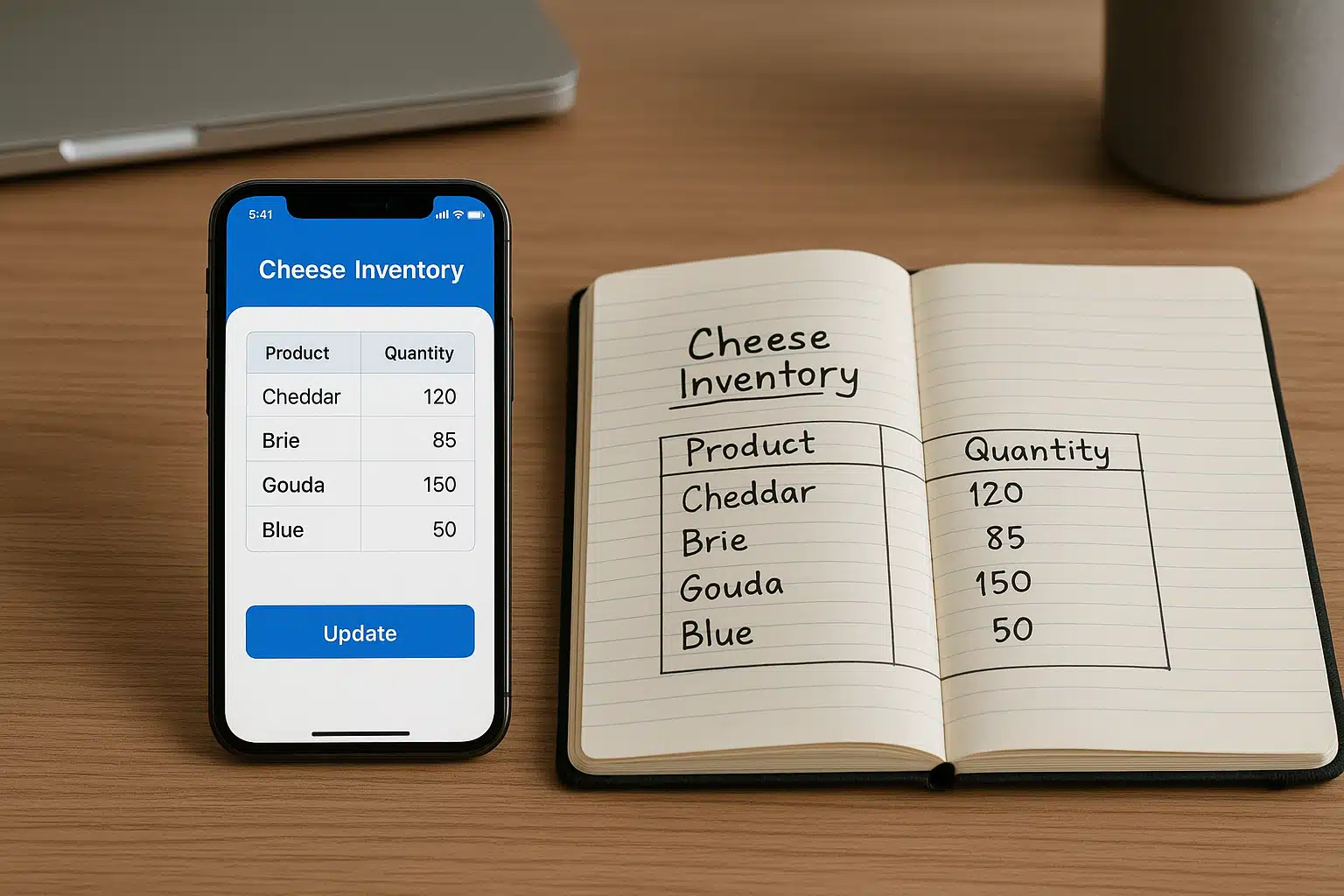
Many experienced cheese makers find that combining digital and physical tracking methods provides the best of both worlds. This hybrid approach typically involves maintaining a quick-reference logbook in the aging room for immediate notes and observations, while simultaneously keeping a master digital spreadsheet that serves as the comprehensive, searchable database.
In this system, you might jot down observations in your physical logbook during daily or weekly checks, then transfer key information to your digital system during less frequent formal updates. The logbook captures the raw, in-the-moment details, while the spreadsheet provides the analytical overview and long-term reference.
This combination also provides valuable redundancy—if your digital system fails or becomes inaccessible, you still have physical records, and if your logbook is damaged or misplaced, your essential data remains safe in digital form.
Practical Example: Tracking a Gouda Batch from Start to Finish
Let’s walk through a concrete example to illustrate how these tracking methods work in practice. Imagine you’ve just created a batch of traditional Gouda cheese that you plan to age for six months to develop its characteristic nutty, caramel-like flavors.
On January 1st, you would create an entry in your chosen tracking system with the following information:
- Batch Identifier: GDA-001-2024
- Cheese Type: Gouda (Traditional Dutch Style)
- Production Date: January 1, 2024
- Quantity: 4 wheels, approximately 2 kg each
- Target Aging Duration: 6 months (180 days)
- Expected Completion Date: July 1, 2024
- Storage Location: Main aging room, Shelf B, Position 3-6
- Temperature/Humidity: 10-13°C, 80-85% humidity
- Initial Notes: Wheels pressed for 12 hours, brined for 24 hours, initial rind formation looks good
At the three-month mark (April 1st), you would add an update:
- Date: April 1, 2024
- Current Age: 90 days (3 months)
- Observations: Rind developing nicely with golden-brown color. Aroma is becoming more complex with nutty notes emerging. Texture check on sample shows good moisture level and beginning of crystallization. No mold issues. Continue regular turning schedule.
- Maintenance: Wheels turned and wiped with salt brine solution
As July 1st approaches, your tracking system (particularly if digital with automated alerts) would remind you that this batch is nearing completion, prompting you to perform final quality assessments and decide whether the cheese has reached optimal maturity or would benefit from additional aging time.
Common Questions and Pitfalls to Avoid
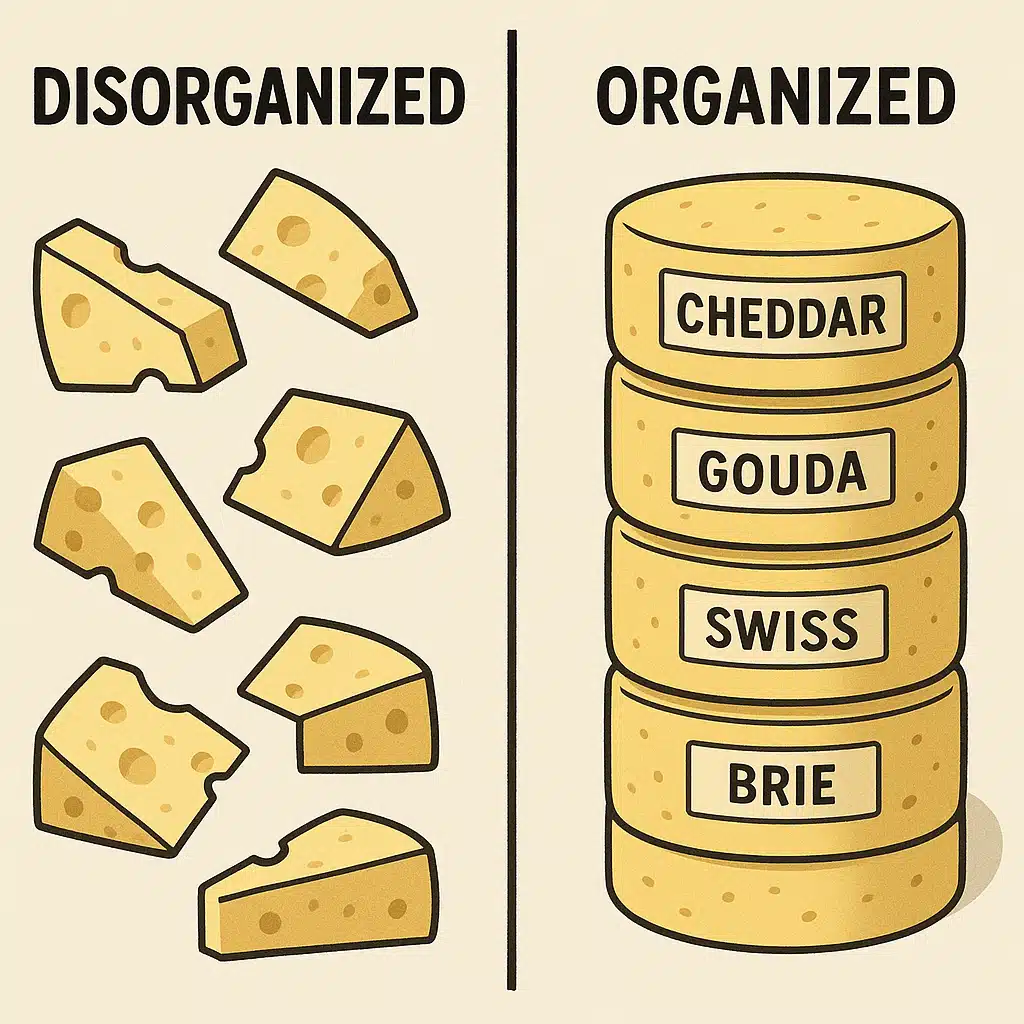
As you begin implementing inventory management systems, you’ll likely encounter questions and potential stumbling blocks. Understanding these common issues in advance can help you avoid frustration and maintain consistent records.
Addressing Common Misconceptions
- “I only make small batches, so I don’t need formal tracking.” Even with just a few wheels, detailed records help you improve with each batch and identify what works best. The discipline of record-keeping benefits makers at every scale.
- “I have a good memory; I can remember when I made each batch.” Human memory is remarkably unreliable, especially when dealing with multiple batches over extended periods. What seems unforgettable today becomes hazy after a few months, particularly as you add more batches to your inventory.
- “The exact aging time doesn’t really matter that much.” While cheese is somewhat forgiving, aging duration profoundly impacts flavor development, texture, and overall quality. Precision in timing can mean the difference between mediocre and exceptional cheese.
- “Setting up a tracking system takes too much time.” The initial investment of an hour or two to establish your system pays enormous dividends over the lifetime of your cheese making practice. The time saved from never searching for forgotten batches or wondering when something was made quickly recoups this modest upfront effort.
Typical Mistakes and How to Prevent Them
Inconsistent Entry Habits: The most common failure point is simply not maintaining regular updates. Combat this by establishing a specific routine—perhaps every Sunday morning or the first day of each month—dedicated to inventory review and record updates. Treat it as an essential part of the cheese making process, not an optional administrative task.
Insufficient Detail: Vague entries like “cheese looks okay” provide little value for future reference. Instead, develop the habit of specific observations: “Rind shows even development with no soft spots, pleasant earthy aroma, slight ammonia smell has dissipated since last check.” The extra thirty seconds to write detailed notes can provide invaluable diagnostic information later.
No Backup System: Whether you rely on digital or physical records, having no backup is risky. For digital systems, ensure your spreadsheet is backed up to cloud storage or multiple devices. For physical logbooks, periodically photograph or scan important pages as a safeguard against damage or loss.
Overly Complicated Systems: Elaborate tracking systems with dozens of data fields might seem comprehensive, but if they’re too cumbersome to maintain consistently, they’ll be abandoned. Start simple and add complexity only when you identify specific needs. A consistently maintained simple system vastly outperforms an abandoned complex one.
Advanced Tips for Experienced Cheese Makers
Once you’ve established basic tracking habits, consider these advanced techniques to extract even more value from your inventory management system:
Photographic Documentation: Supplement your written records with periodic photographs of each batch, capturing rind development, color changes, and any issues. These visual records become invaluable for pattern recognition and quality comparison across batches.
Environmental Data Logging: Record not just your target temperature and humidity, but actual measured conditions during key points in the aging process. Fluctuations in environmental conditions can significantly impact cheese development, and tracking these variables helps identify correlations between conditions and outcomes.
Sensory Evaluation Scoring: Develop a simple scoring system for key characteristics like aroma intensity, texture firmness, flavor complexity, and overall quality. These numeric scores allow you to track quality trends over time and compare batches objectively.
Recipe Refinement Tracking: When you experiment with variations in ingredients, cultures, or techniques, meticulously document these changes and their outcomes. Over time, this creates a personalized knowledge base of what works best in your specific environment with your particular methods.
Conclusion: Building Better Cheese Through Better Records
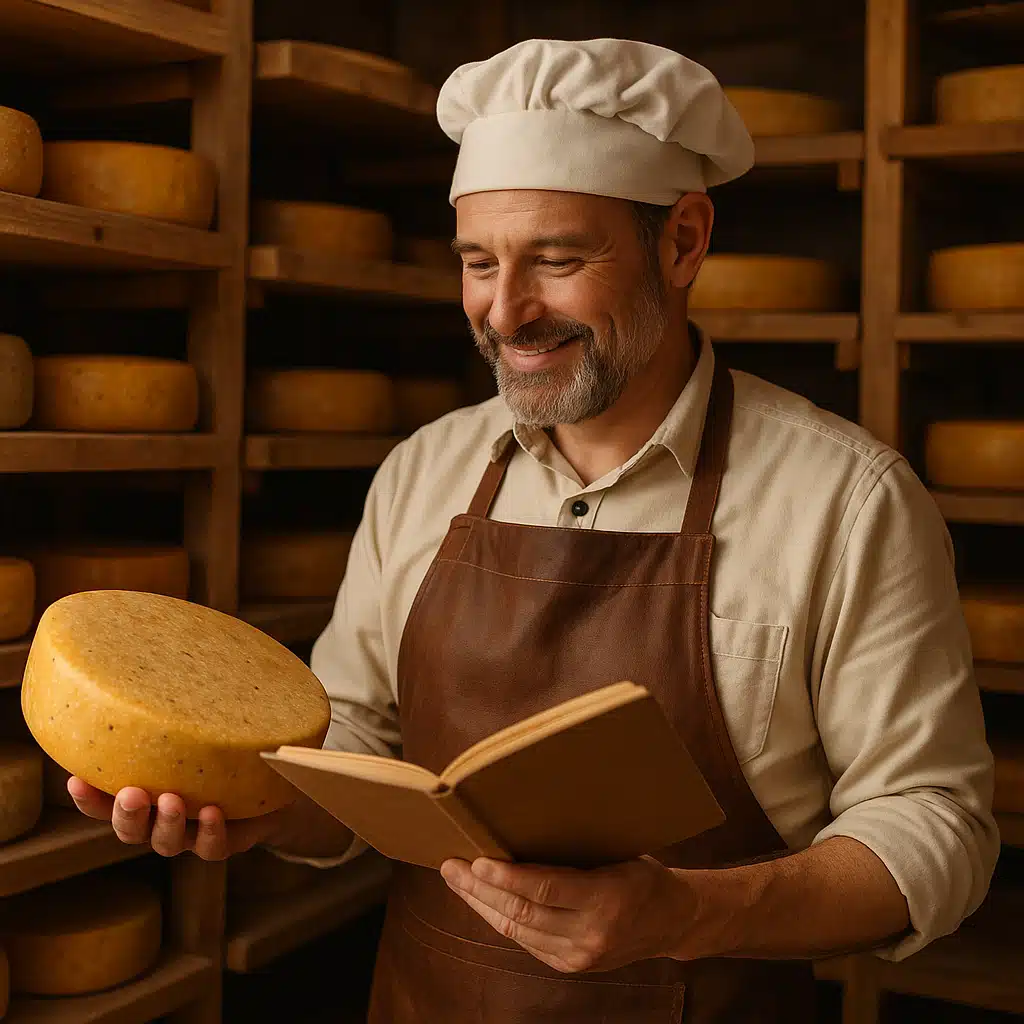
Managing your cheese inventory doesn’t require complicated software or extensive administrative training. Whether you choose the computational power of digital spreadsheets, the tactile immediacy of traditional logbooks, or a hybrid approach combining both methods, the fundamental principle remains the same: consistent, detailed record-keeping transforms cheese making from guesswork into a refined craft.
The tracking system you implement serves multiple crucial functions simultaneously. It prevents waste by ensuring no batch is forgotten or over-aged. It enhances quality by allowing you to replicate successful batches and learn from less successful ones. It provides peace of mind by giving you complete visibility into your aging inventory at any moment. And perhaps most importantly, it creates a detailed historical record that becomes increasingly valuable as you gain experience, revealing patterns and insights that would otherwise remain hidden.
Start simple—choose the method that feels most natural to your working style and commit to maintaining it consistently. As tracking becomes habitual rather than burdensome, you’ll discover that the time invested in record-keeping pays dividends many times over in the form of better-tasting, more consistent cheese and the confidence that comes from truly understanding your craft.
The journey from fresh curd to perfectly aged cheese is already magical. With proper inventory management, you’ll ensure that every batch completes that journey at exactly the right moment, reaching its full potential and rewarding your patience with flavors and textures that only time—carefully tracked time—can create. So whether you reach for a spreadsheet or a notebook, begin your organized cheese aging journey today. Your future self, standing before perfectly aged wheels of your own creation, will thank you for the discipline you establish now.