Introduction
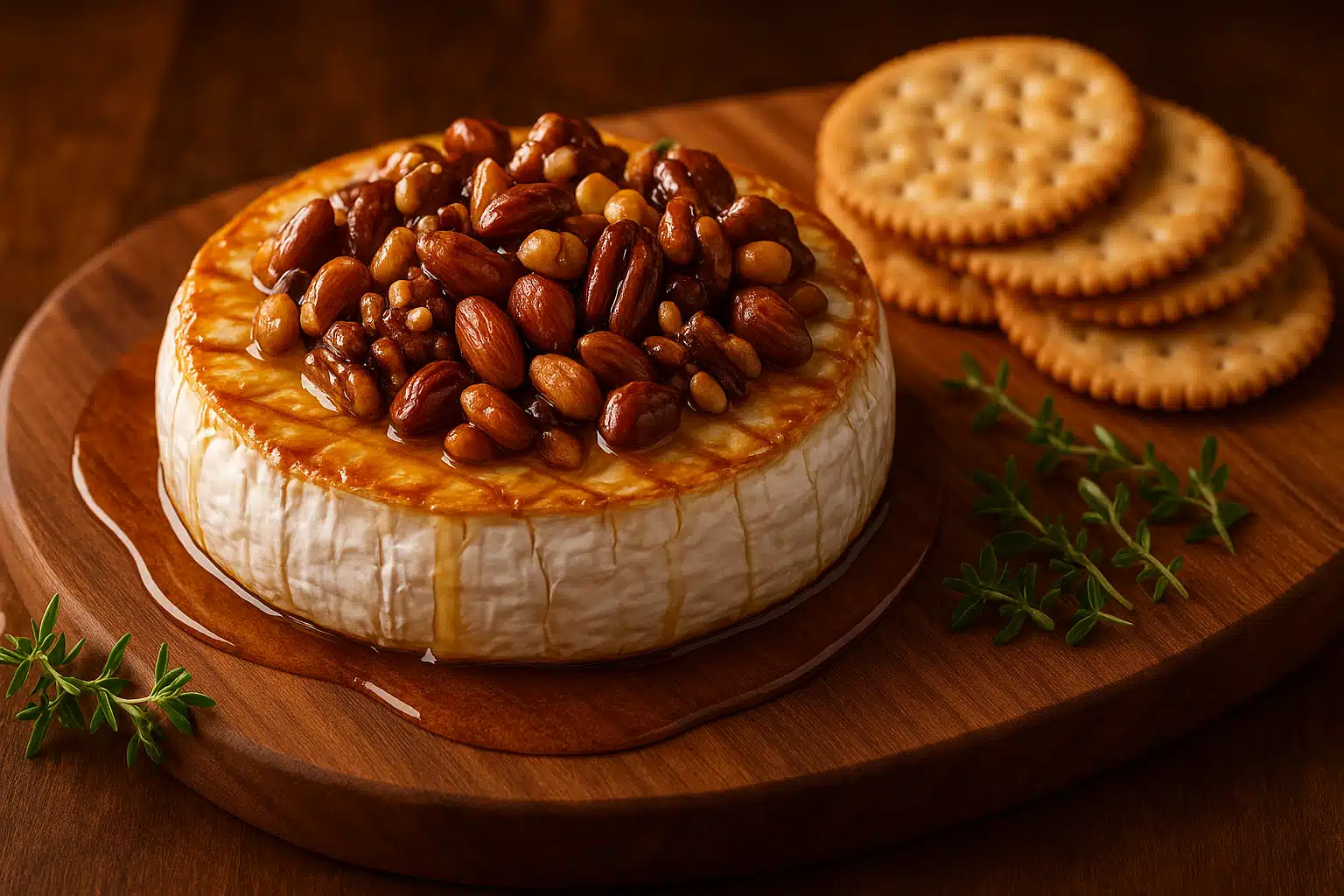
Gatherings and celebrations call for food that brings people together, and few appetizers accomplish this as effortlessly as baked brie with honey and nuts. This warm, indulgent dish combines the creamy richness of melted cheese with the natural sweetness of honey and the satisfying crunch of toasted nuts. Whether you’re hosting an intimate dinner party, a festive holiday celebration, or simply looking to elevate your entertaining repertoire, this elegant yet simple appetizer is guaranteed to impress.
What makes baked brie so universally appealing is its perfect balance of flavors and textures, paired with its remarkable simplicity. In just minutes, you can transform a wheel of cheese into a sophisticated centerpiece that looks as stunning as it tastes. This guide will walk you through every step of creating this crowd-pleasing dish, from selecting the right ingredients to avoiding common pitfalls, ensuring your baked brie turns out perfectly every time.
What You’ll Need
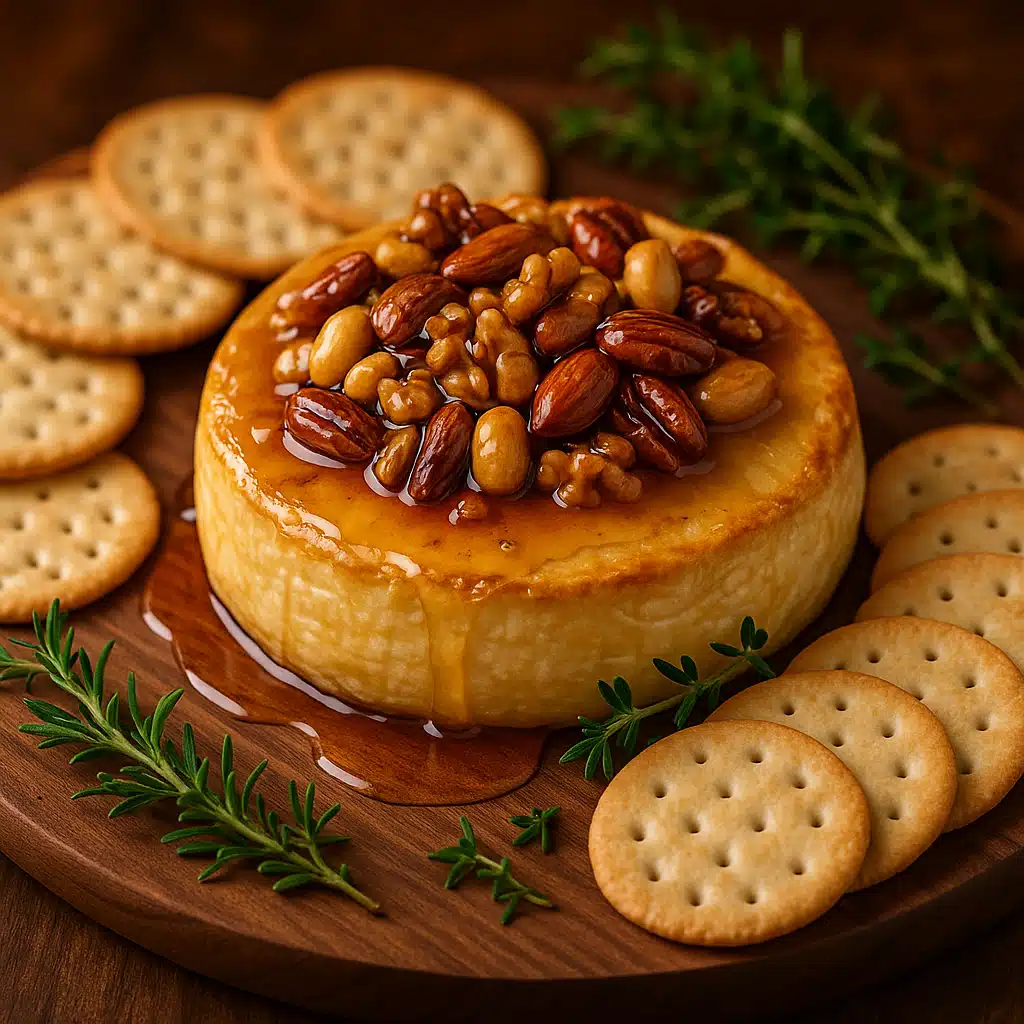
Creating this delicious appetizer requires just a handful of quality ingredients and basic kitchen tools. The beauty of this recipe lies in its simplicity—each component plays a crucial role in building layers of flavor and texture that complement each other beautifully.
Ingredients
- Brie Cheese: One round wheel, approximately 225-250 grams (8 ounces). Look for a soft-ripened cheese with a creamy interior and edible white rind.
- Honey: About 60 milliliters (1/4 cup). Choose a high-quality honey with good flavor—wildflower, clover, or acacia varieties work wonderfully.
- Mixed Nuts: Approximately 60 grams (1/4 cup), roughly chopped. Almonds, walnuts, pecans, or hazelnuts all work beautifully. You can use a single variety or combine several for complexity.
- Fresh Herbs: Optional garnish such as thyme, rosemary, or sage to add visual appeal and aromatic notes.
- Accompaniments: Sliced baguette, artisan crackers, apple or pear slices, or crostini for serving.
Tools
- Oven-safe baking dish or small cast-iron skillet
- Parchment paper (optional, for easy cleanup)
- Sharp knife for preparation
- Serving board or platter
Preparing Your Baked Brie
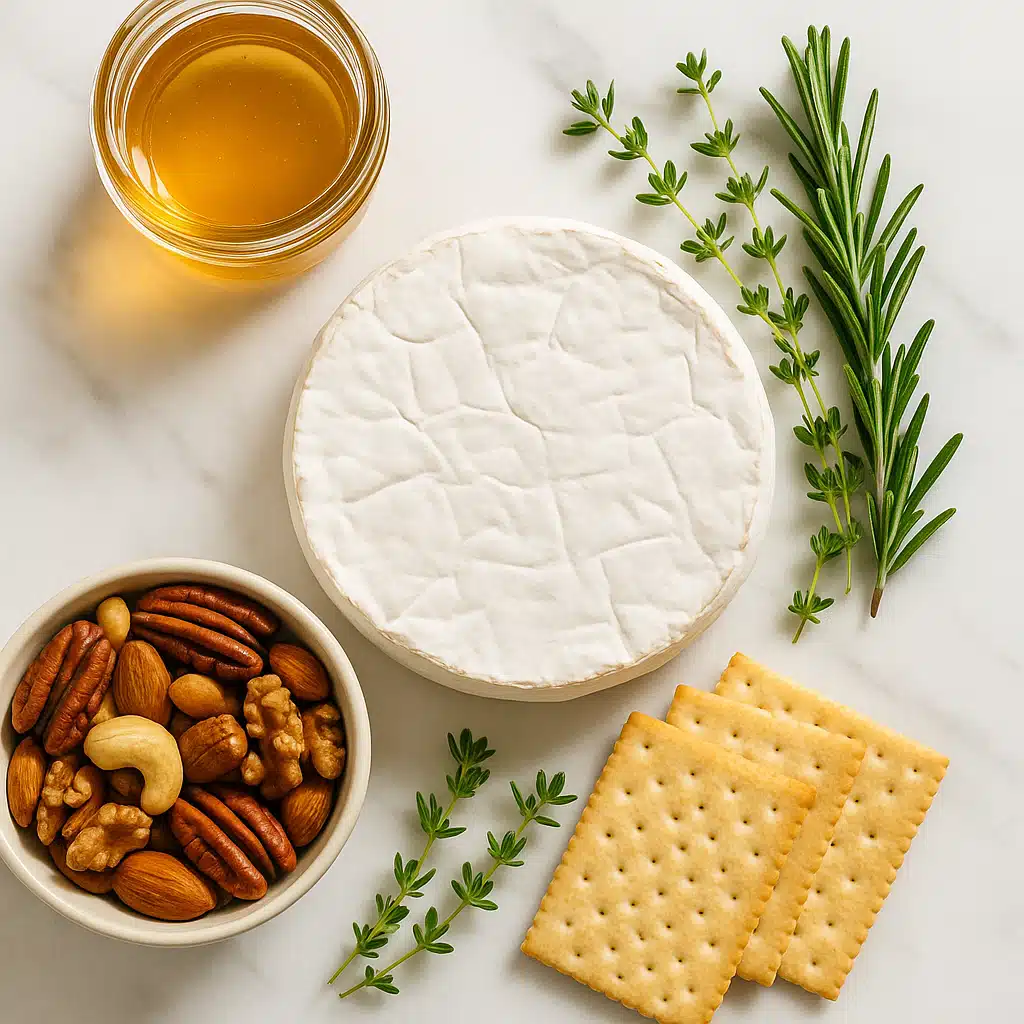
Follow these straightforward steps to create a perfectly baked brie that’s warm, gooey, and irresistibly delicious. The entire process takes less than 30 minutes from start to finish, making it an ideal choice when you need an impressive appetizer without spending hours in the kitchen.
Step-by-Step Instructions
1. Preheat Your Oven: Begin by preheating your oven to 175°C (350°F). Proper preheating ensures even cooking and helps achieve that perfect melted consistency throughout the cheese.
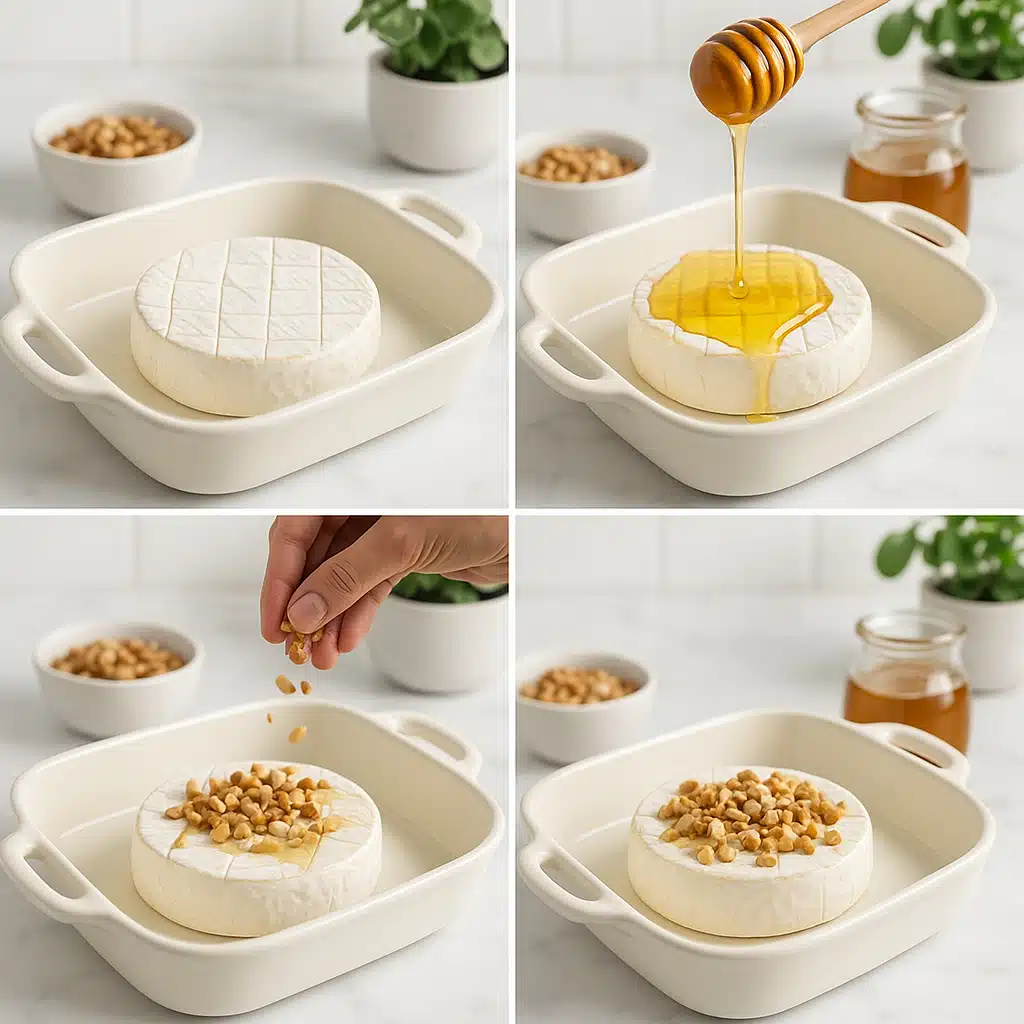
2. Prepare the Cheese: Remove the brie from any packaging and let it sit at room temperature for about 15-20 minutes before baking. This step is crucial for achieving an evenly melted interior. You have the option to remove the top rind if you prefer, though leaving it intact helps the cheese maintain its shape and adds a subtle earthy flavor. If you choose to remove the rind, use a sharp knife to carefully score and peel away just the top layer.
3. Position in Baking Dish: Place the brie wheel in your oven-safe baking dish. If desired, line the dish with parchment paper for easier cleanup and transfer to your serving board.
4. Add Your Toppings: Generously drizzle the honey over the entire surface of the brie, allowing some to pool around the edges. Sprinkle the chopped nuts evenly across the top, pressing them gently into the honey so they adhere during baking. This is also the time to add any additional toppings like dried fruits or a light sprinkle of sea salt for enhanced flavor complexity.
5. Bake to Perfection: Transfer the dish to your preheated oven and bake for 10-15 minutes. The exact time will depend on the size of your brie wheel and your oven’s characteristics. You’ll know it’s ready when the cheese feels soft to the touch and you can see the edges beginning to ooze slightly. The top should be warm and fragrant, with the honey bubbling gently around the nuts.
6. Rest and Garnish: Remove the baked brie from the oven and allow it to rest for 2-3 minutes. This brief resting period prevents the cheese from being too runny when served and allows the flavors to settle. Add your fresh herb garnish just before serving for maximum visual impact and aromatic appeal.
7. Serve Immediately: Transfer the baked brie to your serving board or platter while it’s still warm. Arrange your accompaniments—sliced baguette, crackers, or fruit—around the cheese, and encourage guests to dig in while it’s at its gooey best.
Tips for Success
Mastering baked brie is straightforward, but these expert tips will help you achieve restaurant-quality results every time and customize the dish to your preferences.
Selecting Quality Cheese: The foundation of exceptional baked brie is the cheese itself. Look for brie that’s soft to the touch with a slight give when pressed gently. Avoid cheese that feels hard or has an overly strong ammonia smell, which indicates it’s past its prime. The interior should be pale ivory to creamy white, and the rind should be uniformly white without dark spots or excessive moisture. Artisan or farmhouse varieties often deliver superior flavor compared to mass-produced options.
Temperature Matters: Bringing your brie to room temperature before baking is one of the most important steps for achieving that luxuriously creamy, evenly melted texture. Cold cheese straight from refrigeration will have a cold center even after the recommended baking time, resulting in an unevenly melted product.
Creative Customization: While honey and nuts create a classic combination, this recipe welcomes endless variations. Consider adding dried cranberries, chopped apricots, or figs for a fruity dimension. A light drizzle of balsamic reduction can add sophisticated depth. For savory variations, try caramelized onions, sun-dried tomatoes, or a sprinkle of everything bagel seasoning. Experiment with different nut varieties—candied pecans add sweetness, while pistachios provide vibrant color.
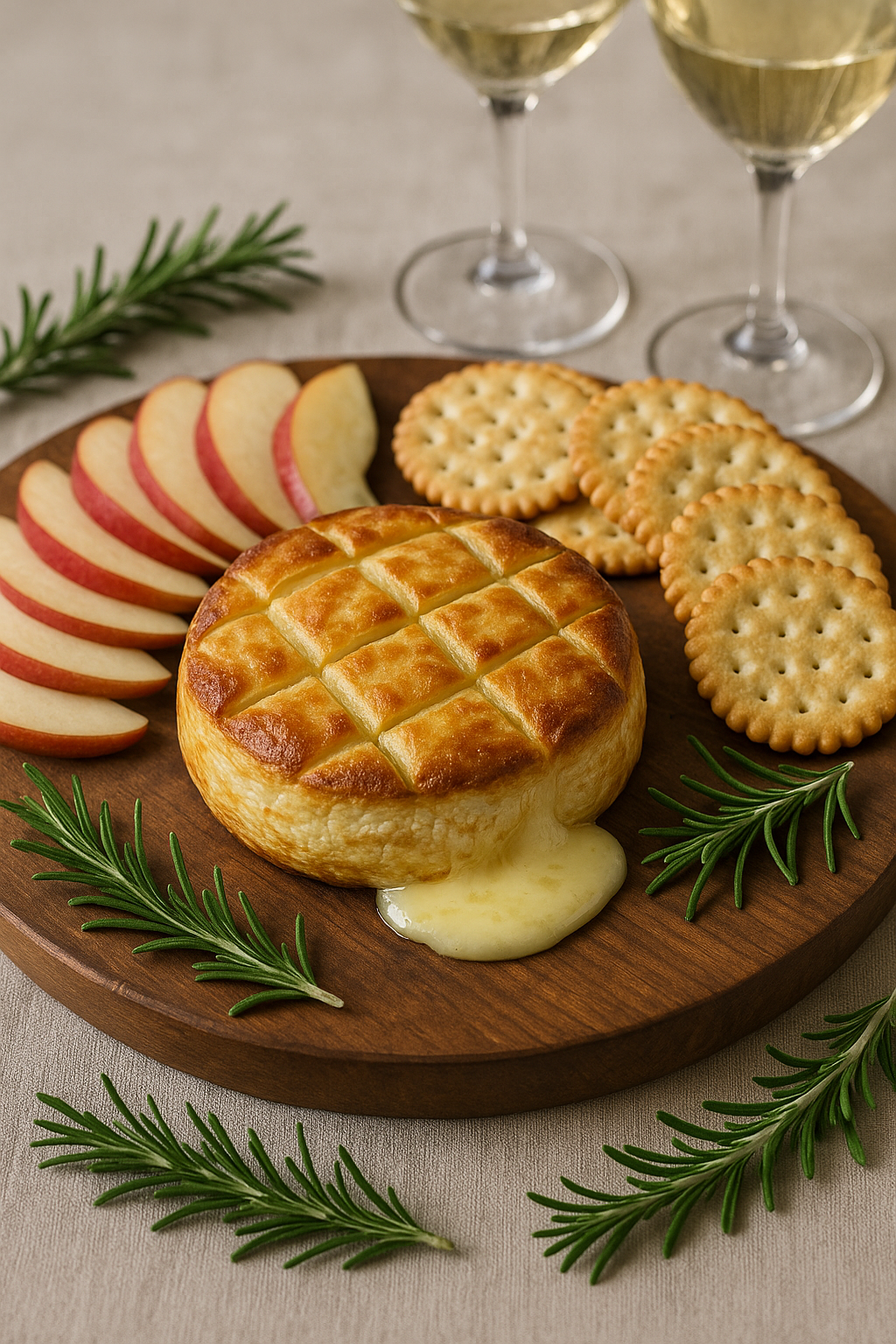
Optimal Serving Pairings: Baked brie pairs beautifully with a wide range of accompaniments. Fresh fruit slices like apples, pears, or grapes provide refreshing contrast to the rich cheese. Crusty bread, whether toasted baguette slices or artisan crackers, offers the perfect vehicle for scooping. Consider the beverage pairing as well—sparkling wines, crisp white wines, light-bodied red wines, or even craft beers complement the flavors wonderfully.
Presentation Matters: Visual appeal enhances the dining experience. Serve your baked brie on an attractive wooden board or elegant platter. Arrange accompaniments thoughtfully around the cheese, add fresh herb sprigs or edible flowers for color, and provide small cheese knives or spreaders for easy serving.
Timing Your Preparation: While baked brie is best enjoyed immediately after baking, you can prepare the components ahead of time. Chop your nuts, select your accompaniments, and arrange your serving board in advance. Place the brie in its baking dish with toppings ready to add, then simply pop it in the oven when guests arrive.
Common Mistakes to Avoid
Even simple recipes can go awry without proper attention to detail. Here are the most common pitfalls when making baked brie and how to avoid them for perfect results every time.
Overbaking: This is perhaps the most frequent mistake. Brie has a relatively low melting point, and just a few extra minutes in the oven can transform it from luxuriously gooey to unpleasantly runny or even cause it to burst through the rind completely. Watch your brie carefully during the final minutes of baking. Set a timer and check it at the 10-minute mark. The cheese should feel soft when gently pressed but should still maintain its shape. If you accidentally overbake it, serve immediately before it cools and becomes more liquid.
Neglecting the Nuts: Skipping the nuts eliminates a crucial textural contrast that makes this dish so appealing. The crunch of nuts against the creamy cheese creates a satisfying sensory experience. If you have nut allergies or dietary restrictions, consider substituting with toasted seeds like pumpkin or sunflower seeds, or add texture with crispy breadcrumbs or crumbled crackers instead.
Using Cold Cheese: Placing cold brie directly into the oven is a recipe for disappointment. The exterior will become overly warm or even start to separate while the center remains firm and cold. Always allow at least 15-20 minutes for the cheese to reach room temperature before baking. This patience pays off with evenly melted, perfectly creamy results.
Choosing Low-Quality Ingredients: Since this recipe relies on just a few simple components, the quality of each ingredient significantly impacts the final result. Industrial honey lacks the flavor complexity of quality varieties. Stale nuts taste flat and may even be rancid. Invest in good ingredients—they make a noticeable difference.
Inadequate Serving Preparation: Baked brie waits for no one. Have your serving board completely prepared, accompaniments arranged, and guests ready before the cheese comes out of the oven. Trying to assemble everything while your brie cools results in a less optimal eating experience.
Wrong Dish Size: Using a baking dish that’s too large causes the honey and any melted cheese to spread too thin. Choose a dish that fits your brie snugly with just a small amount of space around the edges. This contains the melted cheese and creates a more attractive presentation.
Conclusion
Baked brie with honey and nuts represents the perfect intersection of simplicity and sophistication. With minimal ingredients, basic kitchen tools, and just minutes of active preparation time, you can create an appetizer that looks professionally crafted and tastes absolutely divine. The combination of warm, creamy cheese, sweet honey, and crunchy nuts delivers a flavor experience that appeals to virtually every palate, making it an ideal choice for gatherings of all types.
Whether you’re hosting your first dinner party or you’re a seasoned entertainer looking for a reliable crowd-pleaser, this recipe deserves a place in your culinary repertoire. The techniques you’ve learned here—from selecting quality cheese to timing the bake perfectly—will serve you well and can be adapted to countless variations as you grow more confident with the dish.
Remember that the best food brings people together, creates conversation, and makes memories. This humble wheel of baked cheese has the power to do all three. So gather your ingredients, preheat your oven, and prepare to impress your guests with this timeless appetizer. The warmth and indulgence of baked brie with honey and nuts will elevate any occasion, turning ordinary gatherings into special celebrations.
Now it’s your turn to experience the magic of this exceptional dish. Happy baking, and may your table always be surrounded by good food and great company!