Understanding Proper Cleaning and Sanitizing in Cheesemaking
Cheesemaking is an ancient craft that combines art, science, and microbiology. Whether you’re a hobbyist exploring artisan cheese production at home or considering small-scale commercial cheesemaking, understanding proper hygiene practices is fundamental to your success. However, there’s a crucial distinction that many beginners overlook: maintaining a clean environment is not the same as creating a sterile one. This comprehensive guide will help you navigate the delicate balance between cleanliness and preserving the beneficial microorganisms that give cheese its distinctive flavors, textures, and character.
Why Cleanliness Matters in Cheese Production
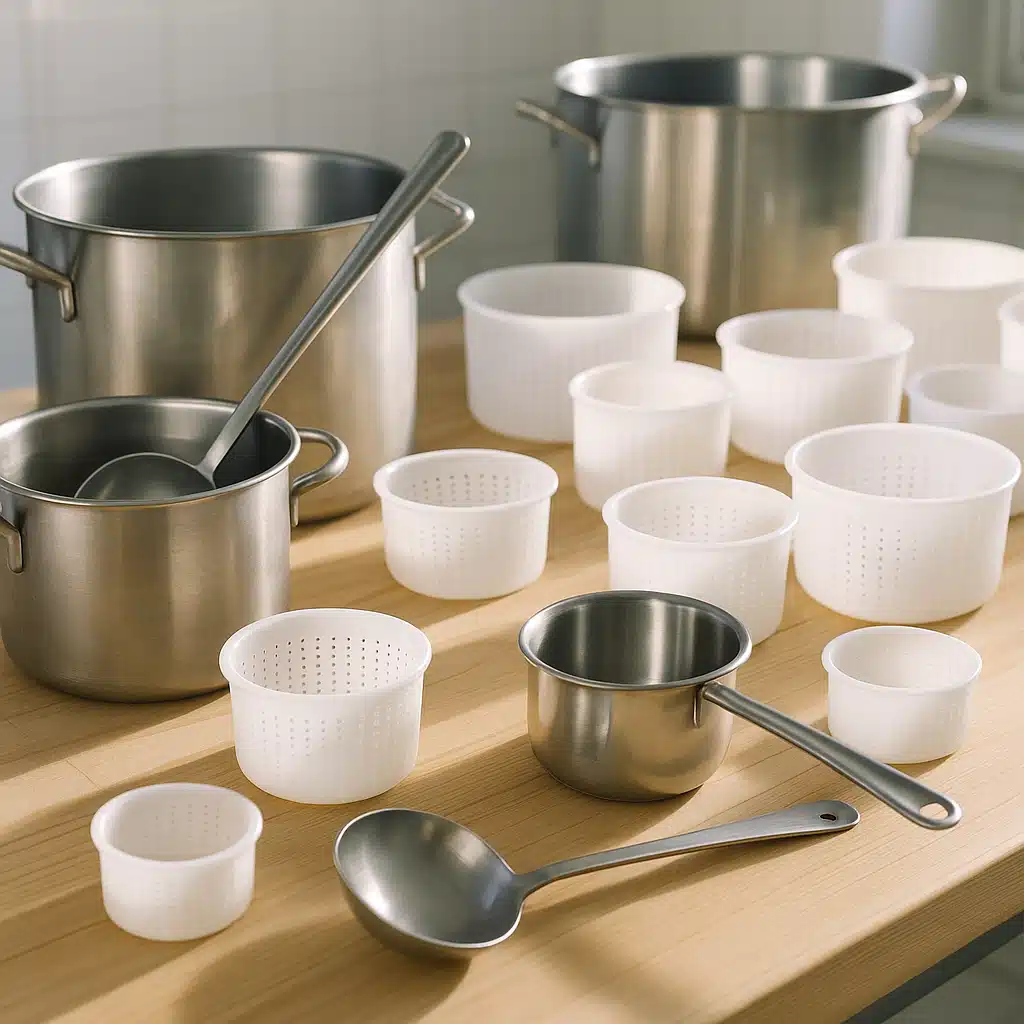
A properly maintained workspace is the foundation of quality cheese production. However, the objective isn’t to eliminate every single microorganism from your environment. Instead, you’re aiming to create conditions where beneficial bacteria can thrive while minimizing the presence of harmful pathogens and spoilage organisms.
Good bacteria—often called starter cultures or native flora—are responsible for the complex flavors, aromas, and textures that make each cheese variety unique. These microorganisms convert lactose into lactic acid, develop flavor compounds, and contribute to the aging process. On the other hand, undesirable bacteria, molds, and yeasts can cause off-flavors, texture defects, premature spoilage, and in serious cases, food safety concerns.
Understanding this microbial ecosystem will fundamentally change how you approach cleaning and sanitizing. Rather than waging war against all microbes, you’re cultivating an environment where the right organisms flourish and the wrong ones are kept in check.

Essential Cleaning Practices for Cheese Equipment
Implementing consistent cleaning protocols protects both the quality of your cheese and the health of those who will consume it. These practices should become second nature in your cheesemaking routine:
- Invest in Food-Grade Materials: All cleaning tools, brushes, cloths, and materials that contact your equipment should be specifically designed for food production. These materials are manufactured to avoid harboring bacteria and won’t leach harmful chemicals into your workspace.
- Harness the Power of Hot Water: Hot water is your primary cleaning agent for most tasks. Water heated to 60-70°C (140-160°F) effectively removes milk proteins, fat residues, and other organic matter while providing a degree of microbial reduction. This temperature range is hot enough to be effective yet practical for regular use.
- Clean Immediately After Use: Milk proteins and fats become increasingly difficult to remove as they dry. Rinsing equipment with hot water immediately after use prevents buildup and makes thorough cleaning much easier.
- Use Appropriate Cleaning Agents: For stubborn residues, food-safe alkaline cleaners help break down proteins and fats, while acid cleaners remove mineral deposits. Always choose products specifically formulated for dairy equipment.
- Select Proper Sanitizers: After cleaning, sanitizing reduces microbial populations to safe levels. Choose sanitizers that are effective against pathogens but won’t harm beneficial bacteria or leave problematic residues.
Understanding No-Rinse Sanitizers
No-rinse sanitizers have revolutionized equipment hygiene in both home and commercial cheesemaking operations. These products effectively reduce harmful microorganisms to safe levels while requiring minimal effort and water usage. Unlike traditional sanitizers that must be thoroughly rinsed away, no-rinse formulations are designed to break down into harmless compounds or remain at such low concentrations that they pose no risk.
The key advantage of no-rinse sanitizers is their convenience and consistency. By eliminating the rinse step, you reduce water consumption, save time, and avoid the risk of recontaminating equipment with water that may itself contain microorganisms. Additionally, these sanitizers work quickly—most require only one to two minutes of contact time to be effective.
Among the most popular no-rinse sanitizers used in cheesemaking are acid-based formulations that work by lowering pH to levels incompatible with pathogenic bacteria while remaining safe for beneficial cheese cultures. These products are valued because they’re effective at very low concentrations, economical to use, and don’t leave behind flavors or odors that might affect your cheese.
Step-by-Step Sanitizing Process
Proper sanitizing follows a specific sequence to ensure effectiveness. Here’s a detailed protocol you can adapt to your specific equipment and production scale:
- Prepare the Sanitizing Solution: Follow the manufacturer’s instructions precisely. Most no-rinse sanitizers require mixing a small amount of concentrate with water. Typical dilution rates range from 1-2 ounces per gallon of water, though this varies by product. Always measure accurately—too little reduces effectiveness, while too much wastes product and may affect beneficial cultures.
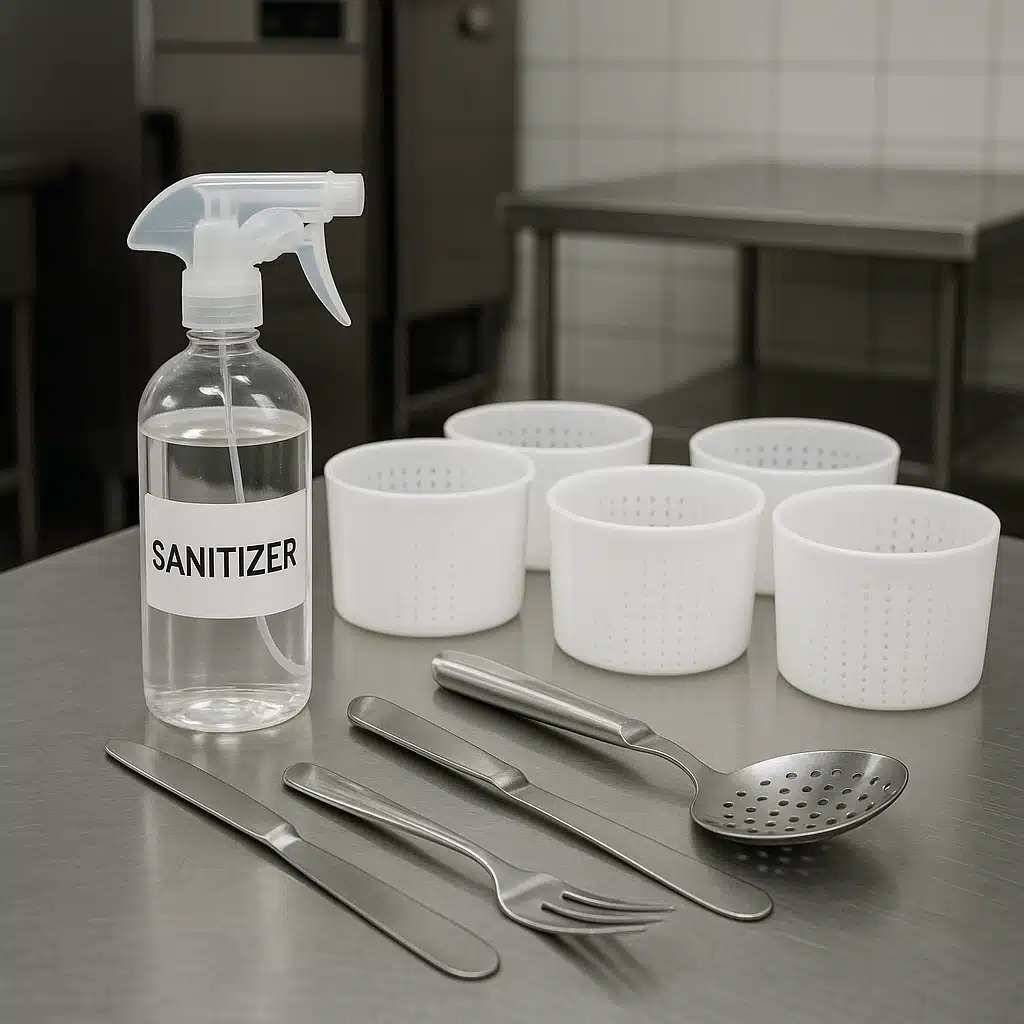
- Ensure Complete Coverage: All surfaces that will contact milk, curds, or cheese must be thoroughly wetted with the sanitizing solution. You can achieve this by submerging smaller items in a sanitizing bath or using a spray bottle for larger equipment and work surfaces. Pay special attention to crevices, joints, and textured surfaces where microorganisms can hide.
- Observe Contact Time: Don’t rush this step. Most sanitizers require 1-2 minutes of wet contact time to effectively reduce microbial populations. During this period, surfaces should remain visibly wet. If sanitizer evaporates or drips away before the contact time is complete, reapply.
- Allow Proper Drainage: After the contact time, position equipment to allow excess sanitizer to drain away. While no-rinse formulations don’t require active rinsing, you don’t want puddles of concentrated solution remaining on surfaces.
- Air Dry Completely: This is perhaps the most underestimated step. Allowing equipment to air dry completely before use is crucial. Moisture provides an environment where microorganisms can multiply rapidly, potentially undoing all your cleaning efforts. Set equipment on clean drying racks in an area with good air circulation.
Practical Workflow: From Production to Clean Equipment
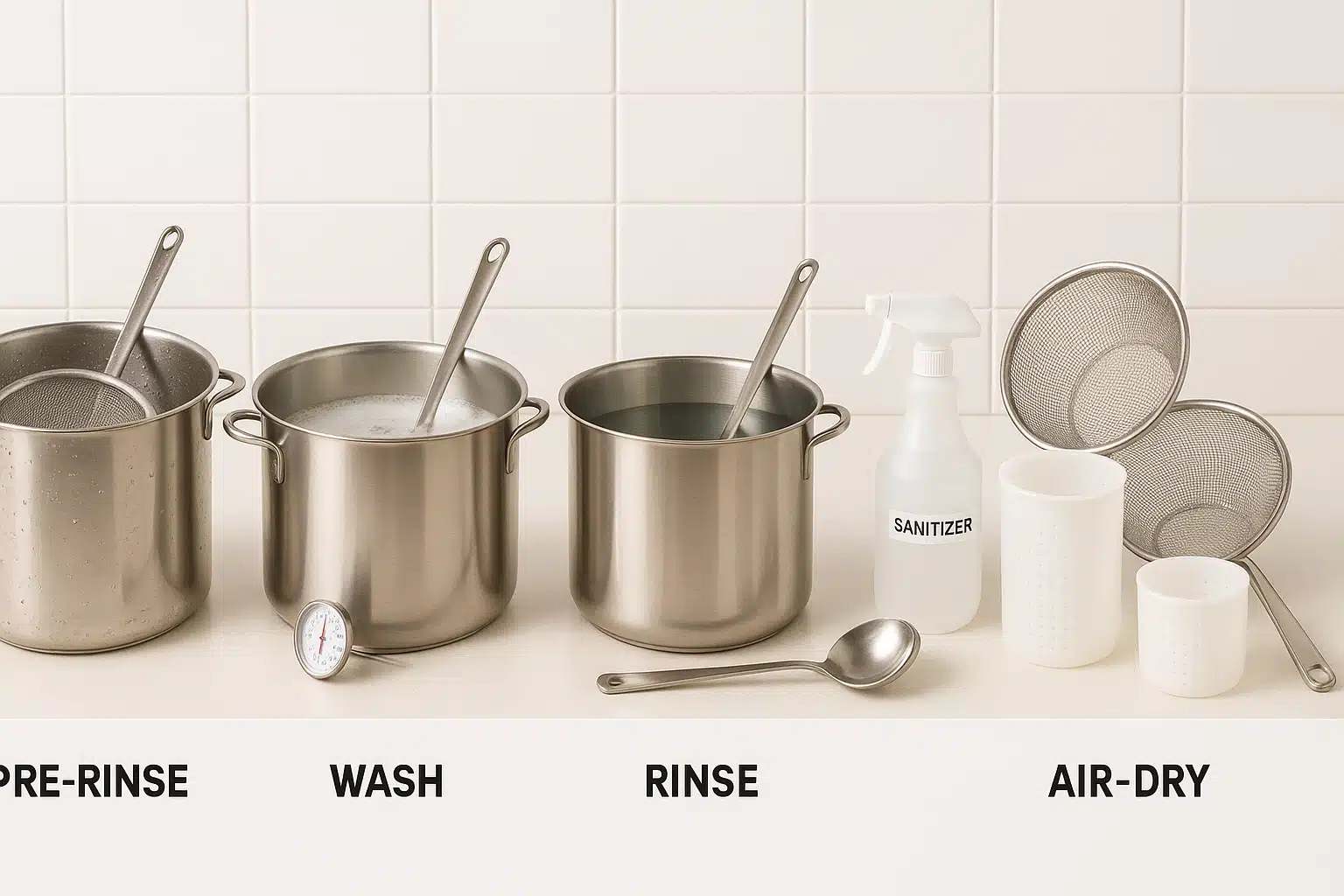
Integrating cleaning into your cheesemaking workflow ensures consistency and helps prevent the fatigue-induced shortcuts that can compromise hygiene. Here’s how to structure your post-production cleaning routine:
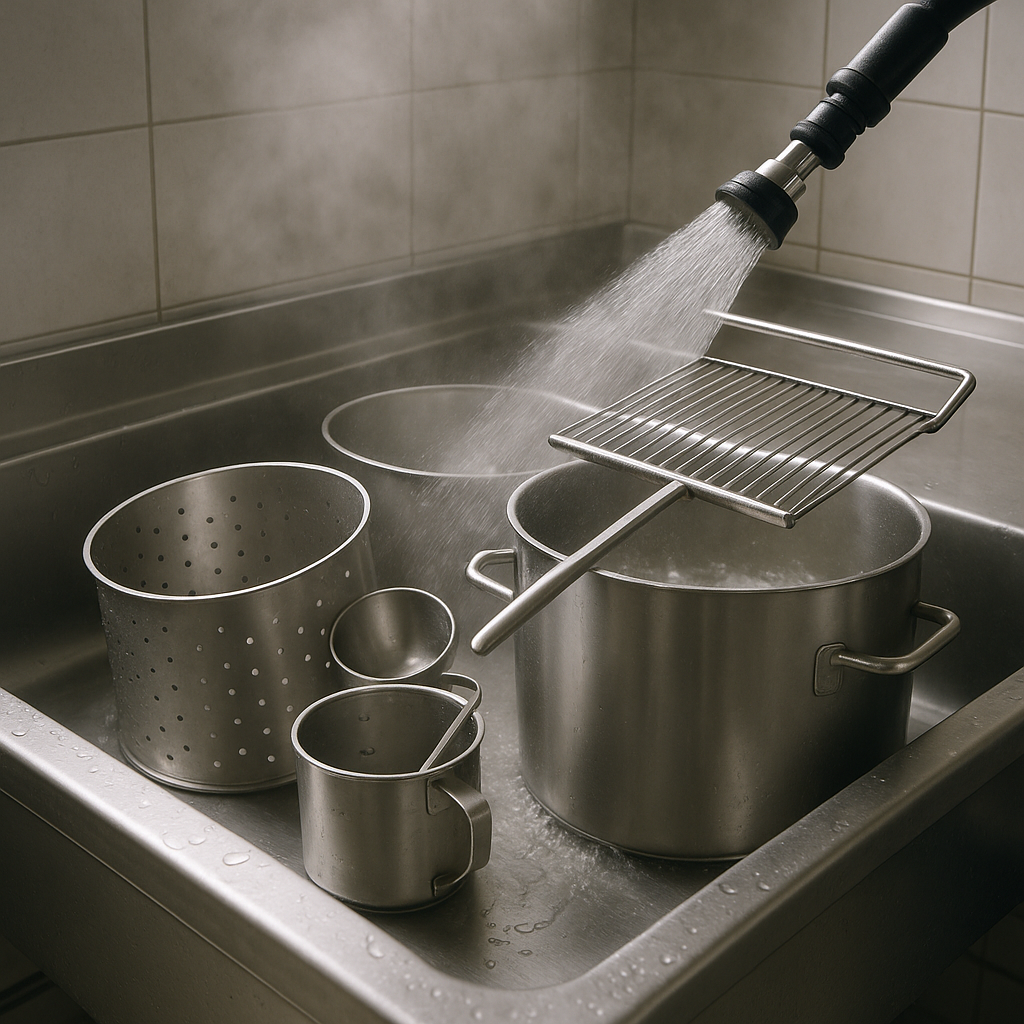
Immediate Post-Production Phase: As soon as you’ve transferred your curds to molds or completed your cheese batch, begin the cleaning process. Don’t wait until everything is put away—dried milk residue becomes exponentially harder to remove with each passing hour. Start by rinsing all equipment with hot water to remove the bulk of milk solids, whey, and curds. A strong stream of hot water is remarkably effective at this stage.
Deep Cleaning Phase: After the initial rinse, assess whether equipment needs additional cleaning beyond hot water. Milk fats and proteins can leave invisible films that hot water alone won’t remove. If needed, apply appropriate food-safe cleaning agents, scrub thoroughly with dedicated brushes, and rinse completely with hot water. Equipment should look and feel clean—no slippery residue or visible matter remaining.
Sanitizing Phase: Once equipment is visibly clean, prepare your sanitizing solution according to the manufacturer’s specifications. Apply systematically to all surfaces, ensuring complete coverage and proper contact time. This step is about reducing microbial populations, not removing visible dirt—which is why it comes after thorough cleaning.
Drying and Storage Phase: Position sanitized equipment on clean drying racks where air can circulate freely around all surfaces. Avoid stacking items or placing them on towels, which can trap moisture. Once completely dry, store equipment in a clean, dry location protected from dust and contamination. Some cheesemakers cover dried equipment with clean cloths, while others prefer closed cabinets.
Common Questions and Misconceptions
Even experienced cheesemakers sometimes struggle with the nuances of proper cleaning and sanitizing. Let’s address the most common points of confusion:
Aren’t All Bacteria Harmful? This is perhaps the most fundamental misconception in cheesemaking. The reality is that cheese production relies entirely on specific bacteria to acidify milk, develop flavor, and create texture. Many traditional cheeses depend on complex communities of bacteria, yeasts, and molds working together. Your cleaning practices should control harmful pathogens and spoilage organisms while preserving the environmental conditions that allow beneficial cultures to thrive.
Should I Sterilize Everything? Sterilization—the complete elimination of all microorganisms—is neither necessary nor desirable in cheesemaking. Sterilization requires extreme heat or harsh chemicals that are impractical for routine use and would damage many materials. More importantly, a sterile environment would be immediately recolonized by whatever microorganisms are present in the air and surrounding environment. Your goal is sanitation: reducing microbial populations to safe levels while maintaining a balanced environment.
Can I Use Regular Household Cleaners? This is strongly discouraged. Household cleaning products often contain fragrances, dyes, and chemicals that aren’t food-safe and can leave residues that affect cheese flavor or pose health risks. Even products that seem similar may have formulations unsuitable for food contact surfaces. Always choose cleaners and sanitizers specifically labeled as food-safe or food-grade.
How Often Should I Sanitize? Equipment should be cleaned and sanitized after each use—every single time. Even if you plan to make cheese again within hours, don’t skip this step. The time between uses is when opportunistic spoilage organisms can establish themselves on equipment surfaces. Consistent sanitizing between batches is one of the most important factors in producing consistently high-quality cheese.
Does Sanitizer Expire? Yes, both concentrated sanitizer products and prepared solutions have limited shelf lives. Concentrates gradually lose effectiveness over time, particularly after opening. Prepared dilute solutions are even more time-sensitive—most remain effective for only 24 hours after mixing, and effectiveness decreases if the solution becomes contaminated with organic matter. Always prepare fresh sanitizing solution for each cleaning session and check expiration dates on concentrate bottles.
Advanced Considerations for Serious Cheesemakers
As your cheesemaking practice develops, you may want to implement more sophisticated hygiene monitoring and control measures:
Water Quality: The water you use for cleaning and sanitizing affects both effectiveness and your cheese quality. Hard water interferes with both cleaners and sanitizers, reducing their effectiveness. If you have hard water, consider using water softening systems or adjusting your cleaning protocols to account for mineral content. Conversely, if you use well water or other non-municipal sources, periodic testing for microbial contamination is wise.
Environmental Monitoring: Professional cheesemakers often conduct regular swab testing of equipment and environmental surfaces to verify their cleaning effectiveness. While this may be beyond the scope of most home cheesemakers, it becomes increasingly important as you scale up production or if you experience recurring quality issues that might indicate hygiene problems.
Aging Room Hygiene: If you age cheese, the aging environment requires different hygiene practices than production equipment. Aging rooms should be clean but not sanitized in the same way as production equipment. The goal is to establish and maintain beneficial mold and bacterial populations while preventing the establishment of unwanted organisms. This typically involves regular cleaning with mild solutions and careful humidity and temperature control.
Building a Sustainable Cleaning Routine
Consistency is more important than perfection when it comes to cheesemaking hygiene. The best cleaning protocol is one you’ll actually follow every single time you make cheese. Here are strategies for building sustainable habits:
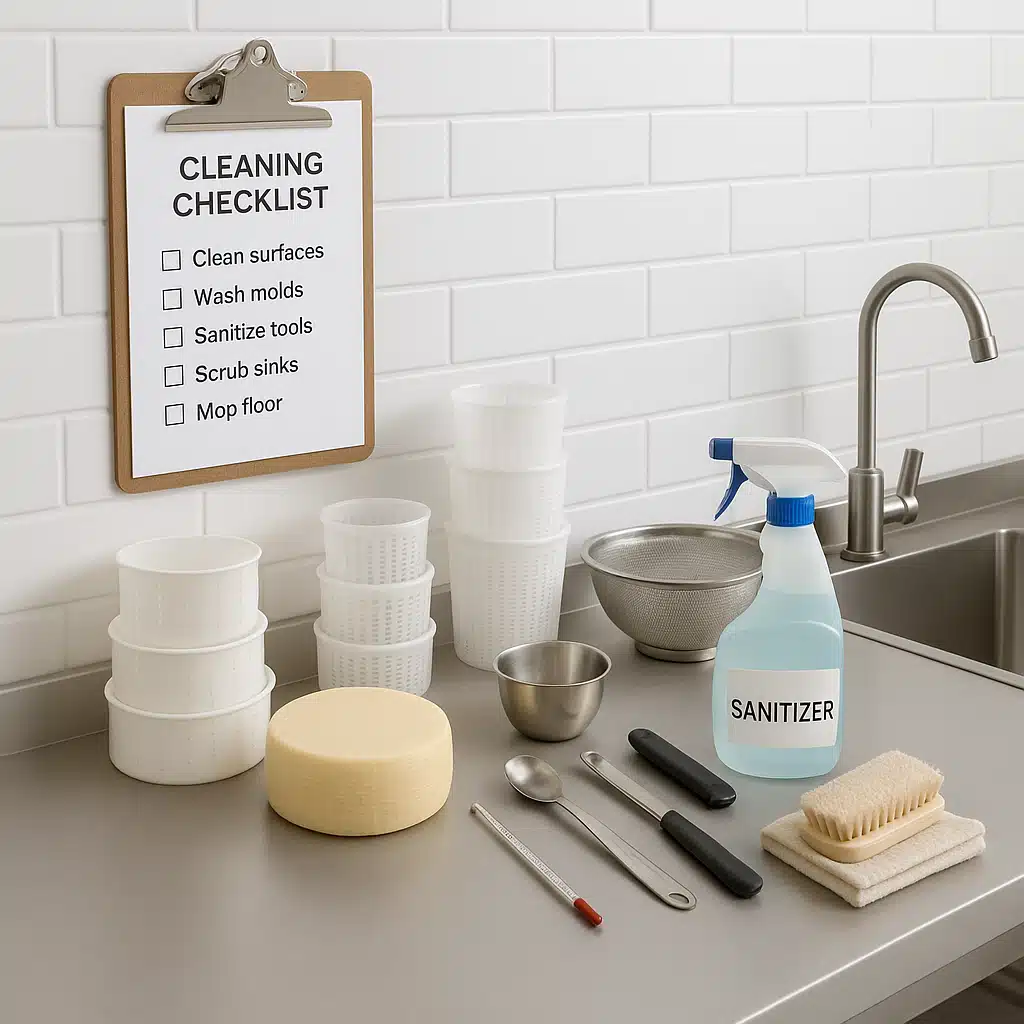
Create a written checklist for your specific equipment and post it in your workspace. After each cheesemaking session, systematically work through the list. This prevents the mental fatigue that leads to skipped steps, especially when you’re tired after hours of cheesemaking.
Set up your workspace to make cleaning convenient. Keep sanitizer, spray bottles, brushes, and drying racks readily accessible. If cleaning supplies are stored in another room or require extensive setup, you’re more likely to cut corners when exhausted.
Track your results. Keep notes about your cleaning practices alongside notes about cheese quality. Over time, you’ll develop insight into how hygiene practices affect your specific cheeses. This personalized knowledge is invaluable for troubleshooting quality issues and optimizing your process.
Final Thoughts on Balancing Cleanliness and Culture
Mastering the art of cleaning and sanitizing is essential to successful cheesemaking, but it’s important to maintain perspective. Your goal is thoughtful hygiene that supports rather than fights against the microbial processes that create great cheese. Cleanliness and beneficial bacteria aren’t opposing forces—they’re complementary aspects of the same craft.
By implementing the practices outlined in this guide—using hot water effectively, choosing appropriate food-safe cleaning agents and sanitizers, following proper protocols, and maintaining consistent routines—you create an environment where your starter cultures can work their magic while problematic organisms are kept in check.
Remember that cheesemaking is as much about developing your observational skills and intuition as it is about following rules. Pay attention to how your cheeses develop, notice patterns, and adjust your practices accordingly. Over time, you’ll develop a feel for the subtle balance between cleanliness and culture that produces the best results for your specific cheeses and environment.
Whether you’re making fresh cheeses that will be consumed within days or aged varieties that will mature for months, proper hygiene provides the foundation for success. Embrace the beneficial bacteria that give your cheese character, maintain the clean environment that allows them to thrive, and enjoy the remarkable cheeses you’ll create.