Complete Guide to Women’s Underwear: 40+ Styles, Uses, and Selection Tips
Choosing the right underwear is an essential part of every woman’s daily comfort and confidence. With dozens of styles available globally, understanding the differences between each type can transform your shopping experience and ensure you select the perfect pair for every occasion. This comprehensive guide explores over 40 types of women’s underwear, explaining their unique features, materials, and ideal uses—from everyday comfort to special occasions and athletic activities.
Understanding Underwear Styles: Why It Matters
Modern women’s underwear has evolved far beyond its basic functional purpose. Today’s designs balance comfort, health, aesthetics, and practicality. The right underwear choice can prevent discomfort, reduce visible lines under clothing, provide necessary support during physical activity, and boost confidence in intimate situations. With specialized designs for pregnancy, menstruation, sports, and formal wear, understanding these options empowers you to make informed decisions that suit your lifestyle and body.
Comprehensive Underwear Style Guide
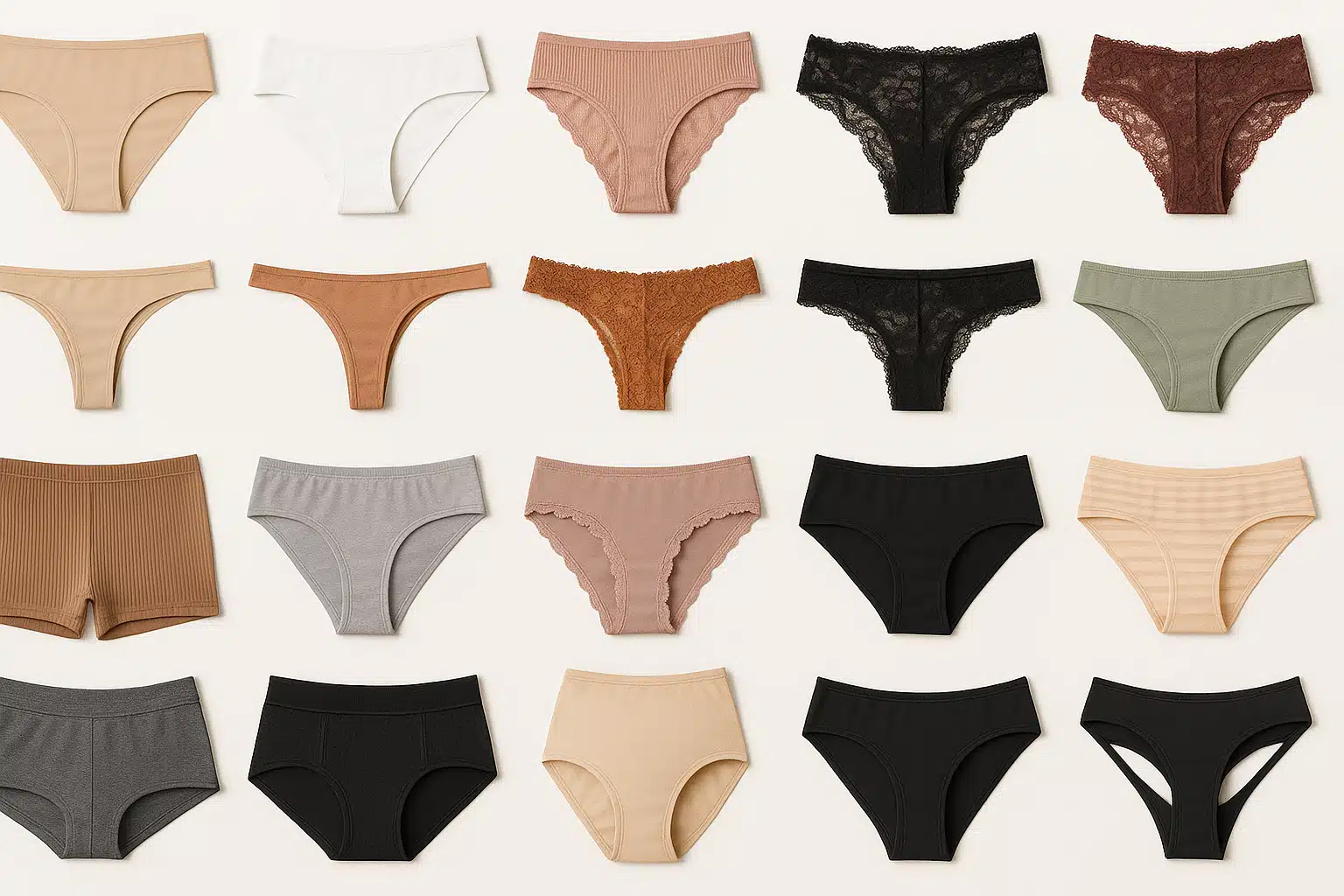
Below is a detailed overview of more than 40 underwear styles, organized by their key characteristics and recommended uses:
| Style Name | Key Features | Best Used For |
|---|---|---|
| Brief (Classic Slip) | Full front and back coverage, elastic waistband at natural waist, no thigh coverage | Everyday wear, maximum comfort, all-day use |
| Brazilian | Moderate coverage with less fabric at back than briefs, curved leg openings | Casual wear, under fitted clothing, balanced coverage and appeal |
| Hipster | Low-rise waistband sits on hips, full side coverage, modest cut | Low-rise jeans, casual skirts, everyday comfort |
| Thong | Minimal back coverage with thin strip, full front coverage | Eliminating visible panty lines under tight clothing, formal wear |
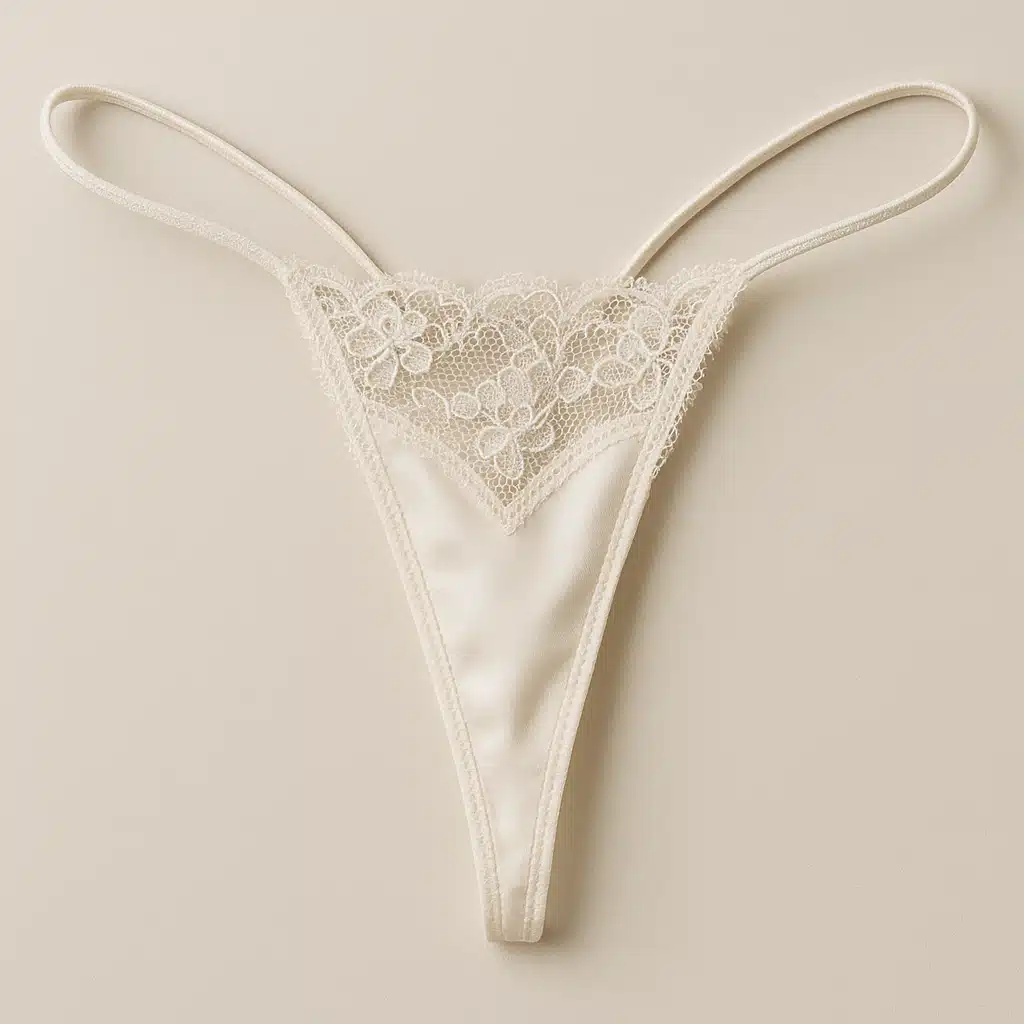
| G-String | Triangular front panel, single thin back strap, minimal coverage | Intimate occasions, under body-hugging garments |
| String/Backless | Front coverage only, thin connecting straps, open back | Backless dresses, beachwear, special occasions |
| Bikini | Moderate coverage, narrow sides, sits below natural waist | Everyday wear, under low-rise pants, versatile styling |
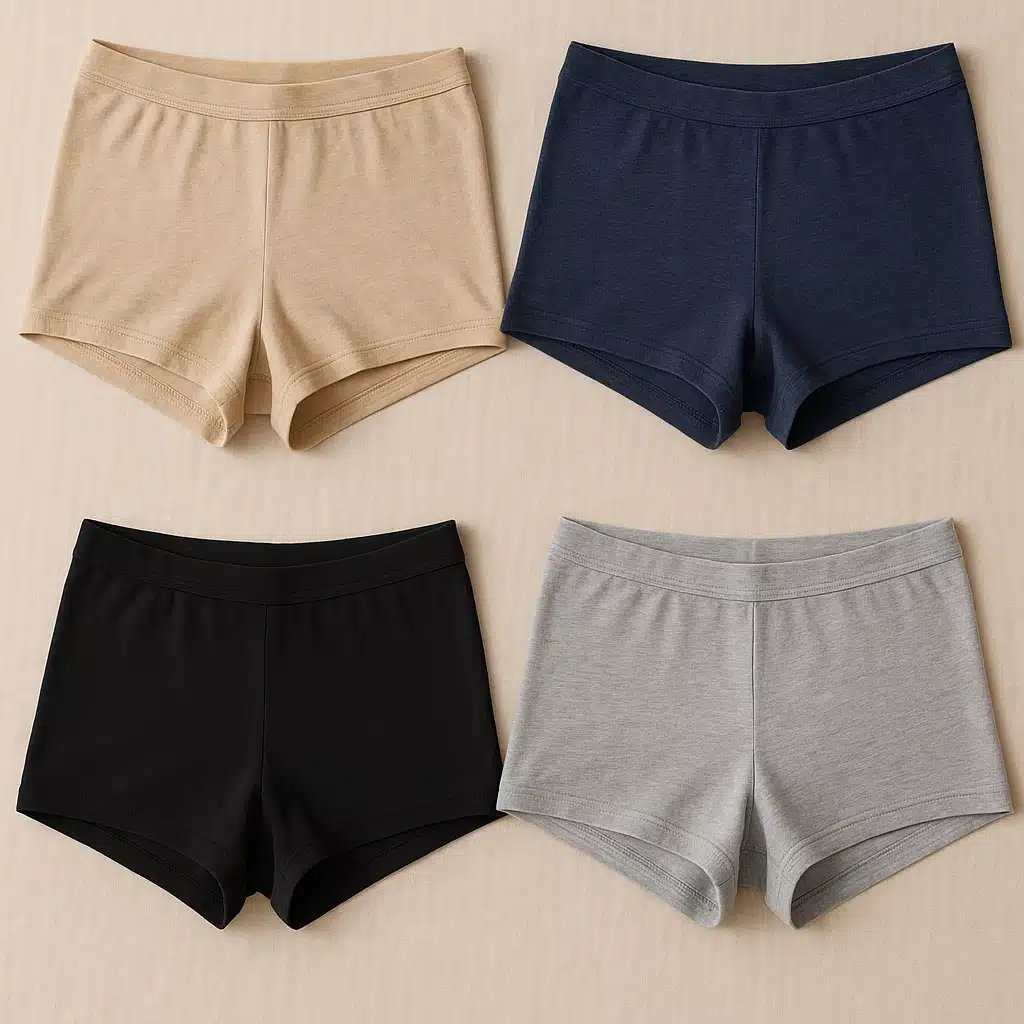
| Boyshort | Extended leg coverage resembling shorts, full coverage | Under dresses, menstruation, active days, loungewear |
| Cheeky/Cheekster | Partial back coverage between bikini and thong, playful cut | Daily wear, moderate coverage with reduced lines |
| High-Waist | Waistband extends above natural waist, vintage-inspired | Tucking in tops, retro styling, abdominal coverage |
| Cotton | Natural breathable fabric, moisture-wicking, soft | Daily wear, sensitive skin, health-conscious choice |
| Seamless | No visible seams, smooth construction, invisible under clothing | Tight dresses, formal wear, business attire |
| Laser-Cut | Edges cut with laser technology, ultra-thin, no seams | Light-colored pants, form-fitting garments, eliminating lines |
| Lace | Decorative lace fabric, semi-transparent, delicate | Special occasions, romantic settings, formal events |
| Control/Shapewear | Compression fabric, smoothing panels, shaping technology | Under fitted clothing, postpartum recovery, special events |
| Maternity | Soft elastic, accommodates growing belly, no pressure points | Pregnancy, postpartum period, adjustable comfort |
| Period/Menstrual | Built-in absorbent layers, leak-proof technology, washable | Menstruation, backup protection, eco-friendly option |
| Sports/Athletic | Moisture-wicking, breathable mesh, ergonomic fit, seamless | Exercise, gym workouts, running, active lifestyles |
| French Cut | High-cut leg openings, full coverage, elongating design | Creating longer leg appearance, vintage style, full coverage |
| Tanga | Wider sides than thong, moderate back coverage | Compromise between coverage and minimal lines |
| C-String | No side straps, flexible wire frame holds in place | Tanning, eliminating all tan lines, experimental fashion |
| Swim | Chlorine-resistant, quick-drying, secure fit | Swimming, water sports, beachwear |
| Plus Size | Extended sizing, proportional coverage, comfortable elastic | Fuller figures, appropriate coverage, proper fit |
| Open-Crotch | Opening at crotch area, specialty design | Intimate purposes, specific lifestyle preferences |
| Caged | Decorative strap detailing, artistic design elements | Fashion statement, intimate occasions, special events |
| Pearl-Embellished | Decorative pearl details, luxurious appearance | Romantic occasions, special gifts, luxury lingerie |
| Butt-Lifting | Strategic padding or ruching, enhancing shape | Under fitted clothing, confidence boost, special events |
| Padded | Silicone or foam inserts, hip enhancement | Shaping, special occasions, confidence enhancement |
| Disposable | Single-use, hygienic, no laundering needed | Travel, hospital stays, postpartum, emergency situations |
| Garter | Attached clips for stockings, vintage-inspired | Bridal wear, formal events, retro styling |
| Leather/Faux Leather | Leather or synthetic leather material, bold styling | Fashion statement, intimate occasions, special events |
| Polyester | Synthetic fabric, lightweight, less absorbent | Occasional wear, budget-friendly, varied designs |
| Plant-Based/Bamboo | Natural sustainable fibers, hypoallergenic, eco-friendly | Sensitive skin, environmental consciousness, daily comfort |
1. Brief (Classic Slip): The Everyday Essential
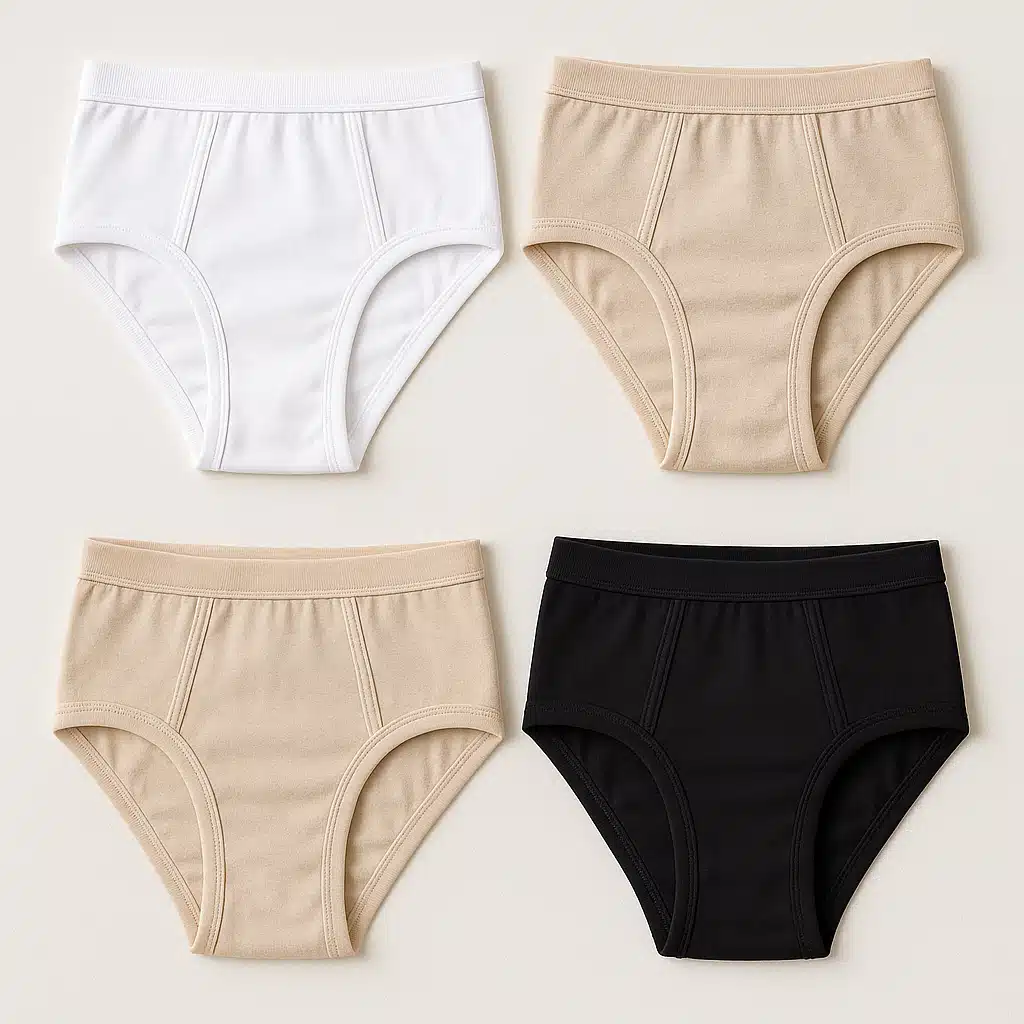
The classic brief, often called a slip, represents the most popular and comfortable underwear style worldwide. This design provides full coverage at both front and back, with an elastic waistband that typically sits at or slightly below the natural waistline. The leg openings end at the hip crease, leaving thighs completely exposed while ensuring the buttocks and genital area remain fully covered.
Briefs are manufactured in countless fabric options, from breathable cotton to smooth microfiber, making them suitable for year-round wear. The generous coverage prevents chafing, provides security during movement, and offers peace of mind throughout busy days. Many women consider briefs their go-to choice for work, casual outings, and relaxation at home.
Best for: Daily wear, all-day comfort, work environments, casual activities, sleeping
2. Brazilian: Balanced Coverage with Appeal
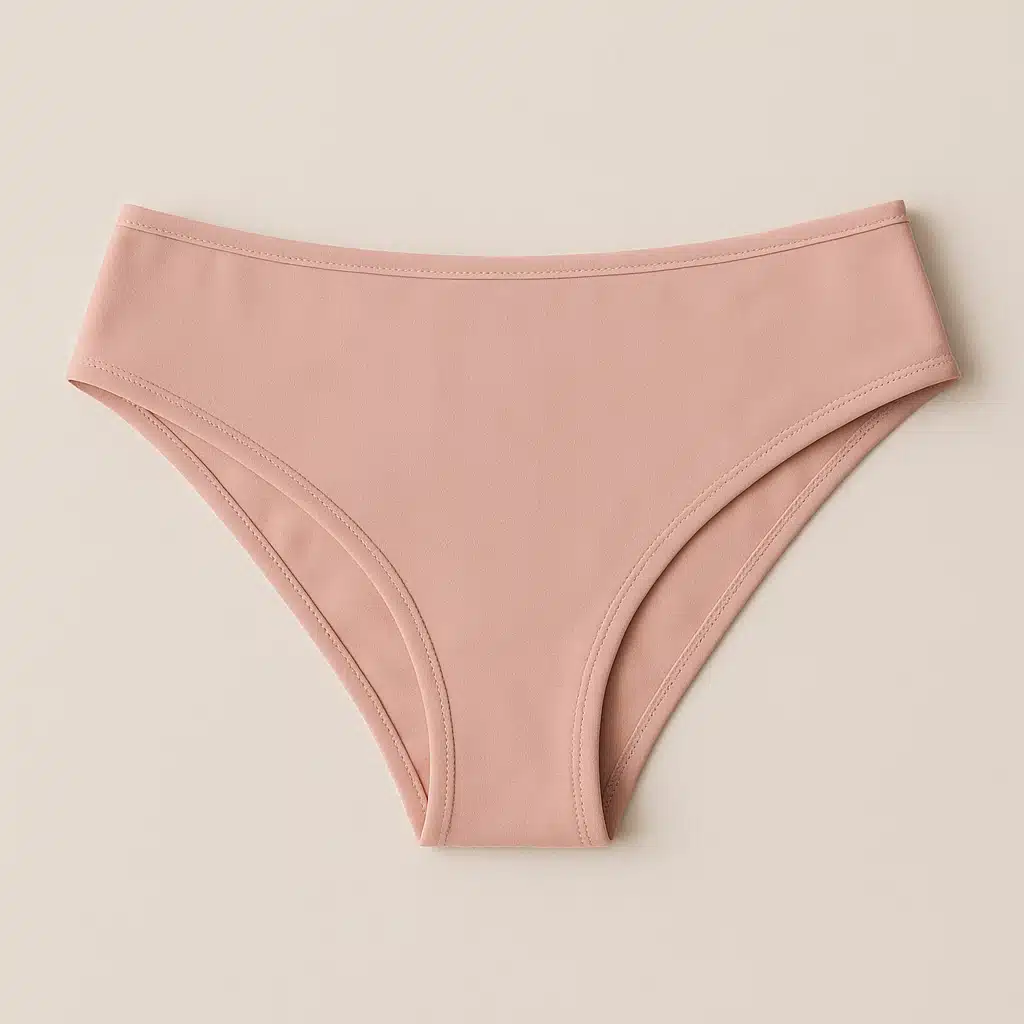
Brazilian-style underwear strikes a balance between full coverage briefs and minimal thongs. This design features moderate front coverage with a distinctly reduced back panel that reveals more of the buttocks while still providing partial coverage. The curved leg openings and lower-cut sides create a flattering silhouette that many women find both comfortable and attractive.
Brazilian underwear works exceptionally well under fitted clothing because it reduces fabric bulk while avoiding the extreme minimalism of thongs. The style has gained international popularity for its versatility—appropriate enough for daily wear yet appealing enough for special occasions.
Best for: Under fitted jeans, casual dresses, loungewear, date nights, balanced comfort and aesthetics
3. Hipster: Low-Rise Comfort
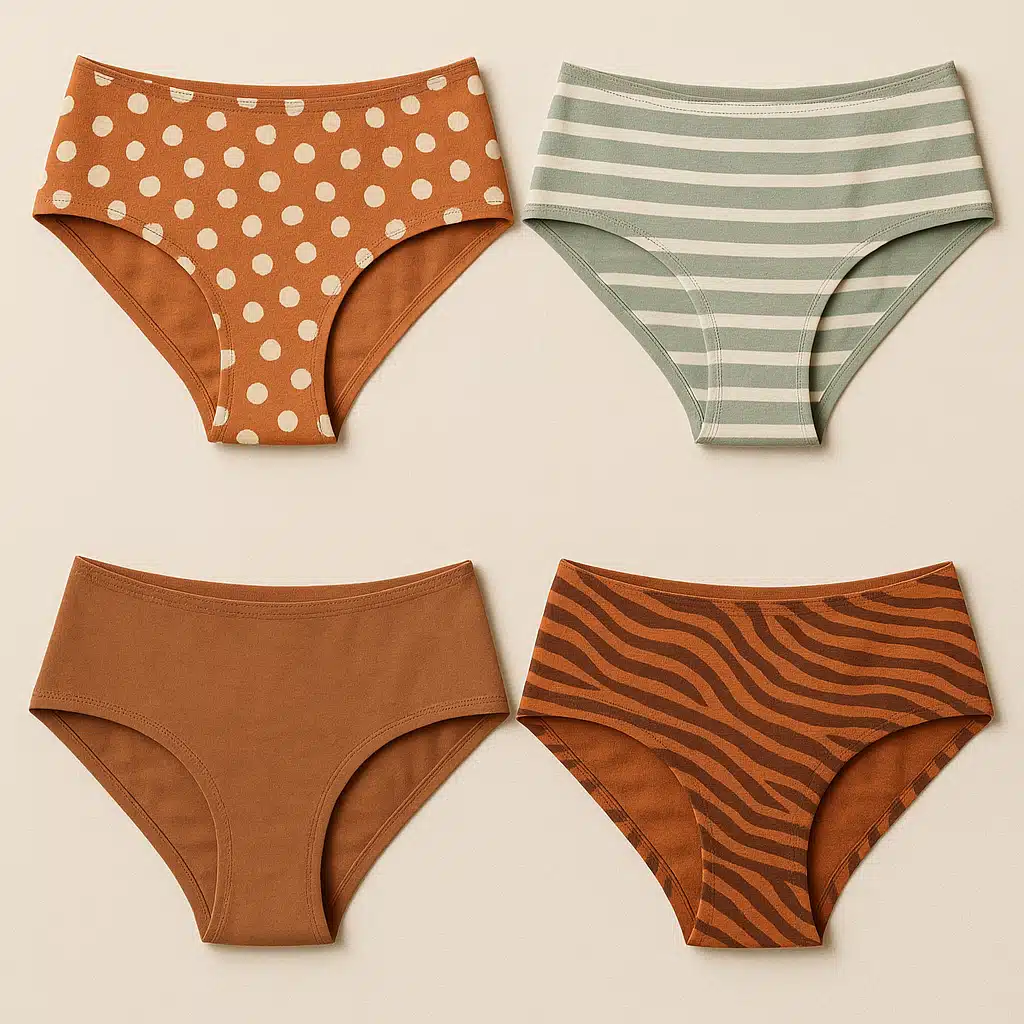
Hipster underwear features a distinctly low-rise waistband that sits several inches below the natural waistline, typically resting on the hip bones. This style provides full coverage across the buttocks and front while maintaining a modern, youthful silhouette. The leg openings offer complete side coverage without riding up, making hipsters extremely comfortable for extended wear.
This style became popular alongside low-rise jeans and continues to be favored for its ability to remain invisible under lower-waisted bottoms. Hipsters work beautifully under casual clothing and provide sufficient coverage for active days without the higher waistband of traditional briefs.
Best for: Low-rise jeans and pants, casual skirts, everyday comfort, younger demographics, modern styling
4. Thong: Invisible Under Clothing
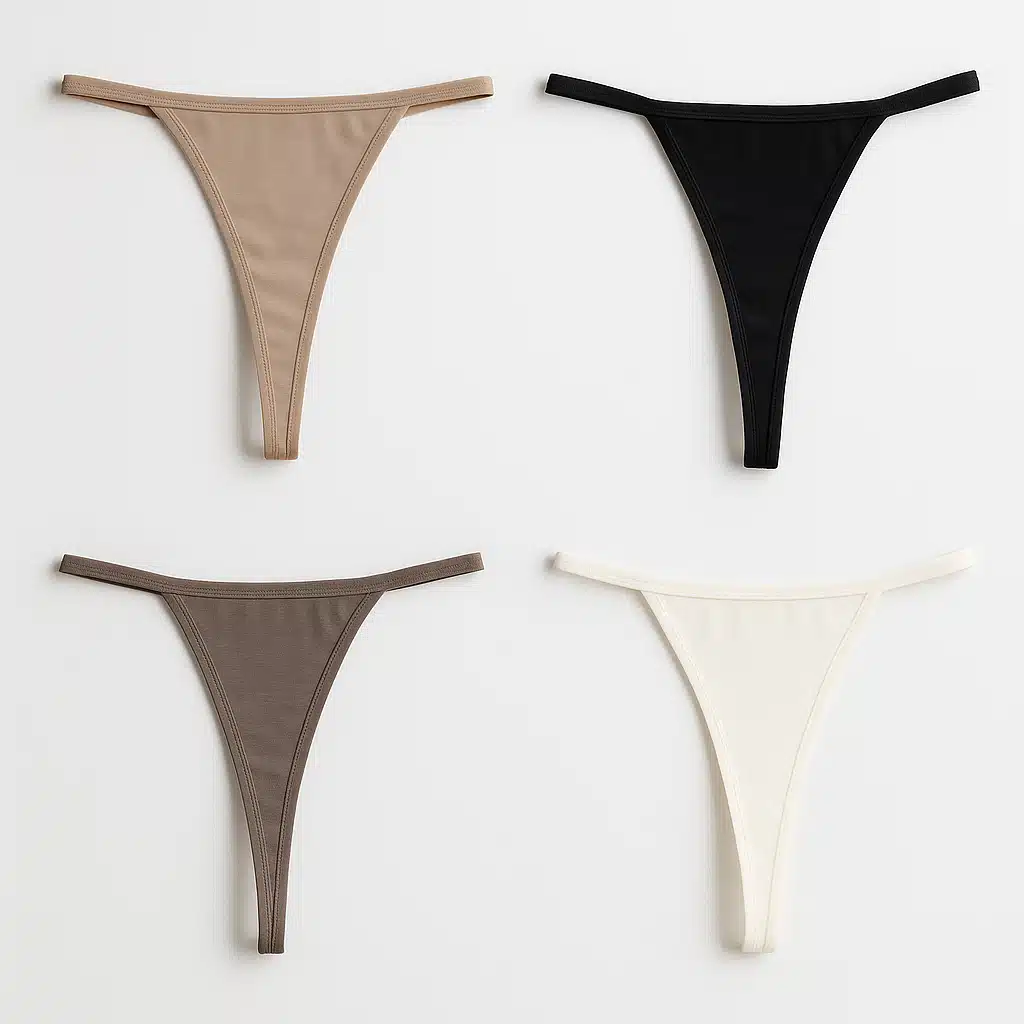
The thong represents one of the most recognizable underwear innovations of recent decades. Characterized by full front coverage and a narrow fabric strip that runs between the buttocks, thongs virtually eliminate visible panty lines. While some women require an adjustment period to become comfortable with the minimal back coverage, many find thongs indispensable for wearing under fitted dresses, light-colored pants, and form-hugging skirts.
Modern thongs come in various widths, from wider bands for comfort to ultra-thin strings for absolute invisibility. Quality matters significantly with thongs—well-constructed versions with soft fabrics and proper sizing provide surprising comfort, while poorly made versions can cause discomfort.
Best for: Eliminating panty lines, tight dresses, light-colored pants, formal wear, smooth silhouettes
5. G-String: Minimal Coverage
G-strings take minimalism further than thongs, featuring an even thinner back strap—often just a single cord—and a triangular front panel. This extreme reduction in fabric makes g-strings nearly invisible under even the most revealing clothing. The design is particularly popular for intimate occasions and situations where absolutely no visible lines can be tolerated.
Due to their minimal construction, g-strings work best for shorter wearing periods rather than all-day use. They’re often chosen for special occasions, photoshoots, performances, or intimate settings where aesthetics take priority over extended comfort.
Best for: Special occasions, intimate settings, performance wear, under extremely fitted garments, minimal coverage preferences
6. Boyshort: Extended Comfort
Boyshorts provide the most coverage of any underwear style, extending several inches down the thigh to resemble actual shorts. This design offers maximum comfort, prevents thigh chafing, and creates a secure, modest feeling that many women appreciate. The extended leg coverage makes boyshorts particularly popular during menstruation, under dresses and skirts, and for sleeping.
The shorts-like construction also makes this style ideal for active days, as the fabric stays in place without riding up. Many women find boyshorts cooler in warm weather compared to briefs, as the leg openings allow better air circulation while still providing full coverage.
Best for: Under dresses and skirts, menstruation, sleeping, lounging, preventing thigh chafing, maximum coverage preferences
7. Seamless and Laser-Cut: Invisible Edges
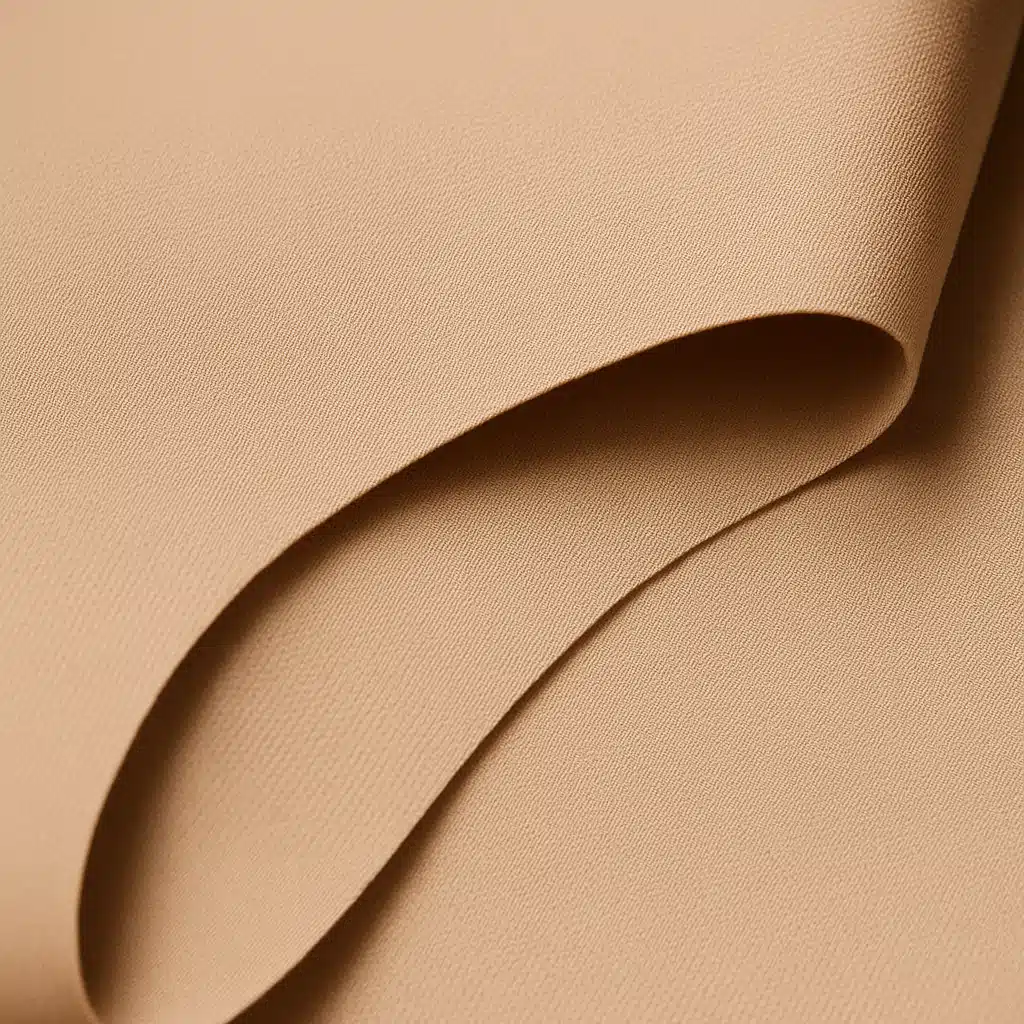
Seamless and laser-cut underwear represents significant technological advancement in intimate apparel. These styles eliminate traditional sewn seams, instead using bonding techniques or laser cutting to create edges that lie completely flat against skin. The result is underwear that becomes virtually invisible under even the thinnest, most form-fitting clothing.
Laser-cut technology creates ultra-thin edges that won’t create ridges or lines under fabric. Seamless construction uses circular knitting to eliminate side seams entirely. Both approaches work exceptionally well under business attire, formal wear, athletic clothing, and light-colored garments where traditional seams would be visible.
Best for: Light-colored pants, tight dresses, business attire, formal events, eliminating all visible lines
8. Cotton: Breathable Health-Conscious Choice
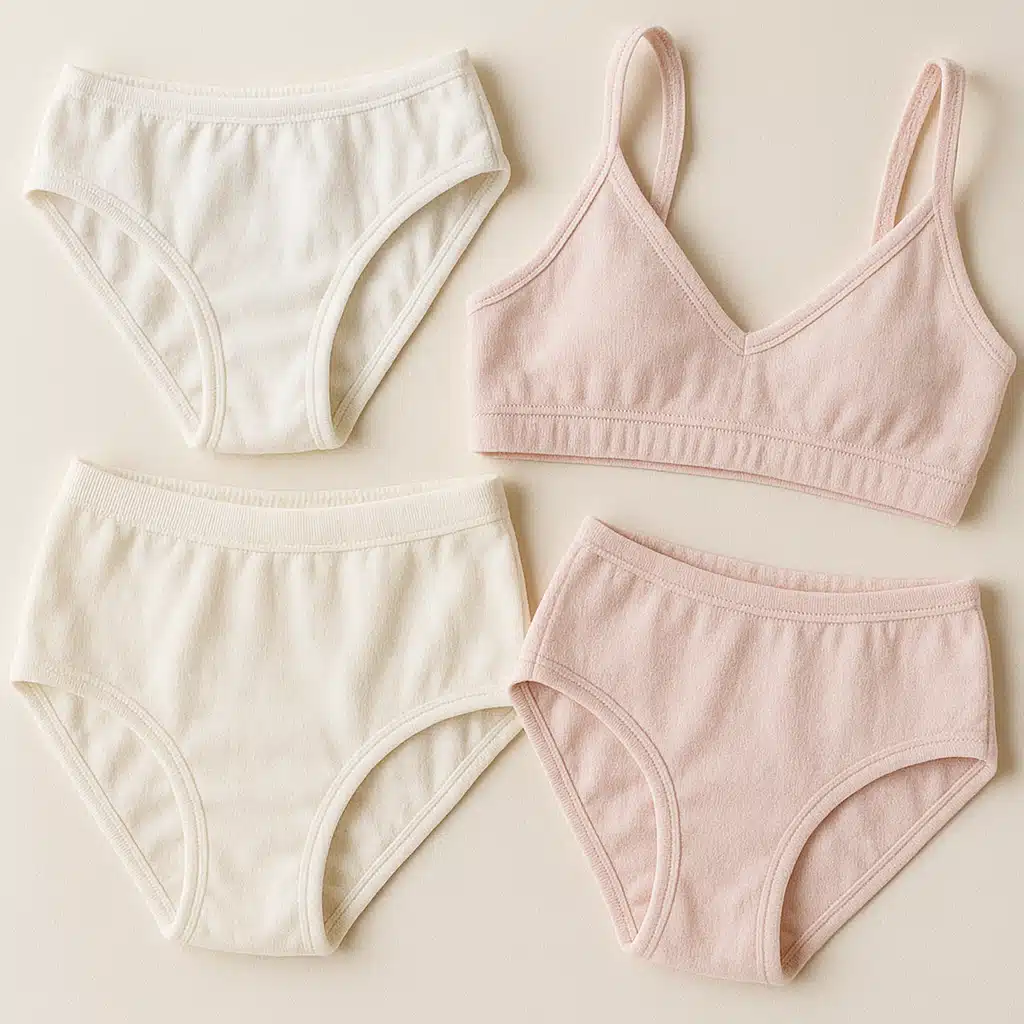
Cotton underwear deserves special mention not as a style but as a fabric choice that crosses all design categories. Natural cotton fiber provides superior breathability, moisture absorption, and comfort compared to synthetic alternatives. Medical professionals frequently recommend cotton underwear, particularly cotton-lined crotches, for maintaining vaginal health and preventing infections.
Pure cotton or cotton-blend underwear regulates temperature effectively, keeping you cool in warm weather and comfortable in cooler conditions. The natural fiber also reduces the risk of irritation and allergic reactions, making cotton the preferred choice for sensitive skin and daily wear.
Best for: Daily wear, sensitive skin, health-conscious choices, breathability, moisture management, reducing infection risk
9. Control and Shapewear: Smoothing Solutions
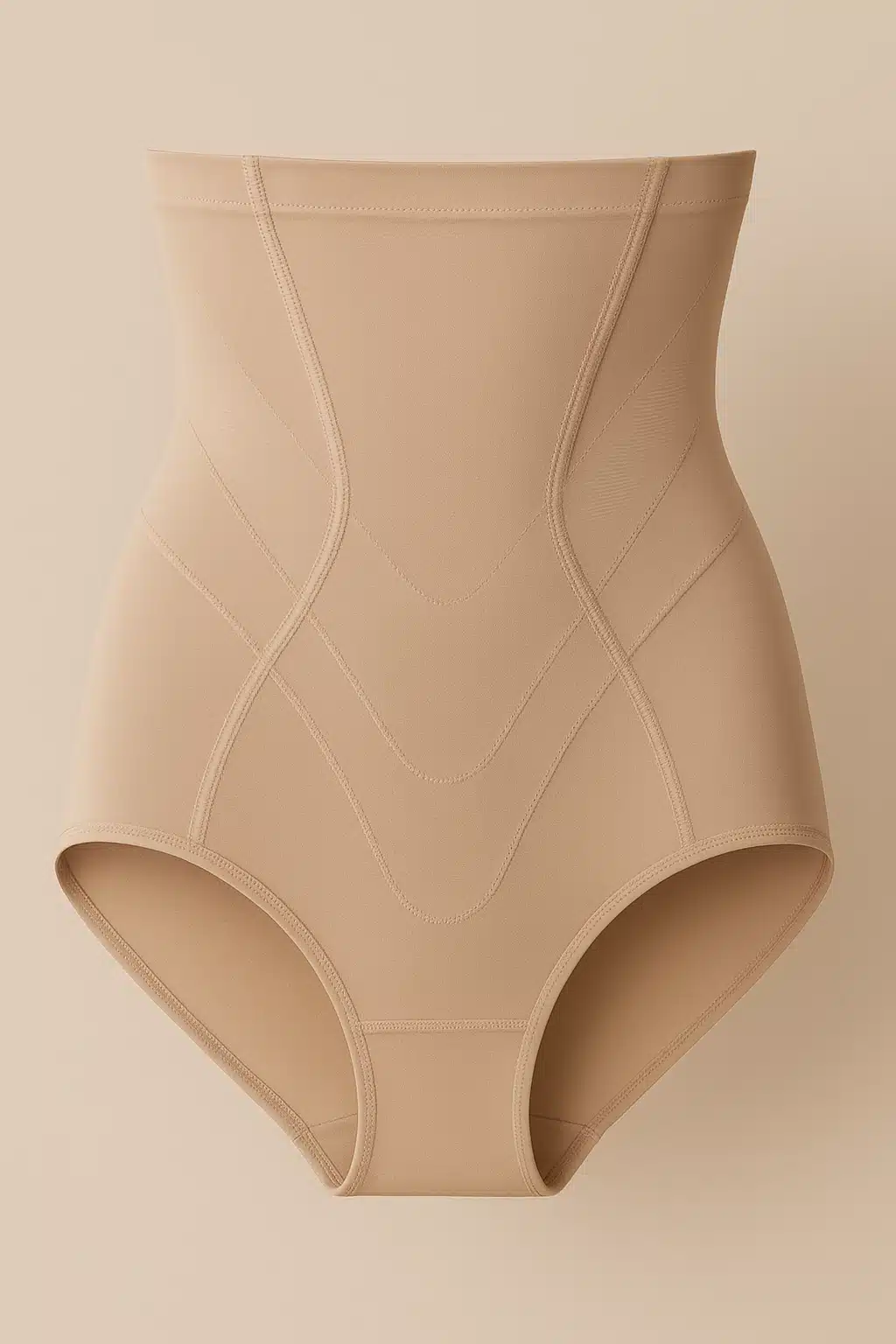
Control underwear and shapewear use compression fabrics and strategic paneling to smooth the abdomen, hips, and thighs while providing a streamlined silhouette under clothing. These garments range from light control with gentle shaping to firm control that significantly compresses and reshapes the body’s appearance.
Modern shapewear has evolved to be more comfortable than earlier versions, using breathable materials and ergonomic design. Many women appreciate control underwear for special events, professional settings, or any time they want a smoother appearance under fitted clothing. Postpartum women often find gentle control underwear helpful during recovery.
Best for: Under fitted clothing, special events, professional settings, postpartum recovery, confidence enhancement, smooth silhouettes
10. Maternity: Pregnancy Comfort
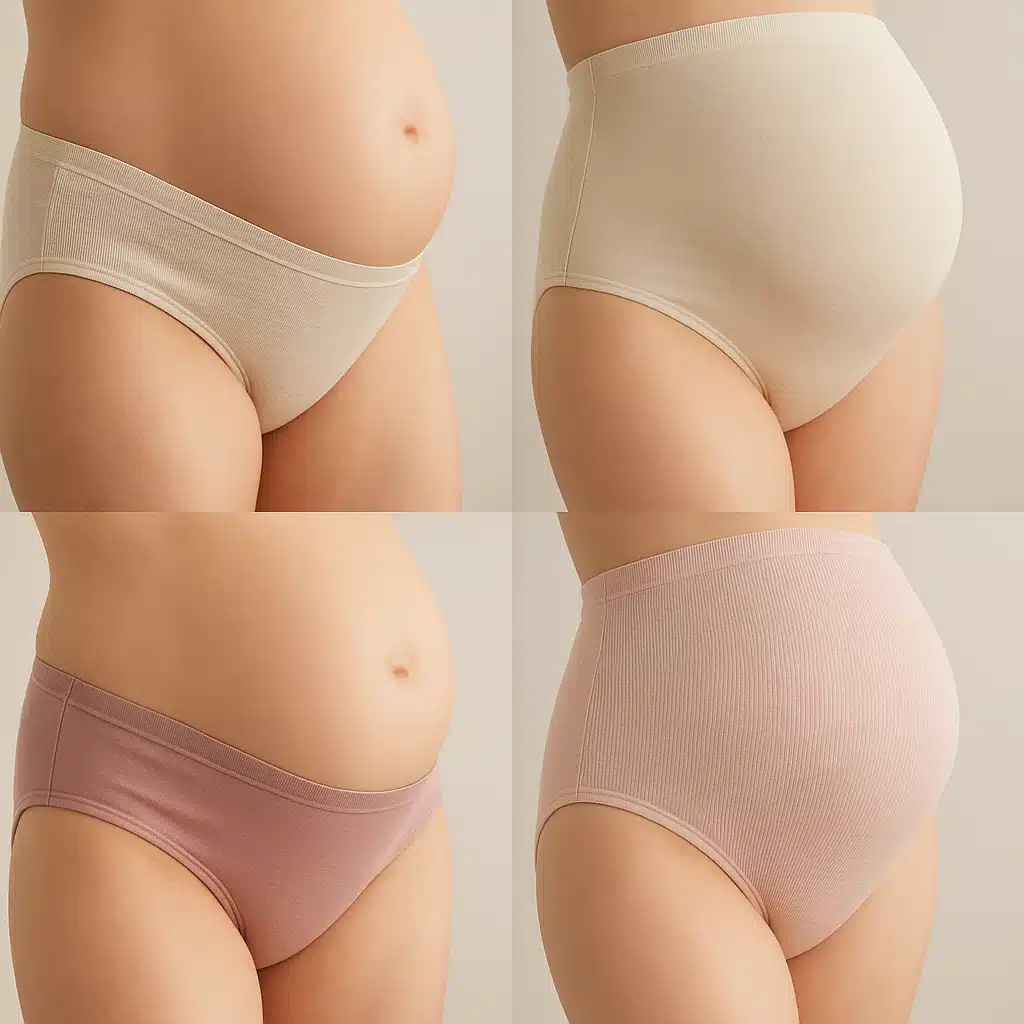
Maternity underwear features specialized design elements that accommodate a growing belly throughout pregnancy. These include extra-soft elastic that won’t dig into skin, expandable fabric panels, and construction that provides support without pressure. Maternity underwear comes in both under-belly styles (with low-rise waistbands that sit below the bump) and over-belly designs (with high-rise panels that cover and support the abdomen).
Quality maternity underwear should adapt as your body changes, eliminating the need to purchase multiple sizes throughout pregnancy. Many designs also work well during postpartum recovery, making them a worthwhile investment for expecting mothers.
Best for: Pregnancy, postpartum recovery, accommodating body changes, gentle support, no-pressure comfort
11. Period/Menstrual: Innovative Protection
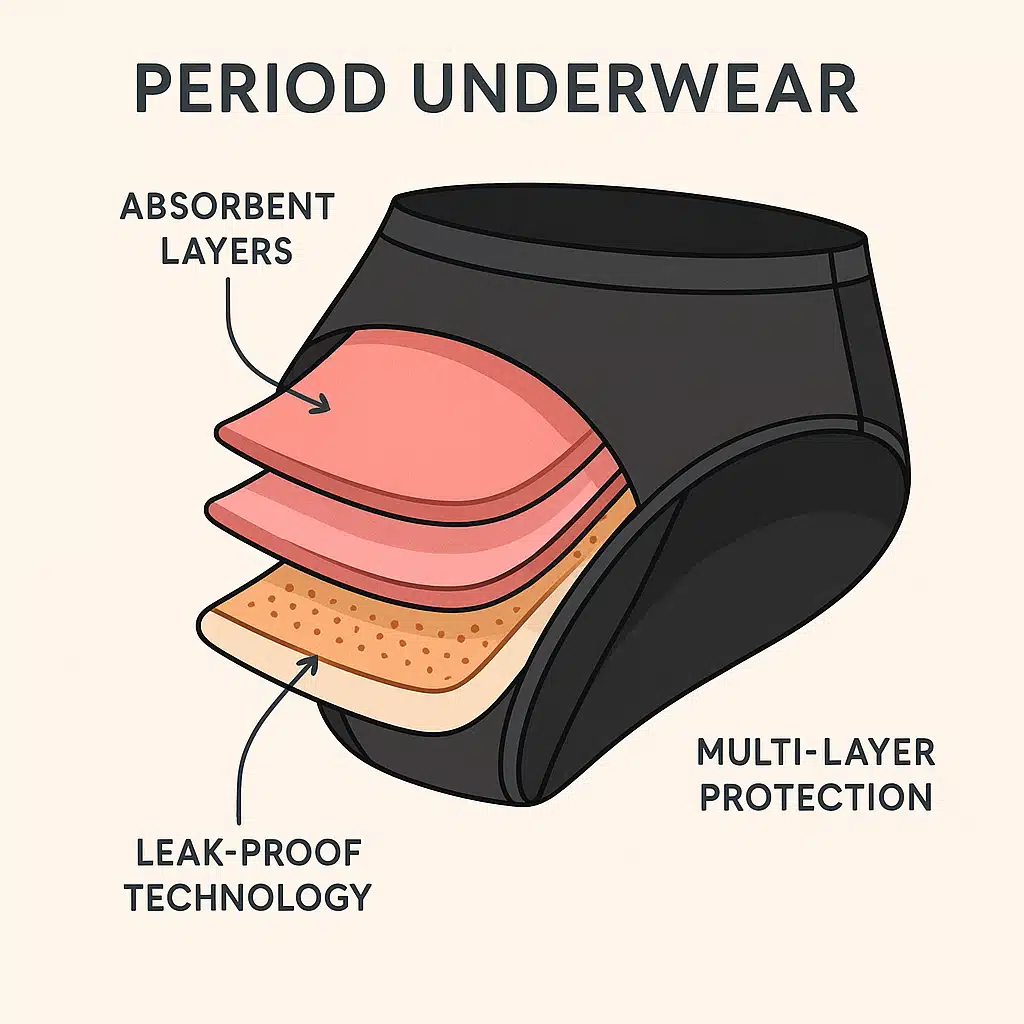
Period underwear represents one of the most innovative developments in feminine hygiene. These specially designed garments incorporate multiple absorbent layers into the underwear itself, providing leak-proof protection during menstruation without requiring separate pads or tampons. The technology typically includes a moisture-wicking top layer, absorbent middle layers, and a waterproof outer layer.
Modern period underwear can absorb the equivalent of multiple tampons, provides odor control, and can be washed and reused for years. This makes them both an economical and environmentally friendly alternative to disposable products. Many women use period underwear as primary protection on lighter days or as backup protection with other menstrual products.
Best for: Menstruation, eco-friendly period management, overnight protection, backup to other products, reducing waste
12. Sports and Athletic: Performance Focused
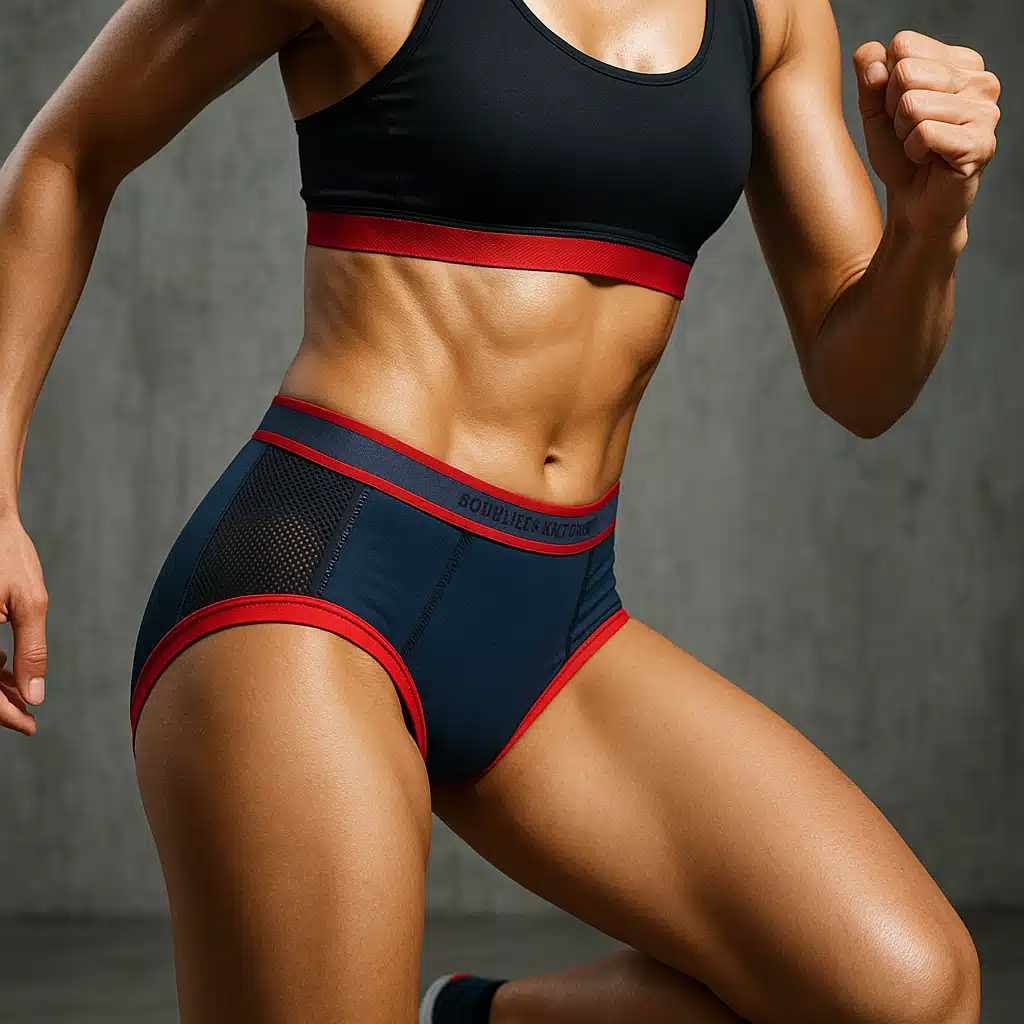
Athletic underwear uses technical fabrics and ergonomic design to support active lifestyles. Key features include moisture-wicking materials that pull sweat away from skin, breathable mesh panels for ventilation, seamless construction to prevent chafing, and secure fit that stays in place during movement.
Sports underwear often incorporates antimicrobial treatments to prevent odor and quick-drying fabrics that remain comfortable during intense workouts. The construction focuses on freedom of movement, with flat seams and tagless designs that won’t irritate skin during repetitive motion.
Best for: Exercise, gym workouts, running, cycling, yoga, active sports, athletic training
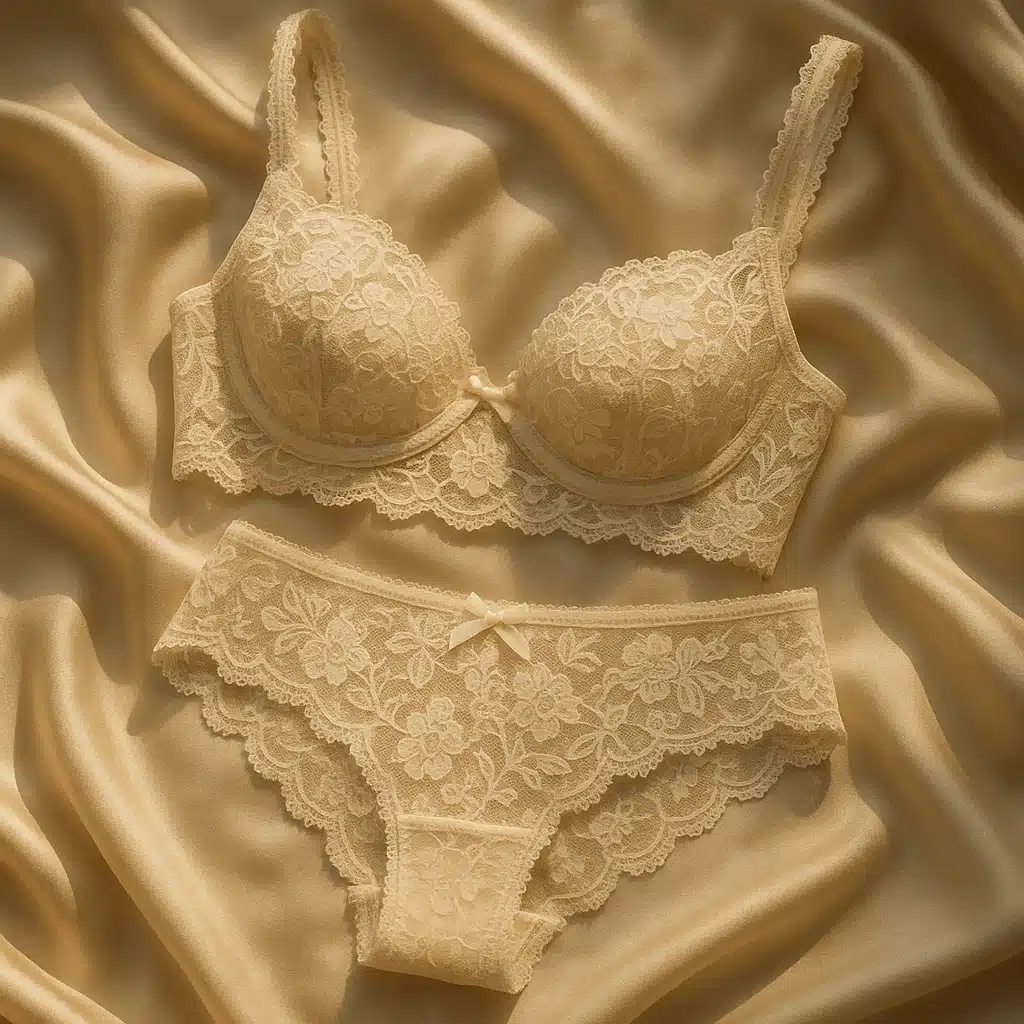
13. Lace and Decorative: Special Occasions
Lace underwear prioritizes aesthetics and special occasions over everyday practicality. These designs incorporate delicate lace fabrics, intricate patterns, decorative embellishments, and romantic details. Lace can appear as trim on otherwise simple designs or comprise the entire garment for a luxurious, feminine look.
Quality lace underwear balances beauty with reasonable comfort, using soft lace that won’t scratch or irritate. These pieces are ideal for special occasions, romantic evenings, bridal wear, and times when you want to feel particularly feminine and elegant.
Best for: Special occasions, romantic settings, bridal wear, formal events, feeling feminine, gift-giving
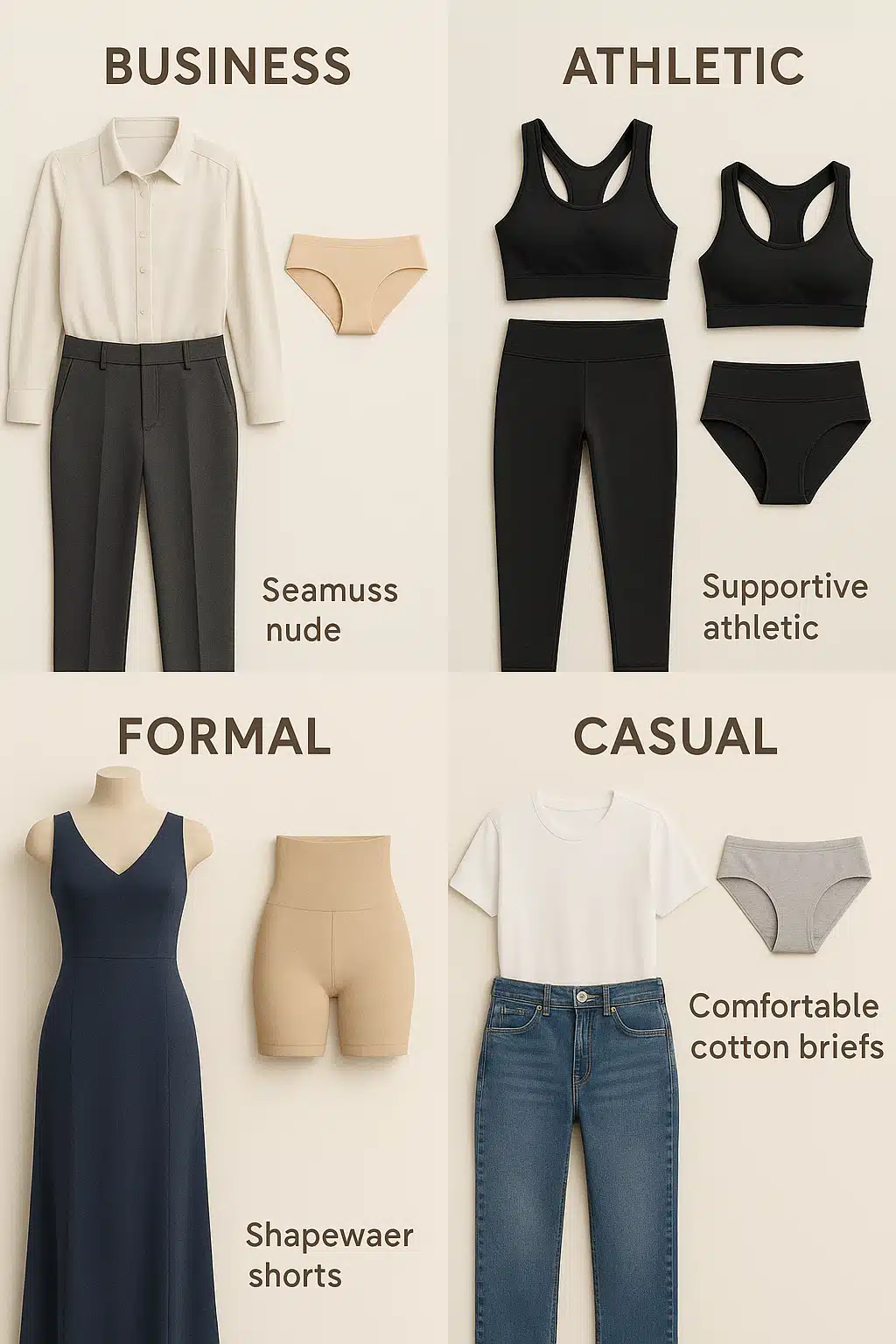
Selecting Underwear Based on Clothing and Activity
Choosing underwear isn’t just about personal preference—it’s also about matching the right style to your outfit and activities. Different clothing and situations demand specific underwear considerations:
For Tight or Light-Colored Pants
Select seamless, laser-cut, or thong styles in nude colors that match your skin tone. Avoid thick seams, decorative elements, and dark colors that show through fabric.
For Dresses and Skirts
Boyshorts prevent thigh chafing and unwanted exposure, while seamless styles work under fitted designs. Match the rise to the dress waistline to prevent visible bands.
For Professional Settings
Choose comfortable, invisible styles like seamless briefs or hipsters in neutral colors. Prioritize comfort for all-day wear and ensure nothing is visible through professional attire.
For Exercise and Sports
Always select moisture-wicking athletic underwear with seamless construction and secure fit. Avoid cotton, which retains moisture, and choose breathable synthetic blends designed for performance.
For Sleep
Prioritize comfort with breathable cotton briefs or boyshorts. Loose-fitting designs without restrictive elastic promote better sleep and healthy circulation.
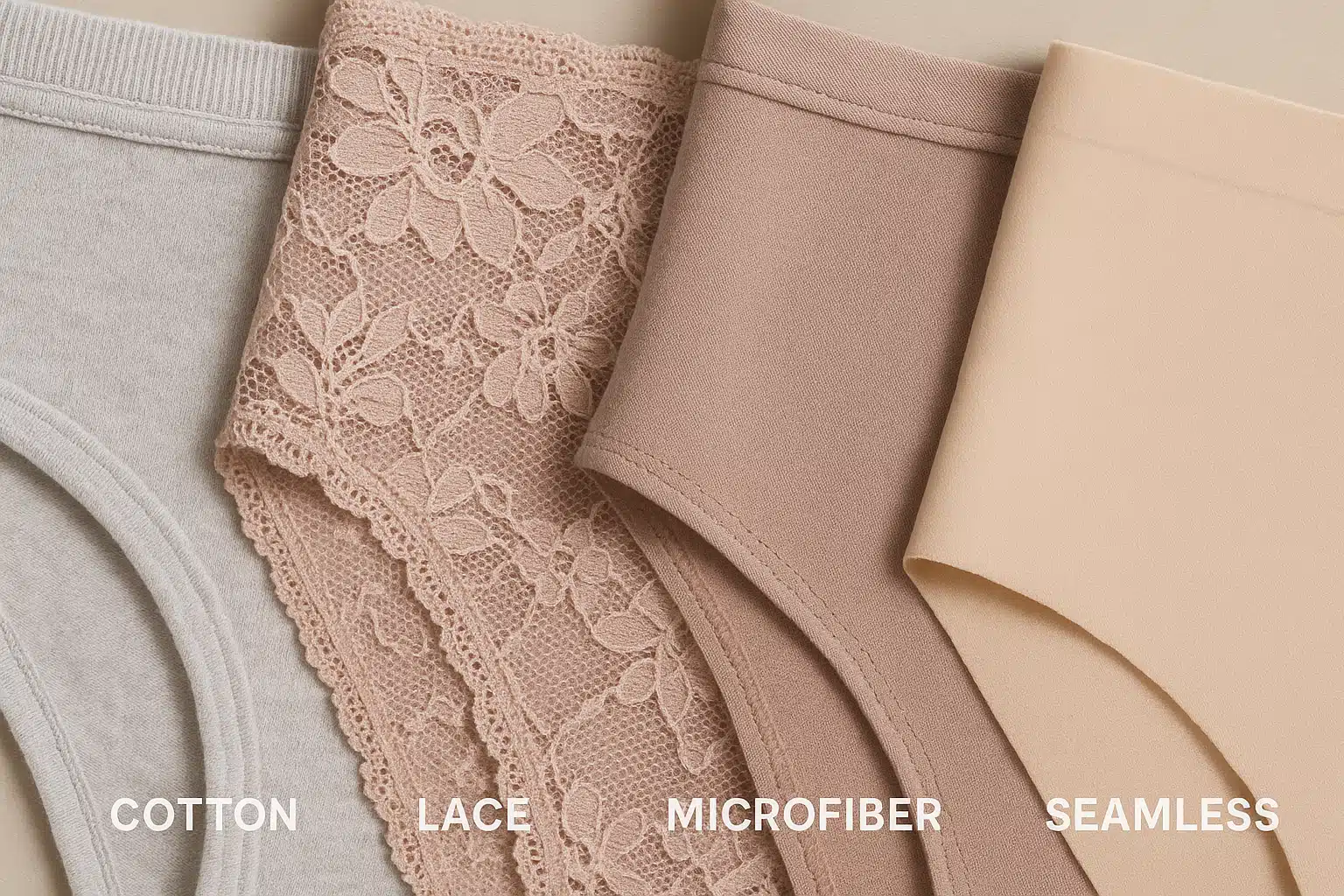
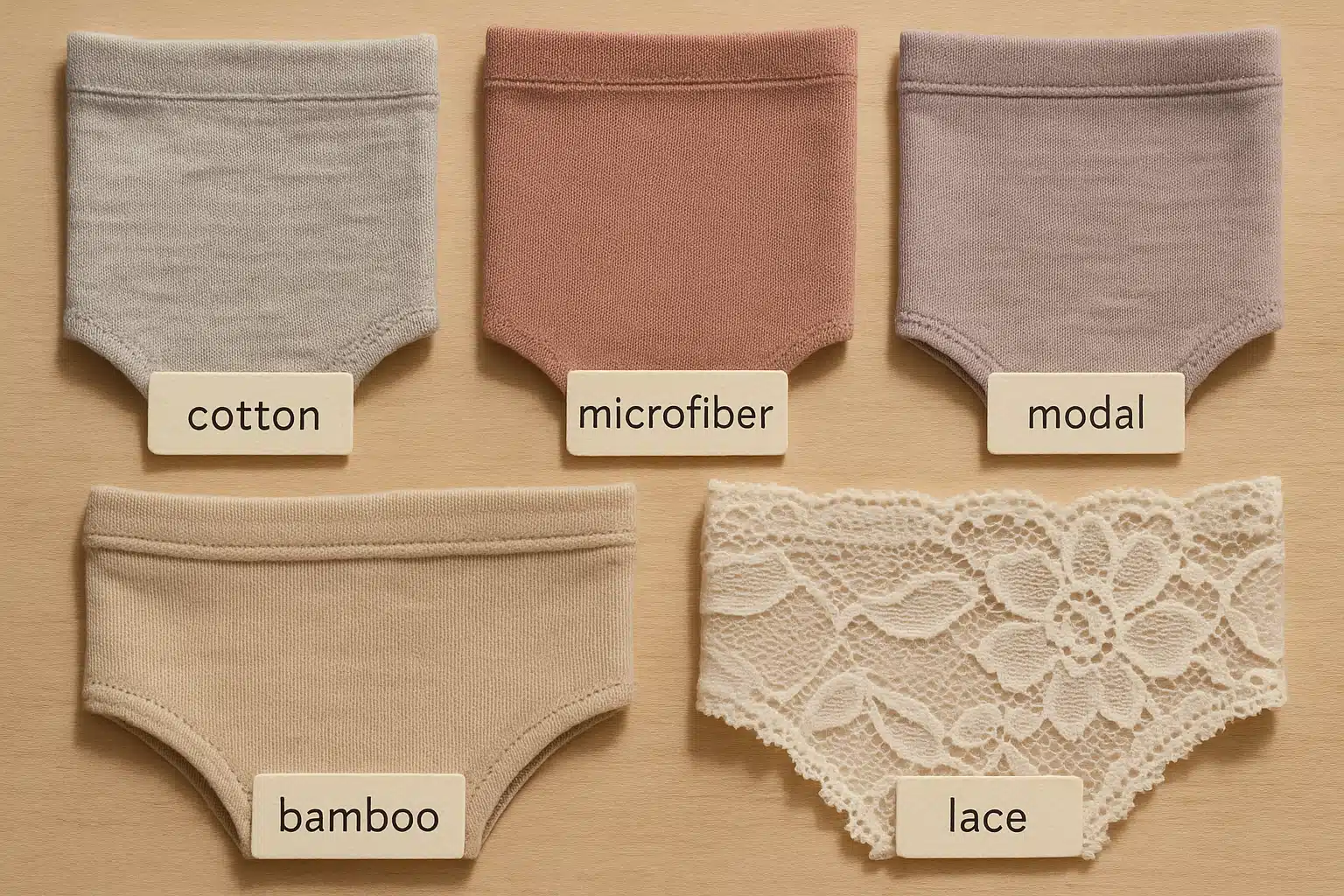
Material Matters: Understanding Fabric Choices
The fabric composition of underwear significantly affects comfort, durability, and appropriateness for different uses:
Cotton
Natural, breathable, and moisture-absorbent. Best for daily wear, sensitive skin, and health-conscious choices. May retain moisture during intense exercise.
Microfiber
Smooth, lightweight synthetic blend that’s virtually invisible under clothing. Dries quickly and resists wrinkles. Ideal for seamless styles and travel.
Modal
Soft plant-based fiber made from beech trees. Extremely comfortable, breathable, and eco-friendly. Comparable to cotton but with superior drape and softness.
Bamboo
Sustainable natural fiber that’s naturally antimicrobial. Soft, breathable, and moisture-wicking. Growing in popularity for eco-conscious consumers.
Nylon/Spandex Blends
Stretchy, smooth, and durable. Commonly used in athletic wear and shapewear. Provides compression and recovery while maintaining shape.
Lace
Decorative fabric typically made from cotton, nylon, or polyester. Primarily aesthetic rather than functional. Requires gentle care to maintain appearance.
Proper Care and Maintenance
Extending the life of your underwear requires appropriate care based on fabric and construction:
- Wash delicate items in mesh laundry bags to protect elastic and lace from damage during machine washing
- Use gentle detergents without harsh chemicals that can break down elastic and fabrics over time
- Air dry when possible as high heat from dryers degrades elastic and can damage synthetic fabrics
- Hand wash specialty items including lace, period underwear, and embellished designs
- Replace underwear regularly—typically every 6-12 months depending on wear frequency and care
- Watch for signs of wear including stretched elastic, thinning fabric, or loss of shape
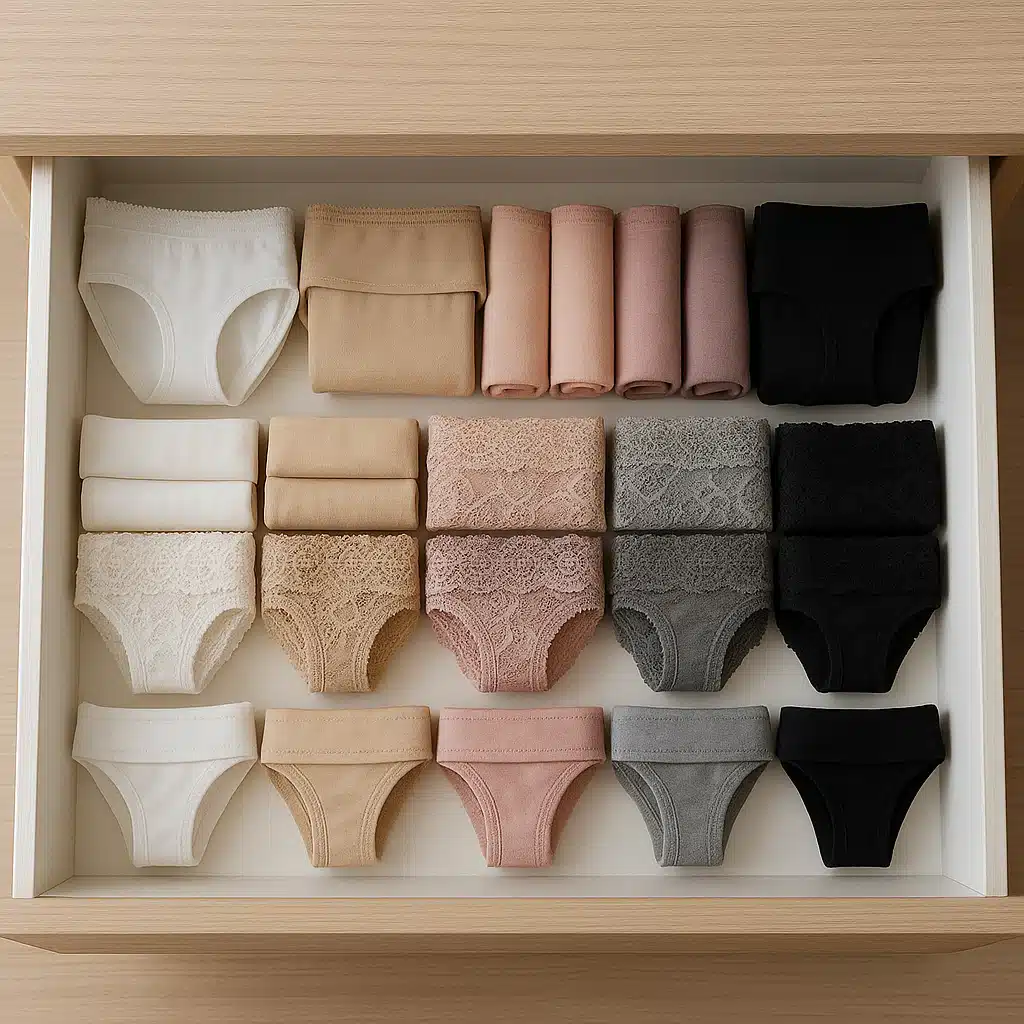
- Store properly by folding rather than rolling to maintain shape and elastic integrity
Building a Versatile Underwear Wardrobe
A well-rounded underwear collection should include variety to meet different needs:
- Everyday basics: 7-10 comfortable cotton or microfiber briefs or hipsters in neutral colors
- Invisible options: 3-5 seamless or thong styles in nude, black, and white
- Athletic wear: 3-5 moisture-wicking sports underwear for exercise
- Special occasions: 2-3 lace or decorative pieces for romantic or formal situations
- Period protection: 3-5 period underwear or comfortable boyshorts for menstruation
- Specialized needs: Maternity, shapewear, or other specific styles as your lifestyle requires
Investing in quality across these categories ensures you’re prepared for any situation while maintaining comfort and confidence.
Frequently Asked Questions About Women’s Underwear
What is the healthiest fabric for everyday underwear?
Cotton or cotton-blend underwear with a cotton-lined crotch is widely considered the healthiest choice for daily wear. Natural cotton fiber allows air circulation, absorbs moisture, and reduces the risk of infections and irritation. Medical professionals typically recommend cotton underwear for maintaining vaginal health.
How many pairs of underwear should I own?
Most experts recommend owning at least 20-25 pairs of underwear. This allows for weekly laundry cycles while ensuring you have appropriate options for different activities and outfits. Having variety means each pair receives less wear, extending the overall life of your collection.
What underwear style is best for eliminating visible lines?
Seamless or laser-cut underwear provides the most invisible option under clothing. Thongs also eliminate visible panty lines due to their minimal back coverage. Choose styles in nude colors that match your skin tone for maximum invisibility, especially under light-colored or thin fabrics.
How do I choose the right size underwear?
Proper fit is essential for comfort. Underwear should sit flat against your skin without digging in, rolling down, or creating bulges. The waistband should feel secure without pinching, and leg openings shouldn’t cut into your thighs. When in doubt between sizes, sizing up usually provides better comfort. Remember that sizing varies between brands, so always check specific size charts.
Is it better to sleep with or without underwear?
This is a personal choice, but many health experts suggest that sleeping without underwear or in loose, breathable cotton underwear promotes better vaginal health by allowing air circulation. If you prefer wearing underwear to bed, choose comfortable, loose-fitting cotton styles without restrictive elastic.
How often should I replace my underwear?
Generally, underwear should be replaced every 6-12 months, depending on wear frequency and care. Signs that underwear needs replacement include stretched-out elastic, thinning fabric, permanent stains, loss of shape, or discomfort during wear. Period underwear typically lasts 2-3 years with proper care.
What underwear is best for preventing yeast infections?
Breathable cotton underwear helps prevent yeast infections by allowing moisture to evaporate and air to circulate. Avoid tight synthetic fabrics that trap heat and moisture. Some experts also recommend avoiding thongs if you’re prone to infections, as the design can transfer bacteria.
Can I wear thongs every day?
While you can wear thongs daily if they’re comfortable, many health professionals recommend alternating with full-coverage styles. Thongs can potentially increase the risk of infections for some women due to their design. If you wear thongs regularly, ensure they fit properly, choose breathable fabrics, and practice good hygiene.
What’s the difference between a thong, tanga, and g-string?
These terms describe progressively minimal back coverage. A thong has a narrow strip of fabric at the back, a tanga has slightly wider sides and more coverage than a thong, and a g-string features the thinnest possible back strap—essentially just a string—with minimal fabric overall.
What should I wear under white pants or light-colored clothing?
Contrary to popular belief, nude or beige underwear that matches your skin tone is less visible under white clothing than white underwear. Choose seamless or laser-cut styles without thick seams or decorative elements. Thongs eliminate panty lines entirely if you’re comfortable with that style.
Conclusion: Finding Your Perfect Underwear Collection
Understanding the vast array of women’s underwear styles empowers you to build a collection that serves every aspect of your life—from everyday comfort to special occasions, from athletic performance to health-conscious choices. No single style works for everyone or every situation, which is why variety matters. By selecting appropriate styles for different outfits, activities, and personal preferences, you can ensure comfort, confidence, and practicality in your daily life. Invest in quality pieces across multiple categories, care for them properly, and don’t hesitate to explore new styles as your needs and preferences evolve.